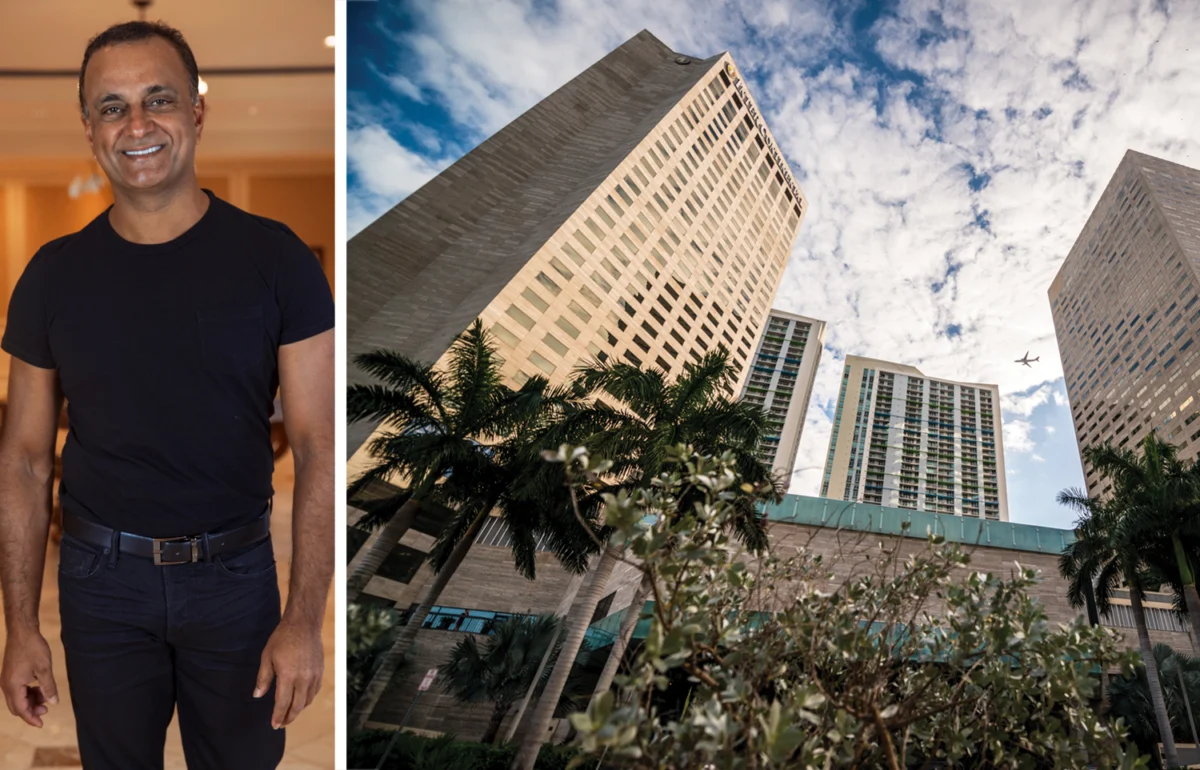
In a significant move for the South Florida hospitality landscape, Miami-based investment firm Gencom and its partner, White Bridge Capital, have successfully finalized the acquisition of the InterContinental Miami. The transaction, valued at approximately $300 million, marks a major shift in ownership for one of the city’s most recognizable waterfront assets. The 34-story hotel, located at 100 Chopin Plaza, has long served as a focal point of the downtown skyline, offering panoramic views of Biscayne Bay and providing a critical link between the Central Business District and the burgeoning Brickell financial corridor.
The sale concludes a long tenure of ownership by the Dajia Insurance Group, a Chinese conglomerate that has held the property since 2005. The acquisition reflects a broader trend of institutional capital rotating through the Miami hotel market, as investors seek to capitalize on the city’s sustained growth as a premier global destination for both corporate travel and luxury tourism.
Property Specifications and Historical Context
Constructed in 1983, the InterContinental Miami is a sprawling 465,000-square-foot structure that has undergone various renovations to remain competitive in the luxury segment. The property houses 652 guest rooms and suites, complemented by 90,000 square feet of versatile indoor and outdoor event space. These facilities have historically made the hotel a cornerstone for major conventions, corporate summits, and high-profile social events in Miami.
The hotel’s strategic location—situated just off Biscayne Boulevard and immediately south of the Brickell district—positions it to benefit from the ongoing densification of downtown Miami. Over the past two decades, the area surrounding 100 Chopin Plaza has transitioned from a traditional office-heavy district into a mixed-use urban hub, characterized by luxury residential towers and high-end retail. The property’s rooftop pool and direct bay frontage are considered significant value drivers, particularly as the demand for experiential luxury hospitality continues to climb in the post-pandemic era.
The Evolution of Dajia Insurance Group’s Portfolio
The exit of Dajia Insurance Group from this asset is reflective of a wider strategy by the firm to rebalance its international real estate holdings. Having held the property for nearly two decades, Dajia oversaw several rounds of capital improvements, ensuring that the InterContinental remained a top-tier performer in the Miami market. While the specific terms of the transition were not disclosed, industry analysts note that the sale aligns with Dajia’s ongoing efforts to monetize long-term investments in the United States.
The hotel’s recent operational performance, which has been bolstered by significant capital expenditure, made it an attractive target for Gencom. By upgrading the lobby, common areas, and guest-facing technology, the previous ownership group successfully positioned the asset for a premium valuation in a high-interest-rate environment, proving that well-maintained hospitality assets remain liquid even when financing conditions are complex.
Strategic Rationale for Gencom and White Bridge Capital
For Gencom, this acquisition is a continuation of an aggressive expansion strategy. Ignasi Puig, managing director of acquisitions at Gencom, emphasized the underlying fundamentals that prompted the investment. “The InterContinental Miami’s significant recent capital investment, strong operating performance and diversified mix of leisure, corporate and group business provide a solid foundation for long-term value creation to Gencom and its investors,” Puig stated.
The partnership with White Bridge Capital highlights the collaborative nature of large-scale hospitality acquisitions in the current market. By pooling resources, these firms are better positioned to navigate the complexities of property management and capital improvements while maintaining the high standards required by the InterContinental brand. The deal allows Gencom to further consolidate its footprint in South Florida, where it already maintains a portfolio including the Ritz-Carlton properties in Coconut Grove and Key Biscayne. The latter, notably, recently emerged from a $100 million renovation, signaling Gencom’s commitment to "asset-heavy" investment strategies that prioritize property modernization.
Broader Hospitality Market Trends in Miami
The acquisition of the InterContinental Miami is not an isolated event but part of a larger narrative of institutional confidence in Miami’s hospitality sector. In late 2025, private equity giant Blackstone completed the purchase of the 352-room East hotel, located in the Brickell City Centre complex. This transaction, occurring in close proximity to the InterContinental, underscores the massive capital inflow targeting the Miami waterfront.
Market data suggests that Miami’s hospitality sector has remained resilient despite global economic headwinds. Factors contributing to this resilience include the continued migration of financial and technology firms to the city, the growth of the cruise industry, and the sustained increase in international tourism from Latin America and Europe. According to recent industry reports, RevPAR (Revenue Per Available Room) in the Miami-Dade market has consistently outperformed historical averages, driven by a blend of high occupancy rates and robust average daily rates (ADR).
Chronology of Recent Major Hospitality Deals
The past 24 months have seen a flurry of activity in the Miami luxury hotel space:
- Early 2025: Gencom finalizes the $230 million acquisition of the InterContinental New York Times Square, signaling the firm’s intent to scale its InterContinental-branded portfolio.
- Mid-2025: Blackstone announces the acquisition of the East hotel in Brickell, confirming that international investors view the Brickell-Downtown corridor as a primary growth engine.
- Late 2025: The Key Biscayne Ritz-Carlton, owned by Gencom, reopens following a comprehensive $100 million renovation, setting a new benchmark for luxury service in the Miami area.
- Early 2026: The $300 million sale of the InterContinental Miami to the Gencom-White Bridge Capital joint venture closes, marking one of the largest hospitality deals of the year.
Financial and Operational Implications
The scale of this acquisition—at $300 million—suggests that the investors are banking on a combination of organic growth and operational efficiencies. By leveraging Gencom’s deep regional expertise, the new ownership group is expected to refine the property’s food and beverage offerings and further optimize its 90,000 square feet of meeting space.
Furthermore, the purchase is a testament to the enduring appeal of the "InterContinental" brand. As a global flag, the brand carries significant weight with corporate clients and international travelers, providing a level of predictability that independent or boutique hotels might lack. For the city of Miami, the influx of new capital into such a prominent landmark is a positive signal for tax revenue and employment, as the hotel remains a major employer in the downtown district.
Outlook for the Future
As Miami continues to evolve into a "gateway city," the demand for high-end hospitality infrastructure will likely persist. Analysts expect that the new owners will focus on integrating more sustainable technologies into the 42-year-old building, potentially addressing modern efficiency standards. Additionally, the integration of the InterContinental into the broader Gencom portfolio may yield synergies in management, marketing, and procurement that could further enhance the hotel’s profitability.
The sale of 100 Chopin Plaza serves as a bellwether for the Miami commercial real estate market. While high borrowing costs have slowed deal flow in other sectors of the economy, the hospitality industry in high-growth, urban environments like Miami remains a preferred destination for institutional capital. Whether this acquisition will lead to further interior renovations or a rebranding effort remains to be seen; however, given Gencom’s track record of capital-intensive upgrades, the property is likely to see continued investment to ensure it remains a premier destination in the competitive downtown Miami market.
In conclusion, the acquisition of the InterContinental Miami by Gencom and White Bridge Capital is a strategic milestone that reflects both the maturity of the Miami hotel market and the long-term vision of its newest owners. By securing one of the most prominent waterfront assets in the city, the investment group has positioned itself at the center of Miami’s ongoing economic transformation, ensuring that the property remains a vital part of the city’s business and leisure infrastructure for years to come.