The State of Texas is facing a significant fiscal crossroads as the cost of a decade-old tax incentive program for data centers has ballooned far beyond original projections. According to recent data released by the Texas Comptroller of Public Accounts, the state is poised to forgo approximately $3.2 billion in sales tax revenue over the next two years. This massive shortfall is the direct result of an exemption designed to lure the tech industry to the Lone Star State—a program that lawmakers now say may be unsustainable in the face of an unprecedented artificial intelligence (AI) boom.
As the 2027 legislative session approaches, influential figures in the Texas Capitol are signaling a major shift in policy. State Senator Joan Huffman, who chairs the powerful Senate Committee on Finance, has characterized the new fiscal projections as "extremely concerning" and has indicated that the legislature will likely move to either significantly curtail the scope of the tax break or repeal it entirely. This sentiment reflects a growing skepticism among state leaders regarding the true economic return on investment provided by massive, energy-hungry computing facilities that often provide relatively few permanent jobs compared to their immense physical and environmental footprints.
The Evolution of an Industry: From Cloud Storage to AI Dominance
The current tax exemption was established more than a decade ago, in a vastly different technological landscape. When the Texas Legislature approved the incentive in 2013, the primary goal was to attract data centers focused on traditional cloud storage and enterprise computing. At the time, these facilities were smaller, required less power, and were viewed as essential infrastructure for the burgeoning digital economy.
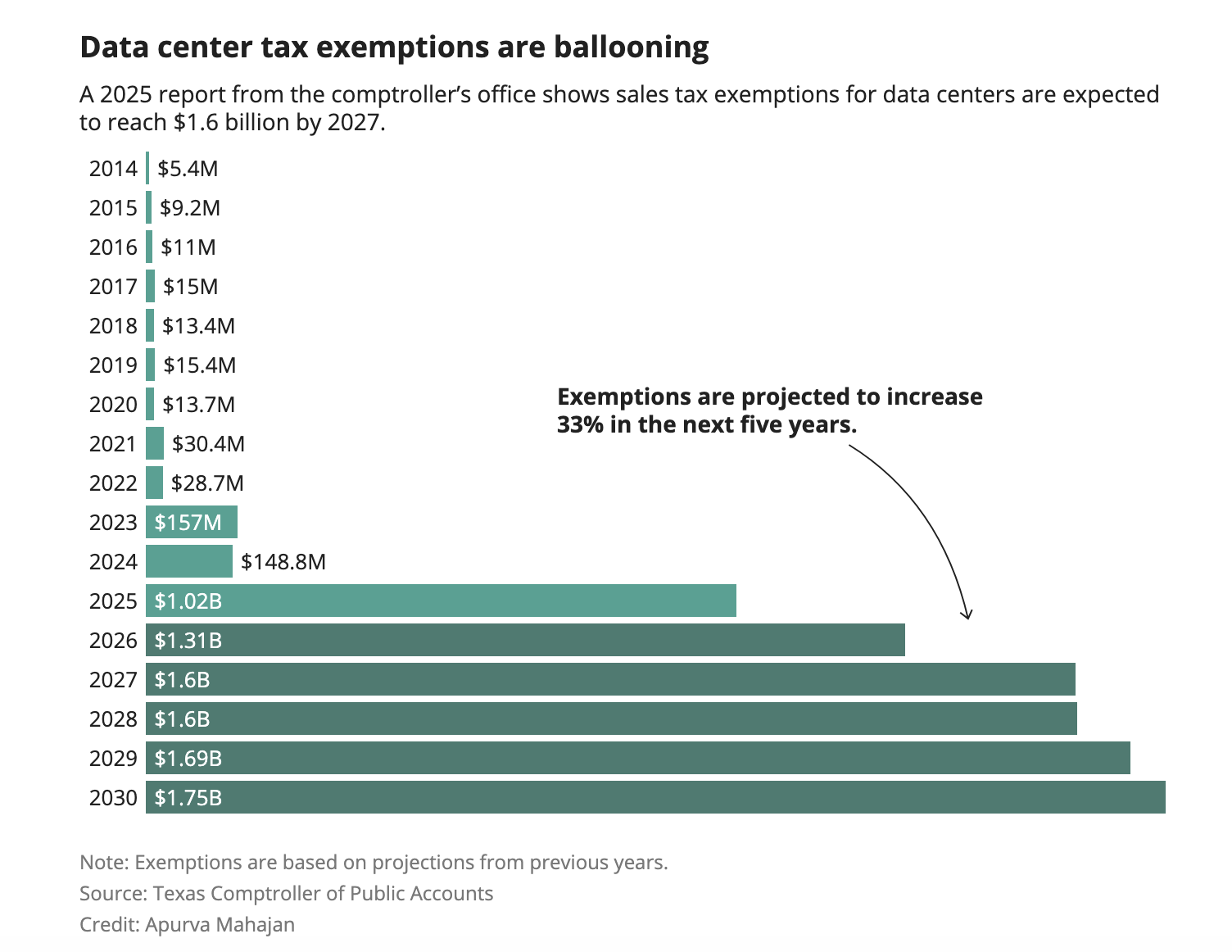
The legislative history of the program shows a modest beginning. From 2014 through 2022, the state’s lost revenue from the exemption remained relatively stable, fluctuating between $5 million and $30 million annually. However, the trajectory shifted dramatically with the emergence of generative artificial intelligence and high-performance computing. By 2023, the annual cost to the state jumped to $150 million. In the current fiscal year, that number has reached at least $1.3 billion, and projections suggest it will continue to climb as more facilities come online.
The original author of the 2013 legislation, former State Representative Harvey Hilderbran, recently noted that the industry’s evolution was impossible to predict at the time. While he described the law as one of his most successful in terms of attracting business, he conceded that the current scale of the industry warrants a comprehensive legislative review to ensure a balanced perspective between state benefits and costs.
Supporting Data: Texas as the National Epicenter of Data Infrastructure
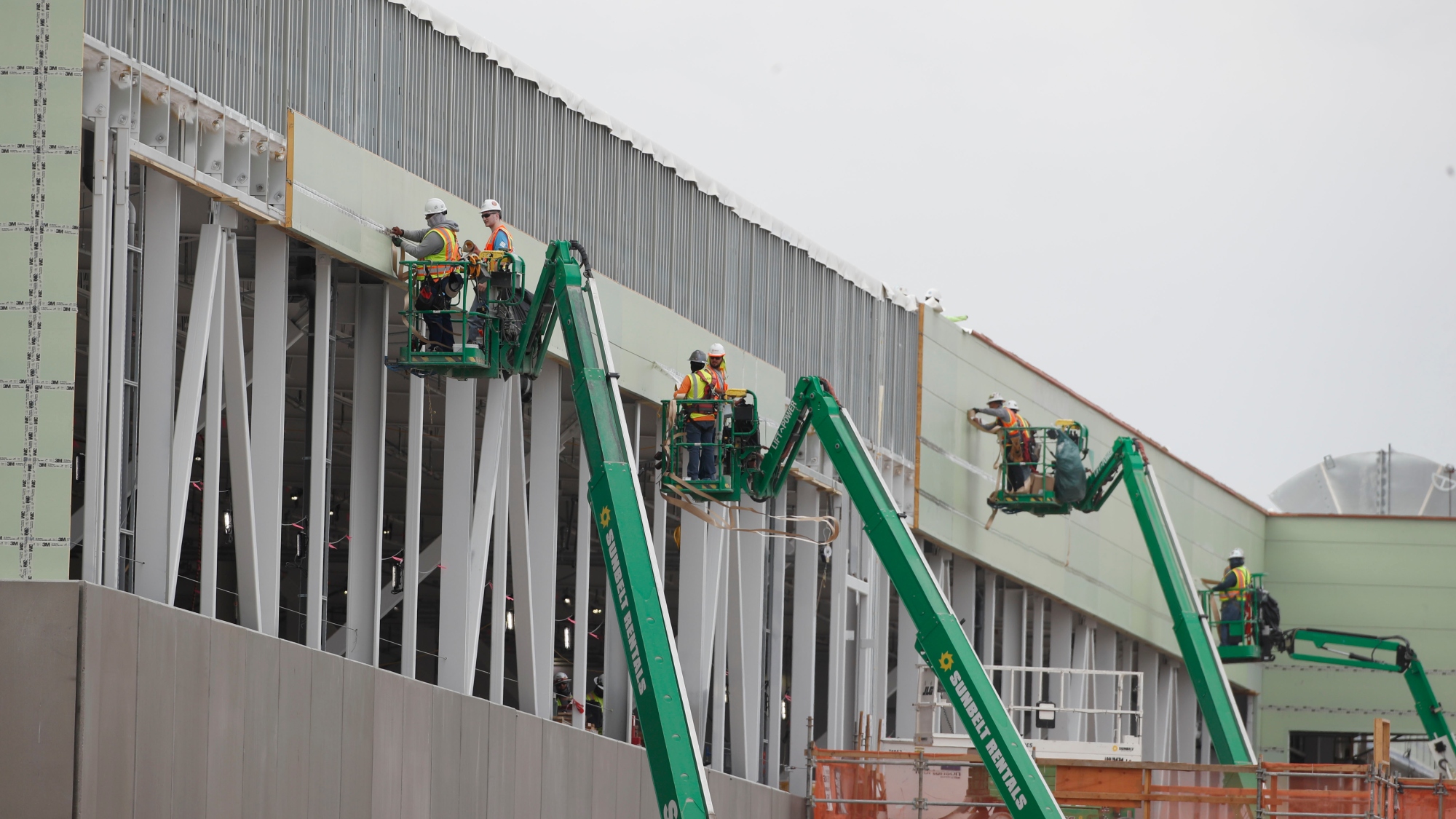
The scale of data center development in Texas is currently unrivaled in the United States. According to an analysis by the data firm Aterio, Texas leads the nation with 142 data centers currently under construction, narrowly edging out Virginia, which has 141. There are already more than 300 operational facilities in the state, with another 100 in various stages of planning.
The Comptroller’s 2025 report highlights the rapid acceleration of these projects:
- 2027-2028 Biennium: Initial projections made three years ago estimated the tax break would cost the state $180 million. The revised 2025 projection now sits at over $3 billion.
- 2030 Projections: By the end of the decade, the annual value of the tax break is expected to hit $1.8 billion.
- Infrastructure Impact: By 2030, one in five data centers is expected to demand more than 1 gigawatt of energy—enough to power roughly 700,000 homes.
To qualify for the current sales tax exemption, data center operators must meet specific benchmarks. For facilities larger than 100,000 square feet, owners must invest $200 million over five years and create at least 20 full-time jobs that pay 120 percent of the area’s median salary. For "mega" data centers exceeding 250,000 square feet, the requirements increase to a $500 million investment and 40 jobs. Despite these high investment figures, critics point out that 20 to 40 jobs is a negligible return for a tax break worth hundreds of millions of dollars per facility.
The Opportunity Cost: What $3.2 Billion Could Fund
The debate over the tax break is intensified by the significant opportunity cost of the lost revenue. Lawmakers are increasingly comparing the $3.2 billion figure to other high-priority state initiatives. For instance, the annual cost of the tax break is now comparable to the projected funding needed for the state’s controversial new school voucher program.
Additionally, the lost revenue could double the capacity of the state’s disaster fund, which provides critical grants to local communities for flood prevention and emergency response. The program is also quickly surpassing the costs of the now-defunct Chapter 313 program, a manufacturing tax abatement initiative that was shuttered by lawmakers last year after it reached a peak cost of over $1 billion annually. The repeal of Chapter 313 set a precedent in the Texas Capitol: no incentive program, no matter how popular with the business community, is immune to cancellation if the costs are deemed to outweigh the public benefit.
Political and Public Backlash
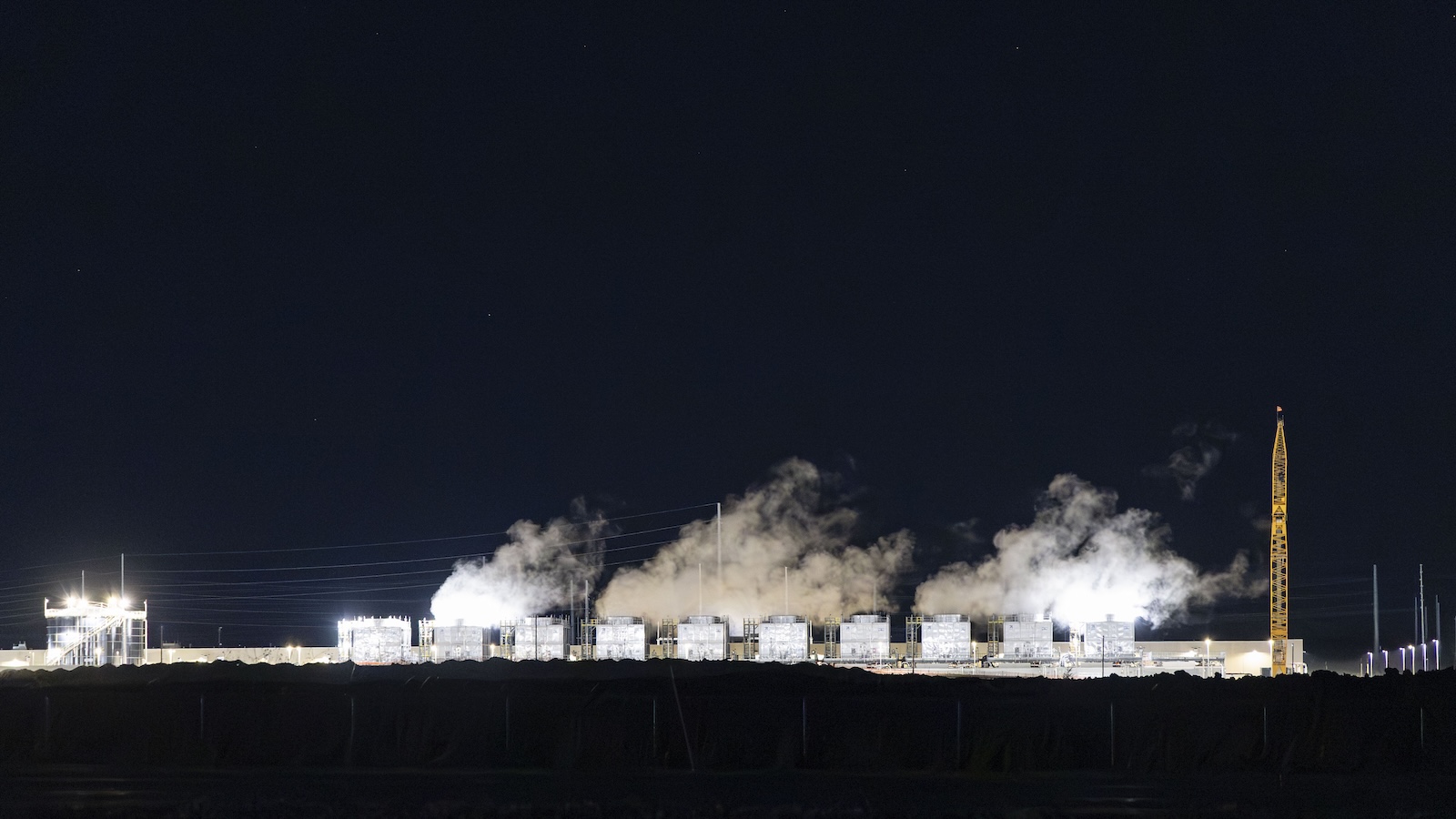
Beyond the halls of the State Capitol, data centers are facing a "not in my backyard" (NIMBY) movement at the local level. Residents in cities such as San Marcos, Amarillo, College Station, and Waco have successfully pressured local officials to block or delay data center projects. Concerns often center on the massive consumption of local water resources for cooling systems and the strain placed on the Texas power grid, managed by ERCOT.
A recent Quinnipiac poll found that 65 percent of Americans oppose the construction of data centers in their immediate communities. This public sentiment has provided political cover for both Republicans and Democrats to question the status quo. Lieutenant Governor Dan Patrick has directed the Senate to study the issue, emphasizing the need for "safeguards" to ensure Texans are the primary beneficiaries of these investments. State Representative Trey Martinez Fischer, a high-ranking Democrat, echoed this sentiment, stating that if tech companies want the benefits of the Texas economy, they must be willing to carry their share of the tax burden.
The Tech Industry Defense
Industry advocates warn that a sudden repeal of the tax break could jeopardize Texas’ status as a global tech leader. The Data Center Coalition, a trade group representing major tech firms, argues that data centers are the "lifeblood" of the modern economy, facilitating everything from financial transactions to telehealth.
Dan Diorio, vice president of state policy for the coalition, argues that the sales tax exemption is a standard tool used by 37 states to remain competitive. He points to an association-commissioned study suggesting that data centers generated $3.2 billion in other state and local taxes in 2024, including property taxes and franchise taxes. However, tax experts like Nathan Jensen, a professor at the University of Texas at Austin, argue that companies often choose Texas for its cheap land and deregulated energy market rather than the tax rate alone. Jensen suggests that even if the state lost half of its potential data center investment by taxing them at full value, the net gain for taxpayers would still be a significant "win."

National Context and Broader Implications
Texas is not alone in rethinking its relationship with the data center industry. Several other states that have historically been friendly to big tech are now pulling back:
- Virginia: Lawmakers are weighing a phase-out of an annual $1.6 billion tax break to help balance the state budget.
- Illinois: Governor JB Pritzker recently announced a two-year suspension of the state’s sales tax break for data centers due to concerns over rising energy costs for residents.
- Georgia and Michigan: Both states are currently debating legislation to curtail or add stricter requirements to their existing incentive programs.
The outcome of the upcoming Texas legislative hearings in July will likely set a tone for the rest of the country. If the most "business-friendly" state in the nation decides that the cost of the AI boom is too high, it could trigger a nationwide re-evaluation of how much public money should be used to subsidize the infrastructure of the digital age.
Chronology of the Texas Data Center Tax Break
- 2013: Texas Legislature passes the original sales tax exemption for data centers (HB 1223), authored by Rep. Harvey Hilderbran.
- 2014–2022: The exemption remains a minor fiscal note, costing the state between $5M and $30M per year.
- 2015: Lawmakers expand the program to include a "mega" data center category for facilities over 250,000 square feet.
- Late 2022: The launch of ChatGPT and other generative AI tools triggers a global "arms race" for high-density computing power.
- 2023: The annual cost of the exemption jumps to $150 million as AI-driven construction begins in earnest.
- 2024: Texas surpasses Virginia in data center construction projects. Local opposition grows in several Texas cities.
- 2025 (Current): The Comptroller revises the biennial cost of the exemption to $3.2 billion.
- July 2026 (Scheduled): The Senate Committee on Finance will hold interim hearings to discuss the future of the tax break.
- January 2027 (Projected): The 90th Texas Legislature convenes, with the repeal or reform of the data center tax break expected to be a top priority.
As the debate intensifies, the central question for Texas lawmakers remains whether the long-term strategic value of being a global AI hub is worth the multi-billion-dollar price tag, or if the state’s resources would be better spent on the human infrastructure of schools, roads, and emergency services.