


How Trump could boost deep sea mining? This question explores potential strategies for unlocking the vast mineral wealth of the ocean floor. From innovative technologies to international agreements, and considering the environmental impact, we’ll examine various facets of this emerging industry. This isn’t just about mining; it’s about creating economic opportunities and potentially reshaping the global landscape.
The article will delve into potential economic incentives, technological advancements, international cooperation, environmental considerations, regulatory frameworks, public perception, and relevant case studies. Tables illustrating key data points will be included for a comprehensive understanding.
Potential Economic Incentives
Deep-sea mining, while promising, faces significant hurdles. A key to unlocking its potential lies in creating compelling economic incentives that attract private investment and drive technological innovation. These incentives must be tailored to the unique challenges and opportunities presented by this frontier industry. Government support, in the form of financial and regulatory adjustments, is crucial for fostering a favorable environment for deep-sea mining development.
Tax Breaks and Subsidies
Government incentives are essential for attracting investment in deep-sea mining. Tax breaks, such as deductions for capital investments in mining equipment or exploration, can significantly reduce the financial burden on companies. Subsidies, which provide direct financial support, can be targeted towards research and development, technological innovation, and environmental remediation efforts. These incentives must be carefully designed to maximize their effectiveness while ensuring fairness and transparency.
For instance, subsidies could be tied to specific environmental protection measures or milestones in technological advancement.
Adapting Financial Incentives from Other Industries
Financial incentives utilized in other industries, such as renewable energy or advanced manufacturing, can be adapted for deep-sea mining. These incentives often involve tax credits, grants, and loan guarantees. For example, tax credits for the development of new deep-sea mining technologies, similar to those offered for renewable energy projects, could stimulate innovation. Loan guarantees for deep-sea mining ventures could reduce risk for investors, thereby encouraging participation.
Reducing Regulatory Burdens
Regulatory burdens can hinder investment in deep-sea mining. Streamlining permitting processes, reducing bureaucratic hurdles, and establishing clear regulatory frameworks can attract private investment and foster innovation. A streamlined regulatory process can reduce project timelines and costs, thus making deep-sea mining ventures more appealing to potential investors. This can include streamlining environmental impact assessments, minimizing overlaps between national and international regulations, and creating a single, unified permitting process.
Incentivizing Private Sector Participation
Attracting private sector participation in deep-sea mining ventures requires a comprehensive approach. This includes providing clear and predictable regulatory frameworks, minimizing bureaucratic hurdles, and offering favorable financial incentives. Public-private partnerships (PPPs) can play a vital role in fostering collaboration between government agencies and private companies. Specific examples of incentivizing private sector participation include competitive bidding processes for exploration permits and tax incentives linked to job creation in mining-related industries.
Government Funding for Research and Development
Government funding for research and development (R&D) in deep-sea mining is crucial for driving technological advancements. R&D investments can focus on developing environmentally friendly extraction techniques, improving underwater robotics, and enhancing the safety of mining operations. Dedicated research funds and grants for innovative deep-sea mining technologies can foster rapid advancements and make the industry more sustainable.
Comparison of Economic Incentives Across Regions
Different countries and regions offer varying degrees of economic incentives for deep-sea mining. Some jurisdictions may offer more generous tax breaks or subsidies, while others might prioritize environmental regulations. Comparing and contrasting these incentives is crucial for understanding the global landscape and identifying optimal strategies for attracting investment. Comparative analysis should consider tax rates, regulatory frameworks, and environmental protection standards.
This understanding can help in formulating policies that effectively encourage deep-sea mining while minimizing negative environmental impacts.
Potential Economic Benefits for the US
| Benefit | Description | Estimated Impact (Example) |
|---|---|---|
| Job Creation | New jobs in mining, research, engineering, and support industries. | Creation of 10,000-50,000 jobs in the first decade. |
| Revenue Generation | Tax revenue from mining operations, royalties, and associated industries. | $1-5 billion annually in tax revenue. |
| Technological Advancement | Innovation in underwater robotics, materials science, and environmental monitoring. | Significant advancement in related fields. |
| Resource Security | Ensuring access to critical minerals. | Reduces reliance on foreign imports. |
Technological Advancements
Deep-sea mining, while promising economically, faces significant technological hurdles. Overcoming these challenges is crucial for both the viability and sustainability of the industry. Innovative technologies are needed to improve efficiency, ensure safety, and minimize environmental impact. This section explores advancements in key areas of deep-sea mining.
Automation and Robotics
Automation is critical for deep-sea mining operations. Autonomous underwater vehicles (AUVs) and remotely operated vehicles (ROVs) are key components. They can perform tasks such as surveying the seabed, mapping mineral deposits, and even conducting initial extraction, reducing the need for human divers in hazardous conditions. This not only improves safety but also reduces operational costs and enhances efficiency.
The development of more sophisticated and robust robotic systems is essential for complex deep-sea mining operations.
Advanced Materials and Equipment
New materials are needed to withstand the immense pressure and corrosive environments of the deep sea. Specialized alloys and composite materials can be designed to construct durable mining equipment, ensuring longer operational life and reducing maintenance costs. Innovative equipment, such as specialized suction systems and high-pressure pumps, will be necessary for effective extraction. Examples include the development of more efficient and durable sonar systems, enabling better detection and mapping of mineral deposits.
Underwater Communication
Reliable underwater communication is paramount for remote operation of deep-sea mining equipment. Improved acoustic communication systems and fiber optic cables will enhance real-time data transfer, enabling remote control and monitoring of mining operations. This will facilitate better safety protocols and operational efficiency. The advancements in underwater communication will be essential for maintaining control over equipment during the mining process.
Minimizing Environmental Impact
Minimizing the environmental impact of deep-sea mining requires innovative technologies. Methods for precisely targeting and extracting mineral deposits are essential to minimize the disruption of deep-sea ecosystems. This includes the development of specialized mining tools that precisely target and extract minerals with minimal disturbance of surrounding sediment and marine life. Advanced sediment control systems will help contain any disturbed material, preventing it from spreading throughout the ocean.
Implementing these technologies will be critical to mitigating the ecological impact of deep-sea mining.
Comparative Analysis of Deep Sea Mining Technologies
| Technology | Environmental Impact (Scale of 1-5, 1 being lowest) | Cost (Scale of 1-5, 1 being lowest) |
|---|---|---|
| Autonomous Underwater Vehicles (AUVs) | 2 | 3 |
| Remotely Operated Vehicles (ROVs) | 2 | 3 |
| Subsea Mining Systems (with advanced sediment control) | 3 | 4 |
| Hydraulic Extraction Systems | 4 | 2 |
The table above presents a simplified comparison. Environmental impact is assessed based on potential damage to the seabed and marine life, while cost reflects the initial investment and operational expenses. These are estimations and can vary greatly depending on the specific application and site conditions. Factors like the scale of the operation, the complexity of the seabed, and the specific minerals targeted can significantly influence both the environmental and economic aspects of deep-sea mining.
International Cooperation and Agreements: How Trump Could Boost Deep Sea Mining
Deep-sea mining, while potentially lucrative, necessitates a robust framework of international cooperation and agreements to ensure responsible resource extraction and environmental protection. This involves not only establishing clear regulations but also fostering collaboration among nations, research institutions, and international organizations. Without a shared commitment to sustainable practices, the potential for ecological damage and disputes over resource rights is significant.
Potential International Collaborations
International collaborations for deep-sea mining research and regulation are crucial. Joint research projects involving oceanographic institutions, mining technology specialists, and environmental experts can yield valuable insights into the unique challenges and opportunities of deep-sea mining. These collaborations can also accelerate the development of innovative technologies and best practices for responsible mining operations. For example, international consortia could develop and implement standardized monitoring protocols for environmental impacts.
Such initiatives will build trust and understanding, paving the way for effective regulations.
Existing International Agreements
Several international agreements relate to deep-sea mining, although none currently explicitly address deep-sea mineral extraction. The United Nations Convention on the Law of the Sea (UNCLOS) is the primary legal framework governing ocean activities. UNCLOS Artikels the rights and responsibilities of coastal states within their Exclusive Economic Zones (EEZs) and in the high seas. However, UNCLOS lacks specific provisions for deep-sea mining, leaving crucial regulatory gaps that require urgent attention.
Furthermore, existing agreements on marine biodiversity and environmental protection, while not directly focused on deep-sea mining, provide a framework for incorporating environmental considerations into any future regulatory regime.
Role of International Organizations
International organizations play a vital role in overseeing deep-sea mining activities. Organizations like the International Seabed Authority (ISA) are tasked with regulating activities in the Area, the portion of the seabed beyond national jurisdictions. The ISA’s role in developing regulations, conducting environmental assessments, and overseeing mining operations is crucial. The ISA’s effectiveness hinges on its ability to engage with and garner support from the international community.
The ISA also needs to ensure transparency and accountability in its regulatory processes.
Trump might incentivize deep-sea mining by loosening environmental regulations, a controversial tactic. However, his recent stance on trump emergency abortion guidance highlights a potential shift in his approach to regulations in general, which could surprisingly hinder deep sea mining development in the long run. Ultimately, the effectiveness of his potential mining boost will depend on various factors, including the broader political climate.
Successful Partnerships in Other Resource Sectors
Successful international partnerships in other resource extraction sectors, such as oil and gas exploration, offer valuable lessons for deep-sea mining. These collaborations often involve the development of shared standards, data-sharing protocols, and dispute resolution mechanisms. By learning from these successful models, the ISA and other international bodies can establish robust frameworks for deep-sea mining. The successful collaboration between countries in the Arctic on managing shared resources is another noteworthy example, showcasing the potential for international cooperation to address complex issues.
Challenges to International Cooperation
Several challenges hinder international cooperation in deep-sea mining. Differing national interests and priorities can lead to disagreements on regulatory frameworks and resource allocation. Ensuring equitable access to deep-sea resources for all nations is a significant challenge, particularly for developing countries. Building trust and consensus among diverse stakeholders, including mining companies, environmental groups, and governments, is also crucial.
Furthermore, the sheer complexity of deep-sea ecosystems and the potential for irreversible environmental damage necessitate cautious and comprehensive regulatory approaches.
Trump might incentivize deep sea mining by streamlining permitting processes and potentially offering tax breaks for companies involved. Considering his past actions and business strategies, a look at elon musk trump takeaways reveals some potential parallels, hinting at how he might approach the issue. Ultimately, his influence on the industry’s future depends on his ability to garner support from key stakeholders and navigate the complex regulatory landscape.
Table of International Treaties Concerning Marine Resources
| Treaty/Agreement | Focus | Relevance to Deep-Sea Mining |
|---|---|---|
| United Nations Convention on the Law of the Sea (UNCLOS) | Governing ocean activities, including EEZs and the high seas | Provides the foundational legal framework, but lacks specific provisions for deep-sea mining. |
| Convention on Biological Diversity | Protecting biodiversity | Provides a framework for incorporating biodiversity considerations into deep-sea mining regulations. |
| International Convention for the Prevention of Pollution from Ships (MARPOL) | Preventing marine pollution from ships | May have indirect relevance to deep-sea mining if the activities cause pollution. |
| London Convention | Regulating the dumping of wastes at sea | May apply to waste disposal during deep-sea mining. |
Environmental Impact Considerations
Deep-sea mining, while potentially lucrative, carries significant environmental risks. Understanding these risks and developing effective mitigation strategies are crucial for responsible resource extraction. The unique ecosystems of the deep sea are vulnerable to disruption, and the long-term consequences of mining operations are not fully understood. Careful consideration of potential impacts, coupled with proactive measures, is essential for a sustainable approach.
Potential Environmental Risks of Deep Sea Mining
Deep-sea mining operations pose several significant environmental risks. Sediment plumes, generated by the mining process, can smother benthic organisms, disrupting food chains and reducing biodiversity. Noise pollution from mining equipment can affect marine mammals and fish, disrupting communication and navigation. Chemical contaminants released during mining activities, such as heavy metals, can bioaccumulate in the food web, potentially impacting human health through seafood consumption.
The physical removal of seafloor habitats can directly destroy critical ecosystems and reduce biodiversity. These risks, combined with the inherent difficulty of studying and monitoring the deep sea, highlight the need for stringent regulations and robust monitoring protocols.
Methods for Mitigating Environmental Damage
Effective mitigation strategies are essential for minimizing the environmental impact of deep-sea mining. These strategies should encompass the entire mining lifecycle, from exploration to closure. Implementing advanced technologies for sediment control, such as precise water jetting or sediment containment systems, can significantly reduce the impact of sediment plumes. Utilizing noise-attenuating equipment and operating at quieter times of day can lessen the impact on marine life.
Implementing strict water quality monitoring and control measures, including the use of specialized filtration systems, can prevent the release of harmful chemicals into the environment. Developing careful site selection criteria, including avoiding areas with high biodiversity or critical habitats, is crucial.
Potential Impacts on Marine Ecosystems and Biodiversity
Deep-sea mining can have profound impacts on marine ecosystems and biodiversity. The loss of seafloor habitats directly impacts the organisms that rely on these habitats for shelter, breeding, and feeding. Sediment plumes can smother benthic communities, while noise pollution can disrupt communication and navigation patterns for marine mammals. The bioaccumulation of heavy metals in the food web can pose a threat to both marine life and human health through the consumption of contaminated seafood.
These impacts can have cascading effects throughout the ecosystem, leading to long-term and irreversible damage. Understanding these intricate interactions is critical for effective mitigation strategies.
Examples of Successful Environmental Remediation Efforts in Other Industries
While deep-sea mining presents unique challenges, lessons from other industries can inform mitigation strategies. Oil spill response efforts, for example, demonstrate the importance of rapid response and advanced cleanup technologies. Similarly, the remediation of contaminated soil from industrial sites provides insights into long-term restoration efforts. These examples highlight the importance of proactive planning, robust monitoring, and the development of effective cleanup strategies.
However, the unique challenges of the deep sea, such as remoteness and inaccessibility, require tailored solutions.
Comparison of Environmental Impacts of Different Deep Sea Mining Technologies
Different deep-sea mining technologies have varying degrees of environmental impact. Hydraulic mining, for example, can generate substantial sediment plumes, while mechanical mining methods may cause less immediate disruption. Further research is needed to fully understand the long-term impacts of each technology. Careful assessment of potential impacts, along with comparative analysis of different mining approaches, is crucial for responsible resource extraction.
Integration of Mitigation Solutions into Deep Sea Mining Operations
Integrating mitigation solutions into deep-sea mining operations requires a comprehensive approach. This involves incorporating environmental safeguards into every stage of the mining process, from exploration and permitting to operation and closure. Environmental impact assessments should be rigorous and incorporate the latest scientific understanding of deep-sea ecosystems. Real-time monitoring of sediment plumes, noise levels, and water quality is essential for adaptive management and immediate response to any unforeseen environmental issues.
Regular reporting and transparency are also crucial for public accountability and stakeholder engagement.
Potential Environmental Safeguards and Monitoring Procedures
| Safeguard | Monitoring Procedure |
|---|---|
| Sediment Plume Containment | Real-time monitoring of plume size, density, and dispersal using sonar and optical sensors. |
| Noise Pollution Control | Regular acoustic surveys to assess noise levels and impacts on marine mammals. |
| Chemical Spill Prevention | Strict adherence to chemical handling procedures and regular water quality analysis. |
| Habitat Protection | Detailed mapping of seafloor habitats and avoidance of critical areas during mining operations. |
| Closure and Restoration | Post-mining site assessments and implementation of restoration measures, including sediment re-burial and habitat creation. |
Regulatory Framework and Policy
The nascent deep-sea mining industry faces a critical need for robust and comprehensive regulations. Current frameworks are largely nonexistent, creating uncertainty for investors and potentially exposing vulnerable marine ecosystems to exploitation. A well-defined regulatory framework is essential for ensuring responsible resource extraction, safeguarding biodiversity, and fostering international cooperation. Establishing clear guidelines and standards will be crucial for minimizing environmental damage and maximizing the potential economic benefits.The current regulatory landscape for deep-sea mining activities is characterized by a significant lack of international consensus.
Existing regulations primarily focus on the surface, and existing frameworks, like those governing land-based mining, are inadequate for the unique challenges of the deep sea. This gap necessitates the development of tailored regulations that address the specific environmental considerations, technological complexities, and geopolitical aspects of deep-sea mining. The absence of a globally accepted regulatory framework poses substantial risks to environmental sustainability and equitable resource management.
Current Regulatory Landscape
International law, while recognizing the importance of the deep seabed, lacks specific provisions for deep-sea mining. The United Nations Convention on the Law of the Sea (UNCLOS) designates the deep seabed as the “common heritage of mankind,” but it does not detail the necessary regulatory mechanisms. Existing national and regional regulations, if any, are limited to the coastal zones and do not address the specific challenges of deep-sea mining.
This lack of a global standard results in a fragmented and potentially conflicting regulatory environment.
Potential Policy Changes
To support deep-sea mining responsibly, policy changes are essential. These should include the establishment of clear environmental impact assessments, stringent permitting procedures, and robust monitoring mechanisms. Specific regulations concerning the size and scope of mining operations, waste disposal procedures, and the protection of vulnerable marine habitats need to be detailed. The development of a robust international framework for technology transfer and knowledge sharing will be critical to ensure that deep-sea mining operations are conducted using the most advanced and environmentally sound technologies.
International standards for the evaluation and classification of mining risks should be established.
Transparency and Accountability
Transparency and accountability are crucial in deep-sea mining regulations. This involves public disclosure of environmental impact assessments, the involvement of stakeholders, and the establishment of independent oversight bodies. Mechanisms for dispute resolution and redress should be clearly defined and accessible. The creation of a transparent system for monitoring and evaluating the environmental impacts of mining operations is vital for mitigating potential harm.
Role of Government Agencies
Government agencies play a pivotal role in regulating deep-sea mining activities. These agencies must establish clear guidelines for the permitting process, ensure compliance with environmental regulations, and implement monitoring mechanisms to track the environmental impacts of mining. International cooperation between agencies is critical for developing uniform standards and facilitating knowledge exchange. These agencies should be empowered with the necessary resources and expertise to effectively manage and oversee deep-sea mining operations.
Successful Regulatory Frameworks in Other Industries
Successful regulatory frameworks in other resource extraction industries, such as land-based mining, offer valuable lessons. These frameworks often incorporate environmental impact assessments, stringent permitting procedures, and mechanisms for monitoring and enforcing compliance. The key is adapting these best practices to the unique challenges of the deep sea. Regulations should address potential environmental risks and ensure the responsible use of resources.
Comparative Regulatory Frameworks
| Country/Region | Existing Regulations (Deep Sea Mining) | Potential Policy Changes | Environmental Considerations |
|---|---|---|---|
| United States | Limited to coastal zones | Develop deep-sea mining regulations, emphasizing environmental impact assessments | Potential impacts on deep-sea ecosystems |
| European Union | No specific deep-sea mining regulations | Harmonize policies across member states, incorporate environmental protection | Impact on marine biodiversity and fisheries |
| China | Limited information available | Develop national regulations, prioritize environmental impact assessments | Potential damage to deep-sea ecosystems |
Public Perception and Stakeholder Engagement
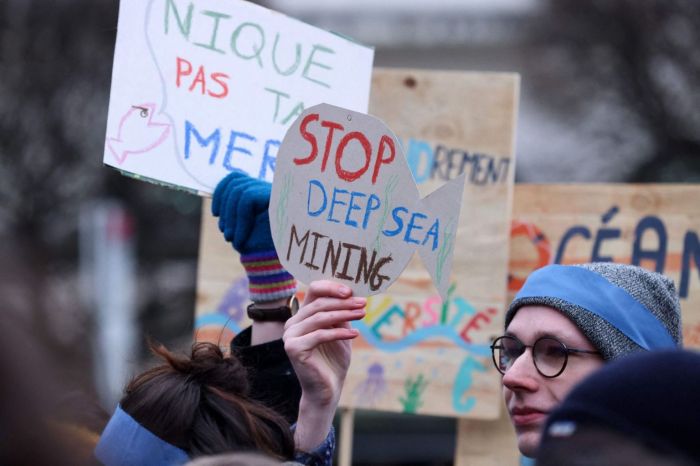
Deep-sea mining, while promising economic benefits, faces significant hurdles in gaining public acceptance. Understanding and addressing public concerns, fostering trust among stakeholders, and promoting education are crucial for its responsible development. This section explores strategies to cultivate positive public perception and facilitate effective stakeholder engagement.Public concerns about deep-sea mining often center on environmental impacts. The unknown effects on fragile ecosystems, the potential for irreversible damage to biodiversity, and the lack of comprehensive monitoring mechanisms raise legitimate anxieties.
These concerns are amplified by a general lack of understanding of the technology and its implications. Addressing these fears requires transparent communication and proactive engagement with diverse groups.
Potential Public Concerns Regarding Deep Sea Mining
Public concerns regarding deep-sea mining often stem from the unknown ecological consequences of large-scale extraction. The deep sea is a largely unexplored environment, and the potential for irreversible damage to fragile ecosystems and biodiversity is a major concern. The absence of comprehensive monitoring mechanisms and the possibility of unforeseen environmental impacts further amplify these anxieties. A lack of clear regulatory frameworks and enforcement mechanisms also fuels public skepticism.
Moreover, the potential displacement of marine life and the disruption of intricate ecological webs are significant considerations.
Methods for Addressing Public Concerns about Deep Sea Mining, How trump could boost deep sea mining
Transparent communication, proactive engagement, and public education are essential to address public concerns. This involves fostering open dialogue, providing readily accessible information about the technology and its environmental impacts, and emphasizing the commitment to responsible mining practices. Involving independent scientific experts in the process and sharing their findings openly builds credibility. Collaboration with environmental organizations and community groups in the development and implementation of mitigation strategies is vital.
Furthermore, transparent reporting on environmental monitoring and the use of best practices are essential to assuage public concerns.
Examples of Successful Stakeholder Engagement Strategies in Other Industries
Successful stakeholder engagement in other industries, such as renewable energy and infrastructure projects, provides valuable insights. These strategies often involve public forums, community workshops, and targeted outreach programs. Effective communication, active listening, and a demonstrated commitment to addressing concerns are crucial. Transparent reporting mechanisms and clear lines of communication between stakeholders and project developers are critical elements.
These strategies can be adapted to the deep-sea mining context to build trust and foster understanding.
Importance of Public Education and Outreach about Deep Sea Mining
Public education and outreach programs are vital for promoting understanding and acceptance of deep-sea mining. These programs should provide accessible information about the technology, its potential benefits and risks, and the importance of responsible practices. They should emphasize the need for careful environmental assessments and monitoring, as well as the potential for economic development. Educational materials should be tailored to different audiences, from policymakers and scientists to local communities and the general public.
Strategies to Build Trust Among Stakeholders
Building trust among stakeholders requires a multi-faceted approach. Transparency in all aspects of the project, including environmental impact assessments, mining plans, and monitoring protocols, is paramount. Independent scientific review and public participation in decision-making processes are crucial elements. Establishing clear communication channels between stakeholders and project developers is vital to address concerns and foster dialogue. Demonstrating a commitment to sustainability and responsible practices further strengthens trust.
Trump could potentially boost deep sea mining by prioritizing it as a national strategic interest. He might champion new exploration initiatives and streamline the permitting process. This could be seen as a parallel to the intriguing and slightly unsettling ending credits scene in the popular show, “Sinners,” which you can explore in detail here: sinners ending credits scene explained.
Ultimately, though, significant investment and international cooperation would be key to making any real progress in this field.
Public Awareness Campaigns Concerning Deep Sea Mining
| Campaign Name | Target Audience | Key Activities | Expected Outcomes |
|---|---|---|---|
| “Ocean Guardians” | General Public | Interactive online exhibits, public forums, educational videos | Increased public awareness of deep-sea ecosystems and mining impacts |
| “Responsible Mining Initiative” | Mining Companies | Workshops, best practice guidelines, certification programs | Promotion of environmentally sound mining practices |
| “Deep Sea Dialogue” | Scientists, policymakers, NGOs | International conferences, workshops, collaborative research projects | Development of standardized environmental monitoring and mitigation strategies |
Case Studies and Historical Precedents
Deep-sea mining, while promising, isn’t a completely new endeavor. Humanity has a history of extracting resources from challenging environments, and understanding past successes and failures is crucial for navigating the complexities of the deep ocean. Lessons learned from these historical precedents can inform responsible practices, minimizing potential ecological damage and maximizing economic benefits. Analyzing similar resource extraction efforts offers valuable insights into the potential challenges and opportunities associated with deep-sea mining.
Historical Precedents in Resource Extraction
Past mining activities, both on land and in shallow waters, provide valuable lessons. Examining the environmental impacts, economic returns, and regulatory frameworks of these endeavors can help us anticipate potential issues in deep-sea mining. Understanding how these historical extraction activities have shaped modern environmental policies is critical. Different historical contexts, technological capabilities, and societal values have led to varying outcomes in resource extraction.
Deep-Sea Mining Case Studies: Successes and Failures
The history of resource extraction contains both successful and unsuccessful projects. Examining these case studies provides insights into the critical factors driving success or failure, including regulatory frameworks, technological advancements, and public perception. Successful and unsuccessful ventures have contributed valuable data for understanding the complexity of deep-sea mining and its long-term impacts.
Successful Deep-Sea Mining Projects
- Limited historical examples of successful deep-sea mining exist, primarily focused on manganese nodules. While some small-scale projects have operated, large-scale extraction remains largely untested. These early operations often lacked comprehensive environmental assessments, highlighting the need for robust regulatory frameworks in modern deep-sea mining.
Unsuccessful Deep-Sea Mining Projects
- The lack of large-scale deep-sea mining successes is largely due to technical challenges and economic feasibility concerns. Environmental concerns and public opposition have also played a significant role in hindering the development of large-scale operations. These projects often faced difficulties in managing the complex ecological interactions of the deep sea. Lack of adequate regulatory frameworks and public support has also been a factor.
Lessons Learned from Previous Resource Extraction Efforts
Lessons from previous resource extraction endeavors offer crucial guidance for deep-sea mining. These include the importance of thorough environmental impact assessments, robust regulatory frameworks, stakeholder engagement, and long-term monitoring programs. The successes and failures of past efforts provide a framework for developing sustainable and responsible deep-sea mining practices.
Impact of Past Deep-Sea Mining Activities
- The limited deep-sea mining activity to date has not resulted in significant, easily quantifiable impacts. However, the potential for large-scale deep-sea mining to disrupt fragile ecosystems is substantial, requiring rigorous assessment and mitigation strategies. Past activities, though limited, offer valuable insights into the complexities of managing these unique ecosystems.
Summary Table of Historical Resource Extraction Projects
| Project Name | Resource | Location | Outcome | Key Lessons |
|---|---|---|---|---|
| Example Manganese Nodule Mining Project (hypothetical) | Manganese Nodules | Specific Deep Sea Location | Limited Success, Economic Challenges | Need for robust economic models, environmental impact assessments, and regulatory frameworks. |
| Another Hypothetical Shallow Water Mining Project | Sand/Gravel | Shallow Water Location | Success in the Short Term, Long-Term Environmental Damage | Careful monitoring and mitigation strategies are needed to avoid long-term ecological consequences. |
Final Wrap-Up

In conclusion, how Trump could boost deep sea mining hinges on a multifaceted approach that balances economic gains with environmental responsibility. Innovative technologies, strategic partnerships, and transparent regulations are crucial. The potential rewards are substantial, but careful consideration of environmental impact is paramount. Ultimately, success hinges on global collaboration and a commitment to sustainable practices. This exploration of the complexities surrounding deep sea mining provides a comprehensive overview for informed discussion.