Trump Administration’s Emergency Abortion Guidance: A Deep Dive into Policy and Controversy
The Trump administration’s approach to reproductive healthcare, particularly concerning abortion access, was marked by significant policy shifts and extensive legal challenges. A key area of focus during this period was the administration’s issuance and enforcement of guidance related to emergency abortion care, a critical component of reproductive health services. This guidance, often implemented through federal agencies like the Department of Health and Human Services (HHS) and its subsidiary agencies, aimed to restrict access to abortion in emergency situations, sparking widespread debate and legal battles. Understanding the nuances of this guidance, its legal underpinnings, and its real-world impact requires a detailed examination of the policies themselves, the arguments made by proponents and opponents, and the subsequent legal ramifications.
At the core of the Trump administration’s stance on abortion was a commitment to restricting access to the procedure, aligning with the broader agenda of many conservative religious and political groups. This commitment translated into a series of policy directives and regulatory actions designed to limit the availability of abortion services. While outright bans on abortion were largely the purview of individual states, the federal government held significant sway through its regulatory power, funding mechanisms, and pronouncements on healthcare standards. The guidance issued regarding emergency abortions was a particularly contentious aspect of this strategy. Proponents argued that such guidance was necessary to protect unborn life, even in emergency medical situations, and to ensure that healthcare providers were not compelled to perform abortions against their moral or religious objections. They often invoked religious freedom protections and the sanctity of life as justifications for these policies. Opponents, conversely, viewed this guidance as a direct threat to women’s health and safety, arguing that it interfered with the doctor-patient relationship and could lead to severe health consequences, including death, for individuals experiencing pregnancy-related emergencies.
The legal framework surrounding abortion access in the United States has been in constant flux, with landmark Supreme Court decisions like Roe v. Wade (1973) and Planned Parenthood v. Casey (1992) establishing and then modifying a woman’s constitutional right to an abortion. However, even under these precedents, states retained the ability to regulate abortion to some extent, and federal policy could influence the landscape of reproductive healthcare. The Trump administration sought to leverage this existing legal framework and, in some instances, to test its boundaries. The guidance concerning emergency abortions often hinged on interpretations of federal laws, such as the Emergency Medical Treatment and Labor Act (EMTALA), which mandates that hospitals provide stabilizing treatment to individuals experiencing medical emergencies, including those related to pregnancy. The debate often centered on whether abortion qualified as "stabilizing treatment" under EMTALA when a pregnant person’s life or health was at risk.
One of the most significant actions taken by the Trump administration in this regard was the issuance of guidance that appeared to prioritize fetal life over the immediate health needs of the pregnant person in emergency situations. This guidance often emanated from the Office for Civil Rights (OCR) within HHS, which is responsible for enforcing federal civil rights laws, including those related to conscience and religious freedom. The administration’s interpretation of these laws suggested that healthcare providers could refuse to provide abortion services, even if it was medically necessary to save the patient’s life, if doing so conflicted with their religious or moral beliefs. This interpretation directly challenged established medical consensus and the ethical obligations of healthcare providers to offer all medically appropriate care. Medical organizations, such as the American College of Obstetricians and Gynecologists (ACOG), consistently opposed such interpretations, asserting that in cases of ectopic pregnancy, incomplete abortion, or other life-threatening obstetric emergencies, abortion is often the only medically sound course of action.
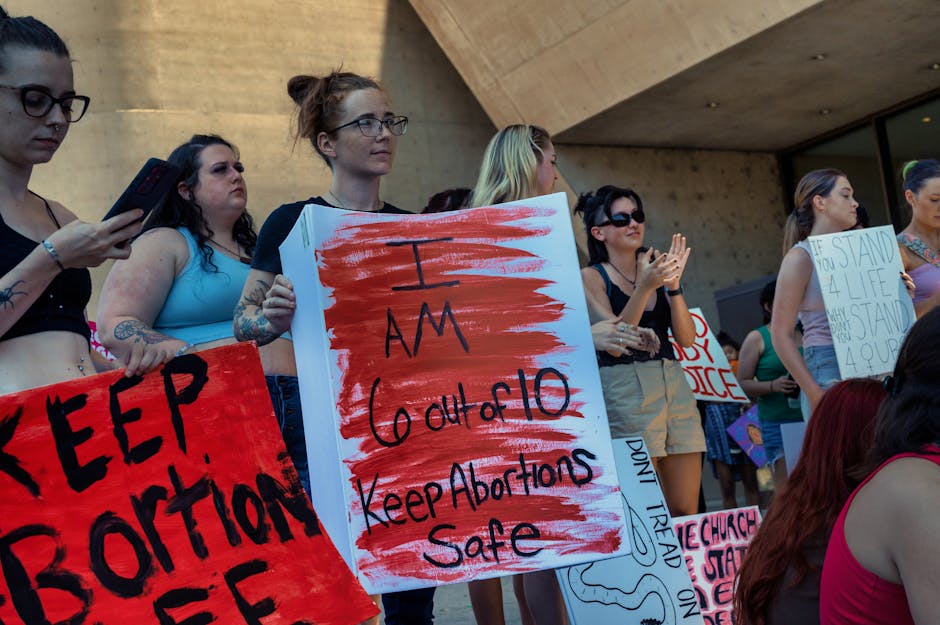
The rhetoric surrounding these policies was highly charged, with proponents often framing the issue as a moral imperative to protect the unborn. Phrases like "pro-life" were central to the messaging, emphasizing the perceived value of fetal life. Conversely, opponents used terms like "women’s health" and "bodily autonomy" to highlight the potential dangers and infringements on individual rights. The political polarization of the abortion issue meant that any guidance or policy change from the federal government was immediately met with intense scrutiny and partisan responses. The Trump administration, with its vocal anti-abortion base, was particularly adept at leveraging this polarization to advance its agenda.
The legal challenges to the Trump administration’s emergency abortion guidance were swift and multifaceted. Numerous lawsuits were filed by civil rights organizations, reproductive rights advocacy groups, and individual healthcare providers. These lawsuits often argued that the guidance violated EMTALA, infringed upon constitutional rights, and created an untenable situation for healthcare providers who were forced to choose between potentially violating federal law or their professional ethics. The courts, in turn, issued conflicting rulings, reflecting the deeply divided legal and societal views on abortion. Some rulings supported the administration’s position, while others sided with plaintiffs, temporarily blocking the enforcement of certain guidance documents. This legal back-and-forth created a climate of uncertainty for both healthcare providers and patients.
A key legal battleground involved the interpretation of conscience protection laws, such as the Church Amendments and Section 1553 of the Affordable Care Act. These laws generally prohibit requiring healthcare providers or institutions to provide services that violate their religious or moral objections. The Trump administration’s interpretation of these laws was notably broad, suggesting that even in emergency situations where a patient’s life was at risk, providers could opt out of providing abortion care. This interpretation was challenged by those who argued that such broad exemptions could lead to a situation where life-saving care was withheld, thereby undermining the very purpose of emergency medical services. The legal question became whether these conscience protections could be invoked to override a provider’s duty to offer medically necessary emergency care.
The impact of the Trump administration’s guidance on emergency abortion care was felt most acutely by vulnerable populations. Individuals in rural areas, those with limited financial resources, and marginalized communities often faced greater barriers to accessing healthcare, and these policies exacerbated those challenges. When emergency abortion guidance was unclear or restrictive, it could lead to delays in care, increased travel distances to facilities willing to provide the service, and ultimately, poorer health outcomes. Healthcare providers in states with restrictive abortion laws, in particular, found themselves in a precarious position, trying to navigate complex federal guidance alongside state-level restrictions. The fear of legal repercussions, coupled with the ethical dilemma of potentially withholding life-saving care, created significant stress and uncertainty within the medical community.
Furthermore, the Trump administration’s actions often involved rescinding or revising previous guidance that had affirmed abortion access as essential emergency care. For instance, in 2019, HHS, under Trump appointee Alex Azar, issued a rule that clarified EMTALA’s requirements, stating that Medicare-participating hospitals must provide abortion services when necessary to stabilize a patient’s emergency medical condition, regardless of state law. However, the administration’s broader agenda and subsequent actions often seemed to contradict or undermine such clarifications, leading to confusion and inconsistent application of policy. The internal inconsistencies within the administration’s approach fueled the ongoing legal and political battles.
The political motivations behind these policies were undeniable. The Trump administration actively courted the anti-abortion vote, and these policy decisions were often seen as fulfilling campaign promises. The appointment of conservative judges to federal courts, including the Supreme Court, was another key strategy to advance the anti-abortion agenda. While the guidance on emergency abortions was a federal-level intervention, it often complemented and amplified the efforts of state legislatures to restrict abortion access. The interplay between federal and state policies created a complex and challenging landscape for reproductive healthcare.
In conclusion, the Trump administration’s emergency abortion guidance represented a significant and controversial chapter in the ongoing debate over reproductive rights in the United States. Through a series of policy directives and interpretations of federal law, the administration sought to restrict access to abortion services, even in emergency situations. This approach was met with strong opposition from healthcare providers, civil rights organizations, and reproductive rights advocates, who argued that it endangered women’s health and violated established medical ethics and legal precedents. The ensuing legal battles, characterized by conflicting court rulings and ongoing challenges, underscored the deep societal divisions on this issue. The ultimate impact of this guidance was a period of heightened uncertainty and fear for both healthcare providers and patients, particularly those in vulnerable situations, highlighting the critical importance of clear, medically sound, and ethically grounded policies in emergency reproductive healthcare. The legacy of these policies continued to shape the discourse and legal landscape of abortion access long after the administration concluded.
