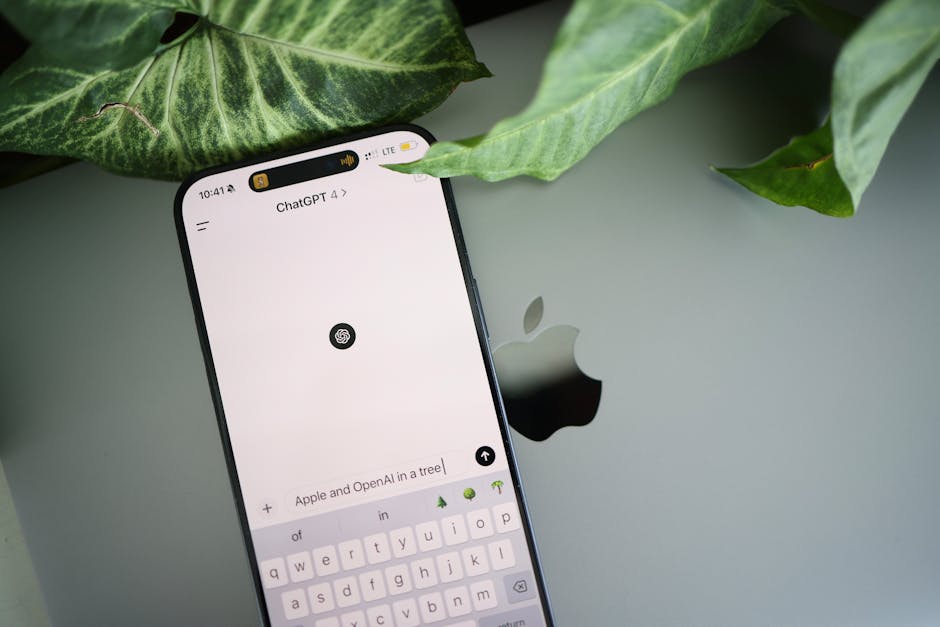
iOS 18 Won’t Prioritize ChatGPT-Style Generative AI, New Leaks Suggest a Focus on Practical Daily Life Tools
Contrary to widespread speculation that Apple’s iOS 18 would heavily integrate ChatGPT-like conversational AI, recent leaks and analyses from reputable sources paint a different picture. While generative AI will undoubtedly play a role, the primary emphasis is reportedly shifting towards a more utilitarian approach, embedding AI capabilities deeply into the operating system to streamline daily tasks, enhance productivity, and offer proactive assistance. This strategic pivot suggests Apple is aiming to differentiate its AI offerings by focusing on practical, integrated solutions rather than simply replicating existing chatbot functionalities. The narrative surrounding iOS 18’s AI features is evolving from "will it have ChatGPT?" to "how will AI make my iPhone work smarter for me?" This article delves into the leaked details, exploring the types of AI-powered tools we can anticipate, their potential impact on user experience, and why this approach might be a more sustainable and impactful strategy for Apple.
The leaks, primarily stemming from Bloomberg’s Mark Gurman, a consistently accurate source on Apple’s unreleased products, indicate that Apple is developing a suite of AI features designed to automate and simplify everyday digital interactions. Instead of a single, prominent generative AI chatbot experience, the focus appears to be on discreet, contextually aware AI that operates behind the scenes. This means users won’t necessarily interact with a dedicated AI assistant in the same way they might with ChatGPT; rather, AI will be woven into the fabric of various applications and system functions. Think of it as an invisible layer of intelligence that anticipates needs, offers suggestions, and automates complex processes without requiring explicit commands for every action. This approach aligns with Apple’s historical strength in creating intuitive and user-friendly interfaces, suggesting they are aiming for AI that enhances, rather than complicates, the user experience.
One of the key areas where AI is expected to shine is in intelligent automation and proactive assistance. This could manifest in various ways. For instance, the system might learn your daily routines and proactively suggest actions. If you typically email a specific report to your team every Friday morning, iOS 18 could learn this pattern and prompt you to do so at the appropriate time, pre-filling recipient details and even the subject line. Similarly, if you’re frequently in meetings, the AI could intelligently manage your notifications, silencing non-urgent alerts and summarizing missed messages for later review. This proactive nature is a significant departure from current AI assistants, which typically require a direct prompt or command to perform a task. iOS 18’s AI is rumored to be more of a silent partner, observing user behavior and offering helpful interventions before a problem even arises or a task becomes cumbersome.
Enhanced search and information retrieval are also slated for a significant AI upgrade. Beyond simple keyword matching, iOS 18 could leverage AI to understand the context and intent behind search queries, delivering more relevant and nuanced results. This could extend to searching within specific apps or even across different applications. Imagine searching for a document related to a specific project, and the AI not only finds the document but also suggests relevant emails or calendar entries associated with that project. Furthermore, the AI could be trained to understand natural language queries more effectively, allowing users to ask complex questions in conversational tones. This could make finding information on your iPhone as effortless as asking a knowledgeable friend. The goal here is to move beyond simple data retrieval to intelligent information synthesis.
Improvements to core applications are another significant anticipated area. Leaks suggest AI will be integrated into apps like Mail, Calendar, Photos, and Notes to automate mundane tasks and provide richer functionality. In Mail, AI could automatically categorize emails, draft responses to common queries, or even summarize lengthy threads. For Calendar, intelligent scheduling assistance that considers your existing commitments, travel time, and even the preferences of other attendees could become a reality. Photos might see AI-powered intelligent organization, automatically tagging people, places, and events with greater accuracy, and even suggesting creative edits or slideshows based on your media library. Notes could benefit from AI that can transcribe audio recordings, summarize handwritten notes, or even generate content based on prompts. These are not entirely novel concepts, but Apple’s rumored approach is to integrate them seamlessly into the existing user experience, making them feel like natural extensions of the applications rather than tacked-on features.
The rumored integration of smarter Siri is a crucial aspect of this AI-focused strategy. While not a pure "ChatGPT," Siri is expected to become significantly more capable and context-aware. This means Siri might be able to handle more complex, multi-part commands, understand follow-up questions without requiring the user to repeat information, and even perform actions across different apps. For example, a user might be able to say, "Hey Siri, find me restaurants near the theater and book two tickets for the 8 PM show," and Siri would be able to execute this entire sequence. The AI enhancements are expected to allow Siri to understand nuances in language, interpret user intent more accurately, and offer more personalized responses. This could be a major step towards making Siri a truly useful and integral part of the iPhone experience, moving it beyond its current reputation for being somewhat limited.
Another intriguing area of leaked speculation involves AI for accessibility. Apple has always been a leader in accessibility features, and iOS 18 is expected to push these boundaries further with AI. This could include more sophisticated real-time transcription and translation services, enhanced voice control capabilities, and even AI-powered tools to assist users with visual or auditory impairments. For example, AI could provide more detailed audio descriptions of on-screen content for visually impaired users or offer personalized audio cues for those with hearing difficulties. The application of AI in this domain has the potential to make the iPhone and its ecosystem more inclusive and usable for a wider range of individuals.
The rationale behind Apple’s likely focus on these practical AI tools, rather than a headline-grabbing generative AI chatbot, can be understood through several lenses. Firstly, Apple’s ecosystem integration is a core strength. By embedding AI into existing apps and system functions, Apple can create a cohesive and seamless user experience across its devices. A standalone chatbot, while impressive, might not integrate as smoothly into this tightly controlled environment. Secondly, user privacy is paramount for Apple. Generative AI models often require vast amounts of data to train and operate, raising privacy concerns. By focusing on on-device processing and more controlled, task-specific AI, Apple can potentially offer greater privacy assurances to its users. This would align with their ongoing emphasis on data security and user control.
Thirdly, there’s a strategic advantage in differentiation. The generative AI chatbot space is becoming increasingly crowded with established players. By carving out a niche in practical, productivity-focused AI, Apple can offer something distinct and valuable to its user base. This approach targets the everyday needs and frustrations of iPhone users, aiming to make their devices more efficient and helpful in tangible ways. The goal isn’t to replace human creativity or conversation but to augment daily life with intelligent automation.
Finally, long-term viability and user adoption are likely considerations. While generative AI is exciting, its practical applications for the average user are still being explored. A focus on proven, useful AI tools that solve real problems has a higher likelihood of broad user adoption and sustained engagement. These are features that users will appreciate and rely on daily, solidifying their attachment to the Apple ecosystem. The leaks suggest a measured and deliberate approach to AI integration, prioritizing impact and usability over novelty. This careful strategy is likely to result in a more robust and user-centric AI experience in iOS 18.
