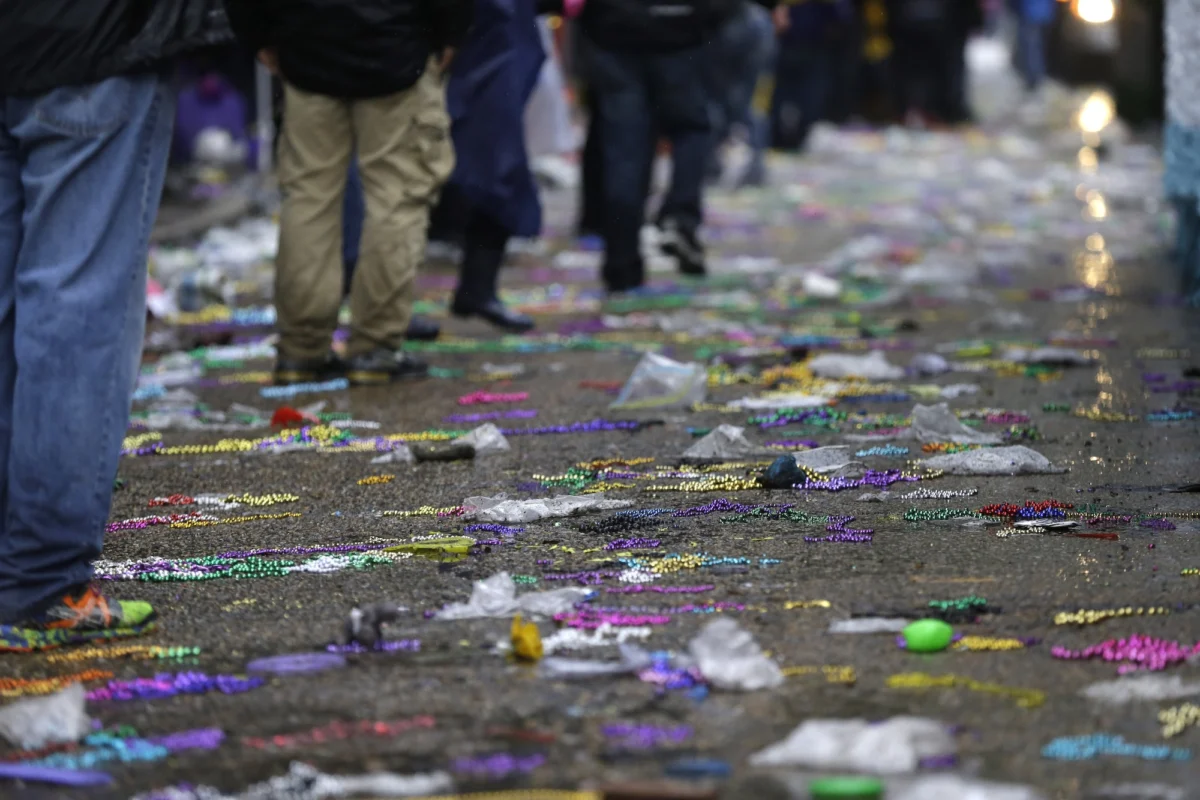
The festive spirit of the 2026 Carnival season in New Orleans has left behind a sobering environmental legacy, as city officials and environmental advocates grapple with a record-breaking 1,363 tons of refuse collected along parade routes. This figure represents a staggering 24 percent increase from the previous year and marks the highest volume of waste ever recorded in the city’s long history of hosting the world-renowned celebration. To put the magnitude of this waste into perspective, the tonnage is equivalent to the weight of approximately 741 mid-sized automobiles, or in local terms, the weight of the iconic Steamboat Natchez.
The sheer volume of trash has reignited a fierce debate over the sustainability of the five-week festival, which runs from Twelfth Night on January 6 through Fat Tuesday. While the city has long struggled with the aftermath of the "throws"—the beaded necklaces, plastic cups, and trinkets tossed from floats—the 2026 data suggests a fundamental shift in the nature of the waste. For the first time, the primary driver of the city’s mounting garbage problem appears to be shifting from the trinkets thrown by parade riders to the heavy, bulky items abandoned by the spectators themselves.
A History of Clogged Arteries and Broken Promises
The current waste crisis is deeply rooted in a 2018 discovery that fundamentally changed how New Orleans views its Carnival cleanup. During a massive effort to clear the city’s notoriously fragile drainage system, cleaning crews extracted 46 tons of Mardi Gras beads from a single stretch of storm drains. The "bead-gate" scandal, as it was colloquially known, revealed the hidden cost of the tradition. The accumulation of plastic over decades had effectively paralyzed the city’s ability to manage rainwater, a life-or-death issue for a city that sits largely below sea level.
In the wake of that discovery, Dani Galloway, then the Director of Public Works, issued a call for reform, stating that the city "had to do better." However, nearly a decade after that pledge, the statistics suggest the opposite has occurred. In the early 2010s, the annual trash tonnage typically hovered around 880 tons. A significant spike occurred in 2017, when the total surpassed 1,320 tons, and since then, the figure has rarely dipped below the 1,000-ton mark. The only reprieve came in 2021, a year when the COVID-19 pandemic forced the cancellation of all parades, resulting in a zero-ton record for that season.
Analyzing the Attendance-Waste Paradox
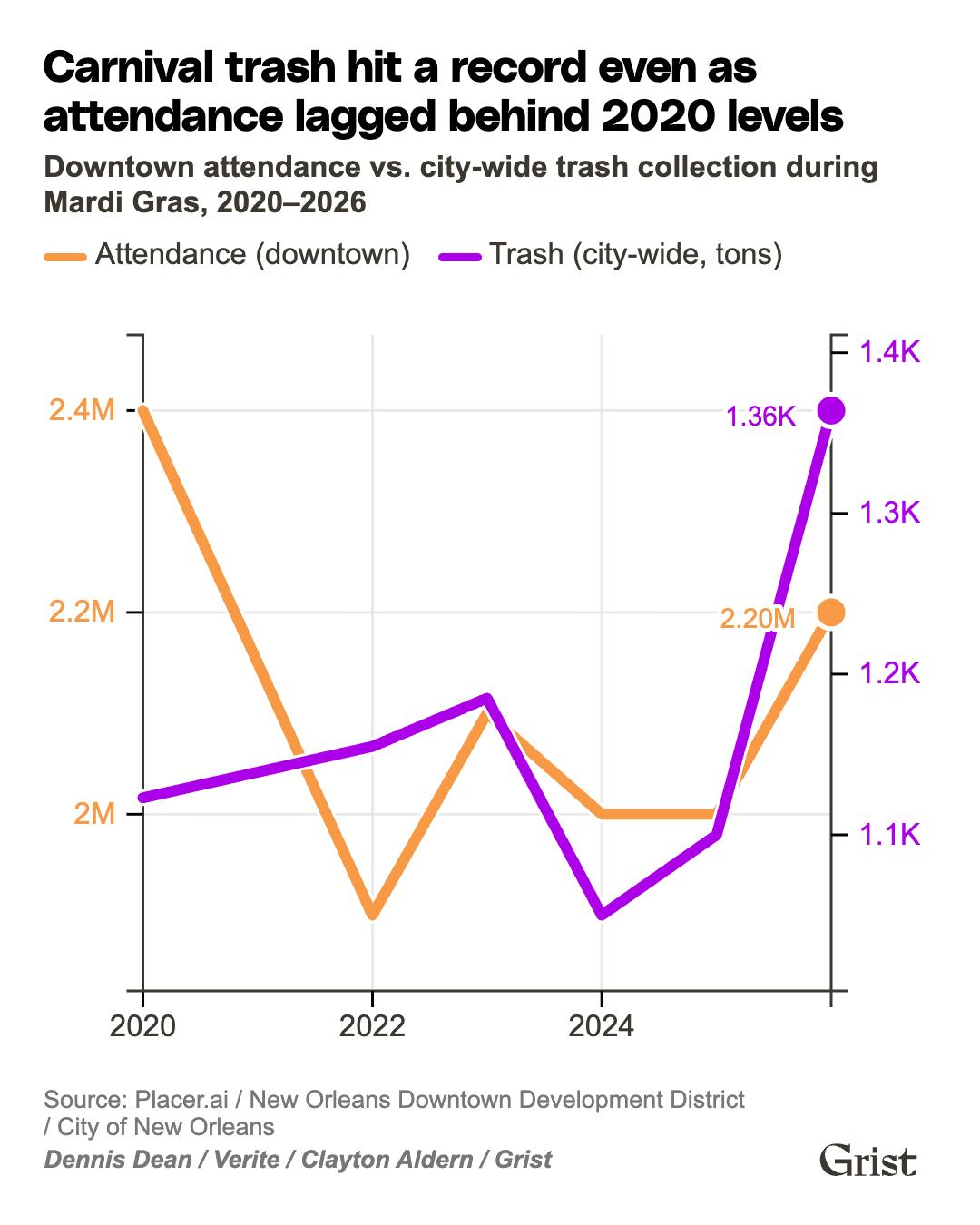
City officials initially attempted to attribute the 2026 trash surge to an increase in tourism. Sanitation Director Matt Torri informed the City Council in March that the rise was "directly associated with the larger crowds," citing data that indicated roughly 2.2 million visitors traveled to downtown New Orleans during the season—a 10 percent increase over 2025.
However, a deeper analysis of historical data reveals a disconnect between the number of revelers and the amount of trash they leave behind. In 2020, for example, the city saw a record-high attendance of 2.4 million people, yet the cleanup crews collected 241 fewer tons of garbage than they did in 2026. This indicates that while crowd size is a factor, it is not the primary determinant of waste volume.
The volatility of the trash tally suggests that consumer behavior and the types of items brought to the parade routes have changed. While the Downtown Development District uses sophisticated location analytics from companies like Placer.ai to track attendance, the data consistently shows that waste tonnage is trending upward even when attendance remains relatively stable.
The Evolution of the "Throw" and the Rise of "Chad"
The tradition of "throws" dates back over a century, beginning with glass beads and small favors. Today, the majority of throws are cheap, plastic trinkets manufactured in China. These items are often laden with toxic chemicals, including unsafe levels of lead, posing a long-term environmental hazard to the local soil and waterways.
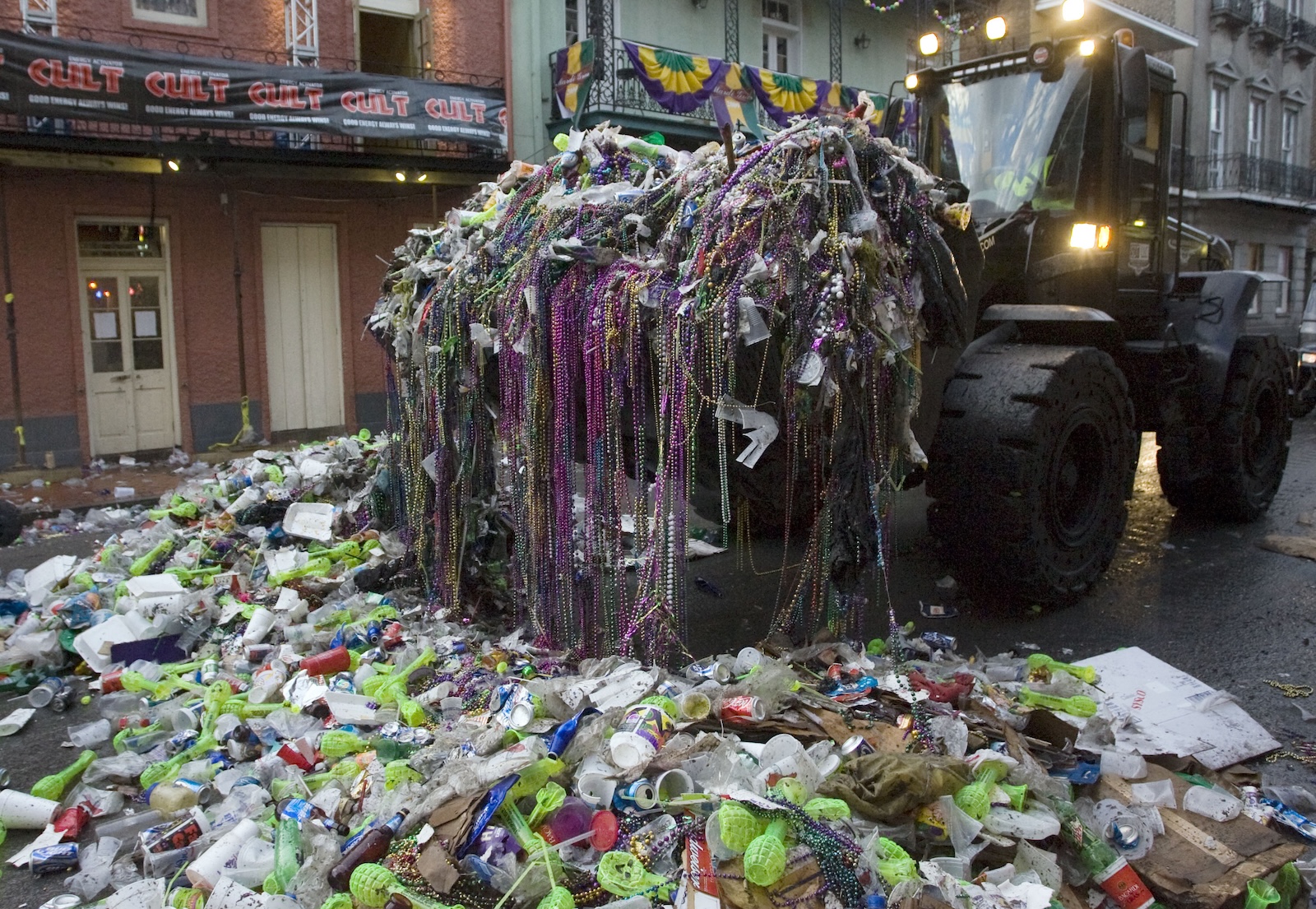
In recent years, many "krewes"—the social organizations that fund and participate in the parades—have made conscious efforts to pivot toward sustainability. Organizations like Grounds Krewe have successfully lobbied krewes to replace plastic beads with higher-value, eco-friendly items such as bamboo toothbrushes, metal cups, wooden spoons, and branded socks. These items are more likely to be kept as souvenirs rather than discarded on the street.
Despite these efforts, the total tonnage continues to climb. Brett Davis, founder of Grounds Krewe, points to a different culprit: the spectators’ encampments. A phenomenon known locally as the "Krewe of Chad" involves parade-goers setting up elaborate viewing stations days or even weeks in advance. These setups often include:
- Folding chairs and viewing ladders
- Large canopy tents and tarps
- Heavy-duty coolers and grills
- Portable toilets and generators
- Old sofas and scaffolding
As the Carnival season concludes, many of these items, which can weigh anywhere from five to 300 pounds, are simply abandoned on the "neutral ground" (the grassy medians) or the sidewalks. The effort required to haul a broken sofa or a grease-stained grill back home often outweighs the perceived value of the item, leading to a "disposable" culture of event furniture.
Environmental and Infrastructure Implications
The impact of this waste extends far beyond the aesthetics of the French Quarter and St. Charles Avenue. New Orleans relies on a complex system of catch basins, pipes, and massive pumping stations to stay dry. When rain falls during or after a parade, the discarded beads and plastic film from packaging are swept into the drainage system.
While the city has implemented "gutter buddies"—temporary filtration screens—to catch debris before it enters the pipes, these measures are only partially effective. Conservation groups have documented significant amounts of plastic litter overflowing from these filters and entering the city’s canals, which eventually discharge into Lake Pontchartrain. The long-term accumulation of microplastics in the lake threatens local wildlife and the region’s fishing industry.
Furthermore, the toxic legacy of the beads remains a concern. Lead and other heavy metals used in the coloring of plastic beads can leach into the environment as the plastics break down under the intense Louisiana sun and humidity. This creates a persistent pollution problem that the city’s sanitation department is not equipped to remediate through standard landfilling.
The Economic Barrier to Enforcement
The city’s ability to curb this trend has been severely hampered by a $220 million budget deficit. This financial crisis has forced the municipal government to make difficult choices, including scaling back on the very enforcement measures that might reduce waste.
In 2024, the city introduced stricter rules banning tents, tarps, and viewing platforms. For a brief period, a "robust" enforcement strategy involving the seizure of abandoned gear appeared to work. However, by 2026, the city had to prioritize its limited resources. City Council President JP Morrell noted that the enforcement of parade rules has become "spotty" because the city is "hard up for cash."
The situation was further complicated by security concerns. Following a tragic incident on New Year’s Day 2025, when a terror attack on Bourbon Street killed 14 people, the New Orleans Police Department and other city agencies shifted their focus almost entirely to public safety and anti-terrorism measures. Sanitation and parade rule enforcement became secondary priorities.
Budget cuts also hit the city’s nascent recycling programs. A $200,000 earmark for Mardi Gras recycling was slashed, leaving nonprofit groups like Grounds Krewe to fill the gap with limited private funding. While these groups managed to divert 28 tons of waste from landfills in 2026 through bottle, can, and bead recycling, this achievement was overshadowed by the 24 percent overall increase in garbage.
The Moral Hazard of "Abject Entitlement"
Beyond the logistics and economics, city leaders are beginning to speak out against what they describe as a shift in the social contract of Mardi Gras. JP Morrell characterized the abandonment of heavy furniture and encampment gear as a sign of "abject entitlement."
"The reality is that they get their use out of this stuff, and then it becomes a tremendous amount of debris that our workers have to deal with because these people had no intention of ever picking this stuff up," Morrell said. He argued that the perception of the city as a space that exists solely to "serve other people’s whims" has led to a degradation of public spaces.
This sentiment is echoed by sanitation workers who, on Fat Tuesday, began cleaning at 8 a.m. and did not finish until 1 a.m. the following morning. The transition from cleaning up beads and cups to hauling away generators and sofas has fundamentally changed the nature of the job, making it more dangerous and physically demanding for the city’s labor force.
Future Outlook and the Path to Sustainability
As New Orleans looks toward future Carnival seasons, the data from 2026 serves as a wake-up call. The trend of "fewer but better" throws from the krewes is a positive step, but it is insufficient to offset the massive influx of consumer waste brought by spectators.
Sustainable solutions will likely require a multi-pronged approach:
- Reinstating Enforcement: Without the consistent removal of illegal encampments and the fining of those who abandon heavy property, the "Krewe of Chad" behavior is expected to persist.
- Infrastructure Investment: Expanding the use of permanent filtration systems in catch basins could prevent the most damaging effects on the drainage system.
- Public Education: Shifting the narrative from "disposable Mardi Gras" to a "leave no trace" philosophy will be essential for the festival’s long-term survival.
- Policy Reform: Some advocates have suggested a "litter tax" on the importation of non-biodegradable beads or a deposit system for large items brought to the parade route.
While Mardi Gras remains the economic engine of New Orleans and a vital expression of its unique culture, the 1,363 tons of trash left in 2026 suggest that the current model is reaching a breaking point. As Brett Davis of Grounds Krewe warned, "Unless we have the trucks to haul it away and the police out there to enforce the rules, this kind of behavior creeps back. And that’s what we’re seeing now."