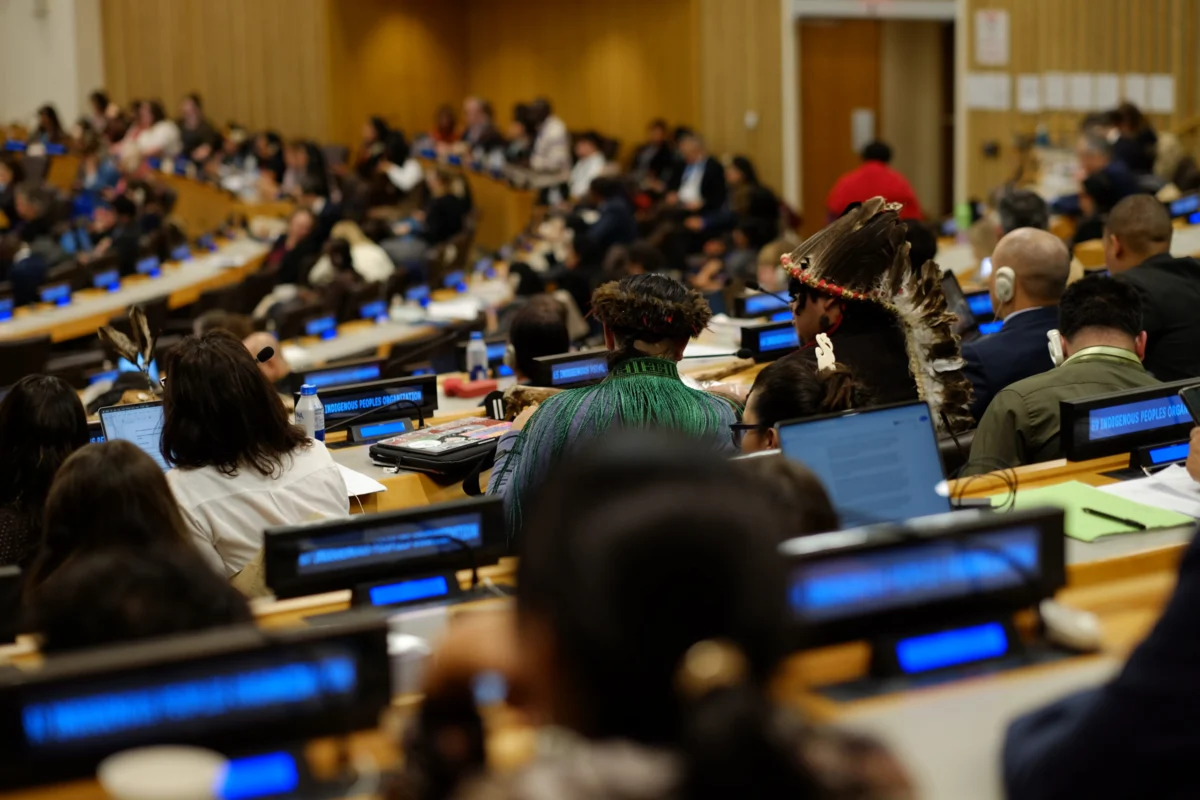
Indigenous leaders and environmental advocates at the United Nations Permanent Forum on Indigenous Issues (UNPFII) are currently grappling with a complex technological paradox that threatens to redefine the relationship between ancestral lands and modern innovation. Artificial Intelligence (AI) has emerged as a transformative tool for environmental stewardship, enabling Indigenous communities to detect illegal logging, monitor wildfire patterns, and track biodiversity with unprecedented precision. However, the physical infrastructure required to sustain these digital capabilities—massive data centers and the extraction of critical minerals—is driving a new wave of environmental degradation and land-grabbing that disproportionately affects Indigenous territories.
The tension lies in the materiality of a technology often perceived as ethereal. While AI "lives" in the cloud, its physical footprint is anchored in the earth. The energy-intensive processing power required for large language models and predictive algorithms demands vast quantities of electricity, cooling water, and rare earth minerals. According to a landmark study presented by Hindou Oumarou Ibrahim, a member of the Mbororo people and former chair of the UNPFII, the rapid expansion of this infrastructure is creating a cycle of "digital extraction" that mirrors the colonial patterns of the past.
The Protective Shield: AI as a Tool for Environmental Stewardship
For many Indigenous groups, AI is not a distant concept but an active frontline defense mechanism. In the Amazon rainforest, specifically within the Katukina/Kaxinawá Indigenous Reserve in Brazil’s Acre state, the technology is being used to reverse decades of encroachment. The reserve is currently categorized among the top five areas at risk for illegal deforestation. To combat this, Indigenous agroforestry agents have integrated an AI-driven forecasting tool developed through a partnership between Microsoft and the Brazilian nonprofit Imazon.
This system analyzes historical satellite imagery and topographical data to predict where deforestation is likely to occur next. By identifying high-risk zones before the first chainsaw is even started, communities can deploy patrols more effectively. Siã Shanenawa, an agroforestry agent in the reserve, emphasizes that this technology provides a layer of security that traditional methods alone could not achieve. The ability to detect hunters, illegal miners, and unauthorized fires in real-time allows for rapid response in territories that are often too vast to monitor by foot.
Similar successes are being reported in the Arctic. In Nunavut, Inuit communities are blending centuries of Traditional Ecological Knowledge (TEK) with predictive AI models to navigate the shifting realities of climate change. As warming oceans alter fish migration patterns, time-series analyses and predictive modeling help locate new fishing grounds, ensuring food security for the community. In Chad, Mbororo pastoralists use participatory mapping combined with AI-processed satellite data to manage transhumance corridors. By predicting severe droughts, these pastoralists can move their livestock to safer areas, boosting climate resilience in one of the world’s most vulnerable regions.

The Physical Cost: Data Centers and Resource Depletion
Despite these benefits, the "back end" of AI presents a starkly different reality. The digital infrastructure powering these tools is placing an immense strain on local ecosystems. Data centers, the massive warehouses of servers that process AI algorithms, require millions of gallons of water daily for cooling. In Thailand’s Chonburi and Rayong provinces, residents have raised alarms over a boom in data center construction. The region already suffers from periodic water shortages, and the arrival of tech giants threatens to divert water away from local agriculture and domestic use, while also raising concerns about wastewater contamination.
The energy demands are equally staggering. A single AI model can consume more electricity during its training phase than dozens of average households use in a year. This surge in demand has led to the reopening of coal plants or the extension of natural gas facilities in some regions, directly contradicting the environmental goals many Indigenous groups are fighting for. In rural Pennsylvania and the state of Querétaro, Mexico, the expansion of data centers has led to rising utility costs and local grid instability, sparking protests from residents who feel their resources are being sacrificed for the benefit of global tech corporations.
Beyond water and energy, the "Green Transition" fueled by AI hardware requires a massive influx of critical minerals such as lithium, cobalt, and copper. Estimates suggest that a significant percentage of the world’s untapped mineral reserves are located on or near Indigenous lands. The push for "cleaner" technology often results in the displacement of communities and the degradation of sacred sites to make way for new mines, creating a situation where the tools intended to save the planet are built upon the destruction of the very lands they are meant to protect.
A Chronology of Digital Integration and Resistance
The intersection of Indigenous rights and high technology has evolved rapidly over the last decade. The timeline of this integration reveals a shift from basic observation to complex, autonomous analysis:
- 2014–2016: Early adoption of drones and GPS by Indigenous groups in the Amazon and Southeast Asia to document land incursions. These efforts were largely manual and required significant man-hours for data processing.
- 2018–2020: The rise of "Indigenous Data Sovereignty" movements. Groups like the Global Indigenous Data Alliance (GIDA) began advocating for the right of Indigenous peoples to own and control data collected from their lands.
- 2021: Launch of the PrevisIA tool by Imazon and Microsoft. This marked a turning point where AI began to be used for proactive, predictive conservation rather than just reactive documentation.
- 2023–2024: The generative AI boom. The massive increase in computational demand led to the current "data center crisis," forcing international bodies like the UNPFII to address the environmental footprint of the AI supply chain.
Institutional Responses and the Call for Sovereignty
The international community is beginning to recognize that technology without governance is a liability. Lars Ailo Bongo, a professor at UiT The Arctic University in Norway and leader of the Sámi AI Lab, argues that the current AI landscape is not inclusive. He points out that while the competency exists within Indigenous communities—Sámi developers are ready to build models aligned with their cultural norms—the lack of funding and institutional capacity prevents them from achieving digital independence.
"To make progress, there is a need for a bigger center and push," Bongo noted, stressing that state governments in Norway, Finland, and Sweden must provide the necessary financial backing to ensure Indigenous groups are not merely "minority partners" in tech projects.

The Tallgrass Institute, led by executive director Kate Finn, a citizen of the Osage Nation, is working to align investor strategies with Indigenous rights. Finn emphasizes that the core requirement for any tech expansion on Indigenous land is Free, Prior, and Informed Consent (FPIC). This legal standard, enshrined in the UN Declaration on the Rights of Indigenous Peoples (UNDRIP), requires that communities be fully informed of the risks and benefits of a project before it begins.
"As we approach AI from an Indigenous lens, it will necessarily have to take account of all of those different nodes," Finn said. This includes not only the protection of physical resources but also the safeguarding of "digital property," such as language and traditional knowledge, which can be easily scraped and exploited by AI companies without credit or compensation.
Analysis of Implications: The Future of Indigenous Data
The move toward AI-driven environmentalism represents a fundamental shift in how humanity relates to the natural world. For Indigenous peoples, the risk is twofold: physical displacement and cultural appropriation. If AI models are trained on Indigenous knowledge without permission, there is a danger of "biopiracy" in a digital format—where pharmaceutical companies or agribusinesses use AI to extract and patent traditional secrets.
Furthermore, the use of high-resolution satellite imagery and drones can expose the locations of sacred sites or ecologically sensitive areas that have remained hidden for centuries. In the wrong hands, this data can serve as a roadmap for illegal miners or trophy hunters.
To mitigate these risks, the study by Hindou Oumarou Ibrahim suggests that governments and tech corporations must adopt a "rights-based approach" to AI development. This involves:
- Transparency in the Supply Chain: Tech companies must disclose the origin of minerals used in their hardware and the environmental impact of their data centers.
- Infrastructure Investment: Providing Indigenous communities with the hardware and connectivity needed to run their own AI systems locally, reducing reliance on external corporations.
- Legal Protections: Establishing new frameworks for "digital rights" that recognize traditional knowledge as protected intellectual property.
Conclusion
The evolution of AI presents a historic opportunity for Indigenous communities to scale their role as the world’s most effective environmental guardians. However, this potential can only be realized if the technology is stripped of its extractive tendencies. As Ibrahim summarized, AI becomes a powerful ally only when used on Indigenous terms and in a culturally appropriate way. Without these safeguards, the digital revolution risks becoming another chapter in the long history of resource exploitation, trading the health of the earth’s most vital ecosystems for the processing power of the "cloud." The challenge for the coming decade will be to ensure that the intelligence used to protect the planet does not come at the cost of the people who have protected it for millennia.