For a decade and a half, the city of Toronto served as a leading laboratory for sustainable urban infrastructure in North America. When the municipal government introduced its groundbreaking green roof bylaw in 2009, it became the first jurisdiction on the continent to legally mandate living roofs for new developments while establishing strict construction standards. Over the next fifteen years, this regulation successfully generated more than 1,200 vegetated roofs across the urban core, transforming grey concrete expanses into functioning ecological systems.
However, the regulatory landscape shifted dramatically on November 3, 2025, when the Ontario provincial government abruptly revoked the specific provisions of the City of Toronto Act that authorized the municipal mandate. Executed without advance notice or a structured phase-out period, the reversal underscores a broader, international tension in urban planning. As municipal governments grapple with escalating housing costs and economic pressures, a wave of policy backlash has begun to challenge environmental construction mandates. While some cities are loosening their green infrastructure requirements to accelerate real estate development, others continue to tighten their environmental codes, increasingly allowing property owners to choose between living vegetation, solar photovoltaic installations, or a hybrid of both.
Understanding the Mechanics and Economic Reality of Ecoroofs
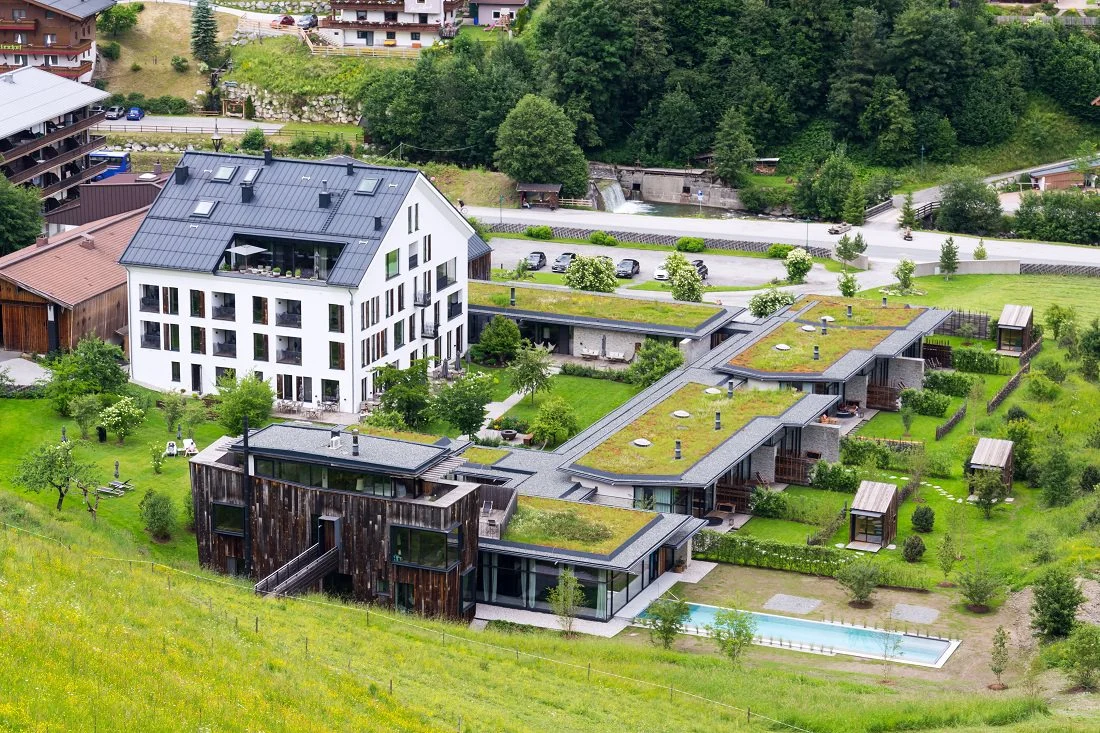
To evaluate the future of urban architecture, stakeholders must first understand what constitutes a modern green roof—frequently referred to as a living roof or ecoroof. Unlike traditional sod roofs, which date back to the Middle Ages, contemporary ecoroofs are highly engineered multi-layered systems. According to engineering and municipal standards, a functional green roof requires a specialized sequence of materials installed over a waterproof membrane: a robust root repellent layer, an efficient drainage network, a filter fabric, a lightweight growing medium, and carefully selected plant species.
Modern systems generally fall into two distinct classifications. Extensive roofs utilize a shallow layer of lightweight growing media—typically just a few inches deep—and are planted with hardy, drought-tolerant species such as sedums. These systems require minimal structural reinforcement and maintenance. Conversely, intensive roofs incorporate significantly deeper soil profiles capable of supporting complex landscaping, including grasses, shrubs, and even mature trees.
The financial investment varies dramatically between these two approaches. Data from environmental protection agencies indicate that a basic extensive roof, lacking public access, typically costs between one-tenth and one-third the price of an intensive, park-like roof designed for public recreation. Despite the initial capital expenditure, lifecycle cost analyses—including historical studies by public building administrations—demonstrate that commercial and public buildings frequently recoup their installation costs through long-term heating and cooling savings within approximately six years.

Global Climate Impacts and Building Energy Efficiency
As urban centers continue to expand, the integration of green and cool roofs has been formally recognized as a vital component of global climate mitigation strategies. Project Drawdown, a prominent environmental research organization, ranks green and cool roofs collectively as a significant global warming solution, projecting a potential reduction of 0.77 gigatons of carbon dioxide emissions by 2050 if these technologies achieve widespread adoption.
Recent empirical research underscores the localized thermal and energy benefits of these installations. A landmark 2024 study published in Nature Cities revealed that implementing city-wide green roofs in Seoul could reduce building energy use intensity by up to 7.7 percent. Furthermore, comprehensive modeling published in Nature Urban Sustainability projected that by the year 2100, the combination of green and cool roofs could reduce heating, ventilation, and air conditioning (HVAC) energy demands by up to 71.72 percent across diverse global climates. On a microclimatic scale, extensive meta-analyses confirm that vegetated roofs successfully lower rooftop surface temperatures by an average of 30 degrees Celsius during harsh summer months, effectively mitigating the urban heat island effect.
Residential Versus Commercial Implementation Trends
While the environmental benefits are well-documented, the adoption rates across different real estate sectors vary widely. Single-family residential homes have historically accounted for a minor fraction of green roof installations, largely hindered by high upfront design and construction costs relative to the property’s overall value. In contrast, multi-family residential complexes benefit from economies of scale, representing a more substantial share of the residential market.
Nevertheless, industrial and commercial developments continue to dominate the ecoroof landscape. Iconic international projects showcase the architectural potential of these systems on a grand scale. The Vancouver Convention Centre boasts a sprawling six-acre living roof, remaining the largest of its kind in Canada. In San Francisco, the California Academy of Sciences incorporates an undulating living roof embedded with 1.7 million native plants. Meanwhile, in Europe, architectural marvels such as the Kö-Bogen II commercial complex in Düsseldorf feature sweeping green facades integrated with tens of thousands of hornbeam plants, establishing a natural sanctuary within a dense commercial district.
The Fall of Toronto’s Mandate and the 2026 Regulatory Status

Toronto’s now-repealed bylaw originally targeted new commercial, institutional, and multi-unit residential developments exceeding 2,000 square meters of floor area. Developers unable to integrate the mandatory green coverage could pay an in-lieu fee of $200 Canadian dollars per square meter. The legal foundation for this mandate collapsed following the passage of Bill 17, the Protect Ontario by Building Faster and Smarter Act, which was enacted by the provincial legislature in June 2025.
The provincial government defended the legislative rollback by arguing that municipal rules should not impose building standards exceeding the baseline provincial building code. Although local industry analysts noted that the cost of compliance added only a fraction of a percent to condominium development budgets—estimated between $1.00 and $2.50 CAD per square foot in a market where units sold for hundreds of dollars more—the legal challenge successfully dismantled the municipal mandate. Toronto has since pivoted to encouraging voluntary installations through its updated Eco-Roof Incentive Program, though mandatory compliance is officially a thing of the past.
A Cross-Jurisdictional Comparison of North American and European Policies
Across North America and Europe, municipal and national policies remain heavily fragmented. A review of active regulatory frameworks reveals distinct approaches to balancing environmental mandates with real estate development pressures:
New York City enforces Local Laws 92 and 94, enacted in 2019, which require a "sustainable roofing zone" combining green roof technology, solar panels, or a hybrid system on new construction and major roof replacements. Property tax abatements and rolling municipal grants continue to support these efforts, though historical uptake among private property owners has prompted lawmakers to continually refine financial incentives.
San Francisco’s Better Roofs Ordinance, implemented in 2017, mandates that a substantial percentage of new construction allocate space for solar energy systems or living roofs, with specific high-density districts requiring a combination of both.
Denver’s Green Buildings Ordinance requires commercial and multi-family buildings exceeding 25,000 square feet to combine cool roofs with a sliding scale of vegetative coverage ranging from 20 percent to 60 percent, depending on the scale of the structure.

Portland, Oregon, maintains its Central City ecoroof standard for large developments while introducing regulatory flexibility. A housing regulatory relief package permitted developers of residential projects to substitute solar panel arrays for traditional vegetation, reflecting a growing regulatory trend toward technological neutrality.
In Massachusetts, municipal policies have grown increasingly stringent. Cambridge enforces Article 22, requiring green roofs or solar installations across 80 percent of available roof space for new buildings over 25,000 square feet, levying heavy financial contributions for non-compliance. Neighboring Somerville introduced a similar mandate requiring extensive vegetative coverage on mid-rise and high-rise developments.
In Europe, national legislation has driven aggressive adoption targets. French law mandates that covered nonresidential buildings incorporate solar or vegetative technologies across a steadily increasing share of their roof space—reaching 40 percent in mid-2026 and scaling toward 50 percent. However, ongoing legislative debates regarding alignment with broader European Union directives have sparked political friction over whether to prioritize solar power exclusively or preserve provisions for living vegetation.
Barriers to Mass Adoption and Future Outlook
Despite compelling environmental data and long-term economic returns, significant barriers continue to hinder widespread adoption. Public and private sector unfamiliarity with green roof engineering, coupled with inconsistent government promotion and a lack of trained local contractors, slows market penetration in emerging regions. Furthermore, municipal authorities face ongoing challenges in accurately quantifying and monetizing the decentralized public benefits of ecoroofs, such as reduced stormwater runoff management costs and localized air quality improvements.
As urban centers navigate the competing pressures of housing affordability, energy grid modernization, and climate resilience, the future of green roofs rests on adaptive policy design. Jurisdictions are increasingly moving away from rigid, single-technology mandates in favor of flexible frameworks that allow developers to integrate solar energy, living vegetation, or stormwater retention systems based on project economics. While regulatory setbacks in major markets like Toronto highlight the vulnerability of environmental bylaws to shifting political landscapes, the enduring engineering, thermal, and ecological performance of ecoroofs ensures they will remain a defining feature of modern sustainable architecture.