China’s Robotics Race: Navigating the Cutting Edge of Automation and AI
The global robotics revolution is not a distant future; it is a present-day reality, and China stands at its forefront, engaged in an unprecedented race to dominate this transformative industry. This competition is not merely about building more sophisticated machines; it’s a multifaceted endeavor encompassing technological innovation, economic strategy, national security, and the very fabric of future society. China’s ambition to become a global leader in robotics is fueled by a confluence of factors: a vast domestic market, significant government investment, a rapidly growing technological talent pool, and a clear understanding of how automation will redefine manufacturing, healthcare, logistics, and beyond. The implications of this relentless pursuit are far-reaching, impacting global supply chains, international trade dynamics, and the fundamental nature of work itself.
At the core of China’s robotics race is the pursuit of technological supremacy. This involves a multi-pronged approach, focusing on key areas such as industrial robots, service robots, and collaborative robots (cobots). Industrial robots, designed for repetitive and often hazardous tasks on factory floors, are a cornerstone of China’s manufacturing modernization. The "Made in China 2025" initiative, though officially de-emphasized in favor of broader economic goals, laid the groundwork for a strategic push to reduce reliance on foreign-made automation and cultivate domestic champions. Companies like Siasun, Estun, and FANUC (a Japanese company with a significant presence and manufacturing in China) are at the forefront of developing and deploying these industrial workhorses. The emphasis here is on increasing precision, speed, and adaptability, allowing Chinese factories to maintain their competitive edge in an increasingly automated global landscape. The race is also keenly focused on developing robots capable of performing more complex assembly, welding, and material handling tasks with greater autonomy.
Beyond industrial applications, the service robot sector represents another critical frontier in China’s robotics race. This segment encompasses a vast array of machines designed to assist humans in various service-oriented roles. Examples include robots for elder care, hospitality, education, cleaning, and even entertainment. Companies like UBTECH Robotics, known for its humanoid robots and educational platforms, are showcasing China’s ambition to integrate robots into everyday life. The development of socially interactive robots, capable of understanding human emotions and engaging in natural language conversations, is a significant area of research and development. This push is driven by a dual need: to address the challenges of an aging population, where robots can provide assistance and companionship, and to enhance customer experiences in sectors like retail and tourism. The integration of AI and machine learning is paramount here, enabling these robots to learn, adapt, and personalize their interactions.
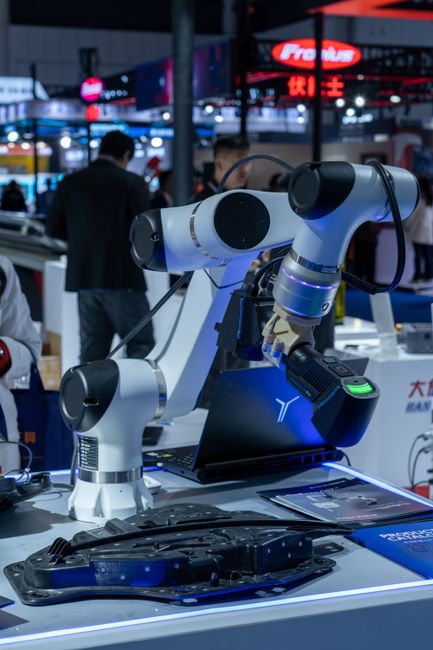
Collaborative robots, or cobots, represent a more nuanced aspect of the race, focusing on human-robot interaction. Unlike traditional industrial robots that are often caged off for safety, cobots are designed to work alongside human employees, augmenting their capabilities rather than replacing them entirely. This approach offers a pathway to enhanced productivity and improved working conditions. China’s investment in cobot technology is driven by the desire to create more flexible and agile manufacturing environments, allowing human workers to focus on tasks requiring dexterity, problem-solving, and critical thinking. The development of intuitive programming interfaces and advanced safety features are key priorities in this domain, ensuring that humans and robots can collaborate effectively and without risk. This also signifies a shift towards a more human-centric approach to automation, recognizing the continued value of human input.
The immense scale of China’s domestic market is a significant propellant for its robotics race. With a population of over 1.4 billion and a burgeoning middle class, the demand for goods and services is enormous. This creates a vast testing ground and a ready customer base for robotic solutions across all sectors. From automating vast e-commerce warehouses to deploying robots in hospitals and smart cities, the sheer volume of potential applications provides a powerful incentive for innovation and investment. This large-scale adoption also generates massive datasets, which are crucial for training AI algorithms and further improving robot performance. The ability to iterate rapidly based on real-world usage is a distinct advantage. Furthermore, the government’s strategic vision for developing advanced manufacturing and its push for technological self-sufficiency are driving substantial public and private investment into the robotics sector.
Government support is a defining characteristic of China’s robotics race. The aforementioned "Made in China 2025" was a clear signal of intent, but the broader national strategy continues to prioritize key technologies, including artificial intelligence and advanced manufacturing, of which robotics is an integral part. This support manifests in various forms: direct subsidies for research and development, preferential loans for robotics companies, tax incentives, and the establishment of innovation hubs and industrial parks dedicated to automation. Furthermore, the government actively promotes collaboration between universities, research institutions, and private enterprises, fostering a dynamic ecosystem for innovation. This top-down strategic approach ensures that resources are channeled effectively towards achieving national goals in robotics. The emphasis is not just on quantity but on developing indigenous capabilities and reducing technological dependencies.
The rapid growth of China’s technological talent pool is another crucial factor. Universities and vocational schools are producing an increasing number of engineers, computer scientists, and robotics specialists. The government’s focus on STEM education and its investment in research facilities are cultivating a generation of skilled professionals capable of driving innovation in the field. Moreover, China’s ability to attract and retain talent, both domestically and internationally, further bolsters its R&D capabilities. The influx of venture capital into the robotics sector also creates opportunities and incentives for talented individuals to pursue entrepreneurial ventures in this domain. This growing pool of human capital is essential for tackling the complex challenges inherent in advanced robotics development.
The implications of China’s robotics race extend far beyond its borders. As China becomes a dominant force in robotics manufacturing and deployment, it will inevitably reshape global supply chains. The increased automation of Chinese factories could lead to a further consolidation of manufacturing within the country, potentially impacting industries and labor markets in other nations. Moreover, China’s leadership in areas like AI-powered robotics could give it a significant competitive advantage in emerging markets and influence the direction of technological development worldwide. The geopolitical implications are also considerable, with robotics and AI being increasingly viewed as strategic technologies with national security relevance.
The race is also intensely competitive. While Chinese companies are making rapid advancements, they still face strong competition from established players in Japan, Germany, the United States, and other industrialized nations. These competitors possess decades of experience, established technological ecosystems, and strong intellectual property portfolios. However, China’s agility, its massive market, and its strategic government backing allow it to accelerate its progress at an unprecedented pace. The competition is driving innovation on a global scale, pushing all players to develop more advanced, efficient, and accessible robotic solutions. The race is characterized by rapid product cycles, intense R&D efforts, and strategic partnerships.
The ethical and societal implications of this robotics race are also a subject of ongoing discussion. As robots become more integrated into workplaces and daily life, concerns about job displacement, data privacy, and the potential for misuse of autonomous systems are becoming increasingly prominent. China, like other nations, is grappling with these challenges. The government and industry stakeholders are investing in research to address these issues, but the pace of technological advancement often outstrips the development of robust regulatory frameworks and ethical guidelines. The long-term impact on employment patterns and the need for reskilling and upskilling the workforce are critical considerations.
In conclusion, China’s robotics race is a dynamic, multifaceted, and highly consequential endeavor. It represents a strategic national priority aimed at achieving technological leadership, economic prosperity, and global influence. Fueled by massive investment, a vast domestic market, and a rapidly growing talent pool, Chinese companies are pushing the boundaries of industrial, service, and collaborative robotics. The outcomes of this race will not only redefine the future of manufacturing and automation within China but will also have profound and lasting impacts on the global economy, geopolitical landscape, and the very nature of human-robot interaction. The continuous development and deployment of advanced robotic systems signal a fundamental shift in how work is performed, services are delivered, and societies are structured, with China playing a pivotal role in shaping this evolving future. The ongoing pursuit of intelligent, autonomous, and interconnected robotic systems underscores China’s commitment to remaining at the vanguard of technological progress.
