The U.S. naval blockade of Iran has evolved into a comprehensive instrument of economic warfare, effectively severing the country’s primary artery of international trade and plunging its domestic economy into a state of acute instability. Before the outbreak of the current hostilities, Iran relied heavily on its southern maritime gateways, with more than 80% of its total trade tonnage moving through ports in the Persian Gulf and the Gulf of Oman. Today, those lanes are under the rigid control of the U.S. Central Command (CENTCOM), creating a logistical vacuum that the Iranian government has struggled—and largely failed—to fill via land-based alternatives.
As of early September 2026, the data provided by CENTCOM confirms the success of the naval enforcement, with 109 commercial vessels intercepted and redirected to ensure total compliance with the blockade. This maritime lockdown has forced Tehran to pivot toward its land borders, yet the transition has exposed deep structural vulnerabilities in Iran’s infrastructure and its capacity to manage a besieged economy.
A Logistical Bottleneck: The Failure of Land Routes
In an effort to circumvent the blockade, Iran has funneled massive volumes of trade toward its land borders with Turkey, Pakistan, Afghanistan, Iraq, and Turkmenistan. While this has resulted in a nominal increase in bilateral trade—most notably a 19% surge in trade with Turkey, reaching $3.2 billion in the first half of the year—the aggregate picture is one of catastrophic decline.
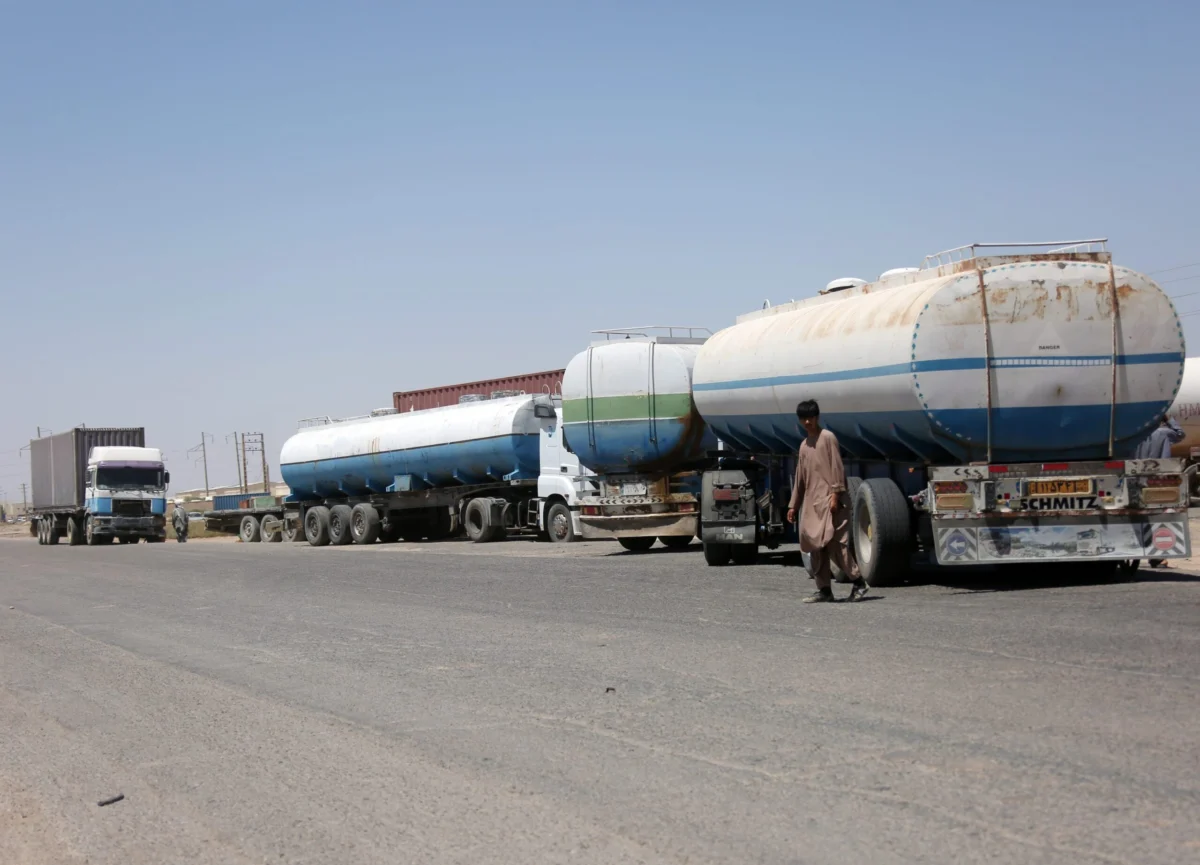
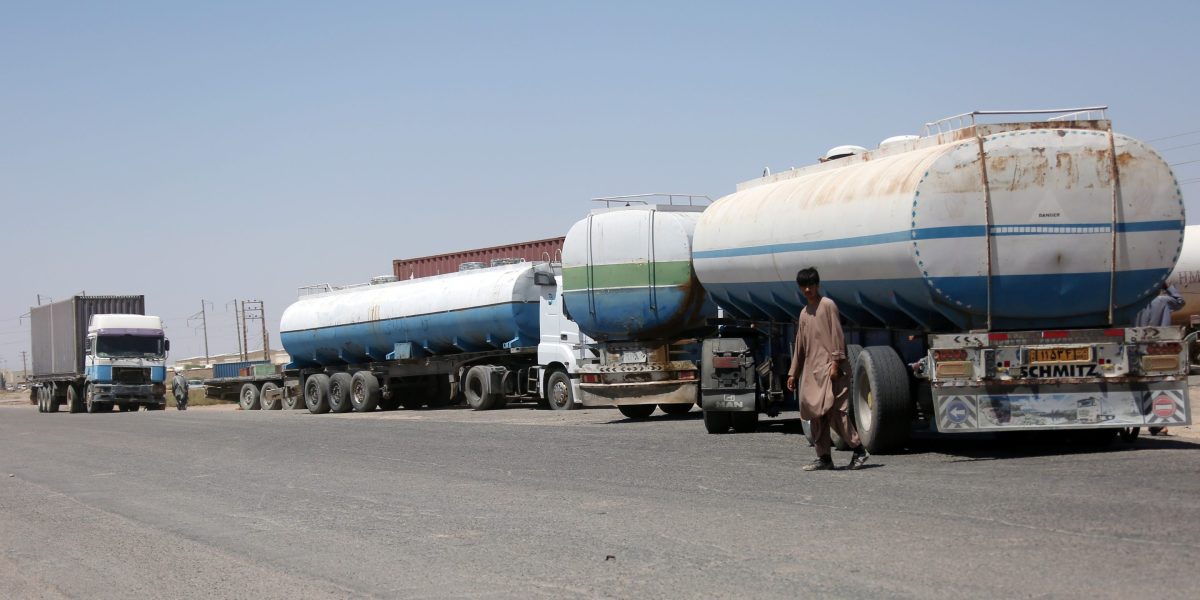
The reliance on land transit has created unprecedented bottlenecks. The infrastructure at these border crossings, never designed to accommodate the sheer volume of redirected maritime freight, has effectively collapsed under the pressure. Reports from border regions describe miles-long queues of heavy-duty vehicles, with drivers facing wait times exceeding three weeks to clear customs. These delays are not merely inconvenient; they are destructive. Perishable goods, including essential food supplies, frequently spoil before they reach their destination, compounding an inflation crisis that has reached a staggering 90%.
The human cost is mirrored by the fiscal cost. Majidreza Hariri, head of the Iran-China Joint Chamber of Commerce, recently noted that the shift from sea to land is economically unsustainable. Shipping a container between Iran and China by sea traditionally costs approximately $3,000. Under the current blockade, the cost of transporting the same cargo over land has skyrocketed to roughly $12,000. Given that Iran’s southern ports typically handle 2 million containers annually, the transition to land routes imposes an estimated $18 billion in additional annual transportation costs—a burden the domestic economy is ill-equipped to absorb.
Chronology of the Strait of Hormuz Conflict
The closure of the Strait of Hormuz, one of the world’s most critical maritime chokepoints, serves as the central pillar of the current U.S. strategy.
- Initial Escalation (Early 2026): Following a series of regional provocations and the subsequent outbreak of the Iran-U.S. conflict, maritime traffic through the Strait of Hormuz experienced a sharp decline as insurance premiums spiked and drone attacks targeted commercial tankers.
- Establishment of the Blockade (Spring 2026): The United States formalizes a "freedom of navigation" enforcement operation, effectively placing the strait under direct military oversight.
- The Shift to Land (Summer 2026): By mid-June, Iranian trucking logistics begin to buckle. Reports from the Afghanistan border indicate wait times of 23 days for commercial transport.
- Current Status (September 2026): CENTCOM reports that primary shipping lanes are now clear of mines and that transit volumes for global oil and gas have returned to near-pre-war levels, while Iran’s own exports have effectively flatlined.
The Shrinking Economy: A Quantitative Assessment
The latest data from Iranian customs, covering the five-month period ending August 22, 2026, paints a grim picture of a nation undergoing economic contraction. Non-oil exports have plummeted by 28% year-on-year to $15 billion, while imports have dropped by 26% to $17 billion.
The decline is particularly acute in the energy sector. Despite being an oil-rich nation, Iran has historically lacked the refinery capacity to meet its domestic fuel needs, relying on the importation of refined petroleum products. With the blockade preventing both the export of crude and the import of refined gasoline, Tehran has been forced to implement aggressive price hikes to curb demand, further fueling domestic unrest.
At the Turkmenistan border, the absence of modern warehousing and digitized customs registration has limited the viability of rail transport, creating a secondary failure point for the state’s attempts to bypass the Gulf. Industry experts within the Iranian Chamber of Commerce have begun to signal that the current trajectory is untenable. "Under these circumstances," one member stated in a recent interview, "there is little alternative but to find a way to restore and maintain the southern trade corridors."
Official Responses and Strategic Perspectives
From the perspective of the U.S. military, the operation is being categorized as a resounding success in securing global energy supplies. Admiral Brad Cooper, head of CENTCOM, announced on September 12 that the U.S. military has successfully facilitated the transit of over 1 billion barrels of oil through the Strait of Hormuz in the last two months, assisting more than 2,000 commercial vessels in the process.
"The strait’s primary transit lanes are now cleared of mines," Admiral Cooper said. "The volume of crude oil, cargo, and liquid natural gas moving through the region over the past two weeks is the highest it has been since the conflict began. Meanwhile, Iran has exported zero barrels thanks to our ironclad blockade."
For the Iranian leadership, the situation has moved beyond a temporary crisis into a existential threat to the regime’s stability. Supreme Leader Ayatollah Mojtaba Khamenei has publicly acknowledged the "anxiety" surrounding the economy, a rare admission of vulnerability from a leader who has historically projected total control. However, analysts suggest that the regime’s history of prioritizing survival over public welfare implies that the government may be willing to endure significant domestic suffering before entertaining concessions.
Broader Implications and Long-Term Analysis
The blockade is fundamentally testing the resilience of the Iranian state versus the political will of the United States. While the U.S. government is banking on "economic warfare" to force a shift in Tehran’s policy, geopolitical analysts caution that the strategy carries long-term risks.
- Industrial Paralysis: As noted by Majidreza Hariri, even if land routes are optimized, the cost of doing business has become prohibitive. Continued reliance on these routes will lead to the "grinding to a halt" of Iranian industrial production, as raw materials become too expensive to import and finished goods too expensive to export.
- Regional Instability: The flooding of trade into neighboring countries like Iraq, Turkey, and Pakistan could create localized inflationary pressures in those states, potentially spreading the economic contagion beyond Iran’s borders.
- The "Waiting Game": The critical variable remains the endurance of the Iranian populace. If the regime continues to suppress dissent while the economy contracts, the conflict could evolve into a protracted state of stagnation. Conversely, if the lack of gasoline and the rise in food costs trigger widespread civil disobedience, the regime may find its internal security apparatus stretched as thin as its supply chains.
Ultimately, the blockade of the Strait of Hormuz has successfully isolated Iran from the global market, but it has also highlighted the limits of using maritime force to dictate domestic outcomes. While the U.S. has achieved the military objective of keeping global energy markets functioning, the economic strangulation of Iran remains a work in progress—a high-stakes experiment in whether a modern economy can be forced to its knees through total logistical isolation. As the year draws to a close, all eyes remain fixed on the border crossings where, for now, the fate of the Iranian economy remains stuck in a multi-week traffic jam.