The Black Death remains etched in global historical memory as one of the most devastating biological catastrophes in human history, sweeping violently across Europe between 1347 and 1353 and decimating an estimated third to half of the continent’s population. Yet, contrary to the popular narrative that the scourge vanished into the annals of medieval history once this initial pandemic wave subsided, the reality was far more agonizingly protracted. The causative agent, the bacterium Yersinia pestis, did not retreat permanently; rather, it settled into a grim, enduring residency across Europe and surrounding regions. For more than four centuries, wave after recurring wave of plague disrupted urban centers, dismantled local economies, fractured societies, and claimed countless lives in what epidemiologists and historians classify as the Second Plague Pandemic.
Now, a groundbreaking multinational study led by geneticists, archaeologists, and historians at the University of Tartu has cast an unprecedented light on this multi-century chapter of microbial terror. By extracting and analyzing ancient DNA preserved within archaeological human remains, scientists have successfully reconstructed the evolutionary trajectory, migratory patterns, and persistent survival mechanisms of Yersinia pestis long after the initial Black Death terror receded. This exhaustive research offers a granular look at how a deadly pathogen establishes itself across diverse geographies, adapts to ecological shifts, and hitches a ride on the engines of human conflict.
Tracing the Genomic Footprint of Ancient Pathogens
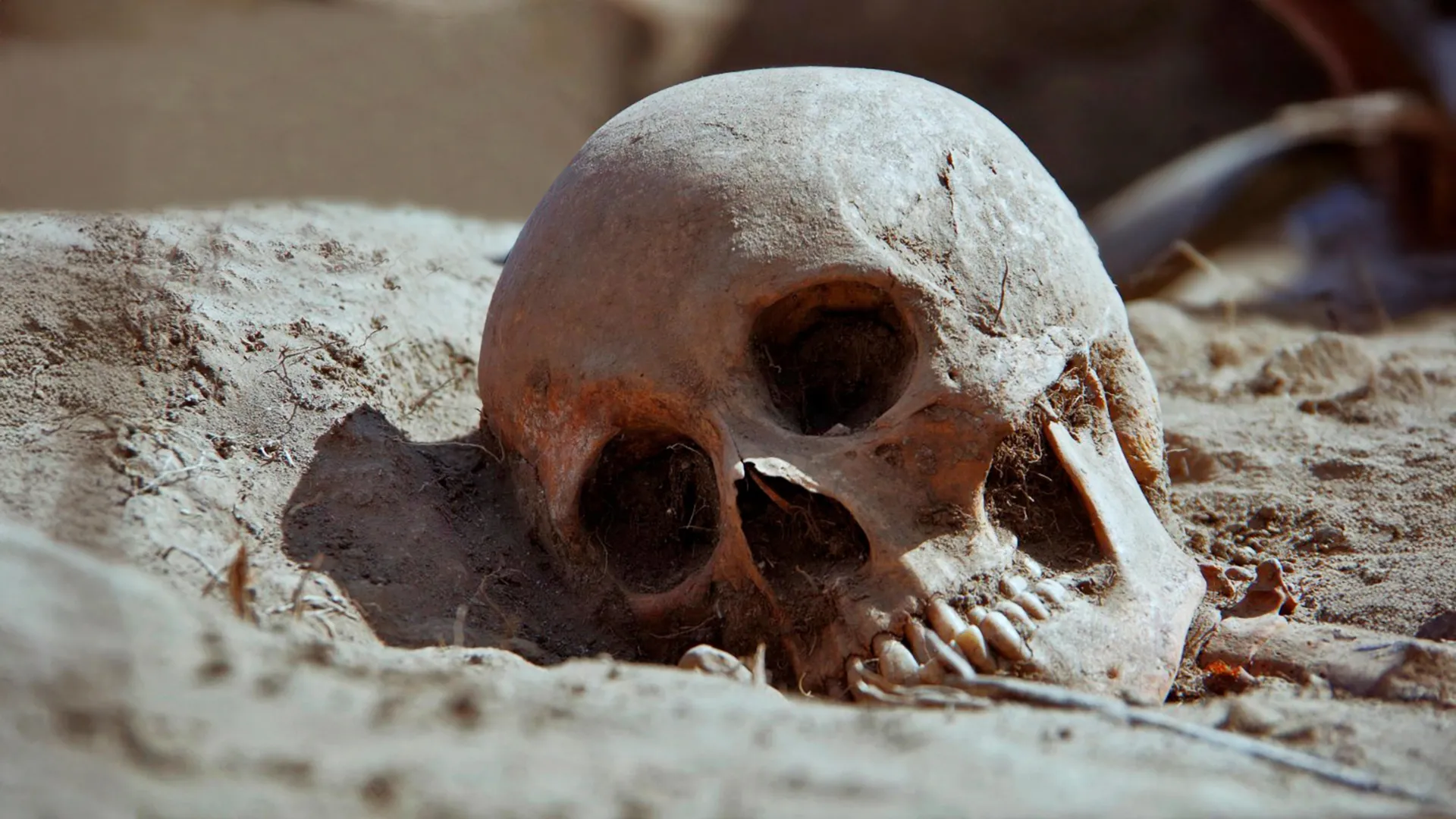
At the core of the study is the successful reconstruction of 26 new Yersinia pestis genomes derived from human skeletal remains unearthed at 11 distinct archaeological sites spanning Estonia, Russia, England, the Netherlands, and Switzerland. These meticulously sampled biological archives date from the fourteenth through the eighteenth centuries, effectively encasing a massive temporal slice of the Second Plague Pandemic.
Rather than confirming the long-held hypothesis that the plague survived in a single, centralized European reservoir from which it periodically radiated outward, the genetic evidence paints a far more complex picture. Instead of a singular source, the bacterium appears to have repeatedly resurfaced across disparate regions of Europe over hundreds of years. This dynamic points to the continuous creation of multiple localized or regional reservoirs where Yersinia pestis managed to take root, likely in wild rodent populations, and persist independently.
Estonia, situated on the fringes of major medieval trade and conflict corridors, was particularly vulnerable. The genomic data revealed clear markers indicating that the plague entered the Estonian region on multiple distinct occasions throughout the pandemic’s lifespan. This steady influx underscores how deep-seated trade networks and geopolitical connectivity facilitated the long-distance transmission of the pathogen, transforming regional hubs into vectors for continuous reinfection.
A pivotal evolutionary turning point occurred between 1450 and 1500. During this narrow window, Yersinia pestis lineages underwent a profound genetic expansion, fracturing into three major, distinct branches. According to the research team, this evolutionary diversification likely catalyzed the establishment of brand-new bacterial reservoirs embedded within wild rodent ecosystems across Europe.
Environmental factors may have played a critical role in fueling this expansion. The researchers point to the Great Renaissance Drought as a potential catalyst. Modern epidemiological studies of contemporary plague dynamics demonstrate that significant climatic shifts can violently disrupt rodent ecology, altering flea vectors’ behavior and precipitating dramatic spillover events into human communities.
"We found evidence for repeated introductions of plague into Estonia starting already in the late 14th century and identified several previously unknown genetic lineages, both in urban and rural settings," noted senior author Professor Kristiina Tambets, highlighting the pervasive nature of the threat across varying demographic landscapes.
Overcoming the Chronological Blind Spots of History
One of the most formidable hurdles in paleogenomics—the study of ancient DNA—is the challenge of absolute dating. During modern health crises, such as the COVID-19 pandemic, researchers are aided immeasurably by real-time genomic surveillance coupled with precise, down-to-the-day timestamps. Every sequenced viral variant can be meticulously mapped along a clear, linear timeline.
In stark contrast, historical paleopathologists must contend with severe chronological fog. Human remains recovered from archaeological contexts are routinely dated using radiocarbon techniques, which inherently yield broad statistical time windows often spanning several decades or even more than a century. This temporal fuzziness has historically hindered scientists’ ability to tightly couple genetic mutations with specific historical outbreaks documented in contemporary chronicles.
"With COVID-19, scientists could reconstruct the spread of individual strains extremely well because the genomes came with precise timestamps. For historical pandemics, those timestamps are often missing or may cover more than 100 years, which limits our ability to interpret the genetic data," explained lead author Dr. Marcel Keller.
To bypass this roadblock, the research consortium devised an innovative methodological framework. By examining the precise phylogenetic placement of individual ancient plague genomes on the bacterium’s broader evolutionary tree, the team leveraged genetic clock models to refine and narrow down the estimated dates of the samples. This sophisticated approach allowed them to anchor ancient infections within a much tighter, highly resolved historical timeline.
Building upon this refined dating protocol, the researchers synthesized their newly sequenced genomes with 64 previously published ancient plague genomes. This massive undertaking marks the first time scientists have systematically cross-referenced nearly all available plague genomic data from the fourteenth through the eighteenth centuries directly against historical municipal and regional outbreak records.
"We were able to improve dating intervals for many samples, which allowed us to connect them to specific plague waves and outbreaks that were recorded in the respective towns or regions by chroniclers," observed historian and corresponding author Professor Philip Slavin. This synthesis bridges the often-fractured worlds of hard molecular science and qualitative historical scholarship.
War, Migration, and the Geopolitics of Contagion
Beyond tracing evolution and climate triggers, the genetic record offers undeniable proof of how deeply human activity—specifically warfare and mass migration—shaped the geography of disease. The newly analyzed genomes provide robust molecular evidence linking specific plague resurgences directly to the devastation of the Thirty Years’ War (1618–1648) and the Great Northern War (circa 1700–1721).
During these protracted conflicts, military campaigns served as devastating epidemiological vectors. Armies on the march, displaced civilian populations, desperate refugees, and opportunistic merchants continuously traversed overlapping routes. These movements effectively knitted together previously isolated communities, providing an uninterrupted highway for Yersinia pestis to leap across regional and international borders.
"We see how Yersinia pestis splits into new branches during periods of conflict and spreads along the routes traveled by troops and displaced populations," emphasized senior author Dr. Christiana L. Scheib.
The empirical data brings chilling clarity to specific historical events, such as the catastrophic 1710 siege of Tallinn during the Great Northern War. Historical chronicles and genomic markers converge to show how the disease ripped through the beleaguered city, indiscriminately felling Swedish soldiers, Russian besiegers, and local civilian populations alike. These findings reinforce the grim reality that human conflict has historically been one of the most effective catalysts for epidemiological disaster, weaponizing mobility against human populations.
The Broader Implications for Modern Epidemiology
While bubonic and pneumonic plague no longer pose a widespread public health emergency in Europe—largely thanks to modern sanitation, targeted antibiotics, and shifts in urban ecology—Yersinia pestis is far from extinct. The bacterium remains endemic, quietly persisting within natural wild rodent reservoirs across several regions of the globe, including parts of the Americas, Africa, and Asia.
Epidemiologists and infectious disease specialists argue that unlocking the deep history of the Second Plague Pandemic offers invaluable lessons for contemporary disease surveillance and global health security. By mapping how a lethal pathogen successfully colonized a continent, maintained its presence across centuries of shifting human societies and climates, and eventually receded, researchers can better anticipate the long-term behavioral trajectories of emerging infectious threats today.
Integrating ancient genomics with archaeological, historical, and ecological data provides a holistic template for understanding how novel pathogens emerge, adapt to new hosts, establish enduring ecological reservoirs, and persist over generational time scales. As global climate change and human encroachment continue to alter natural ecosystems and wildlife habitats, insights gleaned from centuries-old bones may well help safeguard modern populations against future zoonotic spillovers.
A Multidisciplinary Triumph in Historical Science
The success of this comprehensive study underscores the power of modern collaborative science. The project united a diverse constellation of institutions and expertise across Europe, drawing upon biological samples and technical proficiencies from the University of Tartu, the University of Cambridge, and prominent research hubs in the Netherlands and Switzerland.
By fusing cutting-edge paleogenomics with rigorous archaeology, archival historical research, and advanced radiocarbon dating methodologies, the research team has constructed what is indisputably the most complete and nuanced genetic picture of the Second Plague Pandemic compiled to date. Their findings dismantle the myth of the Black Death as a singular, isolated historical anomaly, recasting it instead as the opening act of a centuries-long epidemiological drama. It was a relentless pathogen that continuously crossed borders, mutated into novel strains, preyed upon the vulnerabilities of human conflict, and fundamentally shaped the demographic and social trajectory of Europe for generations.