The healthcare landscape of the Middle East has faced unprecedented challenges over recent years, driven by regional conflicts, massive refugee influxes, and systemic economic pressures. Against this complex backdrop, World Health Organization (WHO) Director-General Dr. Tedros Adhanom Ghebreyesus arrived in the Hashemite Kingdom of Jordan for a high-stakes, two-day State visit. The diplomatic and humanitarian mission was designed to spotlight Jordan’s exemplary role as a regional anchor of stability, medical evacuation, and healthcare resilience. Throughout the first day of his itinerary, Dr. Tedros engaged in high-level political dialogues, inspected specialized medical facilities treating evacuees from the Gaza Strip, and coordinated with international donors and philanthropic organizations to secure sustainable financing for health systems across the Levant and broader Eastern Mediterranean region.
The visit carried profound symbolic and practical weight, underscored by a high-profile audience with His Majesty King Abdullah II. The discussions between the monarch and the WHO chief centered on the fortification of national health systems, the expansion of equitable access to primary care, and the urgent imperative to sustain emergency health operations for vulnerable populations. Of primary concern during the deliberations was the ongoing humanitarian catastrophe in Gaza, the complex logistics surrounding the transfer and treatment of severely injured or ill patients evacuated to Jordanian hospitals, and the protracted socioeconomic pressures of hosting millions of refugees.
Jordanian Leadership and Humanitarian Commitment to Refugees
Jordan’s standing as a sanctuary for displaced populations remains a cornerstone of its national identity and foreign policy. The kingdom currently hosts upwards of three million refugees, predominantly originating from neighboring Syria and, more recently, individuals displaced by the devastating conflict in Gaza. Despite bearing immense financial and infrastructure strains, Jordan has consistently maintained an open-door policy regarding humanitarian aid and basic public services.
Dr. Tedros explicitly commended this steadfast generosity during his royal audience and subsequent public addresses. He praised King Abdullah II for personal dedication to universal health coverage (UHC) and expressed profound gratitude on behalf of the international community for absorbing millions of refugees into the national health grid. A key element of this humanitarian architecture is the King Abdullah II Medical Corridor initiative—a vital logistical and clinical pathway designed to airlift and treat critically ill and injured children from Gaza who cannot receive adequate care locally due to the collapse of health infrastructure in the besieged enclave.
By facilitating these complex medical transfers, Jordan has demonstrated an extraordinary commitment to putting humanity ahead of geopolitical friction. The WHO Director-General noted that the kingdom’s approach serves as a global benchmark for resilience, compassion, and structural integration of refugees into domestic public health planning.
Frontline Realities: Hospital Inspections and Patient Encounters
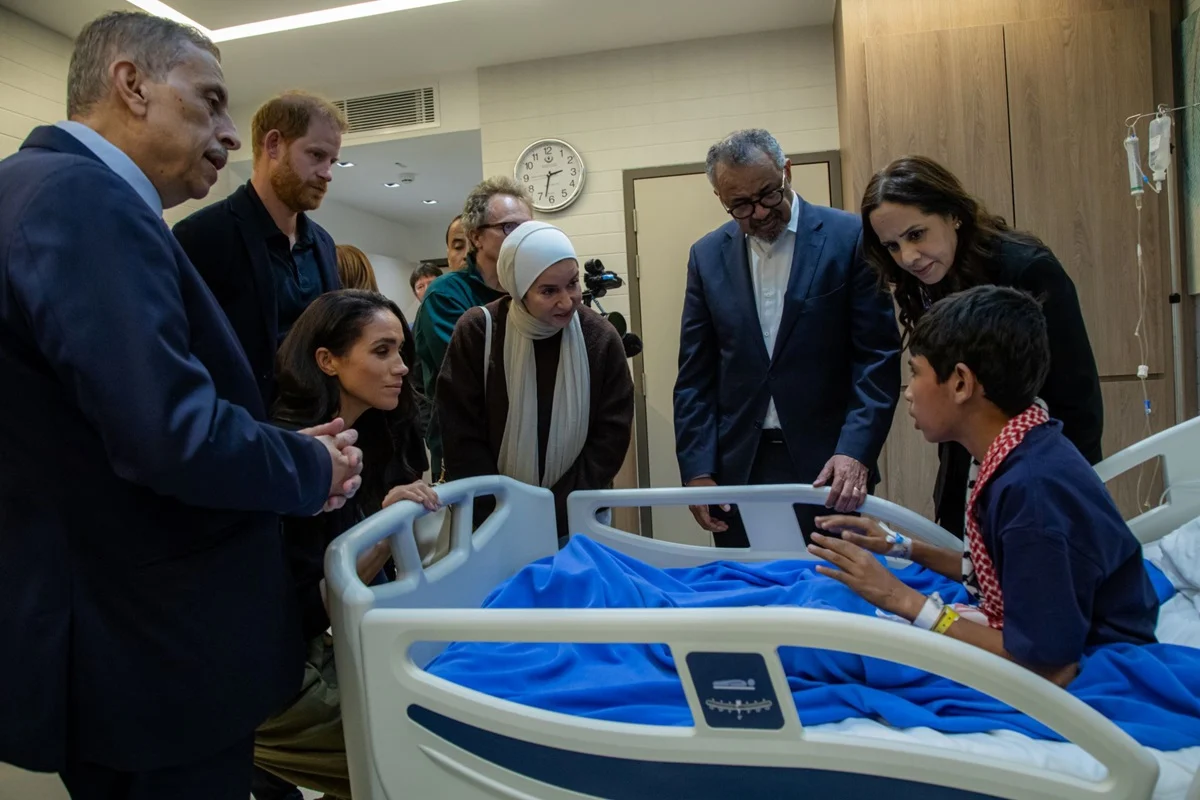
The realities of regional conflict and international medical solidarity converged during Dr. Tedros’s visit to a specialized, WHO-supported Jordanian hospital currently providing advanced pediatric care to children evacuated from Gaza. Accompanied by healthcare administrators and international delegates, the WHO chief walked the wards to meet young patients, their families, and the multidisciplinary teams of doctors, nurses, and technicians delivering life-saving interventions.
The facility visits shed light on the intense clinical demands facing Jordanian medical personnel. Patients evacuated through the humanitarian corridor often present with complex trauma injuries, advanced malignancies, and chronic conditions exacerbated by months of displacement, malnutrition, and a lack of pharmaceutical supplies. Frontline workers briefed the delegation on the logistical hurdles of treating acute injuries alongside specialized cancer care, emphasizing that these operations rely entirely on unhindered access corridors and predictable international funding streams.
Dr. Tedros stressed that the continuation of the medical evacuation corridor is non-negotiable for saving young lives. He called upon the international donor community to match Jordan’s domestic sacrifices with robust, sustained financial packages to ensure that regional hospitals are not left to shoulder the economic and operational burden alone.
High-Level Partner Consultations and Financing Priorities
Addressing the broader structural requirements of regional health security, Dr. Tedros convened an exclusive, high-level roundtable meeting with key health partners, bilateral donor countries, United Nations agencies, and prominent philanthropic foundations. The agenda focused heavily on mobilizing resources for health system strengthening within Jordan, scaling up mental health services in emergency zones, and supporting host nations grappling with protracted refugee crises.
Participants examined the widening gap between humanitarian needs and available funding across the Eastern Mediterranean region. Donors evaluated strategic investment priorities aimed at bolstering primary healthcare networks, enhancing supply chain resilience for essential medicines, and expanding workforce capacity to prevent burnout among medical professionals operating in high-stress environments.
The WHO chief welcomed the proactive engagement of international partners, noting that investments in Jordan’s healthcare infrastructure yield dividends for regional stability. By reinforcing health systems at the primary care level, international stakeholders can mitigate the long-term socioeconomic costs of untreated chronic illnesses and severe psychological trauma among displaced populations.
Bilateral Engagements on Universal Health Coverage and Mental Health
In addition to multilateral consultations, Dr. Tedros held extensive bilateral talks with Jordan’s Minister of Health. The discussions drilled down into the mechanics of achieving comprehensive universal health coverage (UHC) through structural primary healthcare reforms. Jordan has steadily distinguished itself globally by embedding primary health care at the heart of its national strategy, successfully integrating specialized services—such as mental health care—into routine community clinic operations.
This integration is a crucial component of the WHO Director-General’s Special Initiative for Mental Health. In conflict-affected regions, the psychological toll on civilians, children, and combatants alike often manifests as long-term post-traumatic stress disorder, anxiety, and depression. By training general practitioners at primary health centers to recognize and treat common mental health conditions, Jordan has effectively reduced the stigma traditionally associated with psychiatric care and expanded access for marginalized populations. The WHO pledged continued technical assistance to help Amman refine and scale these innovative community-based health models.
High-Profile Advocacy: The Role of Archewell Philanthropies
Adding a distinct dimension of global visibility to the state visit, Dr. Tedros was accompanied throughout several key engagements by Prince Harry, Duke of Sussex, and Meghan, Duchess of Sussex. Participating in their capacities as founders of Archewell Philanthropies and long-standing advocates for global public health, the Duke and Duchess brought international attention to the intersecting crises of mental health in emergencies and equitable access to medical care.
Archewell Philanthropies has previously partnered with the WHO on critical initiatives, ranging from advocacy for equitable COVID-19 vaccine distribution to supporting targeted medical evacuation and mental health support programs. During the Jordan visit, Prince Harry participated actively as a leading ally of the WHO’s mental health agenda. His engagements focused on the urgent necessity of investing in psychological resilience across communities fractured by war and displacement, with a specific focus on the mental health needs of men, adolescents, and children.
Expressing gratitude for their sustained partnership, Dr. Tedros remarked that the involvement of Prince Harry and Meghan, Duchess of Sussex, helps pierce through media fatigue, bringing vital resources, awareness, and hope to populations that might otherwise be forgotten by the international community.
The Duke of Sussex echoed these sentiments during a joint appearance, emphasizing the foundational role of mental health in post-conflict recovery and human dignity.
"It is an honour to join the Director-General of the World Health Organization in Jordan, a country that is leading by example in compassion, resilience, and innovation," Prince Harry stated. "Through our work with Archewell Philanthropies, my wife and I have seen first-hand the impact of WHO’s efforts to support mental health and deliver life-saving care in emergencies. We remain deeply committed to advancing awareness, reducing stigma, and expanding access to mental health support for all those affected by conflict and crisis. Mental health is fundamental to recovery, dignity, and long-term peace, and we are proud to stand with WHO and partners around the world to make it a global priority."
Chronology and Agenda for Day Two
As the state visit transitions into its second and final day, Dr. Tedros’s schedule reflects a diverse cross-section of Jordan’s domestic health and social infrastructure. The itinerary includes a targeted site visit to Jordan’s National Center for Rehabilitation of Addicts, a specialized facility supported by WHO that delivers comprehensive medical, psychological, and social rehabilitation services.
Following this, the Director-General is scheduled to meet with prominent community leaders and women’s advocacy organizations, including representatives from the Jordanian Hashemite Fund for Human Development (JOHUD), to evaluate grassroots initiatives addressing health equity and social determinants of health. The day will also feature an inspection of the renowned King Hussein Cancer Center, where Dr. Tedros will review cutting-edge advancements in regional oncology care, digital health integration, and cross-border clinical research collaborations.
The two-day diplomatic mission will draw to a close with a series of wrap-up meetings involving humanitarian logistics coordinators and multilateral partners. These final sessions are intended to cement operational frameworks for future emergency responses, ensuring that Jordan remains fully equipped to function as a vital, unshakeable humanitarian hub for medical evacuation and health system resilience across the Middle East.