The Hashemite Kingdom of Jordan has long served as a vital anchor of stability, medical humanitarianism, and progressive public health policy in an intensely volatile region. This legacy took center stage as World Health Organization (WHO) Director-General Dr. Tedros Adhanom Ghebreyesus arrived in Amman to kick off a comprehensive, high-profile two-day State visit. The visit is designed to evaluate, reinforce, and expand the multifaceted partnership between the WHO and the Jordanian government, focusing intensely on universal health coverage (UHC), cutting-edge mental health integration, and robust humanitarian emergency response operations.
From high-level diplomatic deliberations with the highest echelons of the Jordanian monarchy to ground-level inspections of specialized medical facilities treating vulnerable evacuees from regional conflicts, the visit underscores Jordan’s remarkable capacity to shoulder immense humanitarian responsibilities. Accompanied by prominent global advocates, Dr. Tedros’s itinerary maps out a blueprint for how nations can successfully institutionalize primary healthcare, champion equitable access for millions of refugees, and prioritize psychosocial well-being amid protracted regional crises.
High-Level State Diplomacy and Royal Leadership
The cornerstone of the Director-General’s opening day was an official audience with His Majesty King Abdullah II in Amman. The high-level meeting served as a powerful testament to Jordan’s proactive stance in positioning public health not merely as a localized service, but as a foundational pillar of national security and international stability. Discussions in the royal palace centered on critical strategic pathways: systematically strengthening resilient health systems, aggressively expanding healthcare access to marginalized populations, and securing long-term, sustainable international financing for ongoing regional emergency responses.
Particular emphasis was placed on Jordan’s unwavering commitment to the Palestinian people, specifically addressing the complex logistics surrounding patients medically evacuated from the Gaza Strip into Jordanian hospitals for specialized, life-saving care. Furthermore, the dialogue thoroughly evaluated the enormous socio-economic and healthcare burdens shouldered by the Kingdom in hosting millions of displaced individuals.
"I wish to express my appreciation to His Majesty King Abdullah II for his commitment to advancing universal health coverage," Dr. Tedros stated following the conclusion of the royal audience. "I also extend my thanks to His Majesty and the people of Jordan for their solidarity and generosity in providing health services to more than three million refugees, primarily from Gaza and Syria, who are living in the country."
Dr. Tedros specifically lauded the innovative humanitarian mechanisms engineered by the Jordanian monarchy, highlighting His Majesty’s Medical Corridor initiative. This pioneering framework has cut through bureaucratic and logistical red tape to deliver rapid, high-level clinical care to critically ill and severely injured children evacuated from active conflict zones in Gaza. By consistently putting health and human dignity above geopolitical friction, Jordan continues to demonstrate exemplary global leadership.
Ground-Level Realities: Witnessing Life-Saving Care in Specialized Facilities
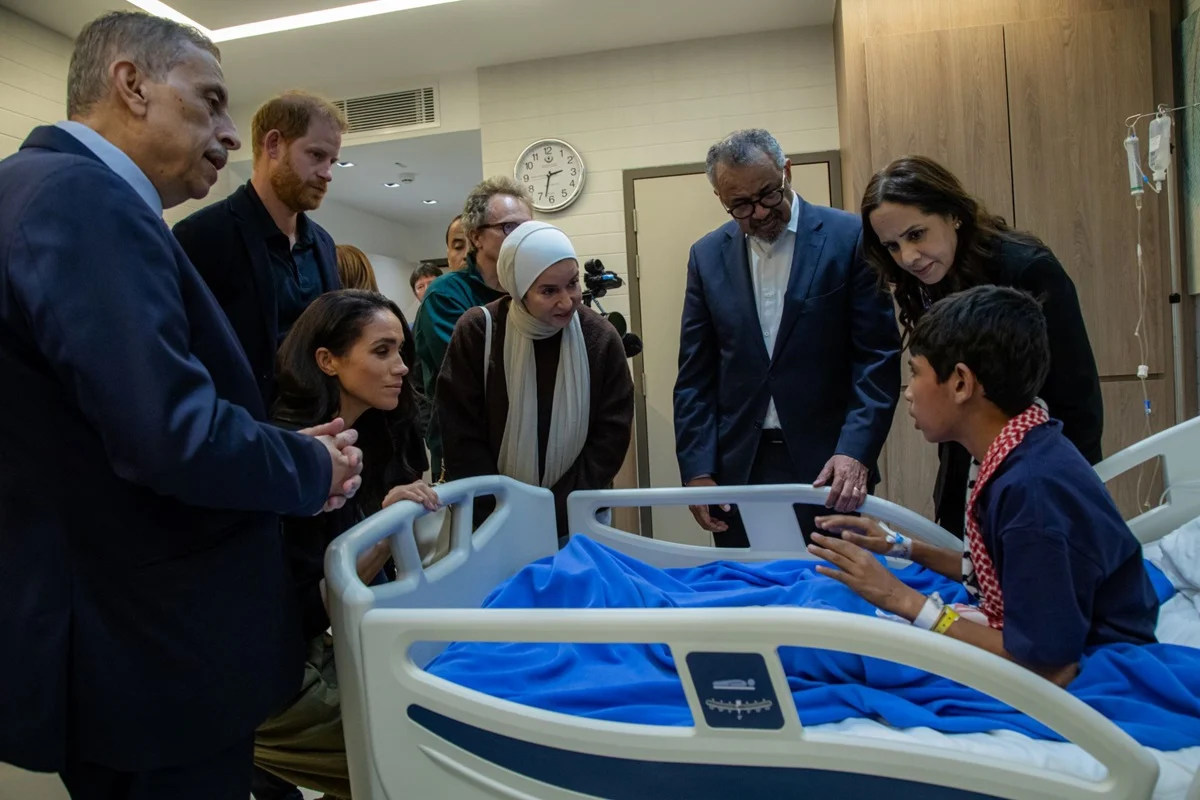
Transitioning from macro-level diplomacy to human-centered impact, Dr. Tedros spent a significant portion of his first day on the ground visiting a specialized, WHO-supported medical facility in Amman. This institution plays a pivotal role in the ongoing medical evacuation pipeline, providing intensive, specialized care to pediatric patients evacuated directly from the Gaza Strip.
Walking through the hospital wards, the WHO chief met directly with young patients undergoing protracted treatments, their families, and the resilient frontline healthcare workforce. These medical professionals work tirelessly under immense pressure to deliver life-saving interventions for severe traumatic injuries, advanced pediatric oncology, and other complex, life-threatening medical conditions.
The field visit underscored the irreplaceable value of the medical evacuation corridor established through Jordan. However, it also served as a stark reminder of the immense financial and logistical strains placed on host nations, highlighting an urgent need for sustained, predictable international donor support. Without robust global solidarity, maintaining the pipeline that ensures children and civilians trapped in conflict can access essential, tertiary-level care remains perilously vulnerable to funding shortfalls.
Mobilizing Resources: High-Level Partner and Donor Convenings
Recognizing that frontline humanitarian action and health system resilience require sustainable financial architecture, Dr. Tedros convened an exclusive, high-level strategic meeting later in the day. The gathering brought together key international health partners, major donor government representatives, United Nations sister agencies, and influential global philanthropic organizations.
The core agenda of the multilateral convening focused on hammering out concrete financing priorities designed to fortify Jordan’s national health infrastructure while simultaneously sustaining vital regional humanitarian operations. Key discussion points included scaling up comprehensive mental health services across community settings and alleviating the fiscal strain on countries hosting disproportionately large refugee populations.
Participants engaged in rigorous dialogue regarding burden-sharing mechanisms. Dr. Tedros publicly welcomed the strong collaborative spirit demonstrated by international partners, urging them to translate high-level commitments into long-term, predictable financial investments. Strengthening Jordan’s healthcare grid is viewed by international experts not just as a national development objective, but as a strategic investment in regional health security.
Advancing Universal Health Coverage and Mental Health Integration
In parallel with his multilateral engagements, Dr. Tedros held a series of bilateral policy discussions with Jordan’s Minister of Health. The talks zeroed in on national strategies designed to deepen the institutionalization of universal health coverage through a robust primary healthcare delivery model.
Jordan has steadily risen as a global trailblazer in primary care reform, most notably through its pioneering efforts to seamlessly integrate mental health services into routine, community-level healthcare clinics. Rather than treating mental health as an isolated, stigmatized specialty, the Jordanian model ensures that psychological support is accessible to patients as a standard component of primary medical consultations.
This progressive integration is actively supported by the WHO Director-General’s Special Initiative for Mental Health. By embedding psychological first aid and psychiatric care into everyday clinical workflows, Jordan is successfully dismantling historical stigmas and ensuring that populations affected by protracted conflicts and domestic stresses can access holistic recovery pathways.
Global Advocacy and Philanthropic Partnership with Archewell
A distinctive dimension of the Director-General’s delegation was the active participation of Prince Harry, Duke of Sussex, and Meghan, Duchess of Sussex. Attending in their official capacities as founders of Archewell Philanthropies and long-standing strategic partners of the WHO, the Duke and Duchess brought heightened global visibility to the visit.
Archewell Philanthropies has cultivated a deep, multi-year collaboration with the WHO, providing crucial financial and advocacy support across diverse public health portfolios. These range from campaigning for equitable global distribution of medical countermeasures during public health emergencies to underwriting specialized mental health programs and medical evacuation logistical frameworks.
Throughout the Jordan engagements, Prince Harry participated actively as a leading global advocate for the WHO’s mental health initiatives. He consistently emphasized the critical imperative of investing heavily in psychological resilience across both stable communities and acute emergency settings, with an intentional focus on vulnerable demographics, including men, adolescents, and children.
Dr. Tedros praised the enduring contributions of the royal couple. "I want to thank our partners, including Prince Harry, Duke of Sussex and Meghan, Duchess of Sussex, whose commitment to mental health and humanitarian action has helped bring visibility, resources and hope to some of the world’s most vulnerable communities," Dr. Tedros remarked. "Their collaboration is helping to advance WHO’s mission to ensure health for all."
Reflecting on the ground realities observed during the mission, Prince Harry shared his perspective on the transformative power of compassionate healthcare delivery.
"It is an honour to join the Director-General of the World Health Organization in Jordan, a country that is leading by example in compassion, resilience and innovation," Prince Harry stated. "Through our work with Archewell Philanthropies, my wife and I have seen first-hand the impact of WHO’s efforts to support mental health and deliver life-saving care in emergencies. We remain deeply committed to advancing awareness, reducing stigma and expanding access to mental health support for all those affected by conflict and crisis. Mental health is fundamental to recovery, dignity and long-term peace, and we are proud to stand with WHO and partners around the world to make it a global priority."
Day Two Itinerary: Rehabilitation, Community Resilience, and Advanced Oncology
As the two-day State visit transitions into its final phase, Dr. Tedros’s itinerary continues to showcase the breadth and depth of Jordan’s health infrastructure. The second day features a scheduled site visit to Jordan’s National Center for Rehabilitation of Addicts. This specialized institution, operating with critical technical and programmatic support from the WHO, delivers integrated medical, psychological, and social rehabilitation services, serving as a regional model for compassionate, evidence-based substance use treatment.
Additionally, the Director-General is slated to engage directly with grassroots community leaders and prominent women’s empowerment organizations, including the esteemed Jordanian Hashemite Fund for Human Development (JOHUD). These sessions are designed to evaluate how community-led networks drive grassroots health awareness, maternal-child health, and socio-economic resilience.
The final leg of the mission includes an official inspection tour of the globally renowned King Hussein Cancer Center (KHCC). Discussions at KHCC will focus on pioneering advancements in regional oncology care, digital health innovations, and cross-border collaborative research networks designed to elevate cancer survival rates across the Eastern Mediterranean region.
Broader Implications and Strategic Outlook
Public health analysts and geopolitical observers view Dr. Tedros’s State visit to Jordan as a watershed moment for regional health diplomacy. By spotlighting Jordan’s dual role as an oasis of progressive health reform and an indispensable humanitarian staging ground, the WHO is signaling to the international community that host nations bearing outsized regional burdens must be backed by tangible, structural solidarity.
As protracted conflicts continue to displace millions and strain public infrastructure across the Middle East, the collaborative frameworks forged between the WHO, the Jordanian government, and philanthropic entities like Archewell Philanthropies offer a resilient template for the future. The visit concludes with renewed commitments from international stakeholders to reinforce humanitarian supply chains, safeguard medical corridors, and cement mental health as an uncompromised pillar of global health security.