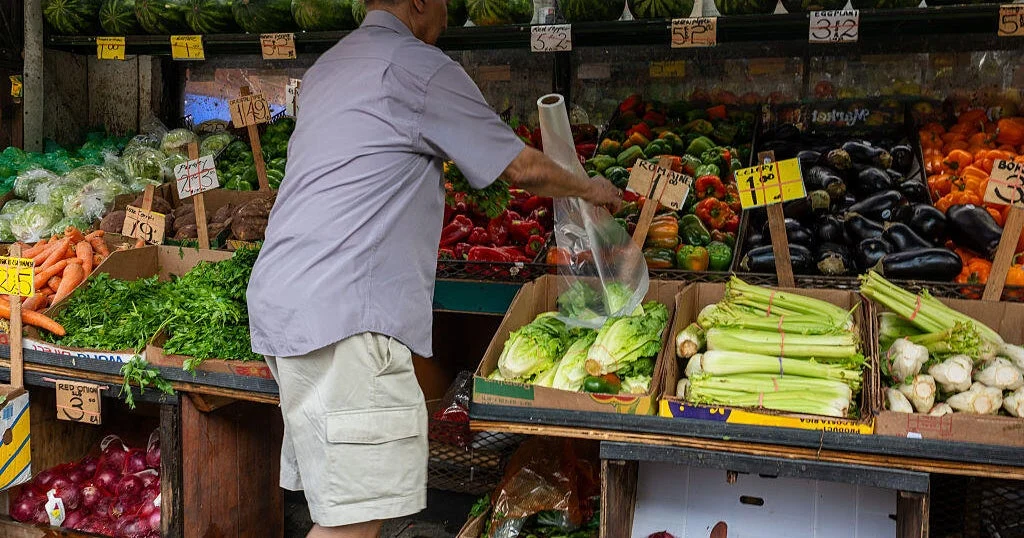
Food safety has unexpectedly erupted into a central flashpoint of the United States midterm elections, transforming grocery aisles and restaurant menus into battlegrounds for partisan debate. What began as a troubling summer marked by historic foodborne illness outbreaks and sweeping agricultural recalls has rapidly evolved into a high-stakes national political conversation. As voters increasingly scrutinize the safety of their everyday meals, political leaders are clashing over the root causes of these crises, regulatory oversight, and the future of federal public health protections.
The intersection of public health and partisan politics highlights a profound shift in voter priorities. While pocketbook issues such as grocery inflation and household budgeting traditionally dominate midterm cycles, the recent convergence of high-profile product recalls, widespread bacterial and parasitic contaminations, and sharp policy debates has left millions of consumers questioning the reliability of the national food supply. With public confidence dipping to historic lows, both major political parties are vying to shape the narrative, utilizing food safety as a crucial mechanism to sway voters ahead of the ballot box.
A Summer of Historic Outbreaks and Widespread Recalls
The foundation of the current political firestorm lies in a punishing season for public health. The summer months were marred by a massive, record-breaking outbreak of cyclosporiasis linked to contaminated lettuce. According to data compiled by the Centers for Disease Control and Prevention (CDC), the outbreak generated nearly 20,000 laboratory-confirmed cases of illness across 21 states between May and August. This figure dwarfs the 1,180 cases recorded during the exact same timeframe in the previous year, securing its place in epidemiological history as the largest recorded outbreak of the parasite in the United States.
Simultaneously, federal authorities announced the recall of tens of thousands of pounds of imported raw meat products, while routine inspections flagged various other contamination vectors. Major fast-food chains and casual dining establishments—including household names like Chipotle and Taco Bell—scrambled to mitigate consumer fears by proactively yanking suspect ingredients such as lettuce and jalapeños from their menus. Late-night comedy hosts and social media influencers quickly seized on the graphic symptoms associated with the outbreaks, amplifying public awareness and injecting a sense of acute anxiety into the cultural zeitgeist.
In the face of these developments, public health advocates and consumer watchdog organizations stepped forward to contextualize the scale of the disruption. Teresa Murray, consumer watchdog director with the U.S. Public Interest Research Group (PIRG), noted that the combination of recognizable brand names and a colossal volume of illnesses made the threat uniquely tangible to the American public.
Diverging Narratives on Regulatory Statistics and Oversight
As the public health crisis mounted, a fierce statistical debate emerged between federal agencies, political campaigns, and independent researchers regarding the true trajectory of food safety in the United States.
The administration and its defenders have pushed back aggressively against criticism, pointing to official data to argue that the food supply remains fundamentally secure. The Food and Drug Administration (FDA) published social media advisories asserting that recalls for fiscal year 2026 are tracking near the lowest levels recorded in over a decade. High-ranking health officials echoed these sentiments, accusing political opponents and independent critics of engaging in fearmongering and leveraging routine regulatory actions to score cheap political points.
However, independent food safety experts and epidemiologists have raised serious methodological concerns regarding the administration’s data claims. Analysts, including Susan Mayne—who directed the FDA’s Center for Food Safety and Applied Nutrition from 2015 to 2023—pointed out that broad agency recall tallies often encompass non-food items, including pharmaceuticals and medical devices. Relying on such aggregate data to claim a decline in food-specific recalls, critics argue, provides a misleading picture of safety conditions in agricultural and processing sectors.
Furthermore, broader long-term datasets present a more complex picture. While the total number of food recalls in 2026 has hovered roughly on par with the previous year, historical analyses reveal an upward trajectory over a broader horizon. Data from regulatory compliance software provider Trace One indicates that total U.S. food recalls grew by 21% between 2021 and 2025. This rise was largely driven by an increase in Class I recalls—the highest priority classification reserved for products capable of causing severe adverse health consequences or death.
Public Confidence and the Political Crossfire
The persistent stream of outbreak headlines has taken an undeniable toll on consumer confidence. A Quinnipiac University survey conducted in July revealed that a majority of registered voters harbor little to no confidence in government oversight regarding food safety, with Democratic respondents demonstrating particularly acute skepticism. A separate survey administered by data standards organization GS1 US indicated that 94% of American adults are concerned about the frequency of food recalls.
Compounding this anxiety, collaborative research released in September by the University of Illinois and Purdue University showed that the share of consumers who strongly agree the U.S. food system reliably produces safe food plummeted to approximately 30% in August, down sharply from 40% in November of the previous year.
Sensing a vulnerability, Democratic lawmakers have launched a coordinated offensive against the administration’s handling of public health agencies. Figures such as Senator Elizabeth Warren (Mass.) and Representative Gabe Amo (R.I.) have publicly criticized the White House for implementing budget cuts, reducing the workforce, and stalling key regulatory enforcement mechanisms. The Democratic National Committee utilized social media platforms to circulate lists of recalled grocery items, directly tying the public health disturbances to leadership decisions within the Department of Health and Human Services (HHS) and demanding accountability from top health officials.
Critics argue that the administration’s stated commitment to food safety is contradicted by policy rollbacks. Earlier this year, the USDA withdrew a proposed rule initiated during the previous administration that aimed to establish stricter limits on salmonella contamination in raw poultry. Additionally, the administration delayed compliance deadlines for comprehensive supply chain traceability rules—originally slated to take effect in January—pushing full implementation out to July 2028 after receiving pushback from industry stakeholders concerned about regulatory burdens.
The Administration’s Defense and Counter-Strategy
In response to mounting political pressure, administration officials have strongly defended their record, maintaining that federal inspection capabilities and outbreak response infrastructures remain fully robust.
HHS spokesperson Grace Davis Jamison emphasized in communications that core investigative personnel at both the FDA and the CDC were insulated from recent federal workforce adjustments. According to the administration, specialized investigative teams have operated at full capacity, coordinating seamlessly with state and local health departments across all 50 states to rapidly isolate contamination sources and issue timely public warnings.
Administration defenders also point to proactive policy initiatives aimed at modernizing the agricultural sector. Proponents argue that recent executive actions—such as measures designed to assist small-scale livestock operations in local slaughter and processing—are intended to foster a more resilient, decentralized agricultural economy. Furthermore, trade adjustments involving beef imports from international partners are framed as strategic efforts to stabilize market pricing and supply chain diversity.
Implications for the Midterm Elections and the Future of Agriculture
As the countdown to the midterm elections continues, the food safety debate shows no signs of abating. For political strategists, the issue represents a potent wild card capable of mobilizing concerned voters who might otherwise remain unengaged. Democrats continue to position themselves as the defenders of rigorous consumer protections and robust regulatory oversight, while Republicans frame their agenda around economic flexibility, deregulation, and bureaucratic efficiency.
Beyond the immediate political fallout, public health experts warn that the ongoing politicization of food safety carries tangible economic and behavioral consequences. Consumer uncertainty has already altered purchasing habits, with nearly half of all shoppers modifying their grocery selections and 40% altering their dining-out behaviors due to contamination concerns. Agricultural producers have reported instances of economic distress, including farmers forced to destroy unharvested crops as consumer demand temporarily contracts for fresh produce.
Industry leaders emphasize that restoring long-term consumer trust will require bipartisan cooperation, transparent data sharing, and a renewed commitment to preventative safety measures. As Sandra Eskin, chief executive of the public health nonprofit Stop Foodborne Illness, noted, encouraging the public to embrace fresh, wholesome foods requires absolute confidence that those provisions are secure from farm to table. Until that confidence is fully restored, the safety of the American plate will remain inextricably linked to the fortunes of the ballot box.