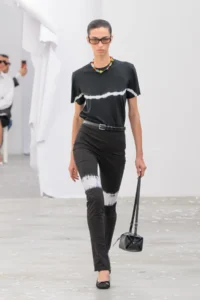
The contemporary fashion landscape is often characterized by an unforgiving cycle of hyper-consumption, transient trends, and the rapid rise and fall of independent labels. Yet, few brands have navigated the turbulent geopolitical and economic crosscurrents of the past decade with the tenacity of Marques’Almeida. Founded by the design duo Marta Marques and Paulo Almeida, the brand recently made a triumphant return to the international runway calendar at Milan Fashion Week. Supported by Portugal Fashion’s internationalization program, the presentation at the historic Palazzo Isimbardi served not merely as a seasonal style showcase, but as a testament to the survival, adaptation, and enduring relevance of an independent label that has spent more than fifteen years defining and redefining modern wardrobe codes.
For fashion historians and industry observers, the trajectory of Marques’Almeida is deeply intertwined with the shifting paradigms of twenty-first-century luxury. The last time the label’s foundational work was critically reviewed on a major global platform with such intensity was immediately following its landmark victory at the prestigious LVMH Prize in June 2015. That triumph catapulted the duo into the upper echelons of contemporary design, showering them with industry praise, financial validation, and immense commercial expectations. However, the years that followed proved to be a formidable crucible for independent design houses across Europe.
A Decade of Global Disruption and Strategic Relocation
The business of fashion cannot be divorced from the broader macroeconomic realities of its operating environment. In the wake of their LVMH Prize win, Marta Marques and Paulo Almeida experienced what they describe as multiple fashion lifetimes. Initially riding a wave of enthusiastic buzz across London and Paris, their enterprise soon faced a barrage of unprecedented systemic shocks. The UK’s exit from the European Union introduced severe logistical friction and trade complications, while the subsequent onset of the COVID-19 pandemic brought global retail to a near-complete standstill. Compounding these pressures were shifting geopolitical trade dynamics, including United States tariff adjustments under the Trump administration, and, most recently, volatile instability across the Middle East that disrupted key luxury supply chains and regional consumer markets.
These compounding international crises acted as catalysts for a profound strategic retreat and structural reorganization. Rather than folding under the weight of mounting overheads and market unpredictability, Marques and Almeida made the deliberate decision to relocate their primary operations back to their native Portugal. This homecoming was not a retreat from the global stage, but rather a strategic fortification. In Portugal, they established a sustainable operational base while simultaneously dedicating their time to nurturing the next generation of creative talent through teaching and mentoring roles at local design institutions.
This deep-rooted commitment to education and local craftsmanship ultimately intersected with Portugal Fashion’s internationalization initiatives, providing the institutional backing necessary to mount their high-profile presentation in Milan. As Marta Marques reflected backstage, maintaining independence over a span of more than a decade requires a willingness to transform. “We’re still an independent brand, and have been for over 15 years now, so we’ve had to adapt,” Marques noted. “I think that has served us well. I think our essence is still there, but we’re open to discovering new possibilities so that we can keep doing what we do.”
The 1990s DNA: Tracing the Aesthetic Roots of Marques’Almeida
To fully appreciate the collection presented at Palazzo Isimbardi, one must look back to the foundational aesthetic markers that first drew critical acclaim to the brand in the early 2010s. Back in 2015—and indeed stretching back to the label’s inception in 2011—the core identity of Marques’Almeida was forged through a rebellious translation of the raw, unfiltered energy found in 1990s fashion editorials, specifically those published in the iconic British magazine The Face.
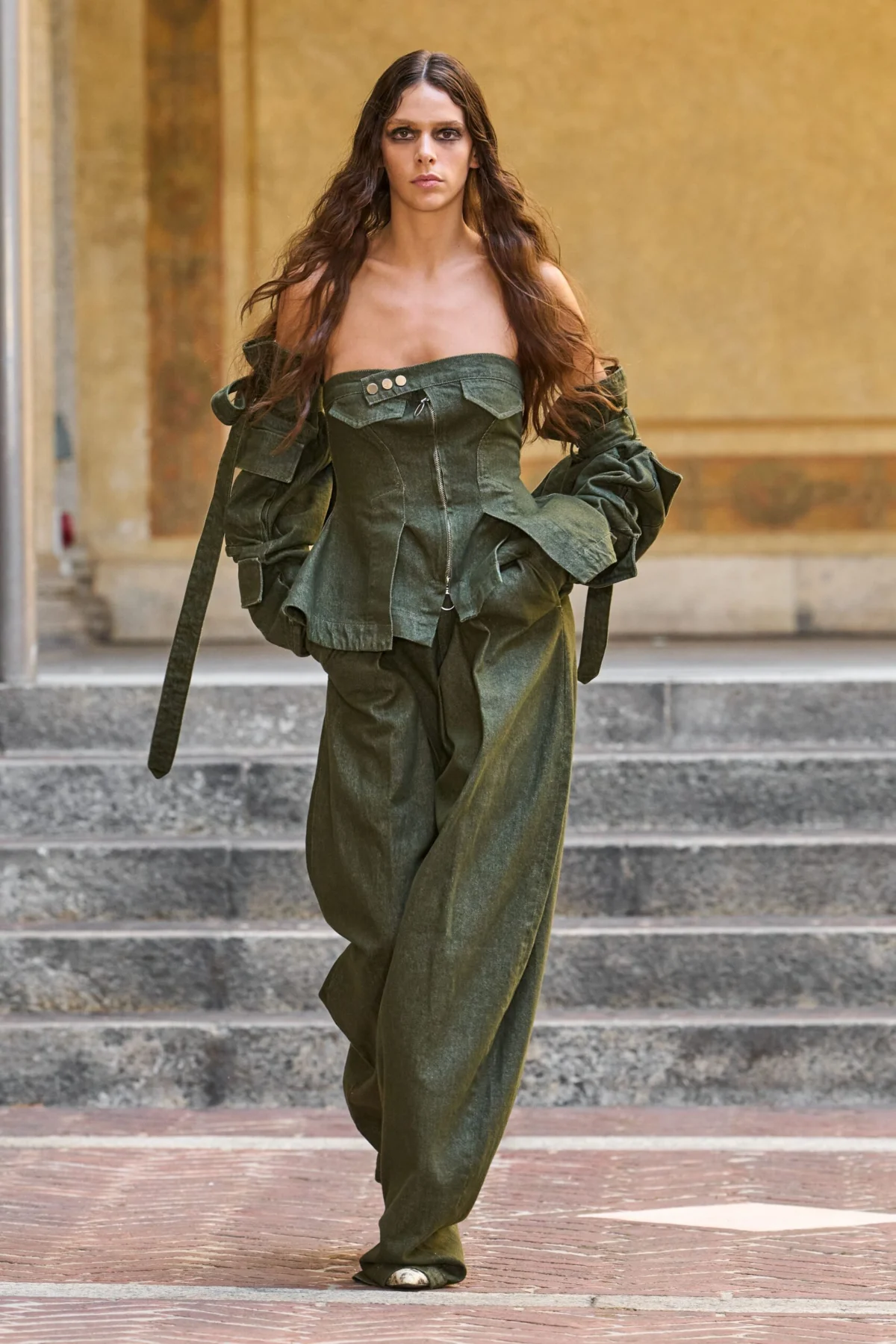
That distinct visual vocabulary was unmistakably present in Milan. The opening look, making its way down the runway under the gilded ceilings of the palazzo, could easily have been salvaged from the brand’s archival rails a decade prior. It possessed the signature architectural peplum, the deliberate slouch, and the defiant attitude that first established the duo’s reputation. At the center of this narrative was denim—the heavy-duty fabric that initially defined the label and, at times, threatened to confine public perception of their creative range.
Rather than shying away from their denim heritage, the designers confronted it directly, demonstrating a masterclass in material manipulation. Look 4 featured masterfully restrained draping and precise darting that elevated the humble textile into a paradigm of modern dressmaking. Furthermore, the brand’s continued experimentation with garment-dyed treatments exploited the natural irregularities and rich depth of color that have historically suited their rough-hewn approach to garment construction.
Maturing the Muse: Evolution into Sophisticated Occasion Wear
While denim remains the architectural bedrock of the label, the Milan collection signaled a mature evolution in response to the changing lives of the brand’s core demographic. Acknowledging the progression of time, Marques candidly conceded a category that has traditionally challenged avant-garde designers: occasion wear.
The archetypal "cool girl" whose wardrobe was defined by Marques’Almeida in the mid-2010s has grown up, and her lifestyle demands garments that bridge the gap between rebellious youth and sophisticated maturity. The runway delivered on this front with an array of bias-cut dresses heavy with tactile ruffles, sophisticated jacquards twisted and sculpturally draped across the body, structural peplum tops, and dramatic bows erupting at the shoulders. These pieces were juxtaposed with intricate lace tailoring, sweeping palazzo trousers, and audacious explosions of ostrich feathers worn atop the head. While these feather headpieces flirted dangerously with theatrical excess reminiscent of Las Vegas revues, they were executed with a self-aware irony that kept the styling grounded and intellectually engaging.
The brilliance of the collection lay precisely in this tension between refinement and subversion. Without this deliberate instinct to disrupt neat resolutions, the garments might easily have drifted into overly delicate territory. Instead, hemlines were left to tilt precariously, proportions were intentionally skewed backward, and long trains dragged heavily across the floor. To anchor these ethereal and elaborate silhouettes, footwear was chosen for its rugged durability, offering a stark, industrial contrast to the delicate dresses and tailored separates. The resulting visual interplay was both dynamic and deeply entertaining for industry insiders and critics alike.
Industry Implications and the Future of Independent Design
The reception of Marques’Almeida’s Milan showcase carries significant implications for the broader ecosystem of independent European fashion. In an industry increasingly dominated by massive luxury conglomerates—such as LVMH, Kering, and Richemont—independent brands face severe structural disadvantages regarding marketing budgets, real estate acquisition, and global distribution networks. The survival of Marques’Almeida for over fifteen years serves as a case study in resilience, proving that creative integrity, when paired with operational agility and strategic institutional partnerships like Portugal Fashion, can weather macroeconomic turbulence.
Furthermore, the logistical success of the presentation has sparked conversations regarding the scheduling of independent shows during international fashion weeks. Industry critics noted that the timing of the Marques’Almeida show—slotted late in the Milan schedule after many international buyers and media representatives had already departed for Paris—did a disservice to the exceptional quality of the collection. Industry analysts and representatives from the Camera Nazionale della Moda Italiana have faced gentle prodding from fashion journalists to elevate independent success stories to more prominent, earlier slots on the calendar, ensuring that commercially viable and critically lauded collections receive the undivided attention they merit.
As Marta Marques and Paulo Almeida look toward the future, their journey from London startups to battle-tested veterans mentoring a new generation of Portuguese designers highlights a vital shift in contemporary fashion culture. The romanticized notion of the overnight fashion success story has largely been replaced by the reality of endurance. By balancing their historical commitment to 1990s-inspired disruption with a pragmatic openness to new commercial and creative realities, Marques’Almeida has secured not only its place in the history books of contemporary design, but a viable, evolving roadmap for the future of independent luxury.