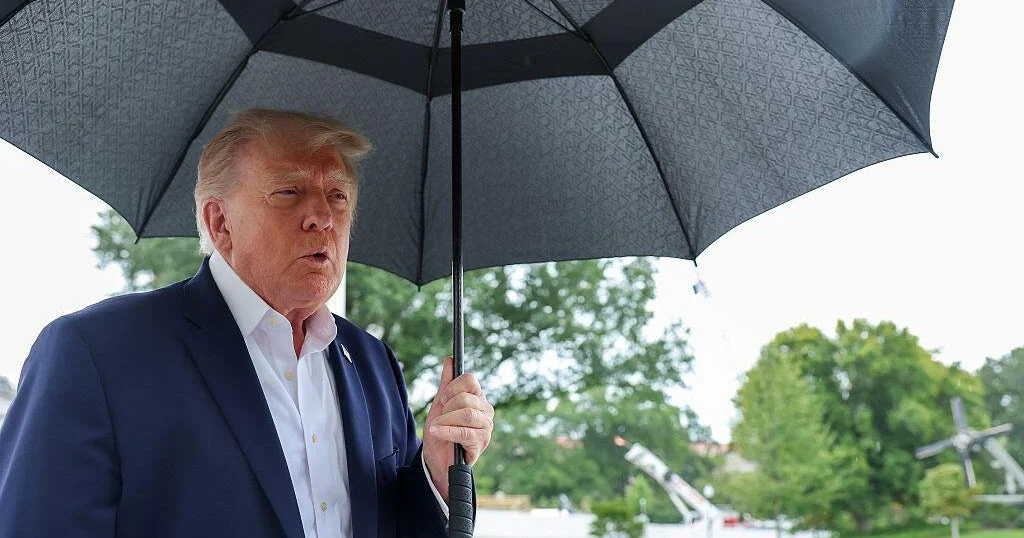
President Trump stated on Sunday that he has not ruled out ordering further military strikes against Iran prior to the upcoming United States midterm elections in November, maintaining a posture of strategic ambiguity as diplomatic channels struggle to yield a breakthrough. Speaking in a phone interview with Fox News, Mr. Trump declined to take future military action off the table when questioned about potential escalations in the coming weeks. At the same time, the administration continues to navigate a high-stakes series of indirect negotiations at the United Nations General Assembly in New York, where competing proposals regarding the reopening of the vital Strait of Hormuz have collided with deep-seated mutual distrust.
The unfolding crisis, which traces its roots back to the outbreak of open hostilities earlier this year, has evolved into a multi-theater conflict encompassing the Persian Gulf, the Red Sea, Lebanon, and global energy markets. While Washington asserts that its military campaign and crippling economic sanctions have successfully constrained Tehran’s military capabilities and isolated its financial architecture, regional allies and domestic critics warn of severe economic blowback, soaring fuel prices, and the dangerous leverage Iran maintains over global supply chains ahead of the November ballot.
Diplomatic Maneuvers and the Rejected Seven-Day Plan
The latest diplomatic friction stems from a proposal submitted by Iranian Foreign Minister Abbas Araghchi on Friday. According to Iranian officials, the plan outlined a seven-day framework under which Tehran would lift its blockade of the Strait of Hormuz, permit renewed talks on its nuclear program, and observe a comprehensive Middle East ceasefire—provided the United States dropped its naval blockade, lifted restrictions on Iranian oil sales, and adhered to conditions outlined in a defunct memorandum of understanding originally signed in Islamabad back in June.
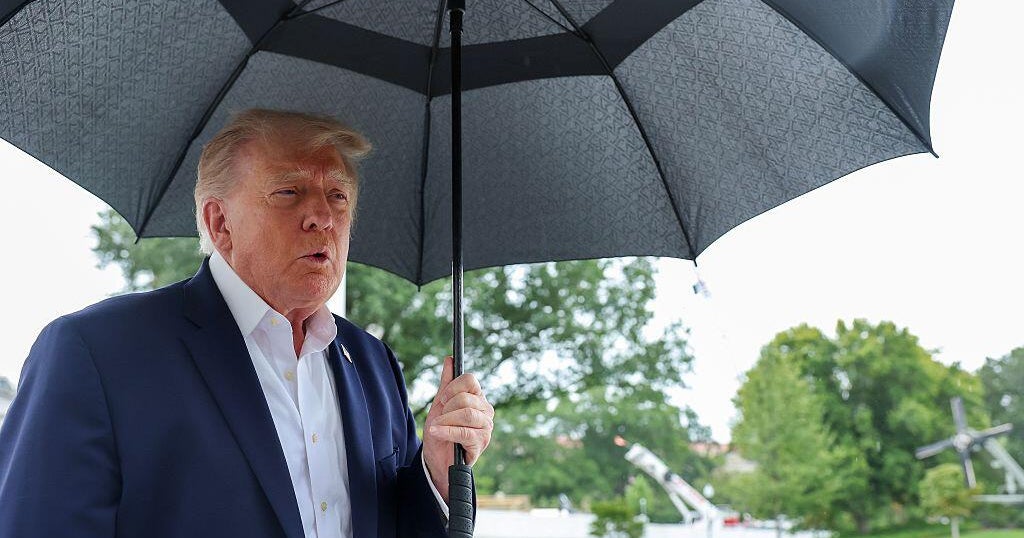
President Trump swiftly rejected the proposal over the weekend, telling reporters while leaving the White House that the terms were unacceptable and that Iranian leaders were seeking a deal merely because they were losing the conflict. "They want to make a deal where they open the strait immediately because they are losing so badly," Mr. Trump said. "That deal would not be acceptable." U.S. officials echoed this sentiment, noting that the U.S. military successfully escorted nearly 40 million barrels of crude oil out of the Persian Gulf under naval protection in a single 48-hour window, matching prewar transit volumes and blunting the immediate impact of Tehran’s maritime restrictions.
Despite the rejection, Iranian President Masoud Pezeshkian maintained during interviews in New York that Tehran remains open to a diplomatic settlement before the November elections, signaling a willingness to discuss long-term compliance measures, including allowing United Nations nuclear inspectors back into the country. However, Tehran’s rhetoric has also featured stark warnings; Mohammad Mokhber, an adviser to Iran’s supreme leader, cautioned that if Iranian airlines are grounded due to sweeping U.S. sanctions, no nation in the region would be permitted to operate trouble-free civilian aviation services.
Chronology of Escalation: From February Outbreak to Current Standoff
The current crisis represents a dramatic intensification of long-standing geopolitical tensions in the Middle East, marked by several critical milestones over the past year:
- February: Open warfare erupts between the United States, Israel, and Iran, triggering widespread kinetic exchanges, the targeting of Iranian military infrastructure, and the initial closure of the strategic Strait of Hormuz.
- June: Washington and Tehran briefly sign a 14-point memorandum of understanding in Islamabad aimed at achieving a temporary ceasefire and managing maritime traffic, though the agreement collapses within weeks over disputes concerning enforcement and naval control.
- July: The conflict expands southward as Iran-backed Houthi forces in Yemen launch a lightning offensive, seizing Yemen’s entire Red Sea coast, including the Bab al-Mandab Strait, and initiating direct drone and missile attacks against Saudi infrastructure and energy installations.
- August: The U.S. Treasury Department ramps up financial pressure through "Operation Economic Outcast," expanding secondary sanctions on digital assets, gold, aviation, and financial institutions transacting with Tehran.
- September: World leaders convene at the United Nations General Assembly in New York, serving as the backdrop for intense indirect shuttle diplomacy led by U.S. envoys Steve Witkoff and Jared Kushner alongside regional mediators from Qatar and Oman, running parallel to renewed military engagements in Lebanon and Yemen.
Economic Fallout and Global Energy Pressures
The protracted conflict has cast a heavy shadow over the global economy, directly threatening energy security and driving inflationary pressures across North America and Europe. Brent crude, the international benchmark, has hovered near historical highs, closing the week around $104 per barrel after experiencing mid-week spikes. The disruption of traffic through both the Strait of Hormuz and the Bab al-Mandab Strait has severely choked petroleum and natural gas exports from the Persian Gulf, forcing consuming nations to grapple with surging fuel and diesel costs.
In Europe, European Commissioner for Energy and Housing Dan Jorgensen warned colleagues in a formal letter of an impending energy "price crisis," urging member states to curtail energy demand and protect depleted natural gas storage reserves. Meanwhile, in the United States, the upcoming release of the personal consumption expenditures (PCE) price index—the Federal Reserve’s preferred inflation gauge—is anticipated to reflect the cascading costs of high energy prices, complicating the central bank’s monetary policy path as inflation stubbornly remains above its 2% target.
To counter Tehran’s economic lifeline, Treasury Secretary Scott Bessent announced aggressive measures targeting Iran’s commercial aviation and banking sectors. Coordinated diplomatic pressure has forced nations such as the United Arab Emirates, Turkey, and Iraq to suspend incoming flights from private Iranian carriers like Mahan Air, and revoked the licenses of financial entities such as Iran’s Bank Melli and Bank Mellat to prevent sanctions evasion. Iraq, heavily reliant on religious tourism and regional trade ties, acknowledged it was actively seeking humanitarian exemptions from Washington to alleviate disruptions at airports in holy cities like Najaf.
Regional Shockwaves and Allied Concerns
The ripples of the conflict have extended far beyond the immediate combat zones, drawing sharp divisions and defensive mobilizations among regional powers. Saudi Arabia, facing near-daily aerial assaults from Houthi forces targeting Riyadh and critical energy facilities, used its platform at the United Nations General Assembly to condemn the international community for failing to adequately protect freedom of navigation in Gulf waterways.
In a rare display of multilateral alignment, the U.N. Security Council formally condemned the Houthi escalation, while defense officials from Saudi Arabia, Turkey, and Pakistan advanced plans for high-level military coordination under an existing mutual defense framework. Simultaneously, heavy fighting in southwestern Yemen’s Taiz province has exacerbated a humanitarian catastrophe, overwhelming local hospitals and displacing over 130,000 civilians amid crumbling health infrastructure.
Domestic Political Implications in the United States
As the conflict stretches toward the autumn months, the intersection of foreign policy and domestic politics has intensified in Washington. Democratic lawmakers have raised sharp concerns regarding the administration’s long-term strategy. Representative Jim Himes of Connecticut, ranking member on the House Intelligence Committee, criticized the administration’s threats of total annihilation as nonsensical, arguing that while U.S. and Israeli strikes have severely degraded conventional Iranian military assets, Tehran retains asymmetric leverage capable of swaying the outcome of the November midterm elections. Himes warned that any deliberate spike in oil prices engineered through proxy attacks in the Gulf could directly influence tight congressional races across the country.
Conversely, Republican lawmakers have backed the administration’s hardline stance. Senator John Kennedy of Louisiana defended the rejection of Iran’s latest overture, characterizing Tehran as economically vulnerable while acknowledging the domestic political and economic pain inflicted by elevated gasoline prices.
Implications and Outlook
As President Trump weighs the prospect of authorizing additional military strikes prior to the November midterms, the trajectory of the conflict remains precariously balanced between coercive economic pressure and elusive diplomatic solutions. While Washington remains confident in its ability to secure maritime trade routes through military escorts and stringent financial isolation, Tehran continues to leverage its geographic position and regional proxy networks to impose economic costs on the West and its regional partners. With both sides preparing for the possibility of renewed military escalation, the international community faces a prolonged period of volatility with profound implications for global security, energy markets, and the stability of the Middle East.