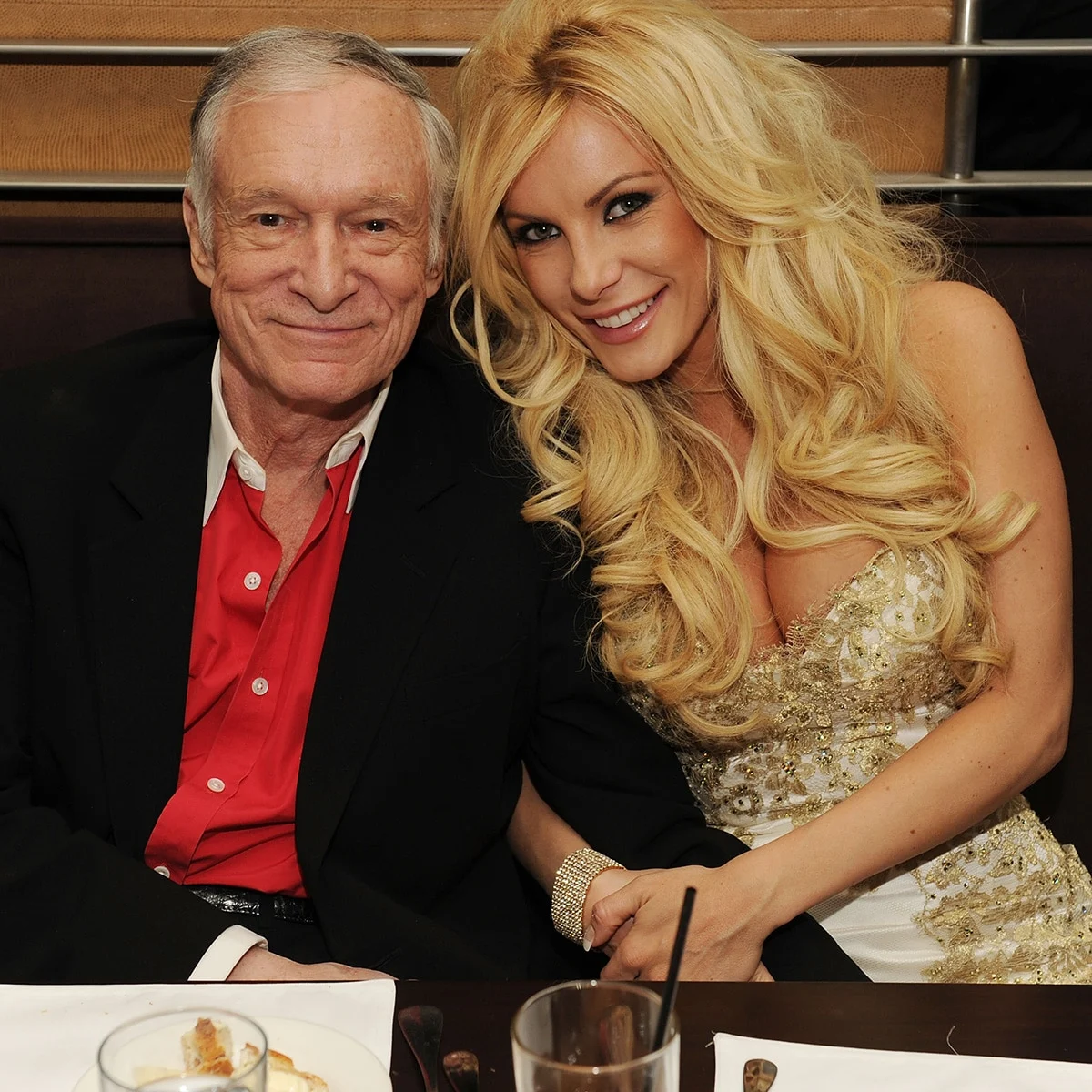
Crystal Harris Hefner, the widow of late Playboy founder Hugh Hefner, has opened up about the darker, more restrictive realities of life inside the legendary estate, shedding light on the behavior of A-list regular visitors and detailing the psychological toll of her years with the media mogul. In a candid interview published in late October 2026, Harris reflected on her time at the mansion—an era that began when she was just 21 years old—and shared deeply personal revelations featured in her memoir, Only Say Good Things: Surviving Playboy and Finding Myself.
Her remarks arrive amid renewed cultural examination regarding power dynamics in Hollywood and elite social circles, prompting fresh scrutiny of the figures who frequented the Beverly Hills property during its peak years. While the estate was widely marketed to the public as a glamorous playground of uninhibited fantasy, Harris portrays it as an insular, emotionally taxing environment governed by rigid unwritten rules, strict hierarchies, and systemic isolation.
The A-List Regulars and a Culture of Misogyny
In her recent media appearances, Harris detailed the frequent presence of high-profile male celebrities, business leaders, and politicians who passed through the gates of the Playboy Mansion. Describing the atmosphere as challenging, she alleged that Hugh Hefner surrounded himself with like-minded individuals whose behavior often crossed into misogyny.
Among the regular visitors she singled out were Bill Cosby and Donald Trump, both of whom she characterized as part of an environment that felt deeply unsettling in retrospect. Cosby, who hosted the annual Playboy Jazz Festival for numerous years, was a familiar presence at the estate. Harris described taking photographs with the comedian as awkward, a sentiment heavily compounded by Cosby’s subsequent legal downfall and multiple convictions for sexual assault, which were later overturned on a technicality in 2021 before his death.
Harris also referred to Academy Award-winning actor Jack Nicholson, characterizing his frequent visits to the property through a critical lens. Describing the estate casually as “Jack Nicholson’s drive-thru,” she alleged that the actor would visit to collect food and women before quickly departing. Furthermore, she called out comedian Jon Lovitz, placing him among the men she viewed as contributing to an overarching culture of sexism and misogyny within the mansion’s walls.
Not all celebrity encounters were viewed negatively, however. Harris recalled positive interactions with individuals who maintained a respectful distance from the estate’s darker subculture. Comedian George Lopez, who succeeded Cosby as the host of the Playboy Jazz Festival in 2013, was praised for being consistently kind and notably refraining from visiting the mansion. Similarly, she spoke fondly of Star Wars actor Mark Hamill and his wife, Marilou York, describing them as lovely individuals who visited infrequently, alongside veteran actress Julie Newmar, whom she lauded as wonderful.
Life Inside the Mansion: Curfews, Surveillance, and Control
The structured reality of the Playboy Mansion stood in stark contrast to its public image. When Harris met Hefner at a Halloween party in 2008 and subsequently moved into the estate, she entered a tightly regulated ecosystem designed to enforce total compliance.
According to her disclosures, life inside the residence operated under strict mandates. Residents faced a firm 6:01 p.m. daily curfew, enforced by pantry staff who would call her phone immediately if she was late, requiring her to report directly to Hefner to demonstrate compliance. Privacy was effectively non-existent; Hefner retained the master key to all residential quarters, ensuring he could access any room at any time.
Financial autonomy was similarly restricted. To cover essential expenses such as clothing, grooming supplies, and transportation, Harris and other residents relied on a weekly $1,000 allowance distributed every Friday morning. She has frequently described this financial model as intentionally infantile and demoralizing, particularly given that residents were prohibited from pursuing outside employment, leaving them entirely dependent on the publisher.
Physical appearance and behavioral conformity were subject to constant evaluation. Harris recounted an incident in which she gained a modest amount of weight—comparing it to the standard "freshman fifteen" associated with college students—only to be criticized by Hefner, who tapped her hip and suggested she needed to tone up. This prompted a swift return to restrictive dieting and rigorous exercise regimens. Other mandates included avoiding discussions regarding death, omitting negative commentary, and accepting strict medical policies, such as the absence of mandatory barrier contraception on the premises, which Hefner managed via an on-call physician.
A Chronology of a Complex Relationship
The timeline of Harris and Hefner’s relationship was marked by intense volatility, a high-profile aborted wedding, and an eventual return to the estate.
- October 2008: Crystal Harris meets Hugh Hefner at his annual Halloween party, subsequently moving into the Playboy Mansion and entering into a relationship as one of his multiple concurrent girlfriends.
- December 2010: Hefner proposes to Harris on Christmas Eve using a diamond ring and a Little Mermaid-themed music box, a moment captured for television cameras.
- June 2011: Just days before their scheduled wedding—and following mounting doubts fueled by financial disputes over television special compensation—Harris flees the mansion, briefly hiding from public scrutiny and developing a relationship with musician Jordan McGraw.
- Late 2011: Following the end of her relationship with McGraw and facing financial vulnerability, Harris is persuaded by Hefner’s longtime secretary, Mary O’Connor, to return to the mansion. She negotiates terms that remove competing girlfriends, assuming the primary role of Girlfriend No. 1.
- December 31, 2012: Harris and Hefner officially marry in a ceremony at the Playboy Mansion, with Harris wearing a pink dress rather than traditional white.
- 2012–2017: Alongside pursuing independent ventures in DJing, real estate, and cryptocurrency, Harris transitions into a primary caretaking role for an increasingly frail Hefner, while managing her own health battles, including Lyme disease, breast implant illness, and toxic mold exposure.
- September 2026: Following Hefner’s death at age 91 in September 2017, Harris publishes her memoir, Only Say Good Things: Surviving Playboy and Finding Myself, and continues to share details regarding the psychological impact of her years in the estate.
Broader Implications and Defense of the Legacy
The revelations shared by Harris contribute to a growing body of testimony from former associates, playmates, and partners who have reassessed the cultural footprint of Hugh Hefner and the Playboy brand in the wake of the #MeToo movement and investigative documentaries such as Secrets of Playboy. Critics argue that the institutional structures of the Playboy Mansion fostered power imbalances, enabled predatory behavior by high-profile visitors, and created environments of psychological coercion under the guise of sexual liberation.
Conversely, defenders of Hefner’s legacy have consistently pushed back against these characterizations. Following the release of critical media projects, family members—including his son Cooper Hefner—have publicly defended the late publisher, characterizing him as a generous, caring individual whose philanthropic contributions and advocacy for civil liberties and free speech have been overshadowed by salacious retrospectives born of regret or shifting cultural standards.
As public discourse continues to evolve, the testimonies of former residents like Crystal Harris provide an unvarnished look into the complexities of fame, power, and autonomy within one of the 20th century’s most heavily mythologized cultural institutions.