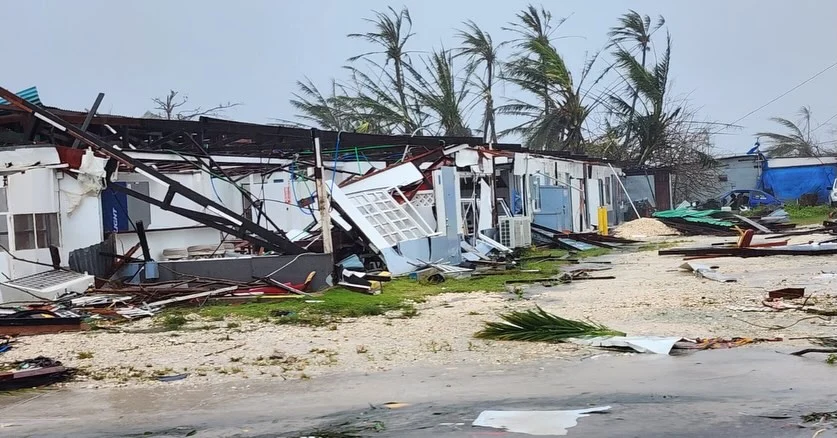
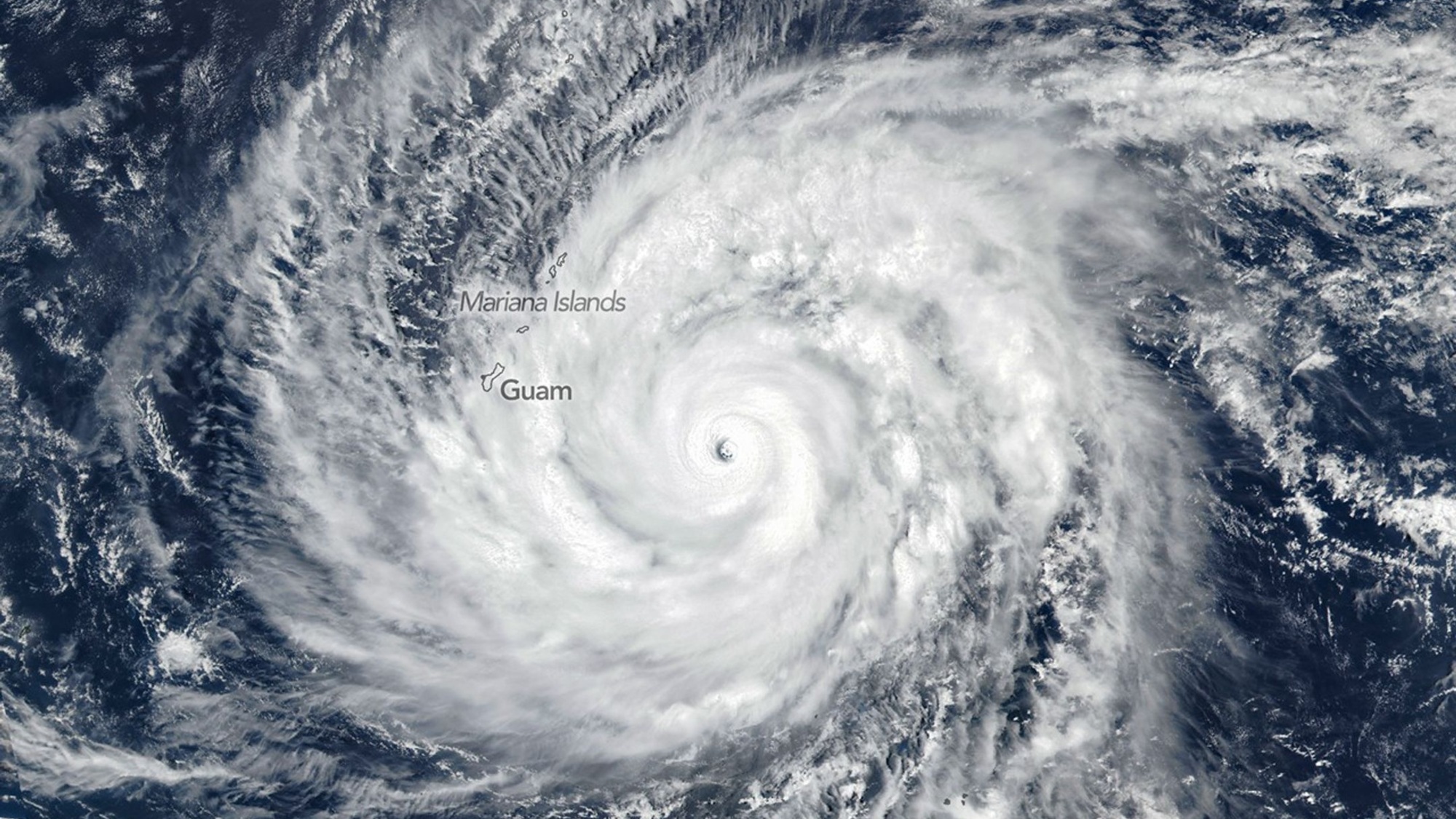
The strongest storm of 2026 slammed into the Commonwealth of the Northern Mariana Islands this week, where it flooded homes, ripped roofs off of houses, and lingered for more than two days, forcing families to shelter without electricity, cell service, or running water as they waited for the worst to pass. Super Typhoon Sinlaku, a Category 5 monster with sustained winds reaching 185 mph, has left a trail of devastation across the Mariana Islands archipelago, testing the resilience of a community already grappling with a severe economic downturn and a complicated relationship with the United States federal government. As the storm moves away from the islands, the focus shifts to a recovery effort complicated by a partial government shutdown and a political stalemate in Washington D.C. that threatens the long-term availability of disaster relief funds.
The Path of Destruction: A Chronology of Sinlaku
Super Typhoon Sinlaku began its life as a tropical disturbance southeast of the Mariana Islands, a region known for spawning some of the world’s most powerful cyclones. However, the speed at which Sinlaku intensified caught many meteorologists and residents by surprise. Within a matter of days, the system underwent rapid intensification, fueled by exceptionally warm sea surface temperatures, evolving from a tropical storm into a "super" typhoon—a designation used by the Joint Typhoon Warning Center for storms with sustained winds of at least 150 mph.
The storm’s first major impact was felt in Chuuk, a state within the Federated States of Micronesia. As Sinlaku passed through the area, it unleashed torrential rains and high surges, resulting in at least one confirmed death and leaving one fisherman missing at sea. The destruction in Chuuk served as an ominous precursor for the islands to the north.
By mid-week, Sinlaku began its approach toward Guam and the Commonwealth of the Northern Mariana Islands (CNMI). While the eye of the storm passed north of Guam, the U.S. territory was lashed by tropical storm-force winds and heavy rainfall that knocked out power in several villages and toppled trees across the island. The most severe impact, however, was reserved for Saipan and Tinian, the two most populous islands of the CNMI.
Sinlaku followed a path hauntingly similar to that of Super Typhoon Yutu in 2018. Yutu, which remains one of the strongest storms to ever hit U.S. soil, destroyed thousands of homes and caused such extensive damage to infrastructure that some children were forced to attend school in temporary tents for years. For residents of Saipan, Sinlaku felt like a recurring nightmare, but with a grueling difference: the storm refused to move. For over 48 hours, the islands were battered by peak winds and relentless rain, creating a prolonged period of terror for those huddled in shelters and reinforced concrete homes.
Unprecedented Timing and the Climate Connection
The arrival of a Category 5 typhoon in April has sent shockwaves through the region. Traditionally, the typhoon season in the western Pacific begins in earnest in June or July, with the most intense storms typically occurring in late summer or autumn. The presence of a "super" typhoon this early in the year is a statistical anomaly that many experts link to the changing global climate.
Ed Propst, a Chamorro resident and former commonwealth legislator, expressed the disbelief shared by many on Saipan. "It’s still whistling and you can still hear it going on and things are banging outside," Propst said on Thursday morning while the storm was still active. "I’ve never seen anything like this, where a typhoon just doesn’t seem to leave. When was the last time we had a super typhoon hitting us this early in the year? This is the first that I can recall."
Scientists point to record-breaking ocean temperatures as the primary driver behind Sinlaku’s ferocity and timing. Daniel Swain, a climate scientist at the California Institute for Water Resources, noted that in the days leading up to the storm’s formation, ocean surface temperatures in the region were 3 to 5 degrees Fahrenheit above the recent average.
"Because warm tropical oceans are ‘hurricane fuel,’ the current super typhoon has rapidly intensified in a favorable environment that is at least partly linked to climate change via warming oceans," Swain explained. This phenomenon of rapid intensification—where a storm’s wind speeds increase by 35 mph or more within 24 hours—is becoming more frequent as the planet warms, making storms harder to predict and prepare for.
A Territory in Crisis: Economic and Political Context
The timing of Super Typhoon Sinlaku could not be worse for the CNMI. The territory, home to approximately 50,000 people including Indigenous Chamorros and Carolinians, is currently mired in a years-long economic crisis. The local economy is heavily dependent on tourism, which has failed to recover to pre-pandemic levels. Arrivals are down by more than 50 percent, leading to business closures, a shrinking tax base, and significant outmigration as residents leave the islands in search of work on the U.S. mainland or Guam.
Before the storm hit, CNMI leaders, including Congresswoman Kimberlyn King-Hinds, had been pleading with the Trump administration for federal intervention. Specifically, they requested a federal bailout and policy shifts to revitalize tourism, such as loosening visa restrictions for visitors from the Philippines and easing flight restrictions from China. To date, federal officials have remained noncommittal, leaving the territory in a state of financial precariousness.
Adding to the complexity is the current political climate in Washington. The storm arrived amidst a partial shutdown of the Department of Homeland Security (DHS), the parent agency of the Federal Emergency Management Agency (FEMA). The shutdown stems from a legislative stalemate in Congress over DHS funding, driven largely by disagreements over the administration’s immigration policies.
Furthermore, the Trump administration has faced criticism from climate advocates for efforts to scale back disaster preparedness and climate change mitigation programs. These policy shifts have created a sense of unease among territorial leaders who fear that the "permanent reshaping" of federal aid will leave them vulnerable during the long-term recovery process.
The Federal Response and the Funding Stalemate
In the immediate lead-up to the storm, President Donald Trump approved an emergency declaration for the CNMI, allowing FEMA to mobilize resources. According to FEMA spokespeople, the agency has approximately 90 personnel on the ground in Guam and the CNMI to coordinate relief efforts.
FEMA’s distribution center in Guam is reportedly well-stocked, containing 1.1 million liters of water, 723,000 meals, 5,300 cots, and thousands of tarps and blankets. Additionally, 78 generators are available, with 42 already en route to Saipan to restore power to critical infrastructure like hospitals and water pumps.
However, the agency has warned that the ongoing funding dispute in Congress could hamper the availability of Disaster Relief Fund (DRF) coffers if a resolution is not reached quickly. "We urge Democrats in Congress to stop playing games and restore DHS’s funding before American communities suffer the next disaster alone," a FEMA spokesperson said, reflecting the highly partisan nature of the current federal response.
For territorial advocates, the rhetoric from Washington is cold comfort. Adi Martínez Román, co-director of the nonprofit Right to Democracy, noted that while immediate aid is flowing, the future of long-term hazard mitigation is in doubt. Over the past year, the administration has reduced FEMA staffing levels and removed references to climate change from federal planning documents, moves that Román argues disproportionately affect island territories on the front lines of environmental change.
The Struggle for Agency and Visibility
The devastation wrought by Sinlaku has once again highlighted the unique and often difficult political status of U.S. territories. Residents of the CNMI are U.S. citizens, yet they cannot vote for president and have no voting representation in the U.S. Senate. Their lone representative in the House, Congresswoman King-Hinds, can participate in debates but cannot vote on the final passage of legislation.
"It is so difficult for us to have agency in federal policies," Román said. "Programs are built responding to constituencies, and we are not considered a constituency." This lack of political leverage often results in a "cluelessness" among federal officials regarding the specific geographic and economic realities of the Pacific islands, which are located thousands of miles from the U.S. capital.
Sheila Babauta, a Chamorro climate justice advocate on Saipan, emphasized that the struggle is not just against the weather, but against systemic neglect and external threats. "We are taking a devastating hit from Super Typhoon Sinlaku, compounding the urgent local priorities we already face, from coastal erosion to an economic crisis," Babauta said. She also pointed to concerns over deep-sea mining and increased militarization in the region as stressors that weaken the community’s ability to recover. "Our community is strong, but even warriors need rest."
Looking Ahead: The Road to Recovery
As the winds subside, the full scale of the damage is becoming clear. In Saipan, neighborhoods that were rebuilt after Yutu have once again been leveled. Local leaders are reporting widespread destruction of agricultural crops, which will exacerbate food insecurity in the coming months. The loss of solar panels and private infrastructure also represents a significant financial blow to families who were already struggling to make ends meet.
Congresswoman King-Hinds has assured residents via social media that she is working closely with federal partners to ensure that the CNMI’s needs are met. Her spokesperson, Chris Conception, noted that while funding issues have not yet stalled immediate relief, the territory remains mindful of its heavy reliance on timely federal support.
In the absence of certainty from Washington, the people of the Northern Mariana Islands are doing what they have always done: looking out for one another. Ed Propst shared stories of neighbors helping neighbors—mothers needing baby formula, friends checking on those who lost their roofs, and communities pooling resources to clear debris.
"We’ve been through this before, and we know what it takes to get through it again," Propst said. However, as the frequency and intensity of these storms increase, the question remains how much more the "warriors" of the Pacific can endure without a fundamental shift in federal policy and a global commitment to addressing the climate crisis that fuels these monstrous storms. For now, the CNMI remains in a state of emergency, waiting for the lights to come back on and for the world to take notice of its plight.