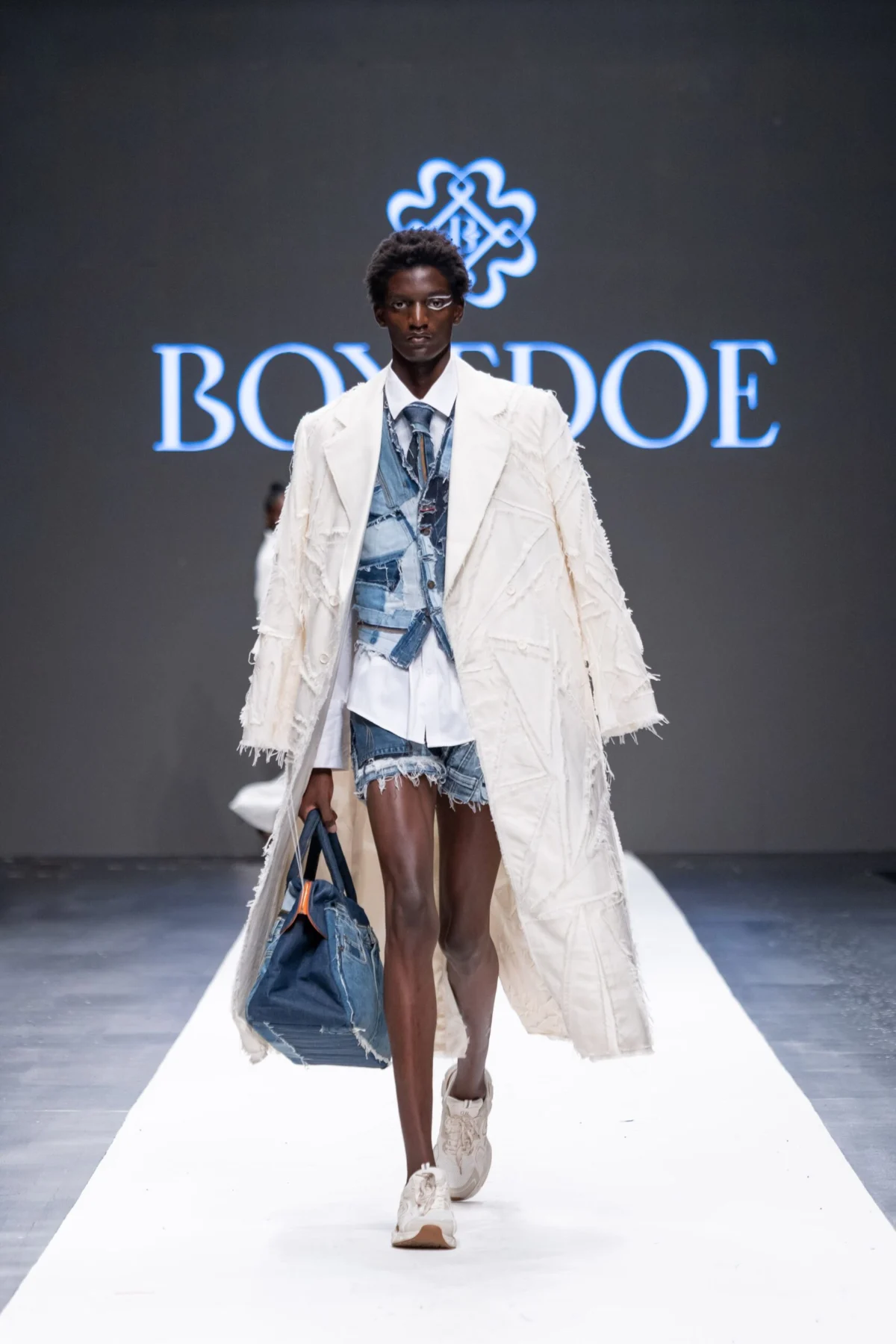
The intersection of ancestral heritage and contemporary global commerce has long presented both a challenge and an opportunity for emerging designers across the African continent. For the Spring 2027 season, Ghanaian fashion visionary David Kusi Boyedoe has stepped forward with a definitive response to this dynamic, presenting a collection titled Oath—or Ntam in the native Twi language—that seeks to honor the profound legacy of the historic Asante Kingdom while maintaining strict commercial pragmatism. Unveiled amid the broader showcases of Lagos Spring 2027, Boyedoe’s latest sartorial statement moves away from fleeting runway spectacle, anchoring itself instead in sustainable craftsmanship, historical reverence, and wearable luxury designed to meet the demands of an international market.
The presentation of Oath marks a significant milestone in Boyedoe’s evolving career, reflecting a broader shift within the contemporary African fashion landscape. For decades, Western perceptions of African design have often been constrained by monolithic stereotypes—categorizing the region’s output as either overly avant-garde performance art devoid of commercial viability or rudimentary craft lacking sophisticated tailoring. Boyedoe, alongside a vanguard of progressive continental designers, is actively dismantling these outdated binaries. By proving that deep cultural storytelling can seamlessly coexist with retail-ready silhouettes, the Ghanaian designer is helping to author a new chapter for the industry, one where economic sustainability and indigenous pride reinforce one another.
Historical Roots and the Asante Kingdom Influence
At the heart of the Spring 2027 collection lies a deep exploration of the Asante Kingdom, one of the most historically influential and culturally rich ethnic groups in modern-day Ghana. Boyedoe’s creative process for Oath was heavily informed by the complex socio-political and cultural relationship between the Asante King, the Otumfuo, and the ordinary Asante man. This dynamic hierarchy, built on mutual obligation, allegiance, and communal identity, served as the conceptual blueprint for the collection’s structure and detailing.
"It’s also a return to our ideology, which is about going back and restoring, and making known our silhouettes," Boyedoe explained regarding the thematic direction of the line. The title Oath—Ntam—carries profound psychological and historical weight in Twi culture, traditionally invoking the ultimate solemn promise or sacred vow. For the designer, the collection functions as a personal and professional covenant: a pledge to honor his ancestral roots while uncompromisingly advancing the standards of his craft on the global stage.
Rather than relying on literal, costumey interpretations of traditional regalia, Boyedoe translates the dignity, structural precision, and regal posture of the Asante hierarchy into modern menswear and womenswear. The collection examines how historical power dynamics and communal codes of conduct can be reinterpreted through contemporary tailoring, offering garments that imbue the wearer with a sense of historic weight and modern sophistication.
Sustainable Innovation and the Upcycled Denim Economy
Beyond its cultural narrative, Oath stands out for its rigorous commitment to environmental sustainability and local manufacturing infrastructure. A critical component of Boyedoe’s design philosophy involves addressing the pressing ecological crisis of textile waste in West Africa. Ghana, in particular, has become a primary global dumping ground for discarded second-hand clothing from Western nations, resulting in vast accumulations of textile waste in local markets and landfills.
Rather than ignoring this environmental burden, Boyedoe has made it a central pillar of his creative methodology. For the Spring 2027 collection, the designer sourced significant quantities of discarded denim from local waste streams, meticulously dismantling, cleaning, and upcycling the material into his signature patchwork constructions. This approach not only diverts tons of textile waste from overflowing landfills but also transforms a symbol of neo-colonial economic dumping into a high-value luxury commodity.
Standout pieces from the upcycled denim capsule included an intricately constructed mini patchwork dress and a pair of perfectly proportioned barrel jeans, which were expertly styled alongside an off-white blazer to demonstrate the versatility of the recycled textile. Furthermore, the denim narrative was extended into accessories, featuring a line of medium-sized patchwork bags that complement the ready-to-wear offerings while maintaining zero-waste principles.
Materiality, Color Palette, and Commercial Strategy
While conceptual depth and ecological responsibility form the soul of Oath, Boyedoe’s primary commercial objective for the Spring 2027 season was undeniable wearability. In an industry where designers frequently prioritize viral runway moments over retail sales, Boyedoe has chosen a deliberately grounded path.
"Instead of creating a spectacle, I’m focused on designs that sell," the designer noted, highlighting a pragmatic business strategy designed to secure long-term brand viability and retail partnerships across global markets. This commercial orientation does not, however, come at the expense of artistic integrity. The construction of each garment reflects a meticulous attention to detail, with the vast majority of the collection proudly handmade by skilled local artisans within Ghana, thereby supporting and sustaining regional manufacturing ecosystems.
The collection introduced a sophisticated, earthy color palette that signals a departure from hyper-saturated neon trends, leaning instead into tones that reflect the natural West African landscape. Rich ivory coats offered structural elegance, while a meticulously tailored moss green suit showcased Boyedoe’s mastery of modern proportion and fit. The interplay between the structured tailoring and the tactile, recycled textures created a balanced collection that appeals equally to domestic luxury consumers and international buyers seeking authentic, ethically produced garments with a distinct narrative.
Chronology and the Evolution of the Lagos Spring Platform
The unveiling of Boyedoe’s Spring 2027 collection occurred within the highly anticipated framework of the Lagos Spring fashion calendar, an event that has rapidly ascended to become a premier showcase for continental and international design talent. Over the past five years, Lagos Fashion Week and its corresponding seasonal showcases have transformed from localized industry events into major international cultural hubs, attracting global buyers, press, and investors.
The timeline of Boyedoe’s rise reflects the broader maturation of the African fashion economy. Having steadily built a reputation for meticulous tailoring and sustainable practices over previous seasons, the designer’s progression culminated in the disciplined, cohesive vision presented with Oath. Industry analysts note that collections presented at Lagos Spring 2027 increasingly emphasize scalable business models, direct-to-consumer digital infrastructure, and localized supply chain integration—trends that Boyedoe has successfully incorporated into his brand’s operational blueprint.
Industry Implications and the Future of Continental Design
The debut of Oath carries significant implications for the future trajectory of African luxury fashion. As global consumers increasingly demand transparency, ethical sourcing, and authentic cultural narratives from the brands they support, designers like David Kusi Boyedoe are uniquely positioned to capture market share.
By rooting his brand in the heritage of the Asante Kingdom while simultaneously addressing contemporary environmental crises through upcycling, Boyedoe bridges the gap between historical preservation and modern circular economics. The commercial success of collections like Oath challenges outdated retail biases, proving that African labels do not need to pander to Western aesthetic templates or rely on superficial gimmicks to achieve international acclaim.
Furthermore, Boyedoe’s insistence on keeping production local—employing and empowering artisans within Ghana—serves as a vital economic model for the continent. As foreign direct investment and interest in African creative industries continue to grow, building robust, locally grounded manufacturing infrastructure ensures that the financial benefits of the fashion boom directly enrich the communities inspiring the designs.
As the fashion industry looks toward the realization of the Spring 2027 retail season, David Kusi Boyedoe stands as a compelling example of a designer who honors his past while engineering a sustainable, commercially viable future. Through Oath, he has not merely fulfilled a personal pledge to his craft; he has set a rigorous benchmark for what modern African luxury can and should achieve.