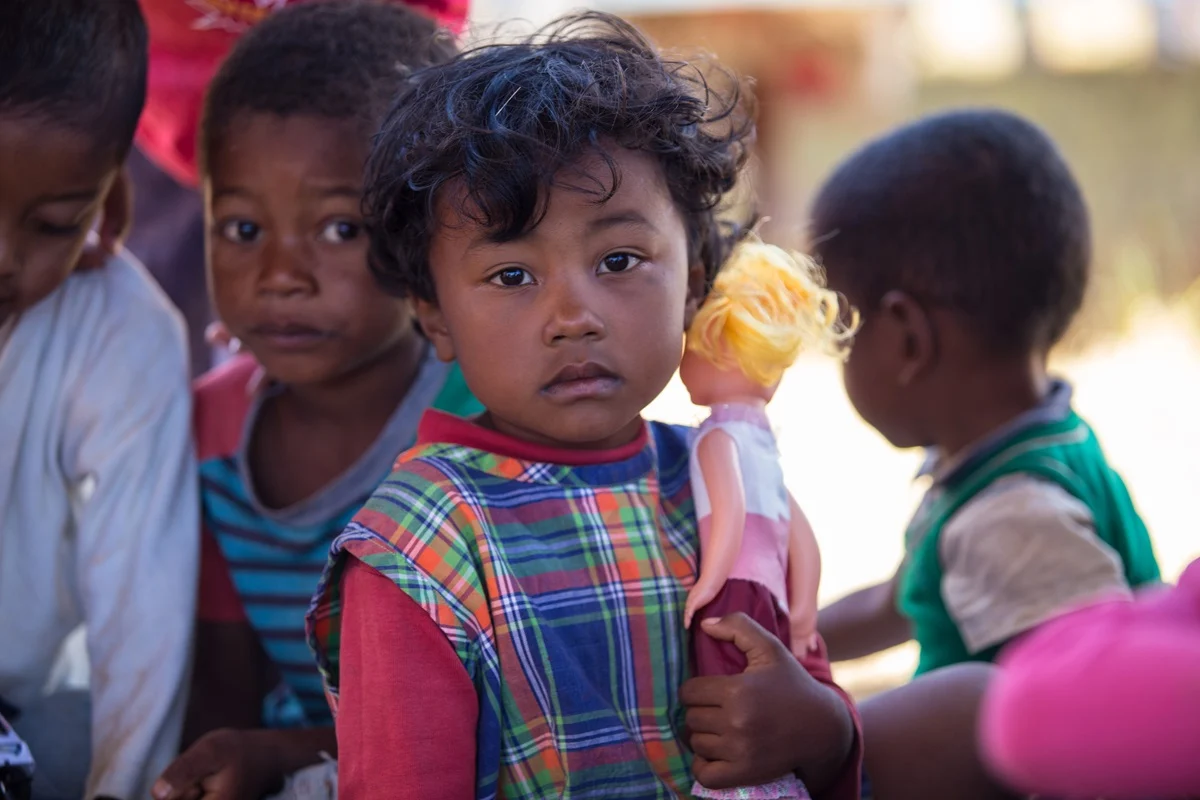
The global landscape of child health reached a monumental milestone in 2019, recording the lowest number of under-five deaths in modern history. According to comprehensive mortality estimates released by UNICEF, the World Health Organization (WHO), the United Nations Department of Economic and Social Affairs (UN DESA) Population Division, and the World Bank Group, annual global deaths among children under five plummeted to 5.2 million. This represented a profound achievement when measured against the 12.5 million deaths recorded in 1990.
However, this hard-won progress is now facing an unprecedented threat. Comprehensive global surveys conducted by UNICEF and the WHO reveal that the cascading disruptions triggered by the COVID-19 pandemic have severely compromised maternal and child health services across the globe. Without immediate, targeted investments to revitalize these essential systems, millions of vulnerable young lives hang in the balance, risking a devastating reversal of thirty years of public health gains.
Main Facts and the Scope of the Crisis
The core of the emergency lies in the systemic strain placed on healthcare infrastructures worldwide. Over the past three decades, coordinated international and domestic interventions successfully combated the leading causes of child mortality. These included preventative and therapeutic treatments for preterm birth complications, low birthweight, neonatal sepsis, pneumonia, diarrhea, and malaria, alongside expansive immunization campaigns.
The onset of the COVID-19 pandemic abruptly fractured these lifelines. Resource constraints, facility closures, transportation restrictions, and a pervasive fear of nosocomial infection have drastically reduced healthcare utilization. Parents are increasingly avoiding medical centers, leaving millions of infants and mothers without routine check-ups, vital vaccinations, and crucial prenatal and postnatal care.
Data from a UNICEF rapid situation tracking survey—covering 77 countries during the summer months—underscores the breadth of the disruption. Nearly 68 percent of participating nations reported at least partial disruptions in child health checks and immunization programs. Furthermore, 63 percent noted interruptions in antenatal check-ups, while 59 percent cited setbacks in postnatal care. Parallel findings from a WHO survey encompassing 105 countries revealed that 52 percent of nations experienced disruptions in health services for sick children, and 51 percent faced challenges in managing acute malnutrition.
Historical Context and Chronology of Child Mortality Reduction
To fully grasp the gravity of the current situation, it is necessary to examine the trajectory of child survival over the last generation. In 2004, the United Nations Inter-agency Group for Child Mortality Estimation (UN IGME) was formally established. Comprising UNICEF, WHO, the World Bank Group, and the UN Population Division, UN IGME was created to harmonize data collection, refine estimation methodologies, and monitor global progress toward international child survival goals.
Through concerted global health initiatives—including the Millennium Development Goals (MDGs) and subsequently the Sustainable Development Goals (SDGs)—the international community prioritized maternal and child health. Between 1990 and 2019, systematic expansions of primary healthcare networks, the deployment of trained community health workers, and widespread vaccine distribution drove the under-five mortality rate down by more than half.
The trajectory was historic: by 2019, more children were surviving to celebrate their first birthday than at any other point in recorded history. Yet, the rapid emergence of SARS-CoV-2 in late 2019 and early 2020 abruptly disrupted this upward trajectory, transforming a decade of steady institutional learning and logistical scaling into a fragile ecosystem vulnerable to sudden shocks.
Vulnerability of Newborns and Hard-Hit Regions
Even prior to the pandemic, newborns represented the most vulnerable demographic within the under-five mortality spectrum. In 2019, statistical models indicated that a newborn baby died every 13 seconds. Alarming data showed that 47 percent of all under-five deaths occurred during the neonatal period, a significant increase from 40 percent in 1990.
The pandemic has drastically amplified these existing vulnerabilities, particularly in low- and middle-income countries with already fragile health infrastructures. Afghanistan, Bolivia, Cameroon, the Central African Republic, Libya, Madagascar, Pakistan, Sudan, and Yemen have emerged as the hardest-hit nations. Seven of these nine countries registered staggeringly high under-five mortality rates exceeding 50 deaths per 1,000 live births in 2019.
In Afghanistan, where 1 in 17 children failed to reach their fifth birthday in 2019, the Ministry of Public Health documented a sharp decline in facility visits. Fear of virus transmission prompted families to de-prioritize essential pre- and postnatal care, compounding the dangers faced by pregnant women and neonates. Similarly, in Cameroon—where 1 out of every 38 newborns died in 2019—UNICEF surveys estimated a staggering 75 percent disruption across essential newborn care, obstetric services, and antenatal and postnatal monitoring.
Predictive Modeling and Immediate Projections
The downstream effects of these service interruptions extend far beyond immediate COVID-19 infection statistics. In May, preliminary predictive modeling conducted by Johns Hopkins University sounded an urgent alarm, estimating that systemic healthcare disruptions could result in nearly 6,000 additional child deaths per day globally.
These models illustrate that indirect mortality—resulting from unmanaged preventable diseases, missed immunizations, and untreated birth complications—could vastly outstrip direct fatalities from the virus among younger populations. Health interventions backed by empirical data demonstrate clear protective benefits; for instance, WHO research indicates that women who receive care from professionally trained midwives adhering to international standards face a 16 percent lower risk of losing their baby and a 24 percent reduced likelihood of a preterm birth. The dismantling of these professional networks directly threatens these protective margins.
Official Responses and Institutional Perspectives
Global health leaders have issued coordinated appeals, emphasizing that the pandemic response must not compromise the foundational health services required to sustain future generations.
Henrietta Fore, Executive Director of UNICEF, underscored the human cost of systemic neglect: "The global community has come too far towards eliminating preventable child deaths to allow the COVID-19 pandemic to stop us in our tracks. When children are denied access to health services because the system is overrun, and when women are afraid to give birth at the hospital for fear of infection, they, too, may become casualties of COVID-19. Without urgent investments to re-start disrupted health systems and services, millions of children under five, especially newborns, could die."
Dr. Tedros Adhanom Ghebreyesus, Director-General of the WHO, echoed the imperative for sustained investment and resilience: "The fact that today more children live to see their first birthday than any time in history is a true mark of what can be achieved when the world puts health and well-being at the centre of our response. Now, we must not let the COVID-19 pandemic turn back remarkable progress for our children and future generations. Rather, it’s time to use what we know works to save lives, and keep investing in stronger, resilient health systems."
From the financial and developmental perspective, Muhammad Ali Pate, Global Director for Health, Nutrition and Population at the World Bank, highlighted the structural economic necessity of preserving medical access: "The COVID-19 pandemic has put years of global progress to end preventable child deaths in serious jeopardy. It is essential to protect life-saving services which have been key to reducing child mortality. We will continue to work with governments and partners to reinforce healthcare systems to ensure mothers and children get the services they need."
John Wilmoth, Director of the Population Division of the UN Department of Economic and Social Affairs, drew attention to the broader demographic and equity implications: "The new report demonstrates the ongoing progress worldwide in reducing child mortality. While the report highlights the negative effects of the COVID-19 pandemic on interventions that are critical for children’s health, it also draws attention to the need to redress the vast inequities in a child’s prospects for survival and good health."
Fact-Based Analysis of Broader Implications
The convergence of historical child mortality data and contemporary disruption surveys presents a complex challenge for international policymakers. The implications of the current crisis are threefold: epidemiological, economic, and systemic.
Epidemiologically, gaps in routine immunization coverage risk triggering resurgences of vaccine-preventable diseases such as measles, polio, and diphtheria, which could complicate already overburdened clinical landscapes. Economically, the diversion of resources toward acute pandemic management, combined with the broader socioeconomic downturn, threatens to starve primary healthcare systems of the recurrent financing necessary for staff retention, medical supply chains, and facility maintenance.
Systemically, however, experts suggest that the crisis provides a crucial stress test for global health architecture. The imperative to rebuild disrupted services offers an opportunity to construct more robust, decentralized, and resilient primary healthcare frameworks. By integrating pandemic preparedness with routine maternal and child health service delivery, international agencies argue that nations can better insulate vulnerable populations against future biological and economic shocks.
Addressing the crisis requires a multifaceted operational strategy: restoring and expanding childbirth services, reinforcing antenatal and postnatal care networks, deploying skilled health personnel to marginalized communities, and actively engaging with local populations to alleviate fears regarding institutional healthcare utilization.
As international institutions continue to monitor the long-term demographic impacts, the overarching mandate remains clear: the preservation of the historic gains achieved between 1990 and 2019 depends entirely on the speed and scale of targeted interventions designed to protect the world’s most vulnerable mothers and children.