iwetel Ejiofor Reflects on a Legendary Career, the Unpredictability of Hollywood, and an Imminent Return to the Stage as He Receives the Prestigious Stella della Mole Award in Turin
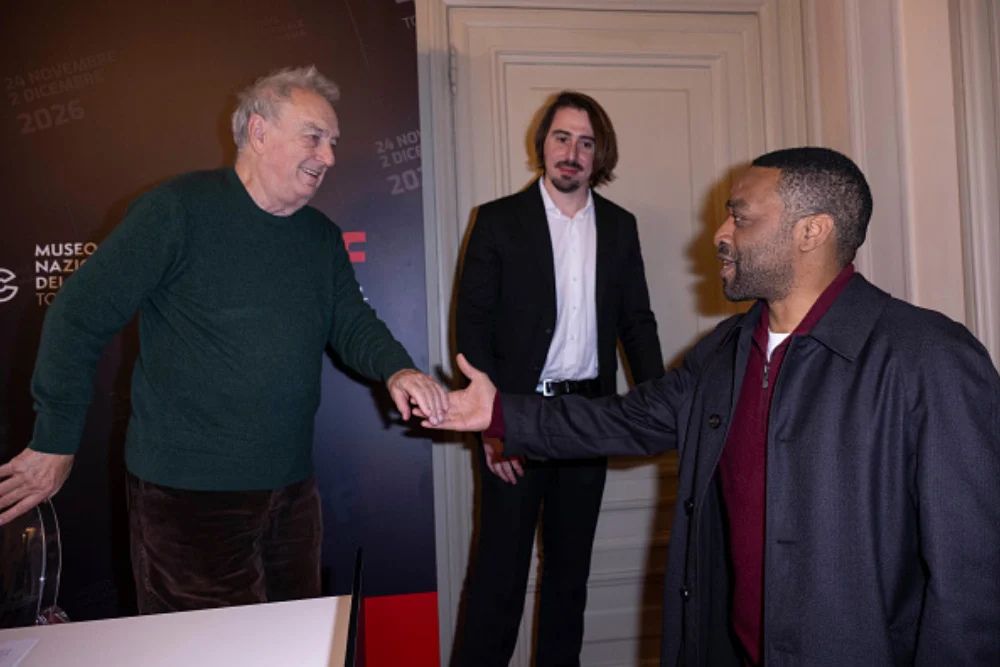
The grand architecture of the historic Italian city of Turin played host to one of contemporary cinema’s most revered talents as British actor, writer, and director Chiwetel Ejiofor accepted the prestigious Stella della Mole award for lifetime achievement at the Torino Film Festival. The accolade serves as a monumental marker for an artist whose career has defied conventional categorization, spanning blockbuster science fiction, intimate historical dramas, high-stakes thrillers, and a towering theatrical foundation. Yet, as Ejiofor reflected on the trajectory of a career that boasts an Academy Award nomination, a Laurence Olivier Award, and a celebrated transition behind the camera, he revealed that his journey began with a profound and persistent anxiety familiar to many young artists: the haunting fear that he had peaked before he had even truly begun.
The Genesis of a Cinematic Journey
For most aspiring actors, landing a role in a major Hollywood motion picture is the ultimate validation of years of training and endless auditions. For Ejiofor, however, that career-defining milestone arrived as his very first professional film credit, creating a unique psychological hurdle. In 1997, at the tender age of 19, he was cast by legendary filmmaker Steven Spielberg in the historical legal drama Amistad. Based on the true story of the 1839 mutiny aboard a slave ship and the subsequent legal battle that reached the United States Supreme Court, the film featured an ensemble cast of heavyweights, including Morgan Freeman, Anthony Hopkins, and Djimon Hounsou.
Stepping onto a Spielberg set as a teenager without prior film experience was baptism by fire. While audiences and critics recognized the raw power of his performance, Ejiofor harbored deep concerns about the longevity and direction of his professional life. Speaking candidly during a masterclass and retrospective panel at the Torino Film Festival, the actor confessed that he was genuinely worried about peaking too soon.
"I was definitely worried about it at the time," Ejiofor told the audience in Turin, recounting the linear expectations young creatives often place upon themselves. "You feel that there are stages to how you develop as an actor and the opportunities you get, and you think they might follow a very linear path. But of course, my first film role was with Steven Spielberg. I realized then, very early on, that it’s a deeply unpredictable profession. You can either feel disquiet or anxiety about that, or you have to go with it."
Rather than allowing the daunting heights of his debut to stifle his progress, Ejiofor embraced the volatile nature of the entertainment industry. He learned to view the sporadic and unpredictable cadence of casting calls and directorial offers not as obstacles, but as invitations to an uncharted journey. "The opportunities can be sporadic or come from different places and angles that you didn’t imagine," he added, emphasizing that the true challenge and thrill of acting lie in the capacity to adapt, travel, and discover where the work leads.
The Heart of a Theater Actor
Despite his auspicious cinematic debut under the guidance of one of Hollywood’s most commercially successful directors, Ejiofor did not immediately view himself as a man of the silver screen. For the formative years of his professional life, his heart belonged firmly to the dramatic arts of the British stage.
Born in London to Nigerian parents of Igbo descent, Ejiofor discovered acting during his school years, eventually joining the prestigious National Youth Theatre and later training at the London Academy of Music and Dramatic Art (LAMDA). His early professional foundations were built on the boards of the National Theatre in Great Britain, the West End, and numerous off-West End venues, where he tackled classic and contemporary texts with intense intellectual rigor and emotional depth.
"Even though I had done the Steven Spielberg film, I still thought of myself primarily as a theater actor," Ejiofor explained in Turin. This deep-seated theatrical identity culminated in a career milestone in 2008, when he received the Laurence Olivier Award for Best Actor for his searing portrayal of the title character in Michael Grandage’s production of Othello at the Donmar Warehouse. His performance was hailed by critics as a masterclass in psychological unraveling, establishing him as one of the preeminent classical actors of his generation.
The Cinematic Turning Point: Stephen Frears and Dirty Pretty Things
The pivot from viewing cinema as a secondary medium to embracing it as an equal artistic passion happened gradually, catalyzed by visionary filmmakers who pushed the boundaries of British and independent cinema. A pivotal moment in this evolution arrived with Stephen Frears’ critically acclaimed 2002 thriller Dirty Pretty Things, which was fittingly screened at the Torino Film Festival alongside a lifetime achievement tribute to Frears himself.
In the film, Ejiofor delivered a gripping performance as Okwe, an undocumented Nigerian immigrant in London working as a hotel night manager while navigating a dangerous underground world of human organ trafficking. The film showcased a different side of Ejiofor’s range—quiet, observant, haunted, yet fiercely resilient.
"I think it was around that time when I started to fall in love with film as well, with film acting and the rhythm and poetry of cinema," Ejiofor reflected. "A lot of that had to do with Stephen Frears and Chris Menges, who was the cinematographer on that film. It became something that I started to pursue."
For a considerable period following Dirty Pretty Things, Ejiofor successfully maintained a dual career, seamlessly balancing demanding theatrical runs in London with complex cinematic projects across the globe. He collaborated with acclaimed directors such as Ridley Scott (American Gangster, The Martian), Alfonso Cuarón (Children of Men), and Spike Lee (Inside Man), steadily building a reputation for intelligence, gravitas, and transformative character work.
Expanding Horizons: Writing, Directing, and the Call of the Stage
As his career matured, Ejiofor’s creative ambitions naturally expanded beyond performance. The actor began dedicating significant blocks of time to writing and directing—pursuits that historically would have been reserved for theatrical residencies on stage.
Transitioning behind the camera allowed him to explore narratives of personal resilience, community empowerment, and historical significance on his own terms. To date, Ejiofor has directed two critically praised feature films: The Boy Who Harnessed the Wind (2019), adapted from William Kamkwamba’s memoir about a Malawian boy who builds a wind turbine to save his village from famine, and Rob Peace (2023), a biographical drama chronicling the tragic life of a brilliant Yale graduate from Newark. Both projects demonstrated his directorial eye for human dignity, structural adversity, and emotional authenticity.
Yet, despite his success as a filmmaker and his packed Hollywood schedule, the pull of the stage remains magnetic. Ejiofor confirmed in Turin that his return to live theater is not only desired, but imminent. "It’s still something that I’m very passionate about," he noted. "Finding the time to do as much theater as I want can be challenging, but it’s something I’m in the midst of conversations about." He expressed hope that audiences might see him tread the boards once again in a major theater production by late next year.
Revisiting a Masterpiece: 12 Years a Slave
While looking forward to new theatrical endeavors, the Torino Film Festival also provided a timely platform to celebrate one of the most defining cinematic achievements of the 21st century: Steve McQueen’s historical drama 12 Years a Slave (2013). The film, which claimed three Academy Awards—including Best Picture—was showcased to enthusiastic Italian audiences during the festival.
In the film, Ejiofor delivered a career-defining performance as Solomon Northup, a free African American man living in New York who was kidnapped in 1841 and sold into slavery in the antebellum American South, enduring twelve years of brutal bondage before regaining his freedom.
Recalling his introduction to the project, Ejiofor admitted that Northup’s harrowing narrative was entirely unknown to him prior to receiving the script. "I hadn’t heard of his story at all. When I was sent the script, I was incredibly moved and shocked by it," he said. "Then I read Northup’s own memoir. I thought it was an extraordinary story, an extraordinary tale."
Ejiofor praised the film for confronting a "very tragic period of absence of humanity" with unflinching honesty and artistic brilliance. He reserve high praise for director Steve McQueen, describing him as a "phenomenal filmmaker, incredibly passionate, detailed and thorough, with a wonderful vision and cinematic heart." The global reception of the film and its recognition by the Academy, Ejiofor noted, was a profoundly gratifying validation of a story that, at its core, was never merely about historical suffering, but about "human respect and human dignity."
Implications and Industry Legacy
The presentation of the Stella della Mole award at the Torino Film Festival highlights the enduring impact of Ejiofor’s eclectic career on global cinema and performing arts. By refusing to be pigeonholed into a single medium or genre, he has carved out a unique space as an artist who moves fluidly between blockbuster franchises like the Marvel Cinematic Universe (Doctor Strange), prestige historical epics, gritty independent thrillers, and classical stagecraft.
Industry analysts and cultural critics often point to Ejiofor’s trajectory as a blueprint for modern artistic longevity. In an era where commercial pressures frequently force actors into repetitive casting loops, his willingness to embrace unpredictability—dating back to his teenage anxieties on the set of Amistad—has allowed him to continuously reinvent his artistic identity.
As he looks toward future theatrical commitments and continued storytelling behind the camera, Chiwetel Ejiofor stands not merely as an acclaimed performer receiving a retrospective honor, but as a vital, evolving force in contemporary culture. Whether commanding a West End theater, guiding an independent film crew, or anchoring a cinematic masterpiece, his career remains a testament to the power of artistic curiosity, emotional depth, and unwavering dedication to human dignity.