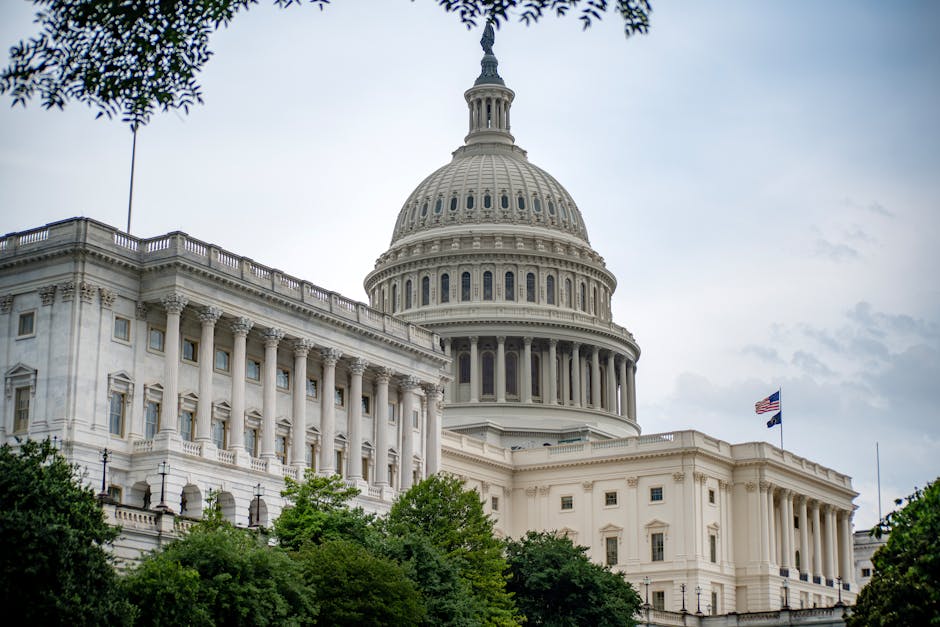
US House Plans: Quick Action, Trump Cuts Foreign Aid Spending
In a decisive move that signals a significant shift in American foreign policy, the US House of Representatives has passed legislation mandating substantial cuts to foreign aid spending. This swift action, spearheaded by the Trump administration’s "America First" agenda, directly addresses long-standing criticisms regarding the allocation of taxpayer dollars to international assistance programs. The approved bill, a product of intense debate and negotiation, aims to reallocate billions of dollars previously designated for foreign aid to domestic priorities, reflecting a fundamental re-evaluation of the nation’s global responsibilities and economic strategies. This legislative maneuver is not merely an incremental adjustment but a bold assertion of a new direction in US foreign engagement, with far-reaching implications for both American taxpayers and the global community.
The core of the legislation revolves around a significant reduction in budgetary allocations for various foreign assistance accounts. These cuts are not uniform across all programs but rather target specific initiatives deemed less critical to immediate US national security interests or economic prosperity by proponents of the bill. Observers point to a strategic pruning of aid to countries perceived as not sufficiently contributing to mutual defense agreements, or those that have historically demonstrated an inability to effectively utilize or reciprocate US assistance. The underlying rationale, as articulated by administration officials and supportive lawmakers, is to redirect these funds towards strengthening domestic infrastructure, bolstering national defense capabilities, and investing in American industries. This approach frames foreign aid not as a tool for global development and humanitarian relief, but as a potential drain on resources that could be more effectively deployed at home.
Key areas impacted by these spending cuts include, but are not limited to, development assistance programs administered by the U.S. Agency for International Development (USAID), contributions to international organizations such as the United Nations and the World Health Organization, and specific security assistance packages to certain allied nations. The rationale behind these specific reductions often centers on a performance-based evaluation of aid effectiveness. Proponents argue that previous administrations have been too lenient in disbursing funds without rigorous oversight or demonstrable return on investment. The new legislation introduces more stringent accountability measures and performance metrics, with the explicit intention of ensuring that any remaining foreign aid is strategically deployed to achieve clearly defined and measurable outcomes that directly benefit American interests. This includes a focus on aid that promotes trade, counter-terrorism efforts, or fosters political stability in regions deemed strategically vital to the United States.
The legislative process leading to the passage of these cuts was marked by fervent debate, highlighting the deep divisions within Congress and among the American public regarding the role of the United States in global affairs. Opponents of the cuts voiced concerns about the potential humanitarian consequences, arguing that reducing aid could destabilize fragile regions, exacerbate poverty, and undermine America’s long-standing commitment to global leadership and humanitarian principles. They further contend that such cuts could alienate key international partners, diminish US influence on the world stage, and ultimately prove counterproductive to long-term national security by creating power vacuums that adversarial nations could exploit. The debate also touched upon the economic arguments, with critics suggesting that reduced foreign aid could negatively impact American businesses that rely on aid-funded contracts and projects.
However, supporters of the legislation consistently emphasized the fiscal responsibility aspect, framing the cuts as a necessary recalibration of national priorities. They point to mounting domestic needs, including crumbling infrastructure, rising healthcare costs, and the need for increased investment in education and job training. The argument is that America cannot afford to be the primary financier of global development and social programs while facing its own internal challenges. The "America First" doctrine, a central tenet of the Trump presidency, finds its tangible expression in this legislation, prioritizing national interests and the well-being of American citizens above all else. This philosophical underpinning suggests a transactional approach to international relations, where aid is seen not as an altruistic endeavor but as an investment with a clear and direct benefit to the United States.
The economic implications of these cuts are multifaceted. On the one hand, proponents anticipate a positive impact on the domestic economy. The redirected funds are expected to stimulate job creation, boost infrastructure projects, and support industries that have been struggling. This could manifest in increased government spending on highway repairs, bridge construction, and other public works. Furthermore, a focus on bringing manufacturing back to the United States, potentially bolstered by reduced reliance on foreign aid as a tool of economic diplomacy, could lead to a resurgence in domestic industrial output. The argument is that by investing in America, the nation can achieve greater economic self-sufficiency and resilience.
Conversely, critics warn of potential negative economic repercussions, particularly for American businesses engaged in international development work. Companies that have historically benefited from USAID contracts and grants may face significant downturns, leading to job losses within these sectors. Moreover, a reduction in foreign aid could impact the stability of global markets, potentially affecting American trade and investment opportunities abroad. The interconnected nature of the global economy means that instability in other regions, exacerbated by reduced aid, could eventually have ripple effects on the US economy. The argument here is that foreign aid can serve as an investment in global stability, which in turn supports a favorable environment for American commerce.
The geopolitical ramifications of this policy shift are also profound. Historically, US foreign aid has been a cornerstone of its diplomatic strategy, used to build alliances, promote democracy, and counter the influence of adversaries. These cuts signal a potential retrenchment of American global engagement, which could create opportunities for other global powers to expand their influence in regions where US presence diminishes. Countries that have relied on American assistance for their economic and security needs may be forced to seek alternative partnerships, potentially altering existing geopolitical alignments. This could lead to a more multipolar world, with implications for international security and the effectiveness of multilateral institutions.
The humanitarian impact is perhaps the most widely debated aspect. International aid organizations and human rights advocates have expressed grave concerns about the potential consequences for millions of people worldwide who depend on US assistance for food, healthcare, education, and basic necessities. They argue that these cuts could lead to increased suffering, displacement, and instability in already vulnerable regions. The narrative here is that US foreign aid is not merely an economic transaction but a moral imperative, reflecting American values and its role as a global leader in alleviating human suffering.
The long-term implications of this legislation will undoubtedly unfold over time. The success or failure of this new approach to foreign aid will be measured by its impact on domestic prosperity, national security, and America’s standing in the world. The quick action by the US House of Representatives signifies a definitive pivot, and the global community will be closely observing the consequences of these significant cuts to foreign aid spending. The debate over the optimal allocation of resources, the definition of national interest, and America’s role in a complex global landscape will continue to be a defining feature of contemporary US foreign policy. This legislative chapter underscores a fundamental reorientation, prioritizing domestic needs and a more transactional approach to international engagement. The full ramifications of this significant policy shift are yet to be determined, but its immediate impact on global aid structures and geopolitical dynamics is undeniable.
