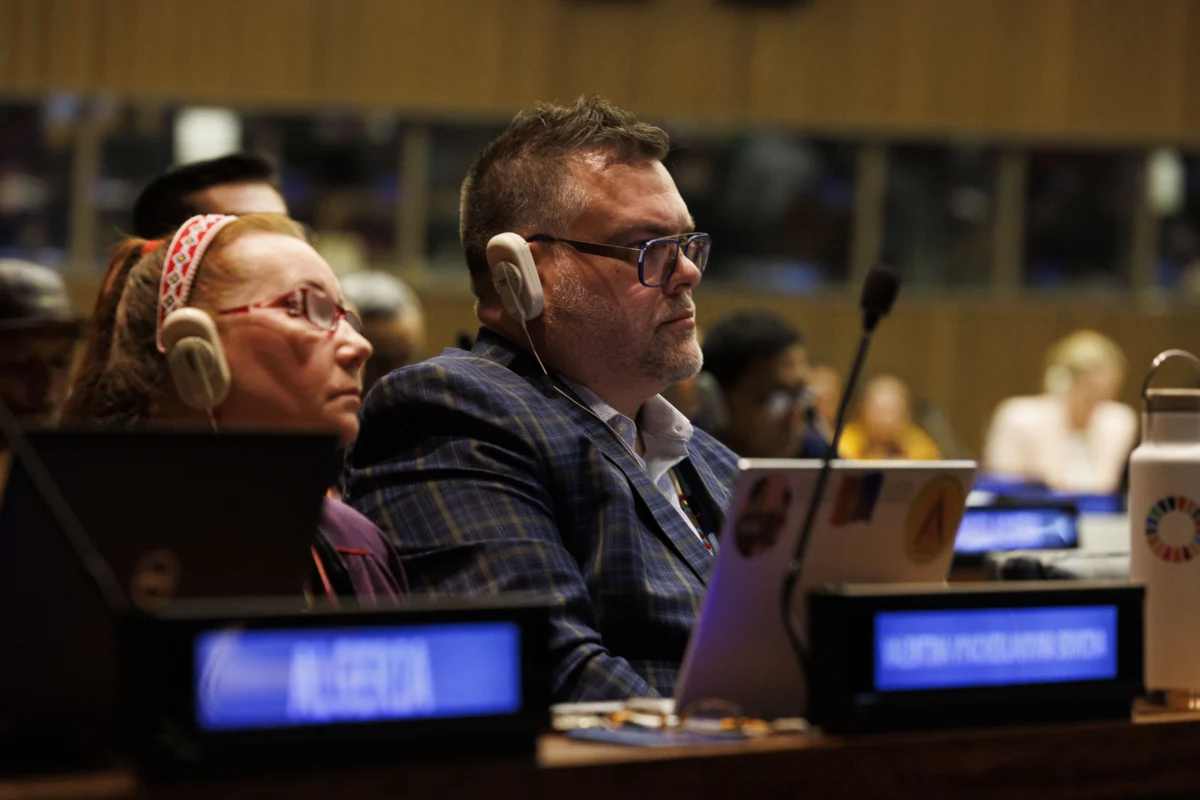
The United Nations headquarters in New York City has once again become the epicenter for the world’s largest annual gathering of Indigenous peoples, as hundreds of delegates from across the globe arrive for the 2025 session of the United Nations Permanent Forum on Indigenous Issues (UNPFII). This year’s assembly, however, convenes under a shadow of increasing geopolitical volatility, technological disruption, and environmental urgency. Delegates are navigating a landscape defined by an artificial intelligence boom that threatens new forms of digital and resource extraction, a restrictive visa environment that has sidelined voices from the Global South, and the paradoxical challenges of a global "green energy" transition that frequently compromises Indigenous land rights in the pursuit of climate goals.
The official theme for the 2025 session, "Ensuring Indigenous peoples’ health, including in the context of conflict," underscores the precarious state of global Indigenous communities. Experts and advocates emphasize that health for these populations cannot be viewed through a narrow clinical lens; rather, it is inextricably linked to territorial sovereignty, environmental integrity, and the preservation of cultural heritage. As armed conflicts and militarization increase globally, the resulting ecological degradation and forced displacement are being recognized as primary drivers of long-term health inequities that exacerbate the historical traumas of colonialism.
The Intersection of Conflict and Holistic Well-being
A central pillar of this year’s forum is the presentation of a landmark report by Geoffrey Roth, a descendant of the Standing Rock Sioux and former vice chair of the Permanent Forum. Roth’s findings argue that the United Nations and individual state governments have historically failed Indigenous populations by "siloing" health issues into Western medical frameworks. Roth, who also chairs the Indigenous Determinants of Health Alliance, posits that for Indigenous peoples, human health is a holistic concept that encompasses the vitality of the land, the strength of native languages, and the security of traditional food systems.
The report identifies several "Indigenous determinants of health," ranging from governance authority and land tenure to the risks of land dispossession and exclusion from national decision-making processes. Roth highlights how state-sanctioned erasure of Indigenous languages directly correlates with mental health crises within these communities. Conversely, language revitalization and the restoration of land rights are presented as essential public health interventions.

Practical applications of this philosophy are already emerging. For instance, the Coquille Indian Tribe in Oregon recently adopted an "Indigenous Determinants of Health Ordinance." This legal framework recognizes traditional activities, such as monthly fishing trips for elders, as vital health services that improve behavioral and mental well-being while reinforcing cultural continuity. Furthermore, the forum is calling on the UN to formally recognize the importance of Indigenous midwifery. Advocates argue that forcing Indigenous women into conventional Western institutions often subjects them to "obstetric violence" and systemic racism, whereas traditional practices offer a culturally safe and effective alternative.
Technological Frontiers: AI as a Tool for Empowerment and Extraction
As the world grapples with the rapid expansion of artificial intelligence, the UNPFII has turned its attention to the concept of "digital extractivism." Hindou Oumarou Ibrahim, an Indigenous Mbororo leader from Chad and former chair of the forum, has warned that AI represents a double-edged sword. While AI offers unprecedented opportunities for monitoring ancestral territories and revitalizing endangered languages through sophisticated translation models, it also facilitates the unauthorized "scraping" of Indigenous knowledge.
This new era of digital extraction involves generative AI systems harvesting traditional medicinal knowledge, sacred stories, and even genetic data without the consent of the communities that have stewarded this information for millennia. Lydia Jennings, an assistant professor at Dartmouth College and a citizen of the Pascua Yaqui and Huichol Tribes, has documented instances where mining corporations have utilized Indigenous cultural data—pulled from environmental impact statements—to promote industrial projects.
The movement for "Indigenous Data Sovereignty" has gained significant momentum at this year’s forum. Advocates argue that communities must retain the right to own and control their data, determining who uses it and for what purpose. While some tribes are exploring the possibility of hosting data centers or using AI for internal governance, the environmental cost of these technologies remains a concern. The massive water and energy requirements of AI data centers pose a direct threat to tribal resources, leading to questions about how power is distributed in the digital age.
The Climate Paradox: Green Energy and Territorial Displacement
The global shift toward renewable energy, intended to mitigate the climate crisis, has created a new set of challenges for Indigenous peoples. The "green transition" requires a massive influx of critical minerals such as lithium, cobalt, and copper—resources that are frequently located on or near Indigenous lands. This "Green Rush" has led to reported human rights violations and land seizures, echoing the extractive patterns of the fossil fuel era.
In addition to mining, "fortress conservation" models continue to displace Indigenous populations. A February report focusing on nomadic and pastoralist peoples warned that rigid state borders and exclusionary conservation zones are curbing the traditional mobility of hunter-gatherers, seafarers, and pastoralists. For groups like the Tuareg in the Sahara Desert and the Maasai in Kenya, mobility is not merely a lifestyle but a sophisticated, knowledge-based strategy for climate adaptation.
Samante Anne, representing the Mainyoito Pastoralists Integrated Development Organization, noted that in Kenya, communal lands are increasingly being subdivided for development or claimed for carbon offset projects. These initiatives, often framed as environmental solutions, limit the movement of pastoralists, thereby threatening their food security and their ability to adapt to a changing climate. The forum is amplifying calls for climate financing to be made directly available to Indigenous communities, bypassing state intermediaries that often redirect funds away from the grassroots level.
Systemic Barriers: Visa Restrictions and the Shrinking Space for Dialogue
Despite the importance of these diplomatic discussions, many delegates have been prevented from participating due to administrative hurdles. Mariana Kiimi Ortiz Flores of the advocacy group Cultural Survival highlighted a disturbing trend of visa denials for representatives from the Global South. Many of these restrictions, which gained momentum during the Trump administration, continue to hamper international Indigenous diplomacy.
In 2024 and 2025, multiple Indigenous staff members and representatives from Africa and South America were denied entry to the United States. Flores noted that the "climate of insecurity and hate speech" directed at Indigenous and Latin American people has created a threatening environment for those who do manage to attend. Furthermore, some delegates who attended previous sessions reported being harassed by political actors from their home countries, leading to a sense of disillusionment with the UN’s ability to provide a safe space for dissent.
"The forum is meant to be for Indigenous peoples," Flores stated, "but we really felt that the states are the ones who have more power over our lives." This sentiment reflects a broader concern that international institutions are losing their influence as member states increasingly prioritize national interests over international law and human rights.
The Semantic Struggle: Distinguishing Rights-Holders from Stakeholders
A recurring point of contention at the UN involves the use of the acronym "IPLC," which groups "Indigenous Peoples and Local Communities" into a single category. Indigenous advocates at the forum are demanding an end to this practice. They argue that while local communities may have interests in land and resources, Indigenous peoples possess distinct, legally recognized rights under international law, including the right to self-determination as outlined in the UN Declaration on the Rights of Indigenous Peoples (UNDRIP).
Geoffrey Roth and other leaders have confronted agencies like the World Health Organization and the UN Convention on Biological Diversity over this issue. They argue that conflating Indigenous peoples with "minority populations" or "local stakeholders" dilutes their legal standing and diminishes their ability to advocate for rights-based approaches to health and conservation. In 2023, the UN’s three primary Indigenous rights bodies issued a rare joint statement demanding that environmental treaties stop using the IPLC acronym, emphasizing that Indigenous peoples should not be grouped with undefined sets of communities with different legal statuses.
Implications and the Path Forward
The 2025 Permanent Forum on Indigenous Issues serves as a stark reminder of the resilience of Indigenous leadership in the face of systemic exclusion. While the challenges are multifaceted—ranging from the physical violence of war to the digital violence of data theft—the forum remains one of the few global platforms where Indigenous voices can directly challenge state power.
The implications of the discussions held this week extend far beyond the walls of the United Nations. The shift toward holistic health models, the establishment of data sovereignty protocols, and the insistence on direct climate financing represent a fundamental challenge to the status quo of global governance. As Mariana Kiimi Ortiz Flores noted, the struggle to defend ancestral lands and rights is a physical, mental, and spiritual battle.
Despite the bureaucratic hurdles and the geopolitical hostility, the determination of delegates to attend the forum reflects a vital reality: in the absence of international advocacy, the specific needs and rights of the world’s 476 million Indigenous people risk being erased by the very systems designed to protect them. The 2025 session stands as a testament to the fact that Indigenous peoples are not merely victims of global shifts but are active architects of a more equitable and sustainable global future.