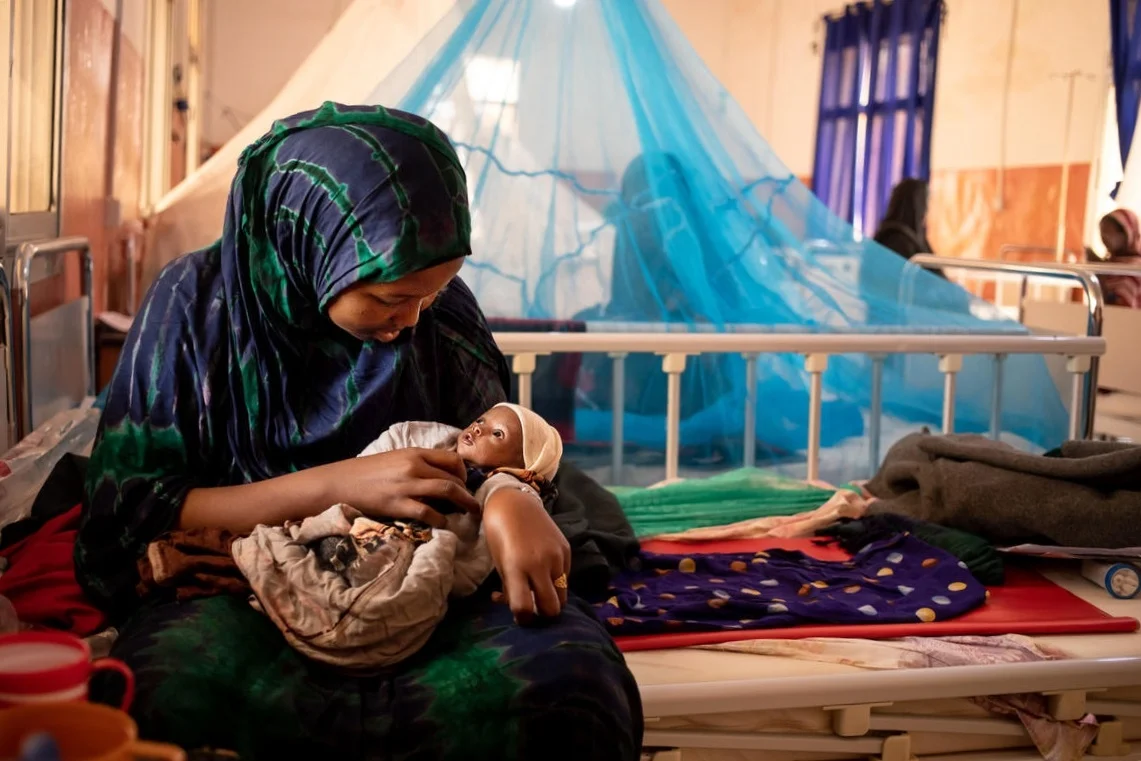
An estimated 4.9 million children died before their fifth birthday in 2024, including 2.3 million newborns, according to stark new estimates released by the United Nations Inter-agency Group for Child Mortality Estimation (UN IGME). The report, "Levels & Trends in Child Mortality 2025," highlights that the vast majority of these tragic and preventable deaths could have been averted with access to proven, low-cost interventions and quality healthcare. While global under-five deaths have fallen by more than half since the turn of the millennium, the report sounds an urgent alarm: the pace of reduction has slowed by over 60 percent since 2015, threatening hard-won progress and jeopardizing the Sustainable Development Goals (SDGs).
This year’s comprehensive report provides the most detailed picture yet of child mortality, offering insights into the number of children, adolescents, and youth dying, their geographic locations, and, for the first time, a full integration of estimates on the causes of death. This granular data, a significant methodological advancement, is made possible by the UN IGME’s unification of global child mortality and cause-of-death data, including estimates from the Child and Adolescent Causes of Death Estimation (CA CODE) group, a research consortium led by the Johns Hopkins Bloomberg School of Public Health.
The Devastating Impact of Malnutrition and Newborn Vulnerabilities
A critical and previously under-acknowledged driver of child mortality has been brought to the forefront: severe acute malnutrition (SAM). For the first time, the report directly estimates deaths caused by SAM, revealing that over 100,000 children aged 1-59 months – approximately 5 percent of all under-five deaths – succumbed to this condition in 2024. The true toll, however, is likely far higher, as malnutrition significantly weakens children’s immune systems, making them more susceptible to common childhood illnesses. The report acknowledges that mortality data often fail to capture SAM as an underlying cause, suggesting a substantial underestimation of its burden. Countries such as Pakistan, Somalia, and Sudan are identified as experiencing the highest numbers of direct deaths from SAM.
The report also underscores the persistent vulnerability of newborns. Neonatal deaths, occurring within the first month of life, account for nearly half of all under-five deaths. This reflects slower progress in preventing deaths around the critical period of birth. The leading causes of newborn mortality are complications from preterm birth (36 percent) and complications during labor and delivery (21 percent). Infections, including neonatal sepsis, and congenital anomalies also remain significant contributors to newborn deaths.
Persistent Infectious Disease Threats and Stark Regional Disparities
Beyond the neonatal period, infectious diseases continue to pose a major threat to young children. Malaria remains the single largest killer in this age group, responsible for 17 percent of deaths, with the vast majority occurring in endemic areas of sub-Saharan Africa. Despite significant declines in malaria mortality between 2000 and 2015, progress has faltered in recent years. Deaths are heavily concentrated in a handful of countries, including Chad, the Democratic Republic of the Congo, Niger, and Nigeria. These regions face a confluence of challenges, including ongoing conflict, climate shocks, the proliferation of invasive mosquito species, and growing drug resistance, all of which impede access to essential prevention and treatment services.
The concentration of child deaths in specific regions is a stark indicator of global inequities. In 2024, sub-Saharan Africa accounted for a disproportionate 58 percent of all under-five deaths. Within this region, infectious diseases are responsible for 54 percent of these deaths. In contrast, the proportion of child deaths attributed to infectious diseases drops to a mere 9 percent in Europe and Northern America and a further 6 percent in Australia and New Zealand. These profound disparities are a direct consequence of unequal access to proven, life-saving interventions.
Southern Asia, which accounts for 25 percent of all under-five deaths, faces a mortality burden largely driven by complications in the first month of life. These include preterm delivery, birth asphyxia and trauma, congenital anomalies, and neonatal infections. The report emphasizes that these largely preventable conditions highlight the urgent need for increased investment in quality antenatal care, skilled healthcare personnel at birth, specialized care for small and sick newborns, and robust essential newborn services.
The Amplified Risk in Fragile and Conflict-Affected Settings
Children born in fragile and conflict-affected countries face a significantly higher risk of mortality. They are nearly three times more likely to die before their fifth birthday compared to children in more stable environments. This amplified vulnerability is a direct result of the disruption of essential health services, displacement, food insecurity, and the increased exposure to violence and disease in these settings.
Beyond Early Childhood: Adolescent and Youth Mortality
The report also sheds light on the mortality of older children, adolescents, and youth aged 5-24. An estimated 2.1 million individuals in this age group died in 2024. Infectious diseases and injuries remain leading causes of death for younger children. However, as individuals enter adolescence, the leading causes of death shift. For girls aged 15-19, self-harm has emerged as the leading cause of death, while road traffic injuries claim the most lives among boys in the same age bracket. These findings underscore the need for comprehensive adolescent health programs that address mental health, injury prevention, and risk-taking behaviors.
Funding Pressures and the Imperative for Sustained Investment
The report issues a dire warning about the current global development financing landscape, which is placing critical maternal, newborn, and child health programs under increasing pressure. Essential components of effective care, including vital surveys, robust health information systems, and core health service functions, require sustained and predictable funding. Failure to secure this funding not only risks eroding past progress but also hinders the acceleration of much-needed improvements.
The Unparalleled Return on Investment in Child Survival
Despite the concerning trends, the report powerfully reiterates the immense value of investing in child health. Evidence consistently shows that investments in child survival are among the most cost-effective development measures available. Proven, low-cost interventions such as vaccinations, treatment for severe acute malnutrition, and skilled care at birth yield some of the highest returns in global health. These investments not only save lives but also contribute to improved productivity, stronger economies, and reduced future public spending on healthcare and social support. Projections indicate that every dollar invested in child survival can generate up to twenty dollars in social and economic benefits.
A Collective Call to Action: Governments, Donors, and Partners Must Act
To reverse the alarming slowdown in child survival and save millions of lives, the report urges governments, donors, and international partners to recommit to accelerated action. The core recommendations revolve around strengthening primary healthcare systems, ensuring equitable access to essential services, and prioritizing the most vulnerable populations.
Voices from the Frontlines of Global Health
The gravity of the situation and the urgency for action have been echoed by leading global health figures:
"No child should die from diseases that we know how to prevent. But we see worrying signs that progress in child survival is slowing – and at a time where we’re seeing further global budget cuts," stated UNICEF Executive Director Catherine Russell. "History has shown what is possible when the world commits to protecting its children. With sustained investment and political will, we can continue to build on those achievements for future generations."
Dr. Tedros Adhanom Ghebreyesus, WHO Director-General, emphasized, "The world has made remarkable progress in saving children’s lives, but many still die from preventable causes. Children living amid conflict and crisis are nearly three times more likely to die before their fifth birthday. We must protect essential health and nutrition services and reach the most vulnerable families so every child has the chance not only to survive, but to thrive."
Monique Vledder, World Bank Group Director for Health, added, "These findings are a collective call to speed up implementation of the proven, scalable solutions we know are within reach. The World Bank Group health target of reaching 1.5 billion people is our concrete commitment to accelerating access to quality primary health services for more children and families."
Mr. Li Junhua, Under-Secretary-General for Economic and Social Affairs, remarked, "The latest estimates from the United Nations Inter-agency Group for Child Mortality Estimation are a stark reminder that progress on child survival is slowing and too many countries are off track to meet the Sustainable Development Goals. We know how to prevent these deaths. What is needed now is renewed political commitment, sustained investment in primary health care, and stronger data systems to ensure no child is left behind."
Li Liu, PhD, an associate professor at the Johns Hopkins Bloomberg School of Public Health and co-PI of CA-CODE, underscored the scientific evidence: "These estimates demonstrate that many deaths among children under five – from causes such as preterm birth, lower respiratory infections, to injuries – are avoidable with proven, cost-effective interventions. The science is clear: targeted investments in primary health care, maternal and newborn health services, routine immunization, nutrition programs, and quality and timely data systems can save millions of lives."
A Look at the Data and Methodological Advancements
The UN IGME’s estimates are derived from a rigorous process that involves consolidating data from national household surveys, censuses, and vital registration systems. The inclusion of estimates from the CA CODE group represents a significant leap forward in understanding the specific causes of death, enabling more targeted interventions. While updated data and improved methodologies mean this round’s estimates may differ slightly from previous years, the overall trend of a decelerating rate of decline is undeniable. The UN IGME’s commitment to transparency and methodological refinement ensures that these estimates serve as a reliable basis for global health policy and programming.
The UN IGME, formed in 2004, is a collaborative effort involving UNICEF, the World Health Organization (WHO), the World Bank Group, and the Population Division of the United Nations Department of Economic and Social Affairs. Its mandate includes sharing child mortality data, improving estimation methods, reporting on progress toward child survival goals, and building national capacity for accurate estimation.
The Johns Hopkins Bloomberg School of Public Health, a pioneer in public health since its founding in 1916, plays a crucial role in advancing research and disseminating knowledge to improve population health globally. Its work, including the CA CODE initiative, is instrumental in providing the evidence base for effective interventions.
The implications of the slowing progress are profound, threatening to leave millions of children behind and undermining global efforts to achieve equitable and sustainable development. The current juncture demands an urgent recommitment to the principles of child survival and well-being, translating into increased financial investment and unwavering political will to ensure that every child, regardless of where they are born, has the opportunity to live a healthy and fulfilling life.