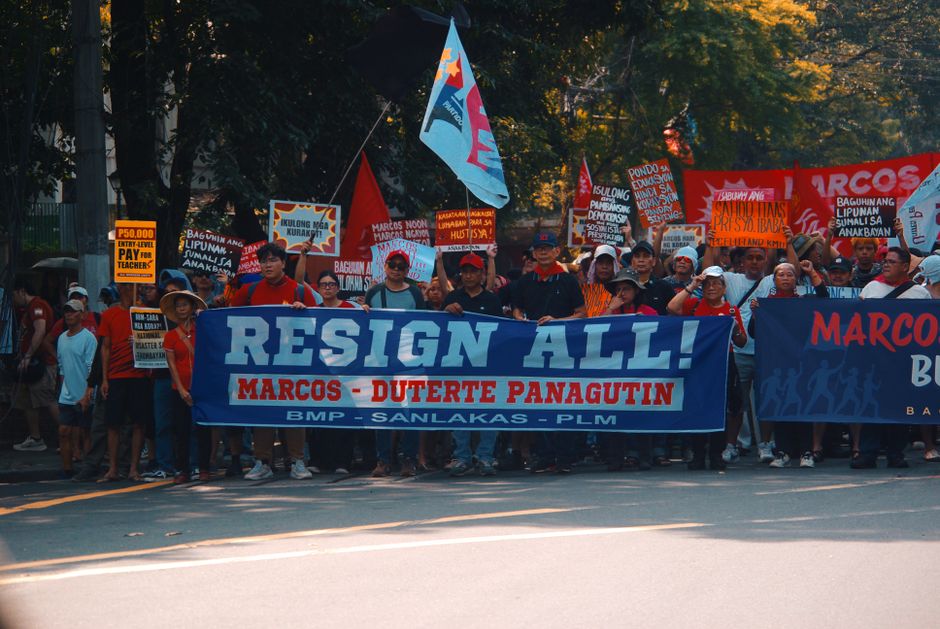
The Unfolding Political Landscape: What Lies Beyond the Philippine Vice Presidency of Sara Duterte
The conclusion of any significant political chapter, particularly one involving impeachment proceedings, invariably triggers a period of intense speculation and strategic recalibration. For the Philippines, the shadow cast by the potential impeachment of Vice President Sara Duterte presents a complex and multifaceted question: what are the next significant political maneuvers and enduring implications for the nation’s governance and its key political actors? Understanding this future requires a granular examination of the immediate aftermath, the strategic realignments among political factions, and the long-term ramifications for democratic institutions and the electoral landscape. The Philippines, with its dynamic political environment, is prone to swift shifts in power and influence, making proactive analysis crucial for comprehending the evolving trajectory.
The immediate aftermath of any impeachment process, regardless of its success or failure, injects a potent dose of uncertainty into the political system. Should impeachment proceedings against Vice President Duterte advance and culminate in her removal from office, the constitutional mechanism for succession would immediately come into play. Article VII, Section 8 of the Philippine Constitution clearly delineates the line of succession: the Speaker of the House of Representatives would assume the presidency, while the Senate President would become the Vice President. This scenario, however improbable in the current political climate given the administration’s support, would trigger a profound reshuffling of national leadership. The sudden elevation of individuals not originally slated for such high office would necessitate a period of adaptation and consolidation of power for the new executive and vice-executive. This would also likely lead to significant cabinet realignments and policy shifts, as the new leadership attempts to establish its authority and implement its agenda. The immediate focus would be on maintaining stability and ensuring continuity of essential government functions amidst a potentially tumultuous transition.
Conversely, if impeachment proceedings are thwarted or do not reach the threshold for conviction, the political narrative would pivot. For Vice President Duterte, the experience, regardless of the outcome, would likely solidify her image as a resilient political figure, potentially garnering sympathy from her supporters and galvanizing her base. This would allow her to continue her political career with renewed vigor, potentially setting the stage for future national ambitions. The key question then becomes how she leverages this experience. Will she adopt a more conciliatory approach, or will she double down on her existing political stance? Her strategic choices in the aftermath will significantly influence the dynamics of national politics, particularly in relation to the incumbent president and other influential political families. Her ability to navigate the post-impeachment narrative, whether as a victor or a survivor, will be critical in shaping her future political capital.
Beyond the immediate impact on the Vice President, the impeachment narrative serves as a catalyst for realignment within and between the nation’s powerful political factions. The Philippines operates under a highly personalized and often transactional political system, where alliances are fluid and often forged based on shared interests and perceived advantages. The prospect of impeachment proceedings would inevitably force political actors to take sides, solidifying existing allegiances and potentially creating new ones. This dynamic has significant implications for the upcoming electoral cycles, particularly the 2025 senatorial and congressional elections and the 2028 presidential election. Parties and political blocs will reassess their strategies, considering the fallout from the impeachment process and how it might affect voter sentiment. The Marcos-Duterte alliance, a cornerstone of the current administration, would be particularly tested, with potential fissures emerging if perceived strategic liabilities arise from the impeachment saga.
The specific political parties and blocs that would be most impacted include the Partido Demokratiko Pilipino–Lakas ng Bayan (PDP-Laban), the Hugpong ng Pagbabago (Hugpong) founded by the Duterte family, and the various factions within the political opposition. The PDP-Laban, which has historically been a dominant force, might see its internal divisions exacerbated as different factions align with or against the administration’s stance on the impeachment. Hugpong ng Pagbabago would likely mobilize to defend its key figure, potentially strengthening its resolve and its appeal to voters disillusioned with traditional politics. The opposition, meanwhile, would seek to capitalize on any perceived weakness or division within the administration, aiming to present a united front to regain electoral ground. The outcome of the impeachment would also influence the strength and credibility of these parties in future political contests, impacting their ability to field strong candidates and garner significant votes.
Furthermore, the impeachment process, or even the threat of it, has profound implications for the evolution of democratic institutions and the rule of law in the Philippines. The impeachment mechanism, enshrined in the Constitution, is a vital check and balance on executive power. Its invocation, regardless of the outcome, draws public attention to the processes of accountability and governance. A protracted or highly politicized impeachment can, however, also erode public trust in these institutions, particularly if perceived as a partisan tool rather than a genuine pursuit of justice. The judiciary, the legislature, and even the office of the ombudsman can be drawn into the political fray, their impartiality tested. The aftermath will likely see debates surrounding the strengthening or reform of these institutions, with proponents arguing for greater transparency and less political interference, while others might advocate for modifications to the impeachment process itself to prevent its perceived misuse. The long-term effect on democratic norms and the adherence to constitutional processes will be a critical area of observation.
The economic implications of political instability, including impeachment proceedings, are also significant. Investor confidence, both domestic and foreign, is sensitive to the predictability and stability of a nation’s political landscape. Uncertainty surrounding leadership transitions or potential executive overreach can lead to capital flight, delayed investments, and a general slowdown in economic activity. Conversely, a swift and decisive resolution to any political crisis can restore confidence and foster a more stable environment for economic growth. The government’s ability to maintain economic momentum and address pressing issues such as inflation, unemployment, and poverty will be closely scrutinized in the post-impeachment period. Any perceived weakness in governance or policy direction stemming from the political machinations could have tangible consequences for the livelihoods of ordinary Filipinos, making economic stability a crucial factor in the nation’s post-impeachment trajectory.
The role of media and public discourse in shaping the narrative surrounding impeachment is paramount. Social media, in particular, has become a powerful tool for disseminating information, shaping public opinion, and mobilizing support or opposition. The aftermath of any impeachment process will likely see a continued battle for narrative control, with political actors and their allies actively engaging in online discourse to influence public perception. This can lead to increased polarization and the spread of disinformation, posing a challenge to informed public debate. The ability of citizens to critically evaluate information and distinguish between credible sources and partisan propaganda will be crucial in navigating this complex information environment. The media’s responsibility to provide balanced and objective reporting will be more important than ever in fostering a well-informed citizenry.
Looking further ahead, the potential impeachment of Vice President Sara Duterte will undoubtedly cast a long shadow over the 2028 presidential elections. Her political future, and that of her allies, will be significantly shaped by the events surrounding any impeachment proceedings. If she weathers the storm, her resilience could be a powerful political asset, potentially positioning her as a strong contender for the presidency. Conversely, a successful impeachment would end her immediate national aspirations but could still propel her to a different role, perhaps as a kingmaker or a rallying point for a particular political movement. The political landscape will be reshaped by her actions and the reactions of her opponents. The outcomes of any impeachment will dictate the strategies of potential presidential candidates, influencing the formation of coalitions and the framing of electoral campaigns. The nation will be closely watching how the political map is redrawn in the wake of this significant political event, with implications for the Philippines’ governance and its place on the global stage. The enduring question will be how the nation’s political system adapts and evolves to ensure continued democratic health and stability.
