Ukrainian President Volodymyr Zelenskyy has unequivocally stated that Russia "does not deserve any easing or lifting on sanctions" following a devastating overnight assault that claimed the lives of 16 people and wounded 100 across Ukraine. The widespread attacks, which targeted major cities including Kyiv, Odesa, and Dnipro, involved an unprecedented barrage of nearly 700 Russian drones and 19 ballistic missiles, marking a significant escalation in Moscow’s sustained campaign against Ukrainian civilian infrastructure. The grim toll, which tragically included two teenage children, underscores the brutal reality of the ongoing conflict, now grinding through its fifth year.
President Zelenskyy’s remarks, delivered with palpable urgency, underscored Ukraine’s unwavering resolve and called for a robust international response. "Russia is betting on war, and the response must be exactly that: we must defend lives with all available means, and we must also apply pressure for the sake of peace with the same full force," he asserted. His statement further emphasized that "there can be no normalisation of Russia as it is today. Pressure on Russia must work," signaling a firm stance against any diplomatic overtures that might diminish the existing punitive measures against Moscow. This declaration comes at a critical juncture, as European leaders grapple with complex geopolitical challenges, including the ongoing war in Ukraine, the escalating conflict in the Middle East, and significant political shifts within the European Union itself.

Intensified Attacks and Civilian Toll in Ukraine
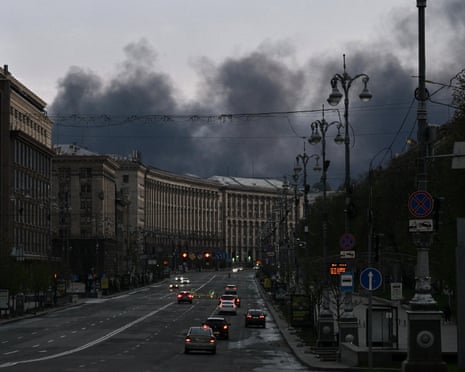
The overnight strikes, which unfolded on Thursday, April 16, 2026, represent one of the most intense aerial assaults on Ukraine in recent months. Eyewitness accounts and video footage from affected areas depict scenes of widespread destruction, with smoke rising above buildings in Kyiv’s Khreshchatyk Street, damaged residential blocks, and a civilian storage facility. The sheer volume of munitions – hundreds of drones and dozens of ballistic missiles – overwhelmed some Ukrainian air defense systems, leading to tragic loss of life and extensive damage in civilian areas. While Russia’s defence ministry claimed its attacks were precisely aimed at "production facilities for cruise missiles and drones and energy targets" purportedly linked to Ukraine’s armed forces, Ukrainian authorities vehemently rejected this narrative, highlighting the civilian casualties as irrefutable evidence of indiscriminate targeting.
The European Council President, António Costa, echoed Zelenskyy’s condemnation, describing the overnight attacks as "horrendous." Costa specifically alleged that Russian forces "deliberately carried out follow-up strikes" to target first responders arriving at devastated sites, a tactic considered a war crime under international law. "As people slept in their homes, the cities of Kyiv, Dnipro, Odesa, and Kharkiv were struck by dozens of ballistic missiles and hundreds of drones. Russian armed forces deliberately carried out follow-up strikes on Ukrainian emergency services as first responders arrived to save lives," Costa stated. He further concluded, "Russia’s war of aggression against Ukraine has failed, and so it chooses to deliberately terrorise civilians. Russia must stop this war of terror." These statements from high-ranking European officials highlight the growing frustration and outrage within the international community over Russia’s tactics.

The attacks also marked a violent end to a 32-hour Orthodox Easter truce, which both sides accused each other of violating. This pattern of short-lived or entirely disregarded ceasefires has become a grim hallmark of the conflict, reinforcing skepticism about Russia’s sincerity in any peace negotiations. German Defence Minister Boris Pistorius, speaking just yesterday, underscored this point, noting that while "the so-called Russian Ukrainian peace talks have currently been suspended, the truth is, anyway, Russia has never taken them seriously." This sentiment reinforces the widespread belief among Western allies that military support for Ukraine remains paramount.
In response to the escalating aggression, the Ukrainian military launched its own counter-strikes. Kyiv’s drone forces commander confirmed successful operations against two oil depots in Russia-occupied Crimea and critical infrastructure in Russia’s southern port of Tuapse. These retaliatory actions demonstrate Ukraine’s capability to strike beyond the immediate front lines and target Russian logistical and energy assets, aiming to disrupt Moscow’s war machine and exert pressure in return.
EU’s Stance on Sanctions and Broader Diplomatic Engagements
The European Commission swiftly responded to President Zelenskyy’s plea, affirming its commitment to maintaining and even tightening sanctions against Russia. Paula Pinho, the commission’s chief spokesperson, categorically stated that "giving any relief in terms of sanctions vis a vis Russia is not helpful in maintaining the pressure" on Moscow to cease its aggression. Pinho also highlighted a concerning dynamic, noting that "it should be ironic that Russia is actually benefiting from the war in the Middle East," suggesting that global instability might be diverting attention or resources in a way that indirectly aids Russia. The EU’s ongoing internal discussions revolve around identifying new avenues for tightening sanctions, aiming to make it increasingly difficult for Russia to "benefit from continuing this terrible war." This reflects a concerted effort to enhance the effectiveness of economic pressure, even as the global landscape shifts.
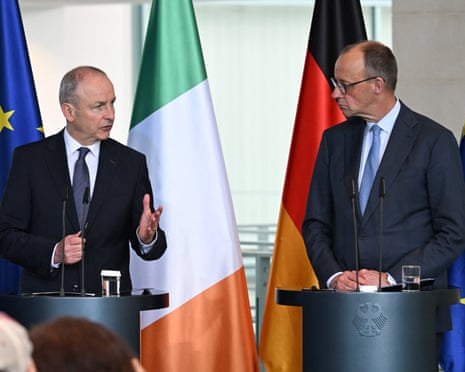
Amidst these developments, Europe’s diplomatic calendar remains packed. NATO Secretary General Mark Rutte is scheduled to meet with European Commission President Ursula von der Leyen, indicating high-level coordination on security and policy matters. Concurrently, German Chancellor Friedrich Merz will host Irish Prime Minister Micheál Martin in Berlin. These meetings are crucial for aligning strategies on Ukraine, energy security, defense cooperation, and broader European integration, especially as the continent navigates an increasingly complex geopolitical environment.
Ireland’s upcoming six-month presidency of the EU, commencing in July, also featured prominently in Martin’s discussions with Merz. The Irish Prime Minister outlined Dublin’s priorities, which center on bolstering the EU’s competitiveness, upholding the bloc’s fundamental values, and ensuring its collective security. "Without a strong and competitive economy, Europe will not be able to improve the living standards of our citizens and to protect our people from external threats," Martin emphasized, articulating a holistic vision for Europe’s future. On the security front, he stressed the "continuing support for Ukraine in the face of Russia’s illegal war" as a paramount objective. Additionally, Martin highlighted the urgent need for Europe to "respond to and manage the consequences of the conflict in the Middle East," recognizing its far-reaching implications for regional and global stability. The Middle East crisis, he added, has "very serious and far ranging" consequences, necessitating an "urgent need to bring hostilities to an end."
Hungary’s Political Seismic Shift and EU Relations
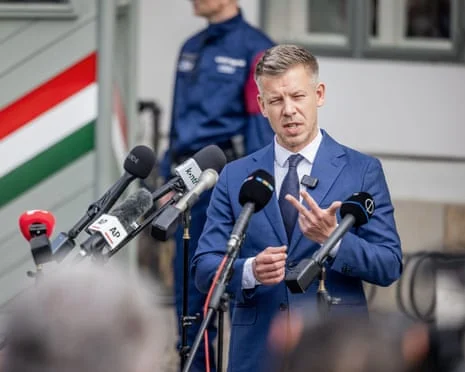
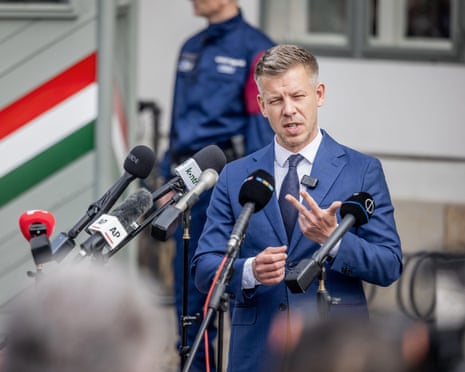
A significant political tremor has rippled through Europe with the recent parliamentary election in Hungary, which saw Péter Magyar emerge victorious, ending Viktor Orbán’s formidable 16-year tenure as prime minister. This historic shift has ignited hopes within the European Union for a more constructive relationship with Budapest, following years of often contentious clashes with Orbán’s government over issues of rule of law, democratic backsliding, and foreign policy alignment.
The European Commission has wasted no time in engaging with the new Hungarian leadership, confirming that it will hold its first "early talks" with Magyar’s incoming government on Friday in Budapest. EU spokesperson Paula Pinho underlined the urgency of these discussions, stating, "The clock is ticking for a number of topics." She clarified that these are "preliminary talks that are taking place in order to make sure that once the government is in place, really, action can be taken if appropriate, and that we do not waste any time."
A central and highly anticipated issue for the EU will be how swiftly Magyar’s government moves to lift Hungary’s long-standing block on a critical €90 billion loan package for Ukraine and the union’s 20th round of sanctions against Russia. Under Orbán, Hungary frequently leveraged its veto power to extract concessions or express dissent, creating significant friction within the bloc on critical foreign policy matters. The unblocking of these vital financial and punitive measures would signal a marked change in Hungary’s alignment and a significant boost for Ukraine’s defense efforts.
For Péter Magyar, a former diplomat in Brussels during the Orbán years, his immediate domestic priority is to fulfill a key campaign promise: to "bring home" Hungary’s frozen EU funds. Currently, an estimated €17 billion in funds allocated for Hungary’s economic development remain withheld by the EU. These funds were frozen due to Budapest’s failure to meet stringent EU standards on combating corruption, ensuring judicial independence, upholding academic freedom, and addressing concerns related to Hungary’s controversial anti-LGBTQ+ law. Magyar’s ability to navigate these complex negotiations and secure the release of these funds will be a crucial test of his leadership and his commitment to aligning Hungary more closely with EU values and legal frameworks.
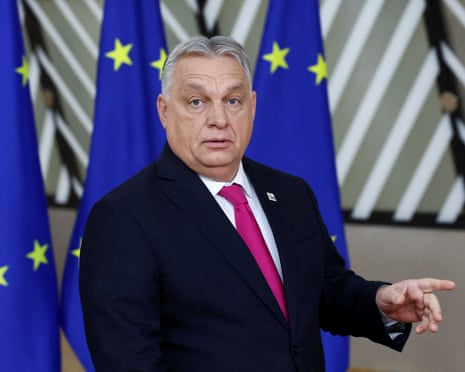
Adding a symbolic capstone to Orbán’s era, Hungary’s outgoing prime minister has confirmed he will skip his final EU summit. EU affairs minister János Bóka cited Orbán’s "duties related to the handover of power" as the reason for his absence, meaning Hungary will not be politically represented at the summit. The meeting is expected to address pressing matters such as the crisis in the Middle East and the upcoming EU budget – topics on which the outgoing Hungarian government communicated its views to the President of the European Council prior to the summit. Orbán’s departure from the European stage marks the end of a turbulent chapter in EU-Hungarian relations and opens the door for a potentially more cooperative future.
Conclusion: A Continent in Flux
The events of Thursday, April 16, 2026, underscore a European continent in continuous flux, shaped by the brutal realities of war, the intricate dance of diplomacy, and profound domestic political transitions. From the devastating Russian strikes on Ukraine and Zelenskyy’s impassioned call for unwavering support, to the European Union’s determined stance on sanctions and its proactive engagement with Hungary’s new leadership, the interconnectedness of these challenges is evident. The incoming Irish EU presidency’s focus on competitiveness, values, and security further highlights the collective European effort to forge a path forward amidst a landscape of persistent threats and evolving geopolitical alignments. The outcomes of these diplomatic endeavors and Hungary’s political reorientation will undoubtedly have far-reaching implications for the future stability and cohesion of the European project.