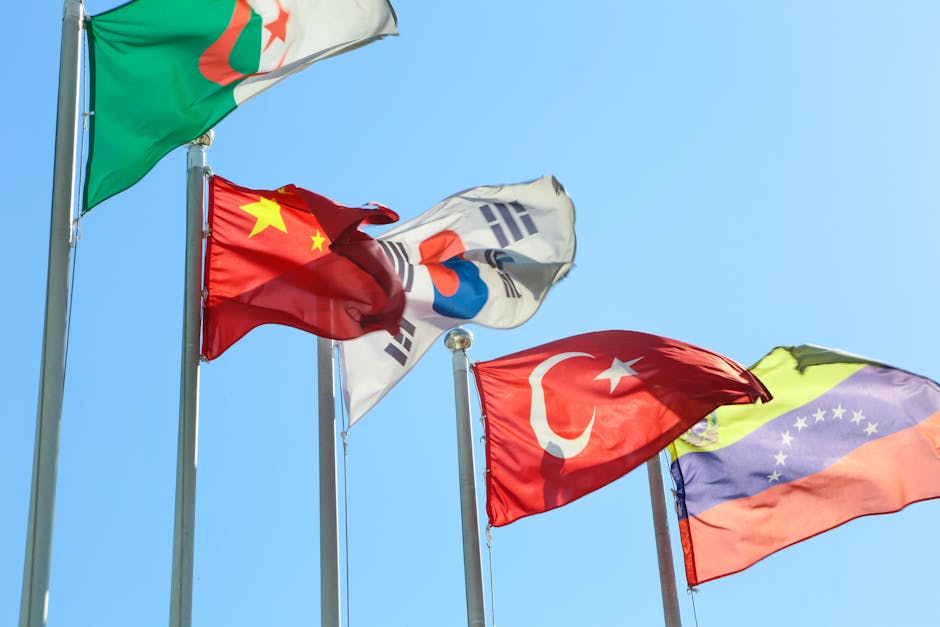
International Relations: Navigating the Complex Web of Global Interactions
International relations (IR) is a dynamic and multifaceted academic discipline that seeks to understand, analyze, and explain the interactions between states, international organizations, non-governmental organizations, multinational corporations, and other actors on the global stage. It delves into the causes of conflict and cooperation, the distribution of power, the formation of alliances, the dynamics of diplomacy, the evolution of international law, and the persistent challenges of global governance. At its core, IR grapples with the fundamental question of how and why political, economic, and social phenomena transcend national borders, shaping the destinies of societies and individuals worldwide. Understanding IR is crucial for comprehending contemporary global challenges, from climate change and economic inequality to terrorism and pandemics, all of which demand coordinated international responses.
Theoretical Frameworks in International Relations
The study of international relations is underpinned by a diverse array of theoretical frameworks, each offering a distinct lens through which to interpret global events. Realism, arguably the oldest and most dominant paradigm, posits that states are the primary actors in the international system, driven by an insatiable pursuit of power and security in an anarchic environment where no overarching authority exists to enforce rules. Realists like Hans Morgenthau emphasized the importance of national interest, often defined in terms of power, and viewed international politics as a perpetual struggle for dominance. Neorealism, or structural realism, introduced by Kenneth Waltz, shifted the focus from the internal characteristics of states to the structure of the international system, arguing that the anarchic nature of this system compels states to behave in similar, self-interested ways to ensure survival. Offensive realists, such as John Mearsheimer, contend that states are not content with a secure position but actively seek hegemony to maximize their power and security, while defensive realists, like Stephen Walt, argue that states primarily seek security and only resort to power maximization when threatened.
Liberalism, in contrast, offers a more optimistic view of international politics, emphasizing the potential for cooperation and the pursuit of shared interests. Liberals highlight the role of international institutions, international law, and domestic political structures in mitigating conflict and fostering peaceful relations. Key liberal thinkers like Immanuel Kant advocated for a "perpetual peace" achieved through republican governance, free trade, and a league of nations. Neoliberalism, also known as liberal institutionalism, developed by Robert Keohane and Joseph Nye, acknowledges the anarchic nature of the international system but argues that international institutions can reduce transaction costs, provide information, and foster interdependence, thereby facilitating cooperation among self-interested states. Democratic peace theory, a prominent liberal concept, suggests that democracies are less likely to go to war with one another due to shared norms, institutional constraints, and a mutual understanding of legitimate political processes.
Constructivism, a more recent but increasingly influential theoretical approach, challenges both realism and liberalism by emphasizing the role of ideas, norms, and social interactions in shaping international outcomes. Constructivists, such as Alexander Wendt, argue that anarchy is "what states make of it," meaning that the nature of the international system is not predetermined but is socially constructed through the shared understandings and practices of states. They highlight how concepts like sovereignty, identity, and national interest are not fixed but are fluid and contingent on social processes. For constructivists, changes in beliefs and norms can fundamentally alter the logic of international relations, leading to shifts in state behavior and the very structure of the international system.
Other significant theoretical perspectives include Marxism and its various offshoots, which focus on economic inequality, class struggle, and the exploitative nature of global capitalism as the primary drivers of international relations. Critical theory, drawing inspiration from Marxism and post-structuralism, seeks to challenge existing power structures and promote emancipation, often focusing on issues of social justice, identity, and discourse. Post-colonialism critiques the enduring legacy of colonialism and its impact on global power dynamics and the marginalization of certain regions and perspectives. Feminist IR scholars examine how gender shapes international politics, analyzing the exclusion of women from decision-making processes and the gendered nature of conflict and security.
Key Concepts and Actors in International Relations
Several fundamental concepts are central to the study of international relations. Sovereignty refers to the supreme authority of a state within its territory, free from external interference. This principle, enshrined in the Westphalian system, remains a cornerstone of the international order, though its absolute nature is increasingly challenged by globalization and the rise of non-state actors. National interest is a foundational concept, representing the goals and objectives that a state seeks to achieve in its foreign policy, often interpreted through the lens of security, economic prosperity, and ideological influence. Power is a multifaceted concept in IR, encompassing a state’s ability to influence the behavior of others, whether through coercion (military might), attraction (cultural appeal), or economic leverage. Anarchy describes the absence of a central governing authority above states in the international system, leading to a self-help environment where states must rely on their own capabilities for security. Balance of power is a strategic concept where states form alliances and build up their military capabilities to prevent any single state from becoming too dominant. Hegemony refers to the dominance of one state over others, often characterized by its ability to set the international agenda and shape global norms.
The actors in international relations are diverse and increasingly interconnected. States remain the primary and most powerful actors, possessing sovereignty, territory, population, and a government. Their foreign policies are shaped by domestic considerations, national interests, and their position within the international system. International organizations (IOs), such as the United Nations (UN), the World Trade Organization (WTO), and the International Monetary Fund (IMF), play a significant role in setting norms, facilitating cooperation, and managing global issues. They can be intergovernmental, comprised of states, or increasingly, non-governmental. Non-governmental organizations (NGOs), like Amnesty International, Greenpeace, and Médecins Sans Frontières, operate across borders, advocating for specific causes, providing humanitarian aid, and influencing public opinion and policy. Multinational corporations (MNCs) exert considerable economic power, influencing trade, investment, and labor practices globally. Their operations can transcend national regulations and challenge state authority. Transnational terrorist organizations and transnational criminal networks represent non-state actors that operate across borders, posing significant security challenges.
The Evolution of the International System
The international system has undergone profound transformations throughout history. The Peace of Westphalia in 1648 is widely considered a pivotal moment, establishing the principle of state sovereignty and laying the groundwork for the modern state system. The Concert of Europe, following the Napoleonic Wars, attempted to maintain stability through a system of alliances and consultations among major European powers. The 20th century witnessed two devastating World Wars, which led to the creation of new international institutions like the League of Nations and, subsequently, the United Nations, aimed at preventing future global conflicts. The Cold War, a bipolar struggle between the United States and the Soviet Union, dominated international politics for nearly half a century, shaping alliances, proxy wars, and the global arms race. The end of the Cold War ushered in a unipolar moment with the United States as the sole superpower, followed by a more multipolar or increasingly complex and interconnected system. Globalization, driven by technological advancements, economic liberalization, and the ease of communication and travel, has intensified interdependence and blurred the lines between domestic and international affairs.
Contemporary Challenges and Issues in International Relations
The contemporary international landscape is characterized by a complex web of interconnected challenges. Security studies remain a central concern, encompassing traditional threats like interstate warfare, terrorism, and the proliferation of weapons of mass destruction, as well as non-traditional threats such as climate change, pandemics, cyber warfare, and resource scarcity. The concept of human security, which prioritizes the safety and well-being of individuals, has gained prominence, moving beyond state-centric notions of security.
International political economy (IPE) examines the interplay between politics and economics in the global arena. This includes analyzing trade relations, financial flows, economic development, inequality, and the role of international economic institutions. Debates about economic globalization, its benefits and drawbacks, and the challenges of global poverty and development are central to IPE.
International law and organizations are crucial for the management of global affairs. International law, though often lacking robust enforcement mechanisms, provides a framework for regulating state behavior, resolving disputes, and promoting cooperation. The UN, the WTO, and various regional organizations are vital platforms for multilateral diplomacy and collective action. However, challenges to international law and the effectiveness of international organizations persist, often stemming from the reluctance of powerful states to cede authority or adhere to norms they perceive as detrimental to their interests.
Environmental issues, particularly climate change, pose an existential threat that necessitates unprecedented international cooperation. The challenges of achieving consensus on emission reductions, adaptation strategies, and equitable burden-sharing are significant. Global health security, highlighted by the COVID-19 pandemic, underscores the interconnectedness of public health and the need for coordinated international responses to disease outbreaks, vaccine distribution, and the strengthening of global health systems.
The dynamics of power transitions, the rise of new powers like China, and the potential for shifts in the global order are subjects of intense debate. Understanding these shifts is critical for predicting future international stability and the potential for conflict or cooperation. The increasing interconnectedness of the world through digital technologies also presents new challenges related to cybersecurity, data governance, and the spread of misinformation.
Conclusion
International relations is an indispensable field of study for navigating the complexities of our interconnected world. By employing a range of theoretical frameworks, analyzing key concepts and actors, and understanding the historical evolution of the international system, we can better comprehend the forces that shape global events. The challenges of the 21st century demand sophisticated analysis and innovative solutions, underscoring the enduring importance of international relations in fostering a more peaceful, prosperous, and sustainable global future.
