Astronomers leveraging the unparalleled capabilities of the James Webb Space Telescope (JWST) have peered into the cosmic dawn, uncovering crucial insights into how early galaxies forged the very building blocks of stars and future galactic structures. While directly observing these primordial galaxies remains a formidable challenge due to their immense distance and faintness, researchers have employed a clever strategy: studying a closer, more modest galaxy, Sextans A, which exhibits characteristics remarkably similar to those of the universe’s first stellar nurseries. This pioneering research promises to illuminate the processes that seeded the nascent cosmos with the heavier elements, or "metals" as astronomers refer to them, essential for the complex cosmic tapestry we observe today.
The early universe, a mere few hundred million years after the Big Bang, was a starkly different place. It was an era dominated by the simplest elements: hydrogen and helium, with only trace amounts of heavier elements. The very first stars, known as Population III (Pop III) stars, were born from this primordial gas. These stars were colossal, short-lived, and, crucially, metal-poor. Their existence, however, was transformative. Through the intense nuclear fusion occurring within their cores, these behemoths forged heavier elements like carbon, oxygen, and iron. When these stars reached the end of their incredibly energetic lives, they exploded as supernovae, scattering these newly synthesized metals into the vast interstellar medium – the cosmic soup of gas and dust that permeates galaxies.
This cyclical process of stellar birth, life, death, and enrichment is fundamental to galactic evolution. The metals dispersed by Pop III stars provided the raw materials for the next generation of stars, the Population II (Pop II) stars, which were consequently richer in these heavier elements. This gradual enrichment continued over billions of years, leading to the diverse stellar populations and complex chemical compositions of galaxies we see today. Our own Sun, for instance, is a Population I (Pop I) star, significantly richer in metals than its predecessors, a testament to the cumulative enrichment of the interstellar medium over cosmic history.
However, directly observing the Pop III stars and the earliest metal-poor galaxies that populated the universe billions of years ago is an immense undertaking. The light from these ancient objects has traveled for eons, redshifting significantly and becoming incredibly faint by the time it reaches us. While JWST’s advanced infrared capabilities allow it to detect some of these distant galaxies, delving into their intricate details and understanding the precise mechanisms of their initial chemical enrichment has remained elusive.
Sextans A: A Window into the Ancient Universe
This is where the study of Sextans A becomes invaluable. Located a mere 4.6 million light-years away in the constellation of Sextans, this dwarf galaxy presents a unique cosmic laboratory. Despite its relative proximity, Sextans A is characterized by a surprisingly low metallicity, estimated to contain only 1% to 7% of the heavy elements found in our Sun. This makes it an exceptional analog for the metal-poor galaxies that dominated the early universe.
"Directly studying the galaxies that populated the early universe is still very difficult, which is why observing a nearby galaxy like Sextans A, which presents similar chemical conditions, offers us a precious opportunity to understand how the first generations of stars evolved and what role they played in transforming the interstellar medium," explained Claudio Gavetti, the team leader from the National Institute for Astrophysics (INAF), in a statement.
By studying Sextans A, astronomers can effectively rewind the cosmic clock and observe, in remarkable detail, processes that mirrored those occurring in the universe’s infancy. This approach circumvents the limitations imposed by the sheer distance to the most ancient galaxies, providing a more accessible yet equally insightful view into the universe’s formative stages.
The Role of Dust in Galactic Evolution
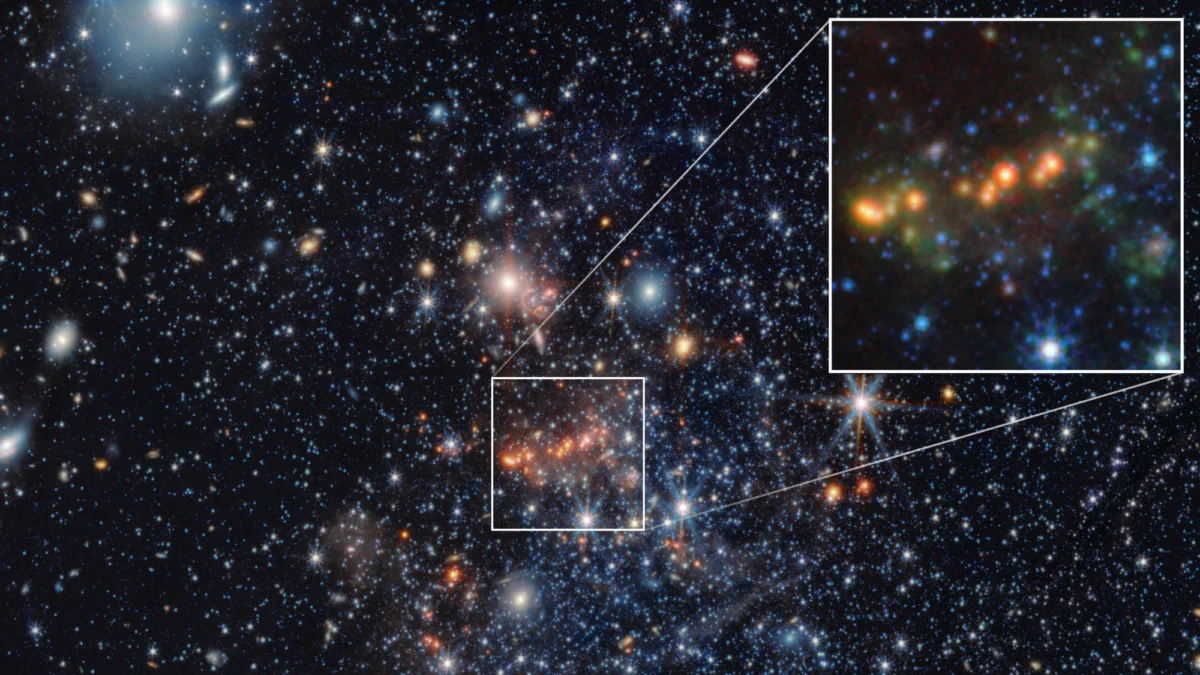
The research, published in The Astrophysical Journal, focused on understanding the origins of dust in galaxies. Dust, composed of heavier elements like carbon, silicon, and iron, plays a critical role in the universe. It absorbs and re-emits starlight, influences the formation of new stars by providing cool surfaces for gas to condense, and can shield nascent stars from harmful radiation. Understanding when and how this dust was first created is paramount to comprehending the broader trajectory of cosmic evolution.
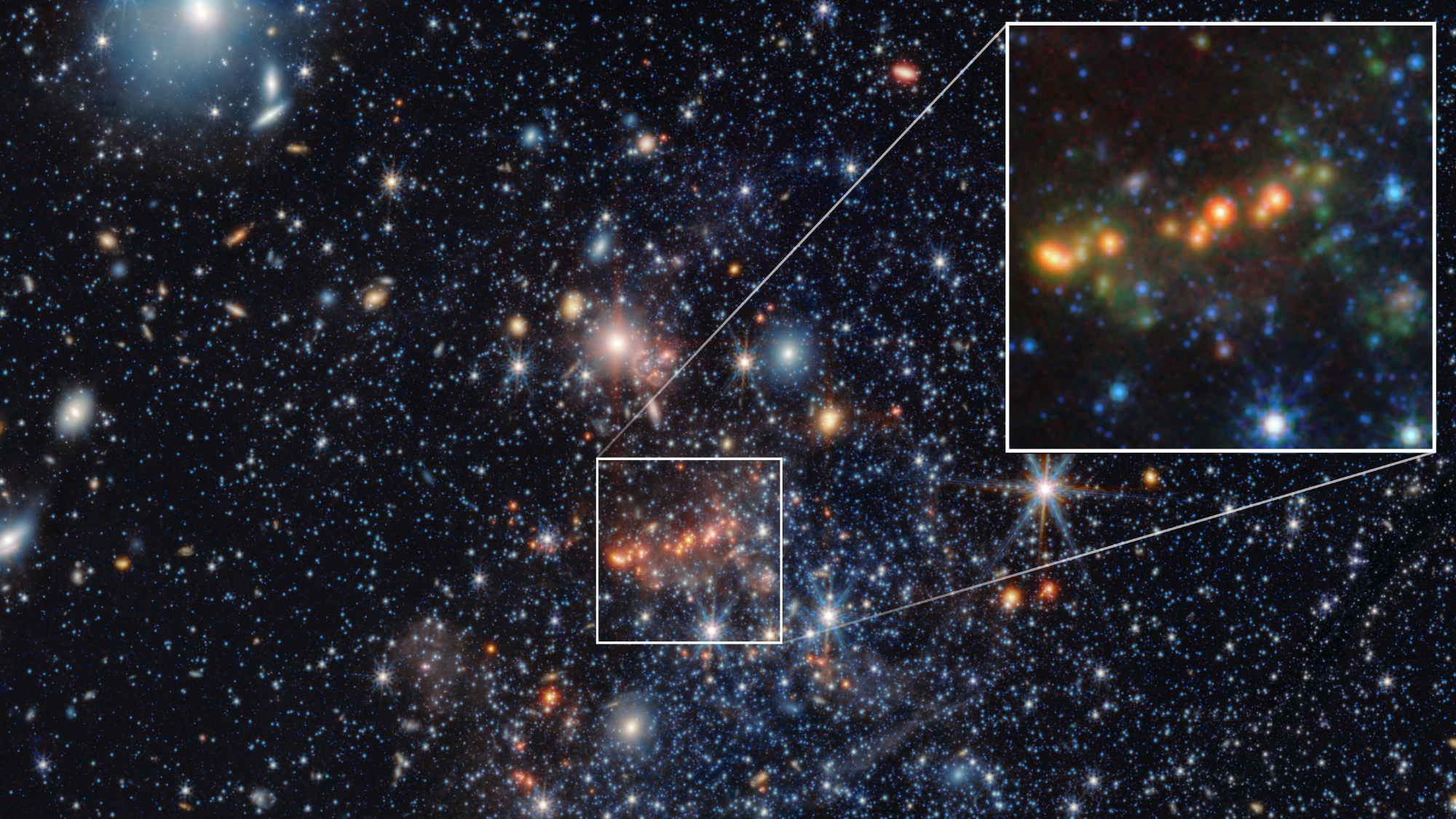
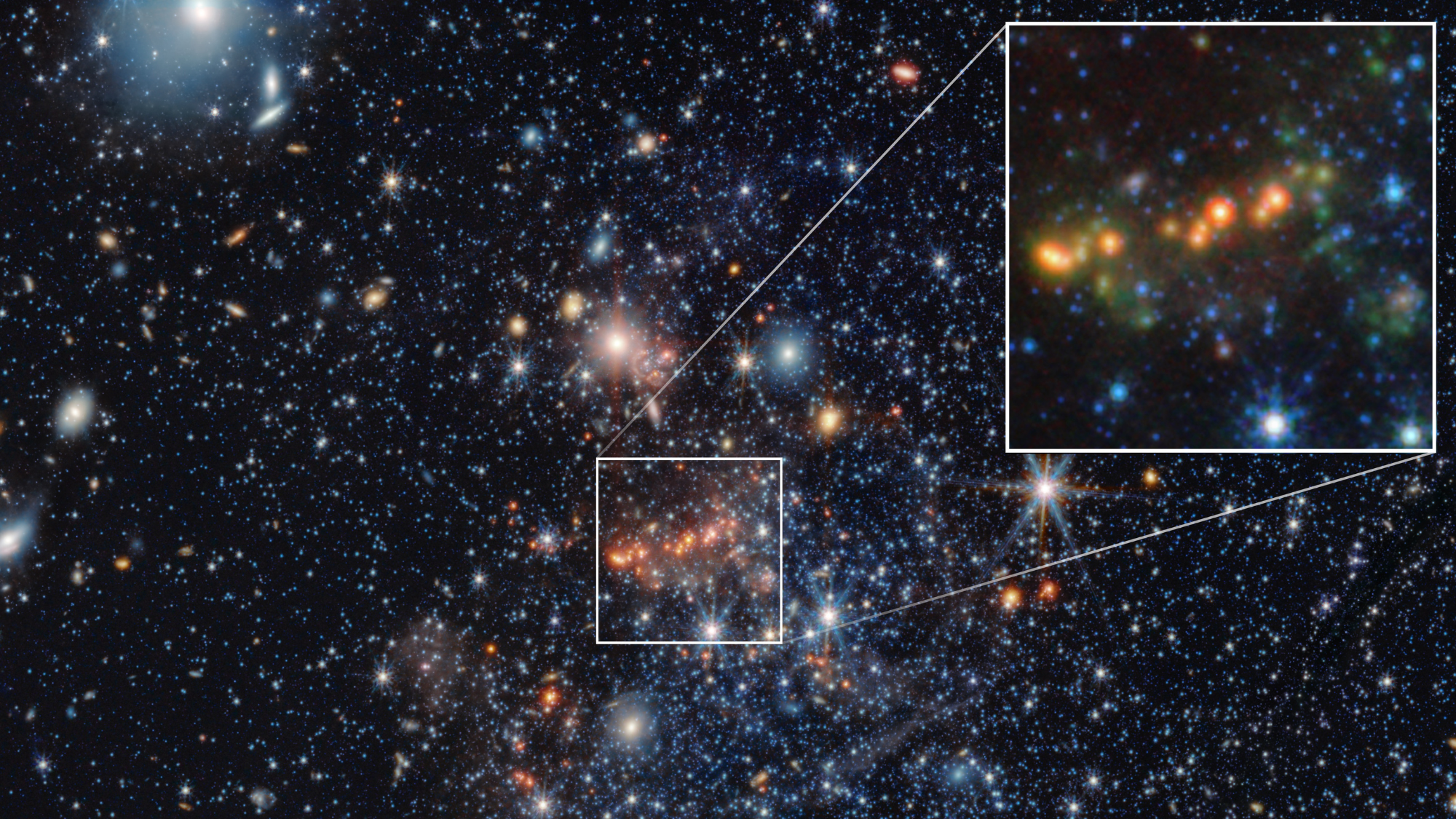
The team utilized JWST’s powerful Near-InfraRed Camera (NIRCam) and Mid-Infrared Instrument (MIRI) to obtain high-resolution observations of Sextans A. These instruments allowed them to meticulously map the galaxy’s stellar population, particularly focusing on stars in a specific evolutionary phase known as the "asymptotic red giant branch" (AGB).
Stars in the AGB phase are characterized by their expansion and cooling, puffing up to become hundreds of times their original size and experiencing a significant increase in brightness. During this stage, stars larger than our Sun exhaust helium in their cores, leaving behind an inert carbon core. Nuclear fusion continues in shells surrounding this core, primarily fusing helium and hydrogen. This intense stellar activity can lead to the expulsion of stellar material, including newly forged heavier elements, into the surrounding space. Crucially, this expelled material can form dust grains.
Surprising Discoveries in Sextans A
The JWST observations of Sextans A revealed a fascinating dichotomy within its AGB stars. The vast majority, approximately 90%, of these stars were found to not be surrounded by envelopes of dust. This initially seems counterintuitive, given that AGB stars are considered significant dust producers. However, a significant subset, around 20 stars, were found to be embedded in thick dust shells.
Further analysis indicated that these prolific "dust factories" likely formed between 2 and 3 billion years ago. These particular AGB stars originated from stars with an initial mass approximately 1.5 times that of our Sun. This specific mass range, coupled with their evolutionary stage, appears to be crucial for efficient dust production in a metal-poor environment.
This finding is significant because it helps to pinpoint which types of stars in the early universe were most effective at generating the metal dust that would have enriched subsequent generations of stars. By identifying these specific stellar progenitors, scientists can refine models of early galactic chemical evolution and gain a clearer picture of how the universe transitioned from a simple hydrogen-helium soup to the chemically rich and complex cosmos we inhabit.
Implications for Understanding the Early Universe
The implications of this research are far-reaching. It provides empirical evidence to support theoretical models that predict the dust-forming capabilities of AGB stars. More importantly, it demonstrates that even in metal-poor environments, specific stellar populations can effectively generate dust, thereby kickstarting the process of chemical enrichment in nascent galaxies.
"The JWST allows us to observe in unprecedented detail environments that until a few years ago were beyond our reach," stated Flavia Dell’Agli, a member of the research team also from INAF. "The value of these data lies not only in the images, but in the ability to compare them with theoretical models and verify how correctly they describe the evolution of stars."
This research is a testament to the transformative power of JWST. Its ability to observe in infrared wavelengths with unprecedented sensitivity and resolution has opened up new avenues of inquiry into the universe’s most distant and enigmatic epochs. The detailed spectral data obtained by JWST allows for precise measurements of elemental abundances and stellar properties, enabling astronomers to test and refine their theoretical frameworks with remarkable accuracy.
A Timeline of Cosmic Enrichment
While the precise timeline of the universe’s earliest dust production is still being pieced together, this study offers crucial anchor points. The Pop III stars, appearing within the first few hundred million years after the Big Bang, would have been the initial heavy element factories. Their supernovae, occurring over the subsequent few hundred million years, would have seeded the intergalactic medium.
By approximately 2 to 3 billion years after the Big Bang, the conditions would have been ripe for the emergence of galaxies like Sextans A, populated by stars with masses around 1.5 solar masses in their AGB phase. These stars, in turn, would have become significant contributors to the dust content of their host galaxies, further fueling star formation and the growth of more complex galactic structures.
This research contributes to a broader understanding of cosmic reionization, a pivotal period when the universe transitioned from a neutral state to an ionized one, largely driven by the radiation from the first stars and galaxies. The presence and distribution of dust would have played a role in this process, influencing the propagation of ultraviolet radiation.
Future Prospects and Broader Impact
The success of studying Sextans A as a proxy for ancient galaxies underscores the potential for similar investigations into other metal-poor dwarf galaxies within our Local Group and beyond. As JWST continues its mission, astronomers anticipate a deluge of data that will further refine our understanding of stellar evolution, galactic formation, and the chemical history of the universe.
This research is not merely an academic pursuit; it has profound implications for our place in the cosmos. By unraveling the origins of the elements that form planets, stars, and indeed ourselves, we gain a deeper appreciation for the intricate and long evolutionary journey of the universe. The dust found in Sextans A, though seemingly insignificant on a cosmic scale, represents the fundamental building blocks that enabled the universe to evolve from a simple, pristine state to the vibrant and diverse cosmos we observe today. The James Webb Space Telescope, through meticulous observation and innovative research strategies, is proving to be an indispensable tool in this ongoing quest to understand our cosmic origins.