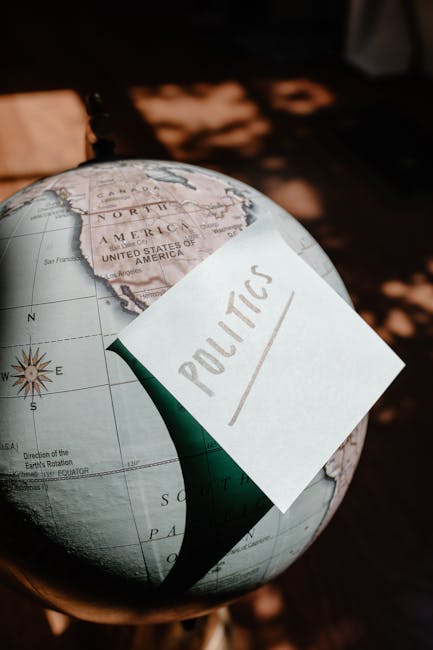
Navigating the Global Chessboard: An In-Depth Exploration of World Politics
World politics, at its core, is the intricate dance of power, influence, and interaction among sovereign states, non-state actors, and international organizations on a global stage. It encompasses the study of how these entities pursue their interests, negotiate conflicts, forge alliances, and shape the international order. Understanding world politics is crucial for comprehending the forces that drive global events, from economic fluctuations and trade agreements to wars and humanitarian crises. The fundamental unit of analysis in world politics remains the state, a political entity with defined territory, a permanent population, a government, and the capacity to enter into relations with other states. However, the post-Westphalian international system, while still state-centric, has witnessed a dramatic proliferation of non-state actors, including multinational corporations, international non-governmental organizations (NGOs), terrorist networks, and transnational advocacy groups, all of which exert significant influence on global affairs. International organizations, such as the United Nations, the World Trade Organization (WTO), and the International Monetary Fund (IMF), also play a pivotal role, providing frameworks for cooperation, dispute resolution, and the establishment of international norms and laws. The study of world politics is inherently interdisciplinary, drawing upon insights from political science, economics, history, sociology, and international law to provide a comprehensive understanding of the complex phenomena at play.
The theoretical landscape of world politics is dominated by several competing paradigms, each offering a distinct lens through which to interpret international relations. Realism, arguably the most enduring and influential theory, posits that the international system is anarchic, meaning there is no overarching authority to enforce rules or protect states. Consequently, states are primarily motivated by self-interest and the pursuit of power, leading to a constant struggle for dominance and security. Key realist thinkers like Hans Morgenthau and Kenneth Waltz emphasize the importance of military strength, balance of power, and the inherent unpredictability of state behavior. In contrast, Liberalism, with intellectual roots in thinkers like Immanuel Kant and Woodrow Wilson, offers a more optimistic view. Liberals believe that international cooperation is possible and beneficial, driven by shared interests, the spread of democracy, and the development of international institutions. They highlight the role of trade, interdependence, and collective security in mitigating conflict and fostering peace. Constructivism, a more recent theoretical development, shifts the focus from material power to ideas, norms, and identities. Constructivists argue that the international system is not fixed but is socially constructed through the interactions of actors. They emphasize how shared understandings, beliefs, and norms shape state behavior and the very nature of international relations. Other important theoretical approaches include Marxism, which analyzes world politics through the lens of class struggle and economic exploitation, and Feminism, which seeks to understand and challenge gendered power dynamics in international relations. The ongoing debate and interplay between these theoretical frameworks are essential for a nuanced understanding of global dynamics.
The distribution of power is a central organizing principle in world politics, shaping alliances, influencing decision-making, and determining the likelihood of conflict or cooperation. The contemporary international system is often described as unipolar, with the United States possessing unparalleled economic, military, and cultural influence. However, this unipolar moment is increasingly being challenged by the rise of other powers, leading to a multipolar or potentially bipolar world. The ascendant power of China, with its rapidly growing economy and increasing military modernization, is a significant factor in this shift. The resurgence of Russia, particularly its assertive foreign policy in its near abroad, also contributes to a more complex power distribution. The concept of the balance of power remains a critical tool for analyzing these dynamics. States often seek to form alliances to counter the power of potential rivals, creating a delicate equilibrium that can, at times, deter aggression but also increase the risk of miscalculation and escalation. The proliferation of nuclear weapons adds another layer of complexity to power dynamics, as nuclear deterrence plays a significant role in shaping strategic calculations and preventing large-scale conventional wars between major powers. Understanding the nuances of power distribution, including hard power (military and economic strength) and soft power (cultural and ideological influence), is crucial for deciphering the motivations and actions of states on the global stage.
The global economy is inextricably linked to world politics, with economic power often translating into political influence. Trade, investment, and financial flows are not merely economic phenomena but are deeply intertwined with diplomatic relations, security concerns, and the pursuit of national interests. The globalization of markets has led to increased interdependence between states, creating both opportunities for prosperity and vulnerabilities to economic shocks. International trade agreements, such as those facilitated by the WTO, aim to regulate global commerce, reduce tariffs, and promote fair competition. However, these agreements are often contentious, reflecting the competing interests of different nations and blocs. Currency fluctuations, debt crises, and the uneven distribution of wealth create persistent tensions and can spill over into political instability and conflict. The role of multinational corporations (MNCs) is also a significant aspect of economic politics, with these global entities wielding considerable economic power and influencing the policies of host governments. Issues such as labor standards, environmental regulations, and the repatriation of profits are often sites of political contention. Furthermore, economic sanctions are frequently employed as a tool of foreign policy, used to pressure targeted states into altering their behavior. The interplay between economic imperatives and political objectives is a defining characteristic of contemporary world politics.
Conflict and security are perennial concerns in world politics, shaping international relations and human experiences across history. While the nature of conflict has evolved, from large-scale interstate wars to more localized insurgencies and asymmetric warfare, the underlying drivers remain potent. Factors such as territorial disputes, ethnic and religious grievances, resource competition, and ideological clashes continue to fuel violence. The study of international security encompasses a wide range of issues, including traditional military threats, terrorism, cybersecurity, and the proliferation of weapons of mass destruction. The concept of collective security, embodied by organizations like the United Nations, aims to deter aggression by presenting a united front against any state that violates international peace. However, the effectiveness of collective security mechanisms is often hampered by the self-interest of powerful states and the complexities of international cooperation. The development of international law and institutions, such as the International Criminal Court, seeks to hold individuals accountable for war crimes and crimes against humanity, contributing to a normative framework that discourages egregious violations of human rights. The ongoing challenges of peacekeeping, conflict prevention, and post-conflict reconstruction highlight the persistent difficulties in achieving lasting peace and security in a complex world.
The rise of transnational issues that transcend national borders poses significant challenges to the traditional state-centric model of world politics. Environmental degradation, climate change, pandemics, and mass migration are global problems that require coordinated international action. The Earth’s atmosphere does not recognize national boundaries, and pollution emitted in one country can have devastating consequences for others. Climate change, in particular, presents an existential threat that demands unprecedented levels of cooperation among states. Similarly, infectious diseases, as demonstrated by recent global health crises, can spread rapidly across the globe, necessitating coordinated responses from international health organizations and national governments. Mass migration, driven by conflict, economic hardship, and environmental factors, creates complex humanitarian and political challenges for both sending and receiving countries. Addressing these transnational issues requires a departure from purely nationalistic approaches and a commitment to multilateralism and global governance. The effectiveness of international organizations in tackling these complex challenges is a subject of ongoing debate and a critical area of focus in world politics.
The role of international law and organizations in shaping world politics cannot be overstated. International law, comprised of treaties, customary practices, and general principles of law, provides a framework for regulating the behavior of states and other international actors. While it lacks the coercive enforcement mechanisms of domestic law, it plays a crucial role in establishing expectations, promoting predictability, and providing a basis for dispute resolution. International organizations, such as the United Nations, the European Union, and regional bodies like ASEAN, serve as platforms for diplomacy, cooperation, and the implementation of international agreements. The UN, in particular, is a multifaceted organization with various agencies and programs addressing a wide range of global issues, from peace and security to economic development and human rights. The effectiveness of these organizations, however, is often contingent on the political will and cooperation of their member states. Debates surrounding sovereignty, intervention, and the enforcement of international norms continue to shape the discourse on the role of international law and organizations in a dynamic global landscape.
The future of world politics is marked by a confluence of complex and often contradictory trends. The ongoing geopolitical shifts, driven by the rise of new powers and the relative decline of others, suggest a move towards a more multipolar world. The increasing interconnectedness of economies and societies through digital technologies presents both opportunities for collaboration and challenges related to cybersecurity and information warfare. The urgent need to address climate change and other environmental crises demands unprecedented levels of international cooperation, potentially reshaping global priorities and alliances. Furthermore, the persistent challenges of inequality, poverty, and human rights violations continue to fuel instability and demand effective global governance. The interplay between state sovereignty and the growing demands for international intervention in cases of humanitarian crises remains a contentious issue. As the world navigates these intricate dynamics, a deep and nuanced understanding of world politics, its theoretical underpinnings, and its practical manifestations is more critical than ever for shaping a more peaceful, prosperous, and sustainable global future. The continuous evolution of power dynamics, economic interdependence, and the emergence of new transnational threats ensures that the study of world politics will remain a vital and ever-changing field of inquiry.
