In a significant transaction that underscores the continued resilience of the Los Angeles multifamily real estate market, Prime Residential has finalized the acquisition of Palm Court Apartments, a 132-unit residential complex located in the heart of the historic Miracle Mile neighborhood. The acquisition, valued at $51.3 million, was completed through a deal with an LLC associated with Studio City-based Harrison Properties. The sale price reflects a per-unit valuation of approximately $388,000, a figure that highlights the premium placed on well-maintained assets in high-demand submarkets within Southern California.
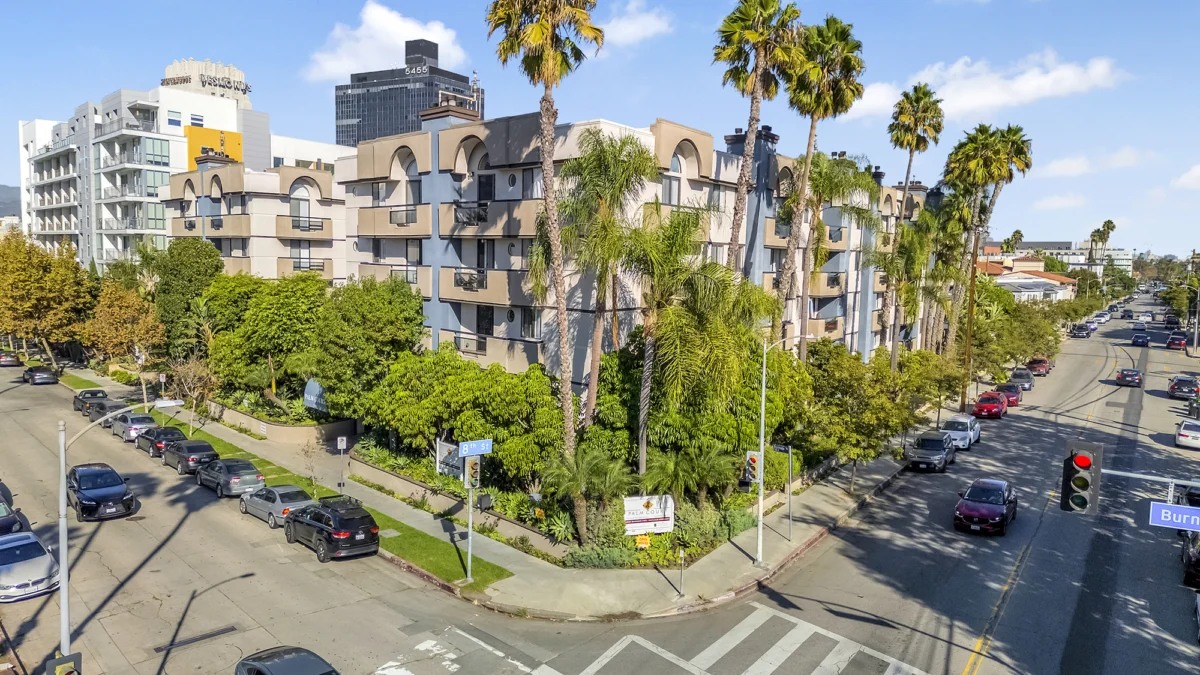
The property, situated at 740 South Burnside Avenue, represents a strategic addition to Prime Residential’s already extensive holdings in the immediate area. The buyer was procured by Matt Ziegler of Marcus & Millichap, while the seller was represented by a veteran team from the same firm, including Jeff Louks, Gayle Factor, and Elliot Sabag. According to the brokerage team, the transaction was the culmination of a period of significant value-add work performed by Harrison Properties, which had recently overseen extensive upgrades to the facility to modernize its offerings and enhance its competitive position in the Mid-Wilshire rental market.
A Strategic Asset in a Prime Corridor
Palm Court Apartments is a quintessential example of the late-1980s multi-residential architecture that defines much of the Miracle Mile’s density. Completed in 1988, the complex offers a diverse unit mix designed to appeal to the neighborhood’s demographic of young professionals, small families, and urban commuters. The building comprises 48 one-bedroom units, 72 two-bedroom units, and 12 spacious three-bedroom apartments. This variety allows the property to capture a broad segment of the rental market, from individuals seeking proximity to the city’s cultural centers to families requiring more substantial living space.
The amenity package at Palm Court is comprehensive, featuring a swimming pool and spa, a fully equipped fitness center, saunas, and a rooftop sundeck that offers views of the Los Angeles basin. These features, combined with the recent interior and exterior upgrades performed by the seller, positioned the property as a "turn-key" investment for Prime Residential, requiring minimal immediate capital expenditure while offering steady cash flow.
The location of the property is perhaps its most valuable attribute. Situated just south of Wilshire Boulevard, Palm Court is within walking distance of "Museum Row," which includes the Los Angeles County Museum of Art (LACMA), the Academy Museum of Motion Pictures, and the Petersen Automotive Museum. Furthermore, the property is centrally located near major commercial and lifestyle hubs such as The Grove shopping complex and the Original Farmers Market.
The Transit-Oriented Evolution of Miracle Mile
A critical factor driving investment interest in the Miracle Mile and Mid-Wilshire areas is the ongoing expansion of the Los Angeles Metro rail system. Palm Court Apartments is positioned near the upcoming Metro D Line (Purple Line) Extension station at Wilshire Boulevard and Fairfax Avenue. This infrastructure project is expected to revolutionize commuting in Los Angeles by providing a high-capacity, underground rail connection between Downtown Los Angeles, the Miracle Mile, Beverly Hills, and Westwood.
The "transit-oriented" nature of Palm Court makes it an ideal long-term hold for an institutional-grade investor like Prime Residential. As the Metro D Line nears completion, properties within walking distance of new stations are expected to see sustained upward pressure on rents and property values. Real estate analysts note that the "Wilshire corridor" is undergoing a renaissance, as the combination of cultural prestige and improved transit connectivity attracts a higher-income tenant base that values an urban, walkable lifestyle.
Market Context: Navigating the Measure ULA Landscape
The acquisition of Palm Court comes at a complex time for the Los Angeles real estate market. While multifamily investment activity has shown signs of a rebound—with investment sales increasing by approximately 25 percent during the 12-month period ending in March—the market is still grappling with the implications of the City of Los Angeles’ Measure ULA.
Often referred to as the "mansion tax," Measure ULA imposes a 4 percent transfer tax on real estate transactions exceeding $5.1 million and a 5.5 percent tax on transactions above $10.3 million. Because the Palm Court sale was priced at $51.3 million, it fell well within the highest bracket of the transfer tax. This tax has had a cooling effect on the upper echelon of the market; according to data from Marcus & Millichap, transactions above the $10 million threshold were down by 50 percent in the year following the measure’s implementation compared to the year prior.
Despite these fiscal headwinds, the Palm Court deal illustrates that for high-quality assets in "A-list" locations, investors are still willing to move forward. The fact that Los Angeles accounted for more than 20 percent of all apartment trades across primary U.S. markets in the last year suggests that the city remains a top-tier destination for capital, even with the added cost of the transfer tax.
Prime Residential’s Deep Roots in the Neighborhood
For Prime Residential, the purchase of Palm Court is a "neighborhood play" that leverages their existing operational expertise in the Miracle Mile. The firm is most notably the owner of the landmark Park La Brea community, located just north of the Palm Court site. Park La Brea is a titan of the Los Angeles housing market; spanning 144 acres, it is the largest apartment complex west of the Mississippi River.
Prime Residential has owned Park La Brea since 1995, managing its 4,249 rent-controlled units across 18 high-rise towers and 175 garden-style buildings. By adding Palm Court to their portfolio, Prime Residential strengthens its footprint in a submarket where it already maintains a massive management and maintenance infrastructure. This proximity allows for significant economies of scale, as the firm can streamline operations, marketing, and leasing efforts across its local holdings.
Statistical Overview of the Los Angeles Multifamily Sector
The broader economic indicators for Los Angeles multifamily housing provide a backdrop of stability for this acquisition. As of the start of 2026, the city’s multifamily vacancy rate has held steady at approximately 4.8 percent. This low vacancy rate is indicative of a chronic housing shortage that continues to plague Southern California, ensuring high demand for existing units.
Financial data indicates that average effective rents in Los Angeles reached $2,853 per month at the beginning of 2026, representing a 1.4 percent increase from the same period in 2025. While rent growth has moderated compared to the double-digit spikes seen in the immediate post-pandemic era, the steady upward trajectory provides a reliable forecast for investors. Marcus & Millichap’s market reports suggest that vacancy may see a slight uptick to 5 percent by the end of the year as approximately 8,500 new units are delivered to the market, but the long-term outlook remains constrained by the high cost of new construction and a difficult regulatory environment for developers.
Brokerage and Seller Perspectives
The successful closing of the Palm Court sale is a testament to the collaborative efforts of the brokerage teams at Marcus & Millichap. Matt Ziegler, who represented Prime Residential, noted that the quality of the recent renovations performed by Harrison Properties was a key selling point. The upgrades modernized the living spaces and common areas, allowing the buyer to step into a property that is already optimized for current market trends.
From the seller’s perspective, the exit at $51.3 million represents a successful execution of a value-add strategy. Harrison Properties, known for its focus on well-located Southern California assets, was able to capitalize on the demand for "core-plus" assets—properties that are high quality but still offer some upside through management efficiencies or minor capital improvements.
Implications for Future Investment
The sale of Palm Court Apartments serves as a bellwether for the Los Angeles investment landscape. It demonstrates that the "Mid-Wilshire/Miracle Mile" corridor remains one of the most desirable targets for institutional and private equity capital. The convergence of culture, transit, and employment centers in this specific pocket of Los Angeles creates a "moat" around these assets, protecting them from the volatility seen in other, more peripheral markets.
Furthermore, the deal highlights a trend where seasoned owners of large-scale assets (like Prime Residential) are looking to consolidate their positions in specific submarkets. By focusing on a "cluster" strategy, these firms can dominate local rental markets and offer a variety of housing types—from the garden-style and high-rise options at Park La Brea to the more intimate, boutique feel of Palm Court.
As the city moves deeper into 2026, the focus for multifamily owners will likely remain on navigating the regulatory environment, including Measure ULA and various rent control ordinances, while positioning their portfolios to benefit from the massive infrastructure investments currently being made by the city. For Prime Residential, the acquisition of 740 South Burnside Avenue is not just a purchase of 132 units; it is a calculated bet on the enduring appeal of the Miracle Mile as a premier residential destination in the second-largest city in the United States.