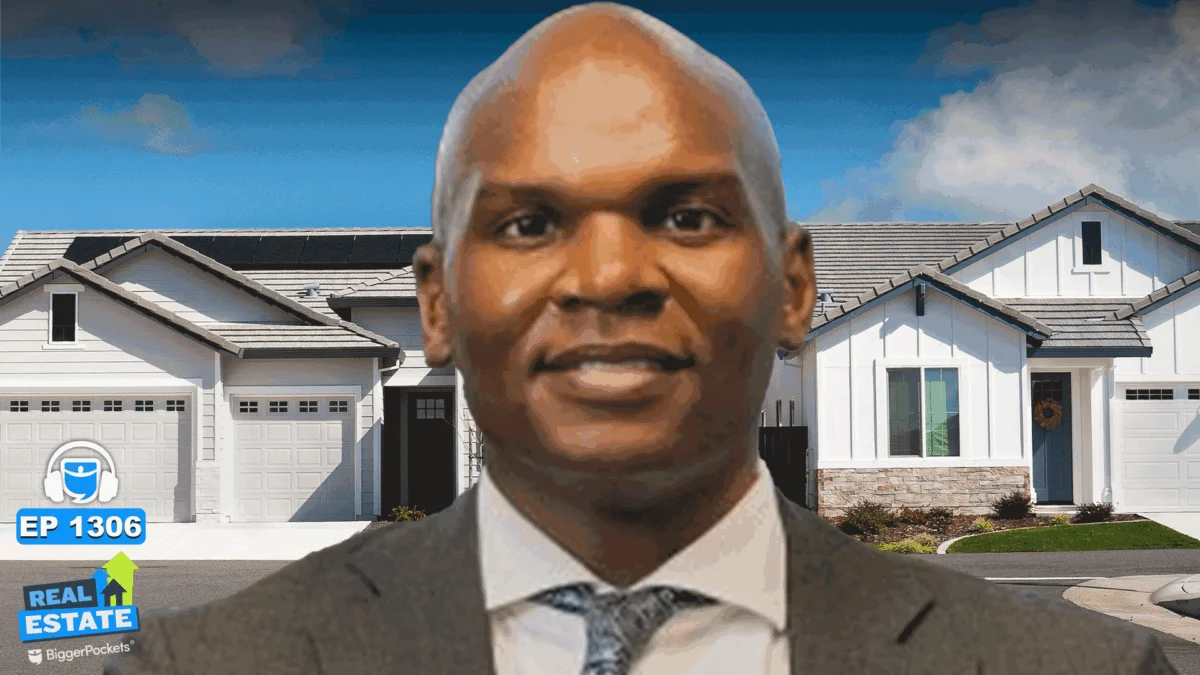
In an era where traditional retirement vehicles like the 401(k) are often the primary focus of corporate employees, Niyi Adewole’s transition from a medical device sales professional to a full-time real estate mogul serves as a case study in alternative wealth building. Within a six-year window, Adewole leveraged an initial $5,000 investment into a diversified portfolio that includes small multifamily units, short-term rentals, and a multimillion-dollar self-storage facility. His trajectory, which began in 2015 with a $55,000-a-year salary, illustrates a systematic approach to "house hacking," strategic geographic relocation, and the eventual scaling of property management services to replace traditional W-2 income.
The Catalyst: Financial Trauma and the 2008 Housing Crash
The foundation of Adewole’s investment philosophy was not built on surplus capital but on a desire for financial security born out of the 2008 Great Recession. Growing up in a household led by a single mother, Adewole witnessed the direct impact of the subprime mortgage crisis when his family was forced into a short sale and bankruptcy. This experience instilled a skepticism regarding traditional financial systems and a preference for tangible assets over which he could exert direct control.
When Adewole entered the workforce in Chicago in 2015, he found the standard corporate financial advice—specifically regarding 401(k) target-date funds—opaque and unconvincing. After researching real estate investment strategies and studying the mechanics of small multifamily properties, he identified Louisville, Kentucky, as a viable entry point due to its lower cost of entry compared to major metropolitan hubs like Chicago or Boston.
Chronology of Growth: From House Hacking to Commercial Scaling
Adewole’s investment timeline is characterized by a series of high-leverage moves and "delayed gratification" tactics that allowed him to recycle capital and minimize living expenses.
2016: The Entry Point
Following a job promotion that relocated him to Louisville, Adewole purchased his first property: a triplex priced at $190,000. Utilizing a Federal Housing Administration (FHA) loan, which allows for a down payment as low as 3.5%, he invested approximately $5,000—nearly his entire savings at the time. By "house hacking"—living in one unit and renting out the other two—he shifted from paying $1,200 in monthly rent to receiving a net positive cash flow of approximately $50 after debt service. This move effectively eliminated his largest personal expense, allowing him to accelerate his savings rate.
2017–2020: The Boston and Louisville Expansion
Adewole’s career in medical device sales required a relocation to Boston, one of the most expensive real estate markets in the United States. To maintain his investment momentum, he opted for a "rental house hack," sharing an apartment with roommates to keep his living expenses at 25% of his base salary. This discipline enabled him to continue investing in the Louisville market remotely.
During this period, he acquired 12 units simultaneously—three quadplexes—from a single owner. This deal marked his transition from residential to commercial lending. Unlike 30-year fixed residential mortgages, the $500,000 acquisition required a commercial loan with a 20-year amortization schedule and a five-year balloon payment. This phase provided a critical lesson in "value-add" investing, as Adewole was forced to fund significant structural renovations, including roofs and siding, out of pocket using his corporate commissions.
2021–2022: The Atlanta Pivot and Short-Term Rentals
In 2021, Adewole moved to Atlanta, Georgia, purchasing a $670,000 single-family home featuring an in-law suite. Recognizing the burgeoning short-term rental (STR) market, he listed the suite on platforms like Airbnb. The unit, which would have commanded $1,500 as a long-term rental, generated upwards of $2,500 to $3,000 per month. This success led to the acquisition of additional dedicated STR properties and the establishment of a management company to oversee assets for other investors.
Supporting Data: The Economics of Management and Development
Adewole’s ability to resign from his corporate role in August 2022 was predicated on the diversification of his income streams. While his property portfolio provided equity and long-term cash flow, his service-based businesses provided the liquid capital necessary to replace a high-earning W-2 salary.
The Management Premium
A key driver of Adewole’s financial independence was the disparity between long-term and short-term rental management fees. While traditional property management typically commands 6% to 10% of gross rents, STR management fees range from 18% to 35%. Adewole’s firm, which manages approximately 25 units, charges a 20% fee. In peak months, this management arm generates over $20,000 in revenue, providing a stable operational cushion that allows him to keep the cash flow from his owned properties within his investment accounts for future deals.
Commercial Development: Self-Storage
In 2022, Adewole diversified into ground-up commercial development. Partnering with a local real estate expert, he acquired 11 acres of land in Taylorsville, Kentucky. The property was successfully rezoned from agricultural to B2 commercial, allowing for the construction of a 225-unit self-storage facility.
Development Metrics:
- Construction Cost: $2.2 million.
- Monthly Debt Service: ~$12,000.
- Current Revenue (75% Occupancy): ~$15,000.
- Operational Model: High-automation using one Virtual Assistant (VA) and one handyman, minimizing overhead.
The storage facility utilizes a dynamic pricing model, offering lower introductory rates to reach occupancy and implementing 5% rent increases every six months to maximize Net Operating Income (NOI).
The Investor-Friendly Brokerage Model
Recognizing a gap in the traditional real estate market, Adewole established a specialized brokerage team within his firm. Currently, he leads a team of 10 agents operating across Georgia, Florida, and Texas. The brokerage focuses exclusively on "investor-friendly" services, catering to clients who require data-driven analysis on cap rates, cash-on-cash returns, and renovation ROI rather than traditional emotional home-buying metrics.
This "concierge" approach has proven resilient in a fluctuating interest rate environment. While the broader residential market slowed in 2023 and 2024, Adewole notes that investors remained active, seeking distressed assets or "BRRRR" (Buy, Rehab, Rent, Refinance, Repeat) opportunities. By training his agents—many of whom were formerly his investment clients—to think like owners, Adewole has created a self-sustaining ecosystem that generates lead flow for both his management and brokerage businesses.
Analysis of Implications: The Future of "Time Buy-Back"
Adewole’s story reflects a broader shift in the American workforce toward "lifestyle engineering" through asset acquisition. His strategy emphasizes that financial freedom is often a byproduct of two distinct phases: high-intensity capital accumulation (the W-2 "hustle") followed by the strategic deployment of that capital into scalable systems.
Key Takeaways for the Real Estate Sector:
- Low-Down Payment Entry: The FHA 3.5% down payment remains one of the most powerful tools for wealth entry, provided the investor is willing to sacrifice privacy through house hacking.
- Geographic Arbitrage: Moving from high-cost areas to emerging markets (e.g., Chicago to Louisville) can provide the "spread" necessary to kickstart a portfolio.
- The Role of Service Income: Transitioning to full-time investing often requires a high-margin "active" income stream (like STR management or flipping) to protect "passive" rental cash flow.
- Specialization: As the real estate market becomes more data-saturated, the demand for "investor-friendly" agents who understand commercial debt and zoning is likely to increase.
Conclusion and Future Outlook
Today, Niyi Adewole’s portfolio stands as a testament to the "formulaic" nature of real estate growth. From a single $5,000 triplex to a 225-unit storage facility and a multi-state brokerage, his journey underscores the importance of technical education and risk management.
Looking forward, Adewole intends to focus on the development of 105 townhomes on the remaining acreage of his Taylorsville land—a project that will likely require a move into the realm of real estate syndication. His evolution from a confused 401(k) participant to a developer of large-scale commercial assets highlights the transformative potential of real estate for those willing to embrace delayed gratification and complex debt structures. As the market continues to evolve with shifting interest rates, Adewole’s model of diversified income streams—brokerage, management, and ownership—provides a robust blueprint for navigating economic volatility.