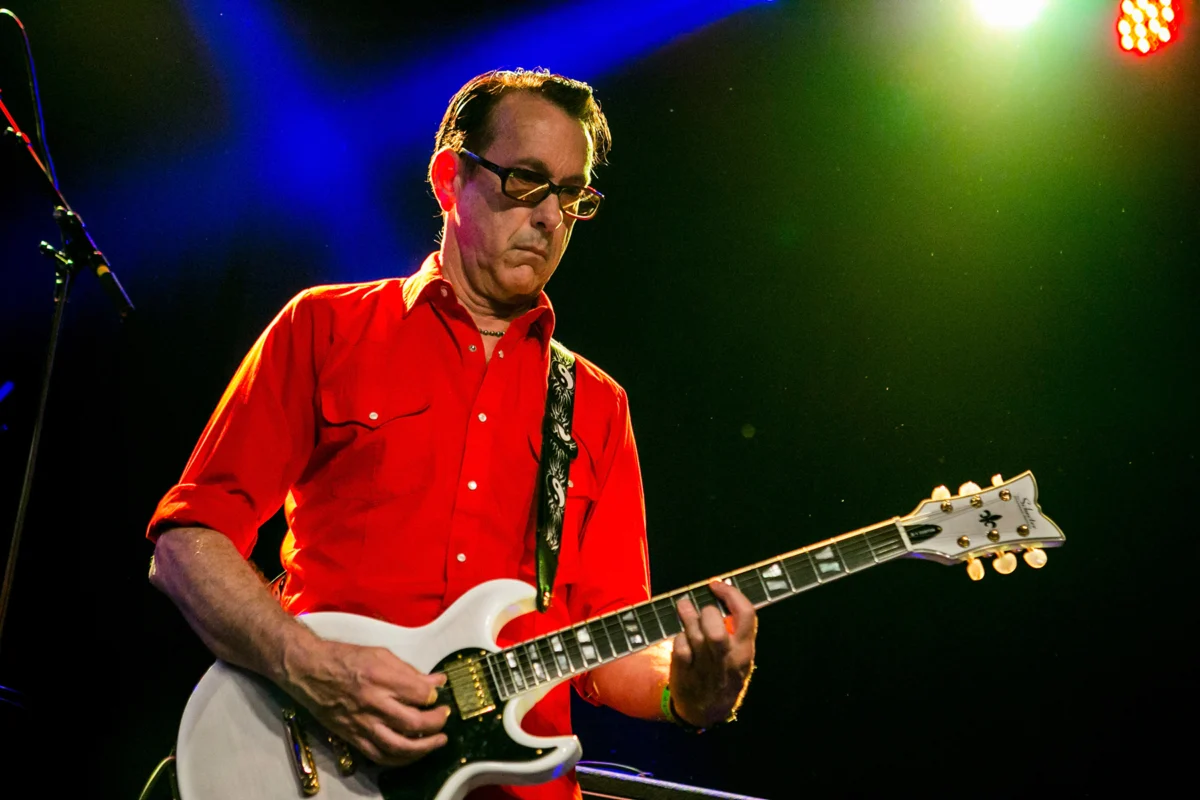
East Bay Ray, the seminal guitarist and founding member of the influential punk rock band Dead Kennedys, has officially been diagnosed with Parkinson’s disease. The announcement, released via the band’s management team on Tuesday, marks a significant development in the history of one of the most important groups to emerge from the American punk movement of the late 1970s. Despite the diagnosis, the musician has signaled his firm intention to maintain his professional commitments, planning to continue performing and touring with the band for as long as his physical health permits.
The news has prompted an outpouring of support from fans and peers across the music industry, highlighting the enduring legacy of a guitarist whose jagged, surf-inflected riffs defined the sound of political punk.
A Legacy of Sonic Innovation
Born Raymond John Pepperell, East Bay Ray was instrumental in forming the Dead Kennedys in San Francisco in 1978. While the band was initially recognized for its provocative lyrics and the confrontational stage presence of original frontman Jello Biafra, it was Ray’s unique guitar style—blending surf rock, rockabilly, and dissonant punk—that provided the group with its distinct, cinematic texture. Tracks such as "California Über Alles" and "Holiday in Cambodia" remain cornerstones of the punk genre, with Ray’s guitar work serving as a primary influence for generations of alternative and hardcore musicians.
The Dead Kennedys functioned as a cornerstone of the burgeoning West Coast punk scene, acting as a voice for social and political dissent. Their rise to prominence was marked by high-energy live performances and a series of albums that challenged the status quo. Following the band’s initial dissolution in 1986—a period marred by legal battles and internal friction—Ray remained a central figure in the band’s legacy, eventually spearheading the group’s reunion in 2001.
Understanding the Diagnosis: Parkinson’s in the Arts
Parkinson’s disease is a progressive disorder of the nervous system that primarily affects movement. Symptoms often develop gradually, beginning with a barely noticeable tremor in one hand. As the condition advances, individuals may experience stiffness, slowing of movement (bradykinesia), and challenges with balance and coordination. For a musician, the diagnosis presents specific challenges, particularly regarding the fine motor skills required for complex guitar playing.
While there is currently no cure for Parkinson’s disease, medical advancements have significantly improved the quality of life for those living with the condition. Treatments, which include dopamine-boosting medications and, in some cases, deep brain stimulation, allow many artists to continue their creative work for years following an initial diagnosis. Ray’s commitment to touring suggests that he, like many other performers who have navigated similar health challenges, intends to utilize modern therapeutic interventions to manage his symptoms while maintaining his artistic practice.
The Current State of the Dead Kennedys
The band’s current lineup has undergone significant changes over the decades, reflecting the resilience of the group despite shifting personnel. Alongside Ray, bassist Klaus Flouride remains a foundational member who has been present since the band’s inception. The current iteration includes lead vocalist Ron "Skip" Greer, who has fronted the band since 2008, and drummer Steve Wilson, who joined the group in 2022.
Wilson’s entry into the band followed the tragic passing of longtime drummer D.H. Peligro, who died in October 2022 after an accidental fall. The loss of Peligro, who had been a vital part of the band’s rhythm section for decades, was a profound blow to the group. The current members have expressed that continuing the band’s touring schedule is a way of honoring the music they built and the fans who have supported them through years of turbulence.
A Year of Health Challenges for the Band
The announcement regarding East Bay Ray follows a challenging year for the alumni of the original Dead Kennedys lineup. Earlier in 2024, it was revealed that former lead singer Jello Biafra had suffered a stroke. Although Biafra has been estranged from his former bandmates for decades—stemming from a bitter, high-profile legal dispute regarding royalties and band management in the late 1990s—the news of his health struggles resonated throughout the punk community.
Recent updates regarding Biafra have been cautiously optimistic. Reports from his camp in May 2024 indicated that he is making significant progress in his recovery, noting that his speech has largely returned and that his cognitive function remains unaffected. The parallel health challenges faced by the band’s two most recognizable figures—Ray and Biafra—serve as a stark reminder of the passage of time for a generation of musicians who once epitomized the aggressive, youthful energy of the late 20th-century underground.
Implications for Future Touring
The Dead Kennedys are currently scheduled to embark on a series of West Coast tour dates, commencing on October 6 at the Showbox at the Market in Seattle, Washington. The tour is slated to conclude on October 11 at the Riverside Municipal Auditorium in Riverside, California.
Management has emphasized that Ray intends to fulfill these obligations, provided his health remains stable. This approach reflects the "show must go on" ethos that has characterized the band’s entire history. For fans, these upcoming performances carry a renewed sense of gravity. The ability of a veteran artist to adapt to a neurological condition while continuing to perform is often viewed as an act of profound dedication.
Broader Context and Industry Reaction
The news has sparked a wider conversation about the health of aging punk icons. As the pioneers of the late 1970s and early 1980s enter their 60s and 70s, many are facing the reality of chronic illnesses. The transparency displayed by East Bay Ray and his management is becoming increasingly common in the music industry, where artists are moving away from the silence that once surrounded health issues in favor of public disclosure.
By sharing his diagnosis, Ray is also helping to destigmatize Parkinson’s disease within the professional music sphere. The outpouring of support from fans on social media platforms underscores the deep personal connection listeners feel toward the artists who provided the soundtrack to their formative years.
Chronology of Key Events
- 1978: Dead Kennedys are formed in San Francisco, with East Bay Ray on guitar.
- 1986: The band officially breaks up amid legal and internal conflicts.
- 2001: The band reunites, with East Bay Ray and Klaus Flouride at the helm, though Jello Biafra declines to participate.
- 2008: Ron "Skip" Greer joins the band as the permanent lead vocalist.
- 2022: Longtime drummer D.H. Peligro passes away; Steve Wilson joins the lineup shortly thereafter.
- May 2024: Updates regarding Jello Biafra’s recovery from a stroke are released to the public.
- September 2026: East Bay Ray’s management officially announces his diagnosis of Parkinson’s disease.
Future Outlook
As the music industry monitors the situation, the focus remains on the band’s upcoming performances. While Parkinson’s is a life-altering condition, the determination of artists like East Bay Ray to continue their craft remains a testament to the power of music as a sustaining force. The coming weeks will see fans watching closely, not just for the musical performance, but as a sign of solidarity with a musician who has spent nearly five decades helping to shape the landscape of modern rock.
For now, the Dead Kennedys continue to operate, with East Bay Ray standing as a pivotal figure whose contributions to the genre remain as impactful today as they were when he first picked up a guitar in the late 1970s. The band’s official statement on social media, accompanied by a stark, black-and-white portrait of the guitarist, serves as a poignant reminder of the enduring nature of their legacy and the resilience of those who created it.