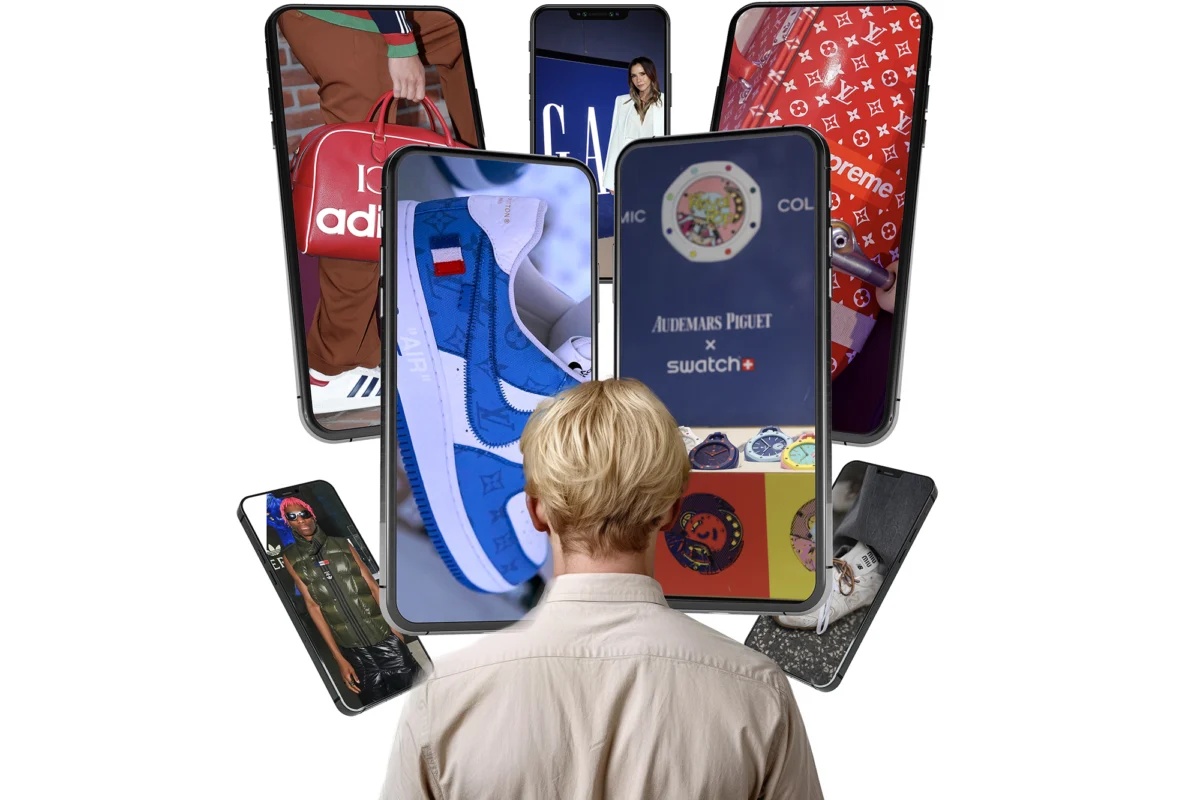
On May 16, the global horology market witnessed a seismic shift as the Swiss watchmaking giant Swatch and the ultra-luxury powerhouse Audemars Piguet (AP) officially launched their highly anticipated collaborative line, "Royal Pop." Comprising eight distinct pocket watches, the collection combined the playful, vibrant aesthetic of Swatch with the high-concept mechanical prestige of Audemars Piguet. Retailing for approximately $400, these timepieces were designed to bridge a massive pricing gap, offering a "window into the inner workings" of mechanical movements to a demographic that might otherwise be priced out of the traditional luxury market. According to official statements from Audemars Piguet, the intent was to invite a younger generation to experience mechanical watchmaking through a lens of accessibility and modern design.
However, the launch proved to be more than a simple product release; it became a global social and logistical phenomenon. As doors opened at Swatch boutiques across the world, the demand for the Royal Pop line reached a fever pitch, resulting in scenes of chaos that highlighted the intense cultural capital currently held by limited-edition "drops." From New York to Singapore, the frenzy surrounding the collaboration underscored a broader transformation in the retail landscape, where luxury brands are increasingly leveraging downmarket partnerships to secure long-term brand loyalty.
A Global Phenomenon: Chaos and Connectivity
The day of the Royal Pop unveiling was marked by unprecedented crowds and security challenges. In Paris, the situation escalated to the point where local police were forced to deploy tear gas to manage the throngs of fans surging toward the storefront. In Italy, reports surfaced of physical altercations among shoppers vying for a spot in line. Similar scenes played out across Asia and North America, with enthusiasts camping out overnight to secure one of the eight designs.
The digital impact of the launch was equally staggering. Within just 48 hours of the product drop, social media feeds related to Royal Pop had amassed over 11 billion views. This level of engagement illustrates the power of modern "hype culture" and the effectiveness of social media as a tool for precise consumer targeting. Industry analysts note that the ability to track trending topics and follower behavior on platforms like Instagram has made it easier for brands to identify exactly which demographics are most likely to appreciate a cross-category collaboration.
Andrew Goldberg, a vice chairman at CBRE, observed that the wealth of information available to brands today allows for a level of strategic planning that was impossible in previous decades. "You have all this access to information now… so you can go to Instagram, and you can see exactly who’s trending and who’s following who," Goldberg stated. He further noted that these collaborations are often born out of a necessity for expansion, as many legacy brands have already reached their core customers and must find new avenues for growth to satisfy corporate mandates.
Economic Headwinds: The Luxury Market in 2025-2026
The aggressive pursuit of younger consumers through collaborations like Royal Pop comes at a time when the global luxury sector is facing significant headwinds. According to a May 2026 Global Luxury Retail report from Savills, the global personal luxury goods market experienced a "marginal contraction" of 2 percent in 2025. This downturn was accompanied by a sharp decline in new luxury store openings worldwide, which fell to their lowest levels since the 2020 pandemic.
In North America, the decline was even more pronounced, with new openings dropping by 13 percent in 2025. The report attributes this stagnation to a combination of softer consumer spending, macroeconomic uncertainty, and a process of "portfolio rationalization" by major luxury groups. Interestingly, while the market for physical luxury goods has softened, the demand for "luxury experiences"—including high-end hospitality, cruises, travel, and fine dining—grew by 3 percent. This shift in spending priorities suggests that consumers are increasingly valuing memories and status-driven experiences over the mere ownership of expensive objects.
For brands like Audemars Piguet, whose traditional timepieces often command prices in the tens or hundreds of thousands of dollars, these economic shifts necessitate a "widened aperture." Todd Siegel, president of U.S. retail for Savills, explains that luxury brands are not necessarily moving toward the mass market, but are instead creating "controlled entry points." By offering a $400 pocket watch or, in the case of Chanel, branded lipsticks and fragrances, luxury houses can cultivate connectivity with a younger audience that may eventually graduate to high-ticket items.
The Evolution of High-Low Partnerships
The strategy of pairing a luxury label with a mass-market brand is not entirely new, but its frequency has increased as the "drop" model becomes standard. The modern era of such collaborations is often traced back to 2004, when Karl Lagerfeld partnered with H&M for a low-cost clothing collection. That event had a "seismic effect" on the fashion industry, democratizing high design and proving that exclusivity could coexist with mass accessibility.
Since then, the market has seen a wave of successful pairings, including Gucci and Adidas, Nike and Louis Vuitton, and the recent collaborations between Miu Miu and New Balance. However, the road is not without its failures. The 2012 collaboration between Target and Neiman Marcus, which featured high-profile designers like Marc Jacobs and Oscar de la Renta, was a notable flop. The products failed to resonate with Target’s core shoppers and were heavily discounted shortly after the launch.
The success of the Swatch x AP collaboration, much like the previous "MoonSwatch" partnership between Swatch and Omega, suggests that the most effective collaborations are those that offer more than just a logo. Reid Litman, a global consulting director at Ogilvy, argues that a "bad collaboration" is essentially just licensing—two logos for the sake of it. In contrast, a "great collaboration" generates action or inspires a community. "A collaboration can be valuable for Gen Z because it helps them tell a more interesting story about themselves," Litman said.
The Gen Z Ethos: Identity through Assemblage
Understanding the mindset of Gen Z is critical for brands navigating this new landscape. Unlike previous generations who often strictly delineated their identities by musical genre or subculture—such as "metalheads" or "goths"—Gen Z tends to view identity as an "assembled" cocktail of various influences. This generation grew up in a world where the barriers between luxury, streetwear, sports, and workwear had already begun to dissolve.
Litman points out that Gen Z is the demographic least likely to use geography or demographics to describe themselves. Instead, they identify with specific interests, such as anime or soccer, and they mix consumer categories with ease. For this group, luxury is no longer solely about looking expensive; it is about "signaling taste." A Louis Vuitton jacket inspired by Carhartt workwear or a Prada-owned Miu Miu denim line with Levi’s serves as a cultural signal that resonates more deeply than a traditional high-fashion garment.
However, marketing to this demographic remains a "tightrope walk," according to Thomaï Serdari, a professor of marketing at NYU’s Stern School of Business. Serdari notes that Gen Z can be contradictory; they may voice support for sustainability while continuing to purchase non-sustainable products, and they claim to be brand agnostic while exhibiting intense loyalty once they find a product that aligns with their peer group’s values. "Word of mouth is really, really powerful for this generation," she observed.
The Risks of Brand Dilution and Uneven Distribution
Despite the overwhelming social media numbers and the crowds at Swatch stores, some industry veterans remain skeptical of the long-term value of the Royal Pop collaboration. Jonathan Schley, vice chairman of global retail advisory at Newmark, suggested that as these collaborations become more mainstream, they lose the experimental edge that once made them special. He specifically pointed to the distribution model of the Swatch x AP line as a potential point of contention.
Because the Royal Pop watches were sold exclusively through Swatch stores and were not available through any Audemars Piguet channels, Schley argues that the brand goodwill may have flowed disproportionately toward Swatch. "I don’t know that there was any AP collector who felt like this was a positive for their perception of the brand," Schley said. This highlights the risk of "brand dilution," where a luxury house may alienate its high-net-worth core customers in its pursuit of a younger, less affluent audience.
Serdari echoes this sentiment, suggesting that the most successful luxury brands are often those that maintain a hierarchy and rely on in-house creativity rather than external partnerships. For ultra-exclusive brands, a collaboration represents an "intellectual stretch" to understand a customer that does not typically walk into their boutiques.
Conclusion: The Future of Cultural Signaling
The Royal Pop launch serves as a case study for the future of retail, where the line between "high" and "low" continues to blur. While some see it as a necessary evolution to ensure the survival of legacy watchmaking in a digital age, others view it as a temporary hype-driven strategy that may eventually wear thin.
What is clear is that the modern consumer, particularly within the Gen Z and Millennial demographics, views luxury through a different lens than their predecessors. They are not just buying a watch; they are buying a "signal" of their worldview—a worldview that prizes the blending of seemingly separate buckets of culture. As Reid Litman of Ogilvy concluded, a great collaboration creates a new way of seeing the world that neither brand could have achieved in isolation. Whether Audemars Piguet can turn these 11 billion social media views into decades of brand loyalty remains to be seen, but for now, the "Royal Pop" has undeniably captured the global imagination.