The small town of Estancia, New Mexico, is grappling with a severe water emergency that has paralyzed local governance, forced the hauling of thousands of gallons of water from outside sources, and reignited a fierce debate over the environmental footprint of large-scale federal detention facilities in arid regions. Following years of persistent drought and a steady decline in local groundwater levels, the town’s municipal wells have reached a critical failure point, leaving the community of 1,400 residents and its largest commercial tenant—the Torrance County Detention Facility—struggling to maintain basic services.
The crisis reached a political boiling point this week during a contentious meeting of the Estancia Board of Trustees. Amid the sound of residents voicing their frustration over dry taps and delayed infrastructure projects, the board passed a formal vote of "no confidence" in Mayor Runnel Riley. The mayor, who narrowly won his seat in November 2025 by a margin of only five votes, has been on a leave of absence and has reportedly been absent from crucial meetings as the water situation transitioned from a chronic concern to an acute disaster. The leadership vacuum has left the town’s deputy clerk and the Mayor Pro Tem to navigate a complex emergency response involving state agencies, private contractors, and a restive public.
A Chronology of Decline: From Warnings to Emergency
The current situation in Estancia did not develop overnight. It is the culmination of years of hydrological warnings and infrastructure delays. In 2024, the town issued its first significant call for water conservation, citing inadequate production from its primary wells. By May 2025, the situation had worsened, with officials again pleading with residents to reduce usage as the Estancia Basin aquifer—the town’s sole source of water—continued to recede.
The Estancia Basin is a "closed" aquifer, meaning it does not receive significant recharge from outside river systems. For years, the New Mexico Groundwater Alliance and the Office of the State Engineer have warned that overpumping in the region has led to a permanent decline in the water table. In response to these trends, the State Engineer’s office officially closed the basin to new water rights years ago. However, the office also issued a sobering prediction: even if no new rights are granted, the continued use of existing rights is expected to deplete the aquifer further, as the rate of extraction far exceeds the rate of natural replenishment through rainfall and snowmelt.
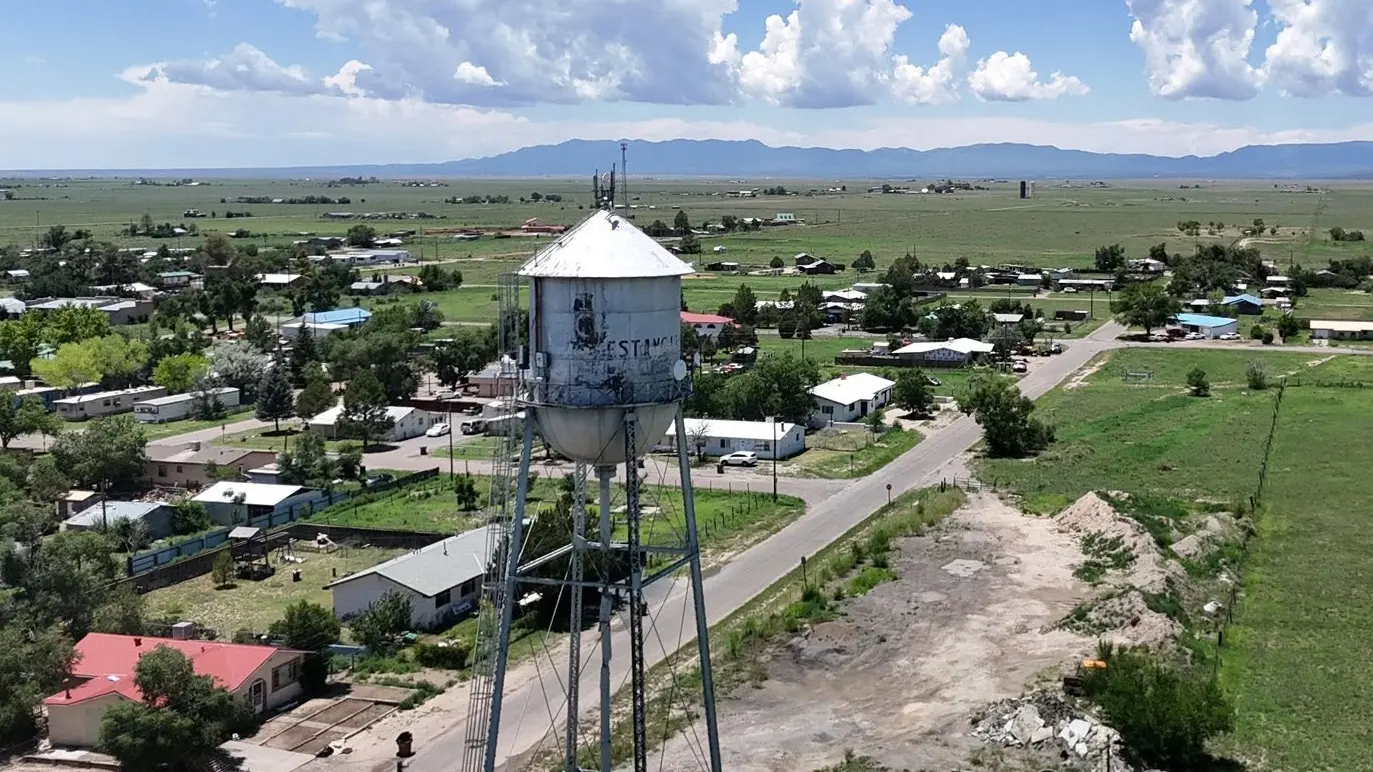
By the final week of June 2026, the town’s infrastructure could no longer keep pace with demand. The declaration of a water emergency followed the failure of the town’s primary wells to provide sufficient pressure for the municipal system. Since then, Estancia has been forced to rely on a fleet of trucks to import water. As of the most recent reports, approximately 116,700 gallons of water have been hauled into the town to fill municipal pipes, a costly and temporary measure intended only to sustain the community until a more permanent solution is found.
The Detention Facility and the Burden on Local Resources
Central to the crisis is the Torrance County Detention Facility (TCDF), a federal immigration detention center operated by CoreCivic, one of the nation’s largest private prison contractors. The facility, which has a capacity of up to 800 detainees, is Estancia’s largest commercial water customer. The sheer scale of the facility’s needs has created a significant strain on the town’s dwindling supply.
During the emergency, the town was forced to drastically reduce the volume of water sold to the TCDF. This move compelled CoreCivic to implement its own contingency plans, which included trucking in its own supplemental water supply to maintain operations. Ryan Gustin, the senior public affairs director for CoreCivic, stated that the facility has remained operational despite the crisis. According to Gustin, drinking water remains available in housing units, and the company has provided bottled water to those in their care.
However, the lack of transparency regarding exactly how much water the facility consumes has become a point of contention. While reporting from the Mountainair Dispatch indicates that more than 80 percent of Estancia’s water is sold to commercial customers, town officials have struggled to provide a specific breakdown of CoreCivic’s share. Mayor Pro Tem Albert Lovato noted that the detention center’s population fluctuates, making it difficult to provide real-time data on demand. This ambiguity has fueled local resentment, with some residents questioning whether a town of 1,400 can realistically support a high-density facility that can house 800 people, especially during a historic drought.
Environmental and Human Rights Concerns
The water crisis has also brought renewed scrutiny to the living conditions inside the TCDF. The facility has a history of documented issues related to sanitation and infrastructure. In 2022, a report from the Department of Homeland Security’s Office of the Inspector General (OIG) highlighted "unsanitary conditions" at the site, including mold, water leaks, and inoperable toilets. More recently, the Innovation Law Lab has documented complaints from detainees regarding sewage overflows and restricted access to water—problems that advocates argue are exacerbated by the town’s overall water scarcity.
While CoreCivic maintains that there have been no recent sewage issues related to the water shortage, the New Mexico Environment Department (NMED) has been closely monitoring the situation. Following an inspection in 2025, the TCDF was required to address several deficiencies in its sewer system. NMED is currently assisting Estancia with emergency response coordination and is working with state agencies to secure alternate water sources for the town.
The intersection of water scarcity and immigration detention is not unique to Estancia. Across the United States, particularly in the Southwest, the expansion of federal detention capacity has frequently clashed with the reality of limited local resources. Under the current administration, the Department of Homeland Security and Immigration and Customs Enforcement (ICE) have sought to increase detention space, often by repurposing warehouses or expanding existing facilities in rural areas. From El Paso, Texas, to parts of rural Pennsylvania, local communities have raised alarms about whether their aging water and sewer infrastructure can withstand the sudden influx of hundreds, or even thousands, of additional residents in a confined setting.
Technical Challenges and the Path Forward
The short-term solution for Estancia lies in the drilling of a new primary well. The State of New Mexico has provided the necessary funding for the project, and the town is set to open a 30-day bidding process this month. However, drilling a new well is a complex and time-consuming endeavor. In the arid high plains of New Mexico, wells must often be drilled to significant depths to reach viable water, and there is no guarantee that a new well will provide a long-term fix if the aquifer continues to decline.
State Representative Stefani Lord, a Republican representing the district, has urged the town to focus exclusively on completing the well as quickly as possible. During the recent trustee meeting, she expressed frustration with the political delays and the lack of communication from the mayor’s office. "Just get the well finished. That is the short-term problem," Lord told the board and the public. "There are all kinds of things we can do in the future. But for this moment, we just have to focus on getting this done."
The town has also taken immediate steps to mitigate fire risks during the Fourth of July weekend. While a professional town-sponsored fireworks display is still planned, the trustees voted to prohibit private citizens from setting off fireworks. In a region where the vegetation is tinder-dry and the water pressure is insufficient to fight major blazes, the risk of a drought-induced fire is a primary concern for local emergency services.

Broader Implications for Arid Communities
The crisis in Estancia serves as a cautionary tale for the American West as it navigates the era of "aridification"—a permanent shift toward a drier climate driven by rising global temperatures and changing precipitation patterns. As groundwater levels drop, small towns with limited tax bases find themselves in a precarious position, often forced to choose between supporting the large industries that provide jobs and tax revenue and ensuring the basic survival of their permanent residents.
For Estancia, the Torrance County Detention Facility represents both an economic lifeline and an environmental burden. The facility provides jobs and brings federal money into the local economy, but it also consumes a disproportionate share of the town’s most precious resource. As climate change continues to shrink the available water supply, the viability of maintaining large-scale, water-intensive federal facilities in small, drought-prone towns will likely face increasing legal and political challenges.
For now, the people of Estancia remain in a state of suspended animation, waiting for the arrival of water trucks and the commencement of drilling. The "no confidence" vote against Mayor Riley reflects a community that feels abandoned by its leadership at a moment of existential threat. Whether a new well and new leadership can stabilize the town’s future remains to be seen, but the lessons of the 2026 water emergency will likely resonate in New Mexico’s water policy discussions for years to come.