For years, the state of Georgia aggressively positioned itself as the preeminent hub for clean energy manufacturing in the American Southeast. Under the leadership of Governor Brian Kemp, state officials rolled out an extensive suite of financial incentives, customized worker training programs, and aggressive economic development strategies to court the burgeoning electric vehicle (EV), battery, and solar technology industries. For a considerable period, this strategy yielded remarkable dividends, transforming quiet rural counties and industrial zones into bustling epicenters of the twenty-first-century automotive revolution.
Today, however, that once-accelerating momentum faces a complex and turbulent landscape. Driven by sweeping changes in federal policy, shifting consumer demand, and regulatory friction, the state’s clean energy manufacturing sector is undergoing a profound structural adjustment. While major automakers and component suppliers are pressing forward with billions of dollars in investments, they are simultaneously modifying their production models, diversifying their product lines, and confronting a newly hostile political and economic environment at the federal level.
The Rise of Georgia’s Clean Energy Corridor
The roots of Georgia’s modern green manufacturing boom date back several years, underpinned by a bipartisan push for industrial recruitment and technological modernization. Domestic and international corporations poured capital into the state, enticed by its logistics infrastructure, pro-business climate, and available labor force.
Among the pioneers was Blue Bird, a Georgia-based school bus manufacturer that began commercial sales of electric buses in 2018 and subsequently inaugurated a significantly expanded manufacturing facility in 2023 to meet growing municipal demand. The momentum escalated dramatically in subsequent years. In 2022, South Korean automotive giant Hyundai Motor Group announced plans to construct a massive, dedicated EV manufacturing plant near Savannah—an economic development undertaking hailed as one of the largest in state history.
By 2024, Kia had commenced EV production at its established manufacturing plant in West Point, Georgia, integrating new vehicle architectures into its assembly lines. Shortly thereafter, in 2025, electric truck manufacturer Rivian officially broke ground on its long-awaited production facility near Atlanta. Beyond final vehicle assembly, the state successfully attracted an expansive web of upstream and downstream suppliers, including advanced lithium-ion battery manufacturing facilities, recycling plants, and solar panel fabrication centers designed to supply national markets.
Federal Policy Whiplash and Market Headwinds
Despite these foundational investments, the economic outlook for Georgia’s clean energy ecosystem has grown increasingly volatile. The inauguration of the second Trump administration ushered in a period of intense regulatory and fiscal disruption. Federal tax credits designed to incentivize consumer purchases of electric vehicles have been systematically phased out or eliminated. Furthermore, the federal government has implemented new tariffs on imported battery packs, charging infrastructure hardware, and critical electronic components essential for modern vehicle architecture.
Concurrently, federal regulatory agencies have loosened tailpipe emissions standards for conventional gas-powered vehicles and dismantled executive initiatives aimed at electrifying the federal government’s vast vehicle fleet. These national policy reversals have rippled directly through regional supply chains.
The sector’s volatility was further compounded by high-profile operational disruptions. Approximately a year ago, federal immigration enforcement authorities executed a large-scale raid on a major electric vehicle battery plant in the state, detaining more than 400 workers—predominantly South Korean nationals who had traveled to the region to assist with the complex technical processes of launching and calibrating the advanced manufacturing equipment.
These converging pressures have made the past eighteen months a challenging chapter for an industry that was previously characterized by uninterrupted expansion. According to data compiled by the Southern Alliance for Clean Energy (SACE), more than $4 billion in planned clean energy and EV-related manufacturing investments across the broader Southeast have been either formally canceled or significantly scaled back over the past year. Layoffs at major regional facilities, including SK Battery, have further underscored the fragility of the transition.
Industrial Adaptation: The Pivot to Hybrids and Energy Storage
Rather than abandoning their multi-billion-dollar footprints, however, Georgia’s manufacturers are displaying a high degree of operational flexibility. Rather than adhering to an all-electric paradigm that may have outpaced immediate consumer readiness, assembly lines are being reconfigured to meet consumer demand in real time.
At Kia’s West Point facility, the traditional rigid assembly line has been transformed into a dynamic, highly responsive production environment. Rather than manufacturing uniform batches of a single powertrain type, the plant operates akin to a custom workshop. A single moving assembly line seamlessly integrates vehicles with diverse specifications—shifting dynamically between gas-powered internal combustion engines, hybrid systems, and full electric vehicles.
Stuart Countess, Chief Executive Officer of the Kia plant, noted that the industry has experienced a distinct transitional phase away from immediate full-scale EV production toward versatile, middle-of-the-road solutions. While the long-term trajectory toward vehicle electrification remains intact, consumer hesitation—driven largely by vehicle acquisition costs and lingering anxieties regarding public charging infrastructure availability—has temporarily slowed market adoption. The sudden expiration of federal consumer tax incentives further destabilized sales projections, prompting the pivot toward hybrids.
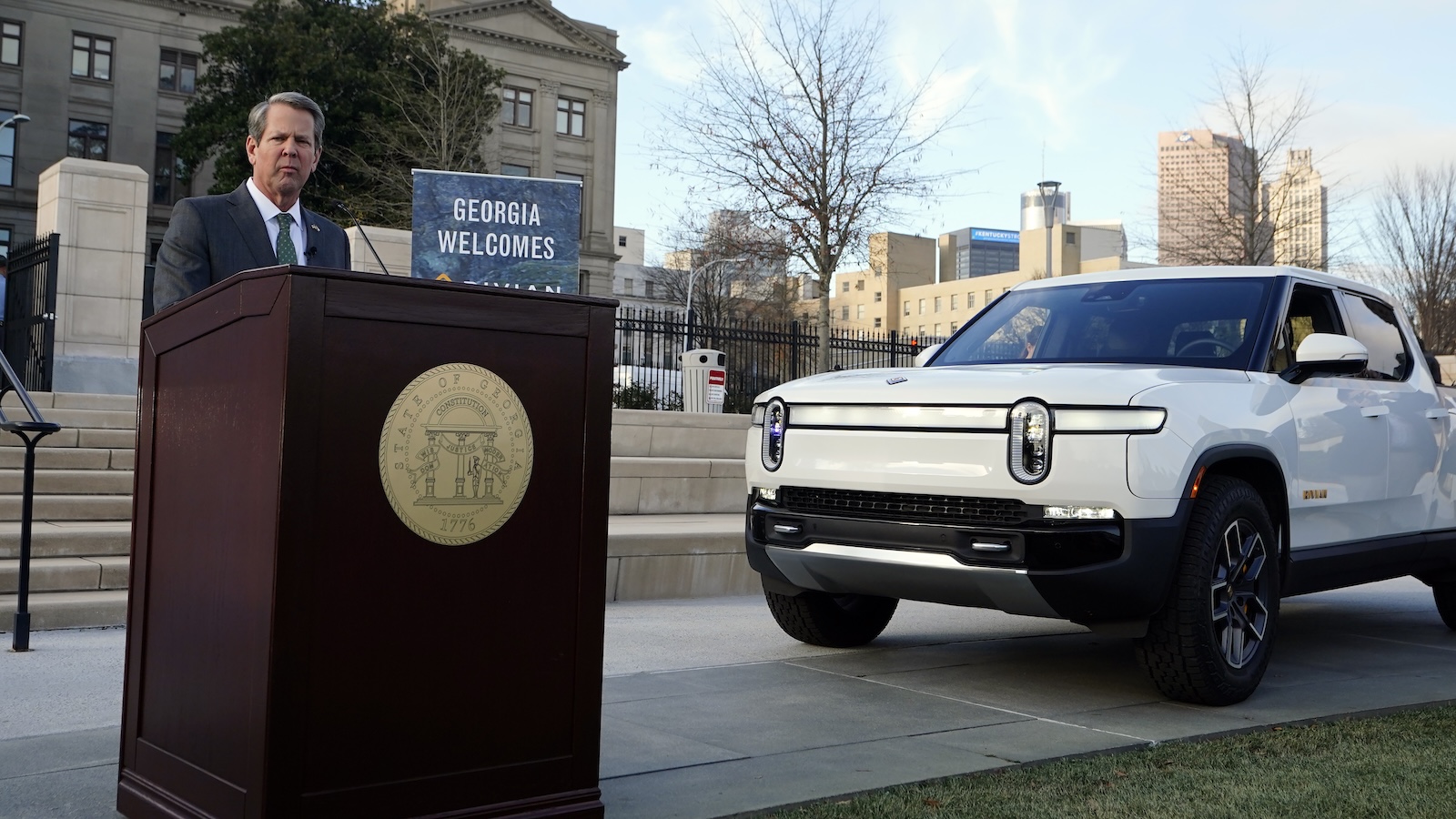
"We had a tax incentive credit that did go away," Countess observed. "Sales were really moving in the right direction, but once it went away, it became a much different environment."
This strategic recalibration is mirrored across the state. Hyundai has similarly integrated hybrid vehicle production into the manufacturing lineup of its massive Savannah-area complex, which was originally conceived exclusively for battery-electric vehicles. Meanwhile, regional battery manufacturers are expanding their operational scope, shifting partial production capacity toward stationary energy storage systems designed to support electrical grids alongside traditional automotive battery cells.
Industry analysts emphasize that while these adjustments introduce short-term operational complexity, they represent a pragmatic survival strategy. Stephanie Valdez-Streaty, Director of Industry Insights at Cox Automotive, characterized the current operating environment as a messy yet necessary period of industrial evolution.
"It’s kind of a messy period we’re in right now," Valdez-Streaty said. "But I think the manufacturers are adjusting."
Infrastructure Investments and Regional Resilience
Even as federal support recedes and automakers modify their vehicle mix, the underlying scale of investment in Georgia remains formidable. The $4 billion in scaled-back or canceled regional projects tracked by SACE is vastly eclipsed by the nearly $74 billion in clean energy and automotive manufacturing capital investments that are continuing to move forward across the state.
A critical open question, according to Stan Cross of the Southern Alliance for Clean Energy, is whether local consumers will ultimately purchase the advanced hybrid and electric vehicles rolling off Georgia assembly lines. This challenge is compounded by state-level policy dynamics. Unlike several other progressive states that offer direct financial rebates or purchasing incentives for electric vehicles, Georgia levies an additional annual registration fee specifically designed to offset lost motor fuel tax revenues from non-gasoline vehicles.
Furthermore, local political support for the sector remains complex. "When it comes to electric vehicles, Georgia politics remains utterly confused," Cross remarked, pointing to the dichotomy between aggressive state-level economic development incentives for manufacturers and a lack of complementary consumer-facing adoption policies.
To bridge this gap, private enterprise and regional utilities are stepping up infrastructure deployment. Kia and Hyundai are active participants in IONNA, a national fast-charging network consortium that has begun deploying high-capacity charging stations across Georgia, including an installation directly at the West Point manufacturing site. Concurrently, regional electric utilities are accelerating capital expenditures for charging infrastructure; SACE data indicates that utility-led EV investments across the Southeast increased by 14 percent over the past year.
"Though we’re not seeing a lot of activity on the legislative side, we do see potential on the regulatory side and really are encouraging Georgia Power to step up and help kind of fill the void that policymakers in the state are creating," Cross noted.
Broader Implications and Future Outlook
Looking ahead, industry experts believe that the localized presence of automotive manufacturing will naturally cultivate domestic market familiarity and long-term consumer demand among Georgians. As citizens secure employment within these advanced manufacturing plants and gain firsthand exposure to the technology, cultural and market resistance is expected to gradually soften.
Valdez-Streaty maintains an optimistic long-term outlook for the sector, asserting that the broader automotive industry’s transition toward electrification remains structurally sound, even if the timeline has extended.
"It’s like that familiarity, right? People have jobs at those companies and familiarity with those products," she said.
Though the market has experienced turbulence over the past year and a half, the underlying foundations of Georgia’s green manufacturing economy are proving resilient. By embracing product diversification, securing private charging infrastructure, and leveraging deep industrial roots, the state’s automotive sector is weathering a period of profound national transition and positioning itself for the future of mobility.