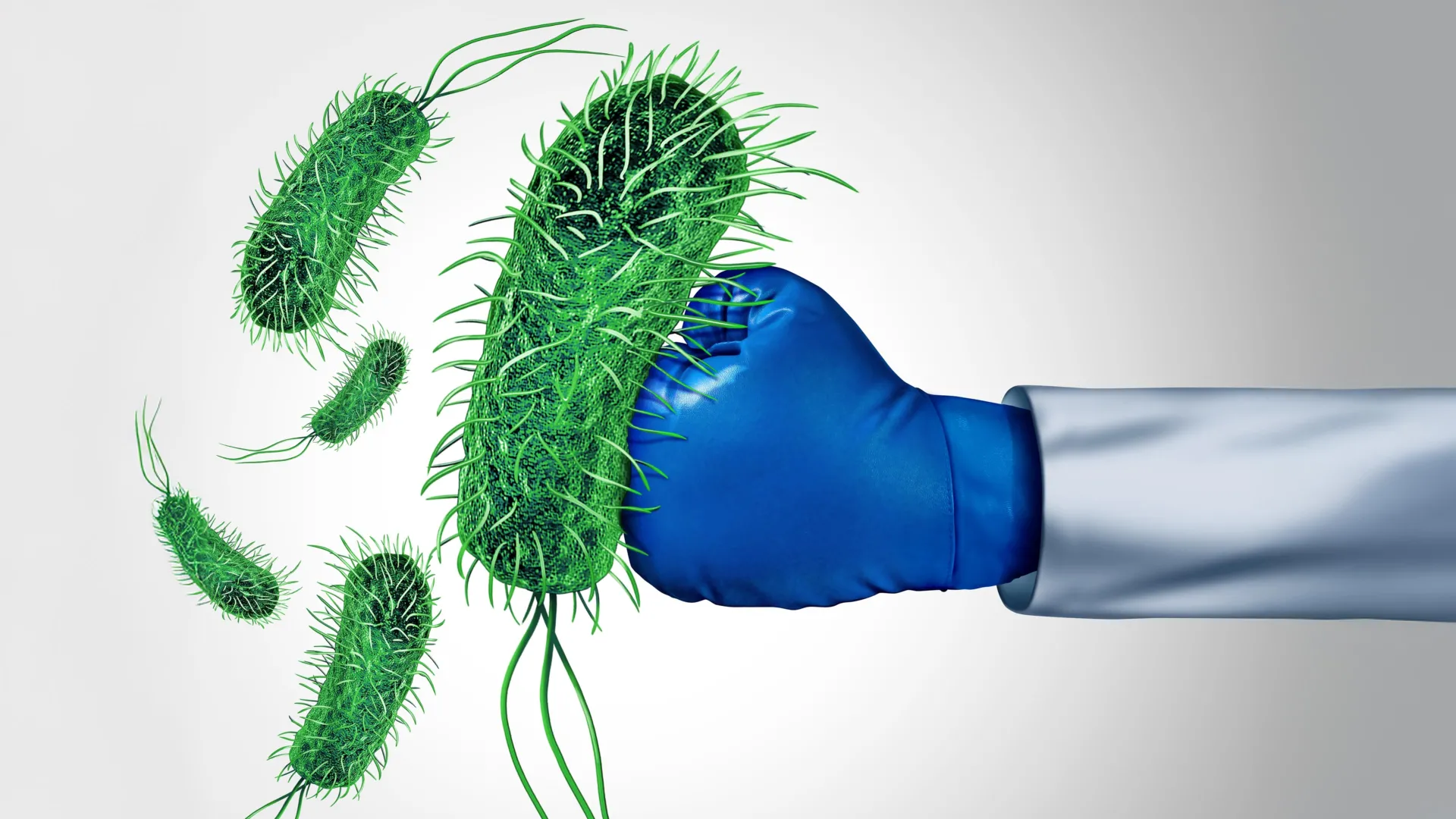
Antibiotic resistance represents one of the most formidable challenges confronting contemporary medicine, a silent pandemic eroding the efficacy of treatments and jeopardizing routine medical interventions. As bacteria, driven by evolutionary pressures, adapt and mutate, the very drugs that once served as reliable defenses are losing their potency. This decline in effectiveness transforms common infections into serious health threats and significantly elevates the risks associated with vital procedures such as surgery, chemotherapy, and organ transplantation. The World Health Organization (WHO) has repeatedly sounded the alarm, designating antibiotic resistance as a global public health emergency, estimating that by 2050, it could be responsible for 10 million deaths annually if left unchecked, surpassing fatalities from cancer. This grim outlook underscores the urgent need for innovative strategies to combat the escalating crisis of drug-resistant pathogens.
In this critical battle, the scientific community is actively pursuing avenues to outmaneuver these rapidly evolving microbes. Rather than solely focusing on the arduous and often slow process of discovering entirely new antibiotic compounds, a promising strategy is emerging: rejuvenating the effectiveness of existing, compromised drugs. This innovative paradigm is the driving force behind the development of antibiotic adjuvants, molecules that, while not directly lethal to bacteria, possess the crucial ability to restore or amplify the power of conventional antibiotics. These companion molecules act as strategic allies, disarming bacterial defenses and allowing once-potent drugs to reassert their antimicrobial might.
Accelerating Drug Discovery Through Molecular Engineering
At the forefront of this molecular revolution are researchers like Professor John Moses and his distinguished team at Cold Spring Harbor Laboratory (CSHL). For years, they have dedicated their expertise to pioneering advanced chemical reactions designed to expedite and enhance the efficiency of the drug discovery pipeline. Their work is not merely incremental; it represents a fundamental shift in how chemical libraries are constructed and utilized.
Central to their methodology is a sophisticated technique known as diversity-oriented clicking (DOC), a proprietary reaction system developed within the Moses laboratory. This innovative approach allows for the rapid and systematic generation of a vast array of molecular structures. By employing DOC, the researchers have successfully assembled an expansive library comprising over 150 distinct compounds. These meticulously crafted molecules are not confined to a single research focus; they have already proven invaluable in advancing investigations into both antibiotic resistance and the complexities of cancer biology.
The strategic significance of this molecular repository has recently been highlighted through a crucial collaboration with Scripps Research. This partnership leveraged the CSHL library, enabling scientists to identify a compound that successfully restored the effectiveness of vancomycin, a powerful and widely used antibiotic. Vancomycin is a cornerstone of treatment for severe infections, including those caused by notorious pathogens like Methicillin-resistant Staphylococcus aureus (MRSA) and Clostridium difficile (C. diff). However, these bacteria possess a dangerous capacity for developing resistance, transforming them into "superbugs" that can evade even frontline treatments like vancomycin. The implications of such resistance are profound, facilitating the rapid spread of untreatable infections through healthcare settings such as hospitals and nursing homes, as well as within broader communities. The rise of vancomycin-resistant enterococci (VRE) and vancomycin-intermediate Staphylococcus aureus (VISA) are stark indicators of this growing challenge.
Restoring Vancomycin’s Might Against Resilient Bacteria
The recent study, a testament to the power of interdisciplinary collaboration, saw scientists from Professor Moses’s laboratory at CSHL join forces with Professor Howard Hang’s team at Scripps Research. Their shared objective was to devise a method to re-sensitize bacteria to vancomycin, thereby reclaiming its therapeutic potential.
Their investigation zeroed in on a specific bacterial enzyme, secreted antigen A (SagA). This enzyme plays a critical role in the bacterial cell wall synthesis pathway, making it a prime target for antimicrobial intervention. The researchers employed a small molecule inhibitor, designated pghi-4, to effectively block the activity of SagA. Notably, pghi-4 was initially discovered in the Moses laboratory in 2020, underscoring the serendipitous yet powerful outcomes that can arise from sustained fundamental research.
The pivotal experiment involved treating drug-resistant strains of Enterococcus faecium with a combination of vancomycin and pghi-4. The results were striking: the antibiotic, which had previously proven ineffective against these resistant bacteria, regained its potent bactericidal activity. This demonstrated that by neutralizing the SagA enzyme, the adjuvant pghi-4 effectively dismantled a key defense mechanism of the bacteria, allowing vancomycin to exert its killing effect once more. This breakthrough aligns with a broader understanding of bacterial resistance mechanisms, where enzymes like SagA can be exploited to bypass or neutralize antibiotic action.
Professor Moses articulated a key takeaway from the research: the discovery was not the result of a direct, targeted search for a new antibiotic. Instead, it emerged organically from fundamental chemical inquiry. "This discovery came from fundamental chemical research," he explained. "Reaction development led to the discovery of the first inhibitor of an important enzyme involved in antibiotic resistance. This is a process we’re constantly refining to both keep our library of molecules up to date and add more for collaborators to take advantage of in their research." This statement highlights a philosophy of scientific exploration where foundational work in chemical synthesis can yield unexpected but profoundly impactful applications.
A Broadening Strategy Against the Superbug Menace
The implications of this research extend far beyond the specific case of vancomycin. By making their meticulously curated molecular library accessible to the wider scientific community, the CSHL and Scripps Research teams aim to foster a ripple effect of innovation. They envision that similar approaches—leveraging chemical ingenuity to develop adjuvants for existing drugs—could eventually lead to the development of treatments for a range of other challenging drug-resistant infections. Potential targets include resistant strains of tuberculosis, a disease that continues to claim millions of lives globally and is seeing a worrying resurgence of multi-drug resistant (MDR) and extensively drug-resistant (XDR) forms. The WHO estimates that in 2020, 30 countries reported more than 100,000 cases of MDR-TB.
"This work reflects a philosophy of chemistry that’s designed to accelerate drug discovery in its purest form," Professor Moses elaborated. "By using reliable, robust, and intelligent chemical reactions, we can build new molecules more efficiently. That’s exactly the approach we used here." This perspective emphasizes the elegance and power of well-designed chemical processes as engines of scientific progress.
As the global threat of antibiotic resistance continues its inexorable rise, these findings offer a beacon of hope. They powerfully demonstrate that significant medical advances may not always originate from the creation of entirely novel therapeutic agents, but can also stem from a profound re-evaluation and re-engineering of the chemistry underlying existing, albeit compromised, medications. The future of combating superbugs may well lie not in the singular pursuit of new antibiotics, but in the strategic deployment of carefully designed molecules that breathe new life into our established arsenal, making old drugs effective once again.
The Timeline of Innovation
The journey from a fundamental chemical reaction to a potential therapeutic intervention often involves a series of critical milestones. While the exact timeline for the development and clinical application of pghi-4 as an antibiotic adjuvant is still unfolding, the core research can be contextualized:
- Prior to 2020: Professor John Moses’s laboratory at Cold Spring Harbor Laboratory (CSHL) focused on developing and refining the diversity-oriented clicking (DOC) technique, a method for efficient and diverse molecular synthesis. This foundational work led to the creation of a comprehensive chemical library.
- 2020: Within the Moses laboratory, the small molecule inhibitor pghi-4 was first discovered, likely as a product of their systematic screening of the chemical library or through targeted synthetic efforts.
- Post-2020: The CSHL library, including pghi-4, became available for broader research collaborations.
- Recent Collaboration: A partnership was forged between Professor Moses’s team at CSHL and Professor Howard Hang’s group at Scripps Research, specifically to address the challenge of antibiotic resistance.
- The Study: Scientists from both institutions utilized the CSHL library, identifying pghi-4 as a promising candidate to revitalize vancomycin. They conducted experiments targeting the bacterial enzyme SagA.
- Publication: The findings of this collaborative study, detailing the restoration of vancomycin’s efficacy against resistant E. faecium when combined with pghi-4, were published, marking a significant step in the fight against antibiotic resistance.
This chronology underscores the importance of sustained investment in basic scientific research, as discoveries made in fundamental chemistry can have far-reaching and life-saving implications years later.
Supporting Data and Context
The urgency driving this research is underscored by stark statistics:
- Global Mortality: The WHO estimates that antibiotic resistance could cause 10 million deaths annually by 2050, a figure that would eclipse current cancer mortality rates.
- Economic Impact: Beyond human cost, antibiotic resistance poses a significant economic threat. The Union of Concerned Scientists has projected that widespread resistance could lead to a global economic output reduction of trillions of dollars by 2050.
- Prevalence of Resistance: In the United States alone, the Centers for Disease Control and Prevention (CDC) reports that at least 2.8 million fungal or bacterial infections are resistant to antibiotics each year, resulting in more than 35,000 deaths.
- Vancomycin’s Role: Vancomycin is a critical last-resort antibiotic, often used for severe infections caused by Gram-positive bacteria, including MRSA and C. diff. The emergence of vancomycin resistance mechanisms, such as those in VISA and VRSA strains, severely limits treatment options.
- The Target Enzyme: Secreted antigen A (SagA) is known to be involved in the biosynthesis of peptidoglycan, a crucial component of the bacterial cell wall. Disrupting this process weakens the cell and makes it susceptible to lysis.
The development of antibiotic adjuvants like pghi-4 is a direct response to these alarming trends, aiming to extend the lifespan of invaluable existing drugs and mitigate the escalating crisis.
Broader Impact and Implications
The research from CSHL and Scripps Research has profound implications for the future of infectious disease management:
- Pipeline Revitalization: The success of this approach suggests a potential strategy to revitalize a "dormant" pipeline of antibiotics that have become less effective due to resistance. Instead of discarding these drugs, they can be repurposed and made effective again.
- Reduced Development Costs: Developing entirely new antibiotics is an astronomically expensive and time-consuming endeavor, with a high failure rate. Adjuvant strategies may offer a more cost-effective and faster route to new treatment combinations.
- Combating Polymicrobial Infections: Many serious infections involve multiple types of bacteria. Adjuvants could potentially be used in combination with various antibiotics to tackle complex polymicrobial infections more effectively.
- Preventing Resistance Evolution: By disrupting bacterial mechanisms that confer resistance, adjuvants might also slow down the evolutionary process that leads to the emergence of new superbugs.
- Global Health Equity: Making existing drugs effective again could be particularly impactful in resource-limited settings, where access to novel and expensive new antibiotics is often a significant challenge.
This work represents a critical paradigm shift, moving from a singular focus on drug discovery to a more holistic approach that includes the strategic enhancement and repurposing of existing therapeutic agents. It underscores that innovation in the fight against superbugs can emerge from unexpected corners of scientific inquiry, highlighting the enduring value of fundamental research in chemistry and biology.
Funding Acknowledgment
This groundbreaking research was made possible through the generous support of several esteemed institutions, including the National Institutes of Health, the National Cancer Institute, the Australian Research Council, the New York State Biodefense Commercialization Fund, the F.M. Kirby Foundation, and the Starr Foundation. Their commitment to advancing scientific understanding and addressing critical global health challenges has been instrumental in driving this vital work forward.