On October 28, 1971, the United Kingdom achieved a monumental milestone in its aerospace history by successfully launching its first and only domestically built satellite, Prospero, using a homegrown carrier rocket. Blasting off from the remote Woomera Range Complex in South Australia, the 66-kilogram technological payload—alternatively designated as the X-3—ushered in a brief moment of national independence in space exploration. However, this triumph of British engineering also marked the abrupt conclusion of the nation’s sovereign rocket program, leaving a legacy that is only now being reexamined through the lens of modern orbital sustainability and potential space debris removal.
A Shift from NASA to Indigenous Engineering
Before the autumn day in 1971, Great Britain was no stranger to the cosmos. Prior to the Prospero mission, the UK had successfully placed six satellites into orbit. Yet, none of these earlier endeavors possessed entirely British pedigree. Every preceding spacecraft relied upon American ingenuity, lifting off from U.S. soil aboard National Aeronautics and Space Administration (NASA) rockets.
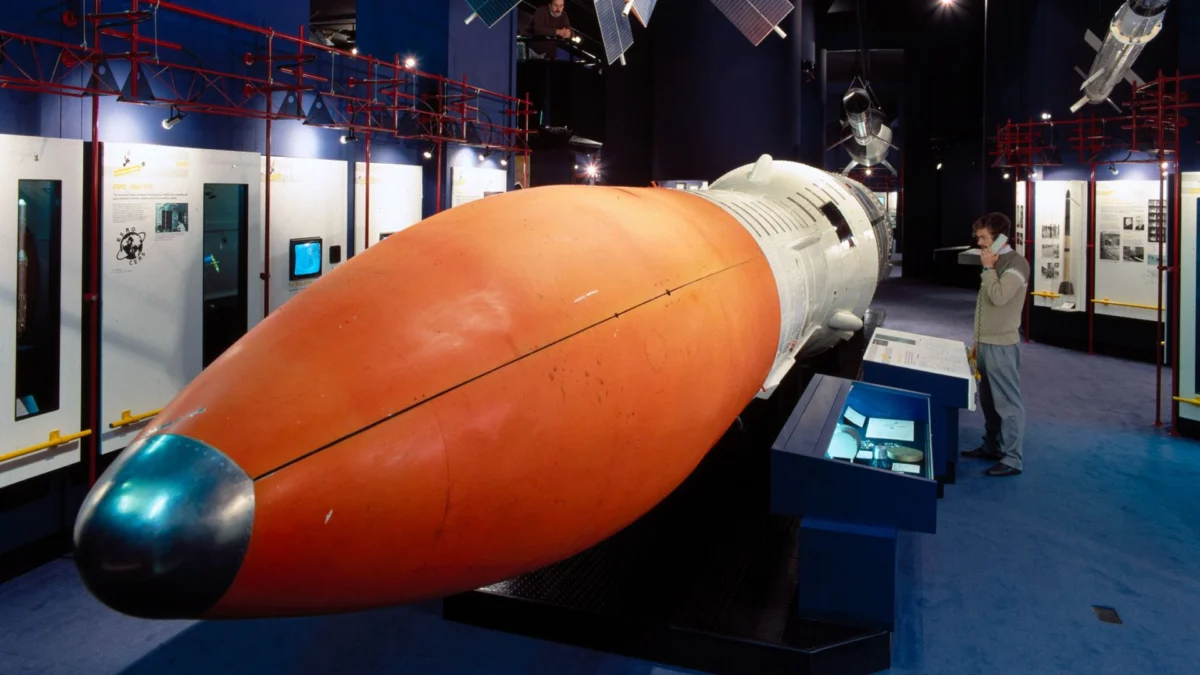
Recognizing the strategic necessity of independent access to space, the British government greenlit the development of a native launch vehicle: the Black Arrow. Standing nearly 13 meters tall and deriving its technological lineage from the smaller Black Knight research rocket, the three-stage Black Arrow R-3 was engineered to carry compact payloads into low Earth orbit. The stakes were remarkably high for the program, which had experienced a volatile testing history characterized by two failures and two prior successes.
The Woomera Launch and the Mishap in Orbit
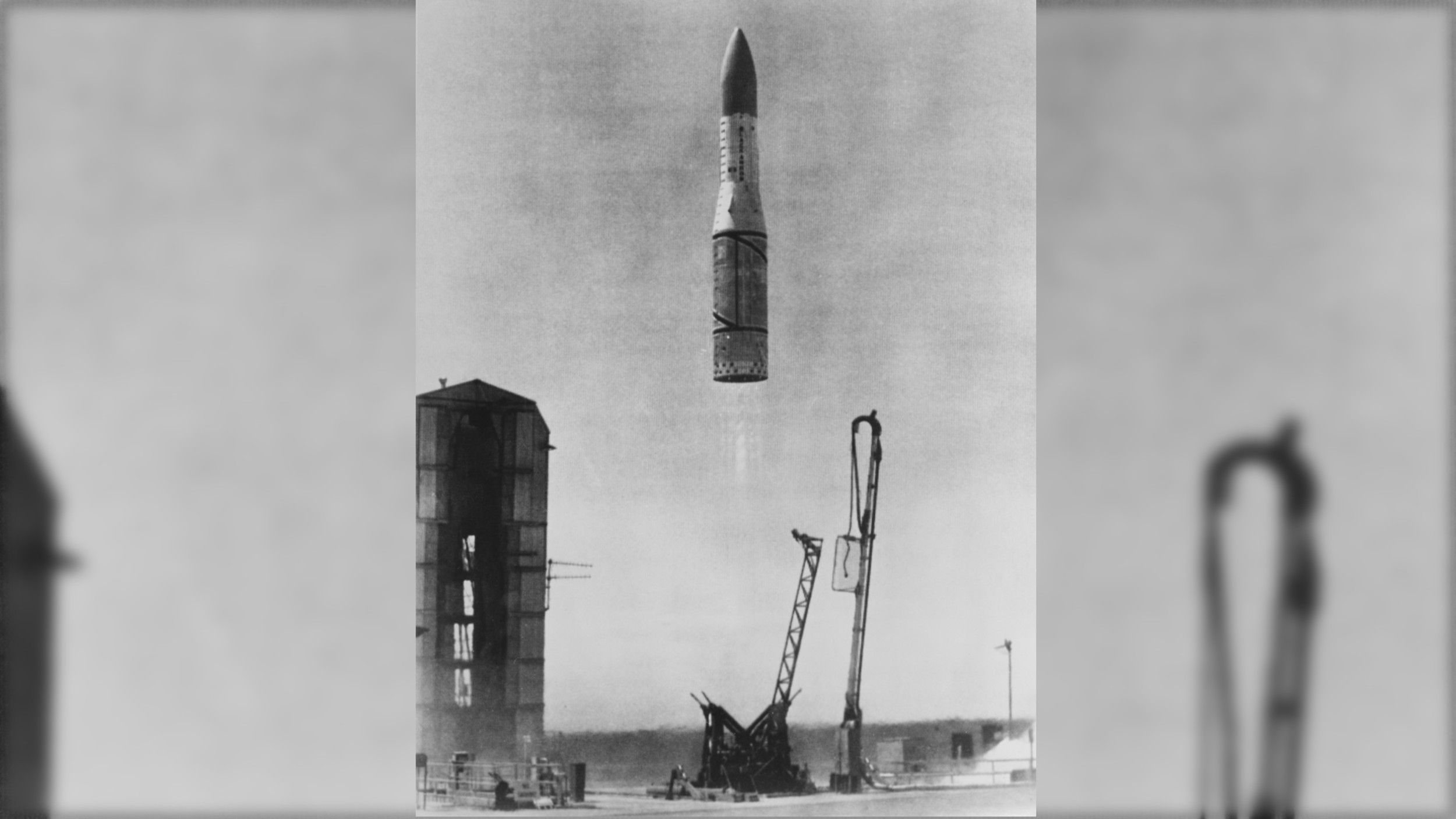
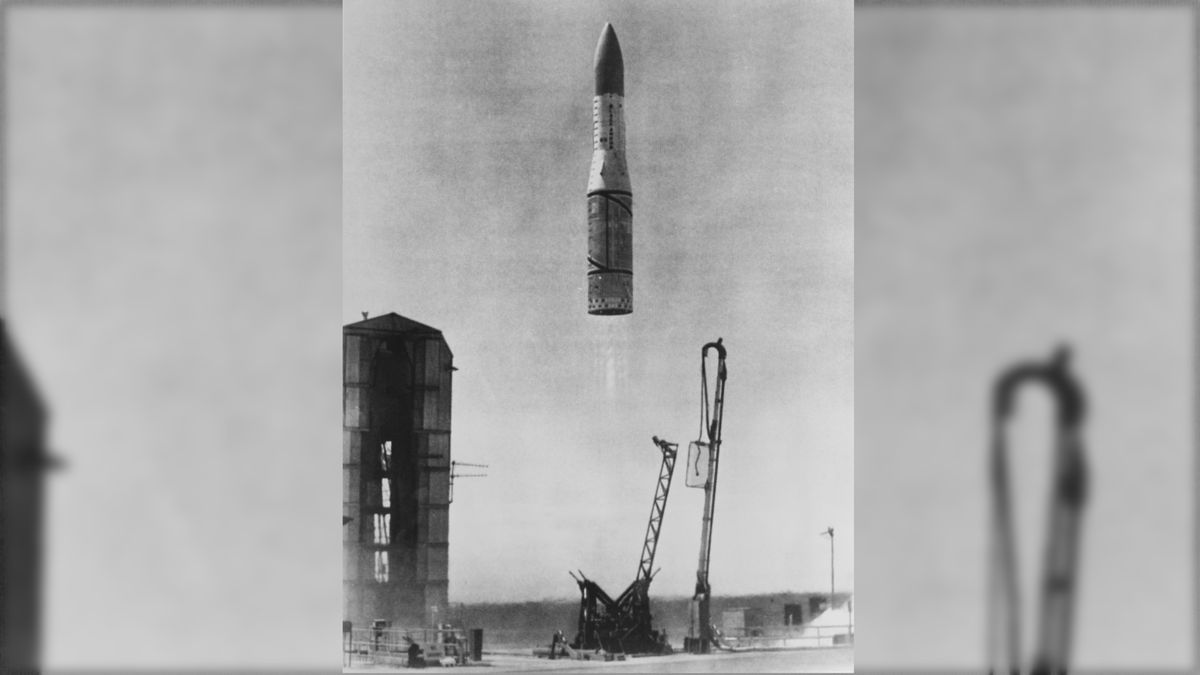
The mission commenced at the Weapons Research Establishment in Woomera, Australia, a facility frequently utilized by British authorities for long-range missile and rocket testing. Liftoff proceeded smoothly, with the three-stage Black Arrow performing its ascent as planned, successfully injecting the Prospero research satellite into an elliptical orbit ranging from 522 kilometers to 1,300 kilometers above the Earth.
Despite the successful orbital insertion, the mission was not without peril. Immediately following stage separation, a mechanical anomaly occurred: the rocket’s spent final stage inadvertently bumped into the newly freed spacecraft. The minor collision snapped one of Prospero’s four primary radio antennas.
Despite this early setback, the resilient satellite functioned remarkably well. Engineers on the ground quickly compensated for the compromised antenna, allowing the spacecraft to carry out its intended scientific objectives and maintain stable telemetry transmissions with ground stations.
Scientific Objectives of the X-3 Mission
Prospero was far more than a symbolic flag-planting exercise in the thermosphere; it was a sophisticated scientific laboratory designed to evaluate the harsh realities of the space environment on emerging satellite technologies.
Among its primary payloads were advanced solar cells, which researchers used to test power generation efficiency and degradation over time in the unfiltered radiation environment of Earth orbit. The spacecraft also evaluated experimental telemetry systems to improve future communications architecture.
Furthermore, Prospero carried a dedicated micrometeoroid detector. This instrument was tasked with measuring the frequency, size, and impact energy of microscopic space particles and early-era space debris, providing critical data to help engineers design more resilient spacecraft capable of surviving hypervelocity impacts in orbit.
The Chronology of the Prospero Program
To fully understand the context of the October 28, 1971 launch, it is necessary to examine the timeline of Britain’s early space aspirations:
- 1950s–1960s: The development of the Black Knight research rocket lays the groundwork for advanced British rocketry.
- 1964: The British government formally authorizes the Black Arrow satellite launch vehicle program.
- 1969–1971: The Black Arrow testing phase experiences mixed results, yielding two failures and two successes across its initial flights.
- October 28, 1971: The Black Arrow R-3 successfully launches the Prospero (X-3) satellite from the Woomera Range Complex in South Australia, though a post-separation collision damages a radio antenna.
- 1973: Regular communications with the Prospero satellite officially cease after two years of continuous operations.
- 1973–1996: Ground stations make intermittent contact with the historic spacecraft at least once a year, demonstrating unexpected durability.
- 2021: Scottish space startup Skyrora announces ambitious plans to locate, rendezvous with, and deorbit Prospero as an initiative for sustainable space practices.
Cancellation of the Black Arrow Program
Even as Prospero orbited the globe, the geopolitical and economic landscape of British aerospace was shifting beneath the feet of its engineers. Shortly before the successful launch of the X-3, the British government made the controversial decision to cancel the Black Arrow program.
Financial considerations heavily influenced the termination. Maintaining a sovereign launch capability required significant capital investments that could not easily compete with the cost-effectiveness of relying on international partnerships, particularly with the United States and the burgeoning European Launcher Development Organisation (ELDO). Consequently, Prospero became an isolated monument in British aerospace history: the first and, to date, the only British satellite ever launched on a British-built rocket. Following the cancellation, the UK shifted its focus entirely toward satellite manufacturing and international launch collaborations.
Operational Lifespan and Long-Term Orbital Presence
While the rocket program that carried it aloft was canceled, the satellite itself exceeded expectations. Prospero remained fully operational for two years, transmitting scientific telemetry and operational data back to Earth until routine communications concluded in 1973.
Remarkably, the spacecraft’s resilience outlived institutional neglect. According to historical records from the BBC and tracking agencies, engineers and amateur radio enthusiasts successfully established contact with the silent satellite at least once a year through 1996. For more than two decades past its operational expiration date, Prospero continued its silent, elliptical vigil around the globe.
More than five decades after its historic launch, Prospero remains in low Earth orbit, serving as a silent artifact of early space exploration and a physical reminder of an era when Britain briefly held independent spaceflight capabilities.
A Modern Twist: The Movement Toward Orbital Cleanup
In recent years, Prospero’s historical significance has intersected with modern anxieties regarding orbital congestion and space debris. As low Earth orbit becomes increasingly crowded with thousands of active satellites and defunct payloads, the question of post-mission disposal has transformed from a theoretical concern into an urgent environmental priority.
This evolving landscape prompted a novel initiative by Skyrora, a space logistics and launch startup headquartered in Scotland. In 2021, the company announced a pioneering mission concept: to design and execute a dedicated operation to return the historic Prospero satellite to Earth.
The proposed mission would utilize one of Skyrora’s specialized orbital "space tugs" launched aboard the company’s prospective Skyrora XL rocket from the Saxavord Spaceport in the Shetland Islands, Scotland. The spacecraft would rendezvous with the defunct X-3 satellite, securely grapple it, and pull it out of its decaying orbit, guiding the relic into a controlled descent to burn up safely in Earth’s atmosphere.
Industry Reactions and Strategic Implications

The initiative by Skyrora drew widespread attention from the global aerospace community, highlighting a growing consensus that space-faring nations must take retroactive responsibility for their historical debris.
Volodymyr Levykin, founder and CEO of Skyrora, emphasized the symbolic and practical importance of the undertaking during the 2021 announcement. "By recovering Prospero, we are not only coming together as a space nation and taking responsibility for what we have launched into orbit, but also confirming our commitment to the sustainable use of outer space," Levykin stated.
From an analytical perspective, missions targeting vintage space debris like Prospero serve a dual purpose. Technologically, they act as high-profile pathfinder missions for active debris removal (ADR) systems, proving the viability of autonomous rendezvous, docking, and deorbiting capabilities that will be essential for managing large orbital constellations in the twenty-first century. Culturally and politically, the endeavor allows nations to re-engage with their aerospace heritage while actively addressing the ecological consequences of early space exploration.
The Broader Impact on the UK Space Sector
Today, the UK space industry is undergoing a renaissance, with new spaceports developing across Scotland and England, and commercial enterprises rapidly expanding small-satellite manufacturing. Yet, the ghost of the Black Arrow program looms large over modern ambitions.
The story of Prospero stands as both a cautionary tale regarding the high economic volatility of sovereign launch programs and an inspiring testament to the technical capability of British engineers. Whether or not Skyrora ultimately succeeds in retrieving the nation’s first indigenous satellite from the heavens, Prospero remains firmly anchored in the annals of space history—a solitary, orbiting monument to a day in 1971 when Britain briefly reached the stars entirely on its own terms.