The Netherlands has officially committed $500 million over the next decade to the Tropical Forest Forever Facility (TFFF), a significant financial injection aimed at curbing the alarming rate of global deforestation. This pledge, announced on October 26, 2026, serves as a cornerstone development for the initiative, which was first conceptualized by Brazil during the 30th United Nations Climate Change Conference (COP30) in November 2025. By providing a stable, long-term funding stream, the TFFF seeks to transform how the international community values standing forests, shifting the economic narrative from extractive exploitation toward sustainable, permanent conservation.
The Genesis and Evolution of the TFFF
The Tropical Forest Forever Facility represents a novel intersection of high-level diplomacy, international finance, and environmental science. Launched in the wake of the 2025 climate summits, the facility was designed to address a persistent failure in global conservation efforts: the lack of a reliable, multi-decadal revenue stream for nations that harbor critical tropical biomes.
The structure of the TFFF mimics that of a sovereign wealth fund. Participating governments, alongside private sector institutional investors, contribute capital to a central endowment. This capital is invested in global markets, and the resulting yields are then distributed to tropical nations. The primary requirement for receiving these disbursements is the verified maintenance of forest cover. By creating a predictable flow of income, the facility aims to make standing forests more economically valuable to host nations than the short-term gains derived from logging, industrial-scale mining, or the expansion of cattle ranching—the primary drivers of deforestation in the Amazon, the Congo Basin, and Southeast Asia.
A Chronology of the Initiative
The trajectory of the TFFF has been marked by both ambitious goal-setting and logistical challenges:
- November 2025: Brazil officially launches the Tropical Forest Forever Facility at COP30, positioning it as a cornerstone of its climate policy.
- September 2026: A critical fundraising deadline passes for the TFFF, which is racing to reach an endowment target of $125 billion to ensure long-term viability.
- October 26, 2026: The Netherlands announces a major $500-million pledge, providing a much-needed boost to the total endowment, which currently sits at approximately $7.8 billion.
- October 27, 2026: One day after the Dutch announcement, Brazil concludes a high-stakes runoff election, confirming the victory of President Luiz Inácio Lula da Silva over challenger Flávio Bolsonaro. This outcome is viewed by the international community as a stabilization of Brazil’s environmental policy.
Quantitative Scope and Environmental Impact
The scale of the TFFF’s ambition is unprecedented. Projections provided by the Netherlands and the TFFF secretariat suggest that the facility has the potential to protect between 800 and 900 million hectares of tropical forest. To put this figure into perspective, this encompasses an area roughly 200 times the size of the Netherlands.
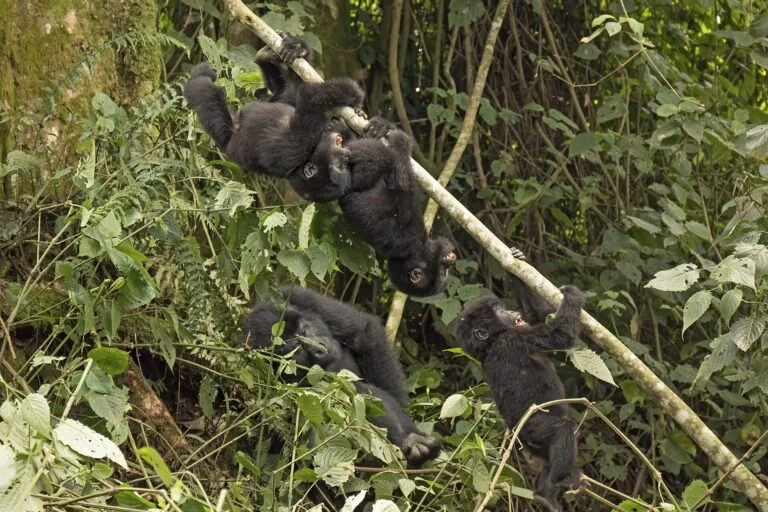
This vast expanse of land is home to a significant portion of the Earth’s terrestrial biodiversity and acts as a critical carbon sink. The monitoring of these areas is expected to rely on a sophisticated architecture of satellite imaging and standardized scientific protocols. This data-driven approach is intended to provide a layer of transparency that has historically been absent from international conservation grants, ensuring that funds are not merely disbursed, but are tied to tangible, verifiable outcomes in forest retention.
Economic Skepticism and Structural Concerns
Despite the enthusiasm from some international bodies, the financial architecture of the TFFF has drawn sharp criticism from within the academic and economic communities. Dr. Bard Harstad, an environmental economist at Stanford University, has emerged as a vocal critic of the facility’s fundamental design.
In professional correspondence regarding the fund, Harstad characterized the TFFF as having "severe flaws." His skepticism centers on the sustainability of the profit-generation model. For the facility to succeed, it must generate sufficient market returns to satisfy the expectations of private investors while simultaneously providing enough capital to compensate tropical nations for the "opportunity costs" of forgoing development.

Harstad argues that if the fund fails to meet these dual expectations, the consequences could be disastrous for future conservation efforts. "If the funds do not materialize as promised, the disappointment could harm the willingness of nations to allocate resources to tropical forest conservation for decades," he noted. Furthermore, he raised concerns about political volatility, noting that the permanence of these conservation efforts is highly susceptible to changes in national leadership. Should a climate-skeptic administration take power in a participating nation, the commitment to protect forests could be reversed overnight, rendering the long-term financial pledges moot.
Alternatives and Strategic Recommendations
Instead of the endowment-fund model, Harstad and other experts have advocated for the adoption of Sustainability-Linked Bonds (SLBs). These financial instruments have already seen successful implementation in countries like Uruguay. In the case of SLBs, the interest rates attached to a country’s debt are tied directly to environmental performance indicators. If a nation meets specific, independently verified targets for reduced deforestation, the interest rates on their bonds decrease, effectively rewarding the country for its conservation success while attracting lower-cost capital. Proponents argue that this model is more robust, less dependent on market volatility, and more aligned with the fiscal realities of developing nations.
Official Responses and the Geopolitical Context
The timing of the Dutch pledge is highly symbolic. Coming on the heels of the Brazilian election, the contribution signals a renewal of confidence in Brazil’s commitment to its 2030 goal of ending deforestation. The election between President Lula da Silva and Flávio Bolsonaro was seen as a watershed moment for environmental policy, with the former championing climate action and Indigenous land rights, and the latter representing a platform of industrial exploitation and environmental deregulation.
The international community, including bodies like the World Bank and various NGOs, has watched these developments closely. Merijn van Leeuwen, the director of Nature Conservation with WWF-Netherlands, lauded the $500-million pledge as a "major breakthrough for the protection of tropical forests worldwide." This sentiment reflects a broader push by European nations to take a more active role in global climate mitigation through direct financial intervention.
Implications for Indigenous Peoples and Local Communities
A critical, often overlooked aspect of the TFFF is its collaborative nature. The facility is not merely a state-to-state mechanism; it involves a consortium of Indigenous Peoples and Local Communities (IPLCs), scientists, finance experts, and civil society organizations. The inclusion of IPLCs is widely regarded as a necessity for the project’s success. Indigenous communities are frequently the most effective stewards of forest land; however, their role has often been marginalized in top-down conservation schemes.
By tying the TFFF to a participatory framework, the organizers hope to ensure that the funding does not just remain at the government level but translates into real-world protection and support for the people living on the front lines of deforestation. Whether this multi-stakeholder approach can overcome the systemic economic challenges identified by critics remains to be seen.
The Path Forward
As the TFFF moves toward its $125-billion goal, the coming years will be a litmus test for the facility. The success of the project will depend on three primary factors:
- Financial Solvency: Can the fund generate the market returns necessary to satisfy investors while providing sufficient incentives for forest-rich nations to forgo industrial development?
- Political Stability: Can the facility withstand the inevitable ebbs and flows of national political cycles in the participating tropical countries?
- Verifiability: Will the proposed satellite and scientific monitoring be robust enough to withstand the scrutiny of international auditors, thereby maintaining the integrity of the conservation results?
The $500-million investment from the Netherlands provides the TFFF with a critical lifeline and a vote of confidence. However, the facility remains in its infancy. For the TFFF to be truly "forever," it must transcend the status of a philanthropic experiment and become a foundational element of the global financial system—one where the value of a standing forest is reflected not just in ecological terms, but in the stable, long-term returns provided to those who protect it.
As the world continues to grapple with the dual crises of biodiversity loss and climate change, the TFFF represents a bold, if controversial, attempt to align the mechanisms of global capital with the survival of the planet’s most vital ecosystems. Whether it will be remembered as a landmark success or a cautionary tale of economic overreach will depend on the transparency, adaptability, and political resilience of the project in the years to come.