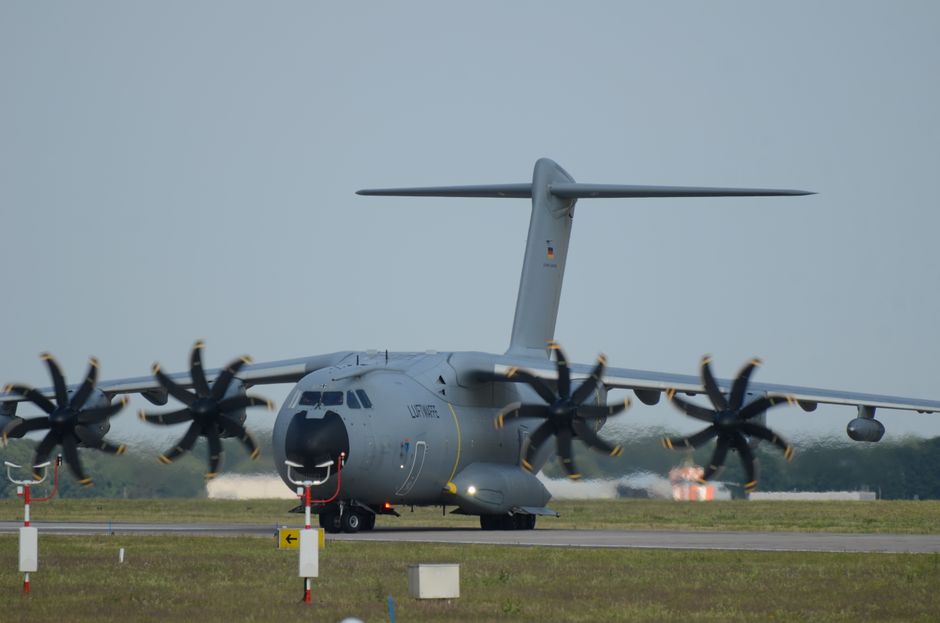
Airbus Secures Vital Infrared Countermeasures Contract for German Air Force Aircraft, Enhancing Survivability Against Advanced Threats
Airbus Defence and Space has been awarded a significant contract by the German Air Force to equip its fleet of Eurofighter Typhoons with advanced Infrared Countermeasures (IRCM) systems. This strategic procurement underscores the German military’s commitment to modernizing its air combat capabilities and ensuring the survivability of its frontline aircraft against increasingly sophisticated missile threats. The contract, valued at an undisclosed but substantial sum, will see the integration of state-of-the-art IRCM technology designed to detect, track, and disrupt incoming infrared-guided missiles, a critical capability in contemporary and future operational environments. The decision to equip the Eurofighter Typhoon, Germany’s primary air superiority fighter, with this enhanced protection signifies a proactive approach to mitigating risks in contested airspace and maintaining air dominance. The selection of Airbus as the prime contractor for this essential upgrade highlights the company’s established expertise in providing advanced electronic warfare and aircraft survivability solutions to military operators worldwide.
The core of this contract revolves around the integration of a next-generation IRCM system, likely based on proven technologies already in service with other NATO allies. While specific system details are typically classified for operational security reasons, it is understood that the chosen solution will offer comprehensive protection against a wide spectrum of infrared-guided threats, including advanced surface-to-air missiles (SAMs) and air-to-air missiles (AAMs). Modern IRCM systems operate by detecting the launch of an incoming missile through its heat signature and then employing countermeasures to confuse or blind its seeker head. This can involve a combination of techniques, such as deploying flares that mimic the aircraft’s heat signature or employing directed energy jamming to disrupt the missile’s guidance system. The effectiveness of these systems is paramount in enabling aircraft to operate in environments where the threat of man-portable air-defense systems (MANPADS) and more advanced SAM batteries is prevalent. The German Air Force’s decision reflects a growing global recognition of the persistent and evolving threat posed by infrared-guided munitions.
The Eurofighter Typhoon, a twin-engine, delta-wing, canard-line fighter aircraft developed by a consortium of European aerospace companies, is already a formidable platform. However, continuous upgrades and the integration of advanced defensive suites are crucial to maintaining its operational relevance and ensuring pilot safety in increasingly dangerous scenarios. This IRCM contract directly addresses this need, providing a crucial layer of protection that complements the Typhoon’s existing defensive capabilities, such as radar warning receivers (RWR) and missile approach warning systems (MAWS). The ability of the IRCM system to actively counter incoming threats significantly increases the survivability of the aircraft and its pilot, allowing them to complete their mission even under direct attack. This enhancement is not merely about defensive measures; it directly contributes to the offensive potential of the Typhoon, enabling it to penetrate more heavily defended airspace and execute its primary roles, whether they be air-to-air combat, ground attack, or reconnaissance.
The selection process leading to this contract likely involved rigorous testing and evaluation to ensure that the chosen IRCM system met the stringent performance and reliability requirements of the German Air Force. Factors such as the system’s detection range, accuracy, jamming effectiveness, response time, and integration with the Typhoon’s existing avionics were undoubtedly key considerations. Furthermore, the ease of maintenance, logistical support, and the potential for future upgrades would have played a significant role in the final decision. Airbus, with its extensive experience in electronic warfare systems, is well-positioned to deliver a robust and effective solution that meets these demanding criteria. The company’s track record in integrating complex defensive aids suites onto various aircraft platforms provides a strong foundation for the successful implementation of this program.
The strategic implications of this contract extend beyond the immediate enhancement of the German Air Force’s capabilities. By investing in advanced IRCM for its Eurofighter fleet, Germany is reinforcing its position as a leading contributor to NATO’s collective defense. The interoperability of advanced defensive systems among allied nations is a critical aspect of modern coalition warfare. Sharing common or compatible IRCM technologies ensures that allied aircraft can operate together more effectively and safely in joint operations, reducing the risk of fratricide and enhancing overall mission success. This contract, therefore, aligns with Germany’s broader defense policy and its commitment to the security of the Euro-Atlantic region. It also signals a continued demand for advanced aerospace defense technologies, benefiting the European defense industrial base.
The development and integration of such sophisticated electronic warfare systems require significant expertise in fields such as sensor fusion, signal processing, laser technology (in the case of directed energy countermeasures), and software development. Airbus’s involvement in this contract is a testament to its continued investment in research and development in these critical areas. The company’s ability to deliver comprehensive solutions that include hardware, software, and integration services is a key differentiator in the competitive defense market. The successful implementation of this IRCM program will likely involve close collaboration between Airbus, the German Air Force, and potentially other industrial partners responsible for specific sub-systems. This collaborative approach is essential for ensuring seamless integration and optimal performance of the new defensive capabilities.
The ongoing evolution of missile technology necessitates continuous adaptation and innovation in defensive systems. Adversaries are constantly developing more advanced infrared seekers that are less susceptible to traditional countermeasures. This includes seekers that can operate in broader spectral ranges, employ sophisticated algorithms to distinguish between decoys and real targets, and are more resistant to jamming. Therefore, the IRCM system chosen for the German Air Force’s Eurofighters must be capable of addressing these emerging threats. This implies a system that is not only effective against current threats but also has the flexibility and potential for upgrades to counter future advancements in missile technology. The long lifespan of military aircraft platforms means that defensive systems must be designed with future-proofing in mind.
The economic impact of this contract should also be considered. It represents a significant investment by the German government in its defense industry, supporting high-skilled jobs and fostering technological innovation within Airbus and its supply chain. The production, integration, and maintenance of these advanced systems will require a skilled workforce, contributing to the economic vitality of the regions where these activities take place. Furthermore, successful delivery of this contract can enhance Airbus’s reputation and competitive standing in the global defense market, potentially leading to future export opportunities for its defensive aids suites and other advanced aerospace technologies. The commitment to indigenous defense capabilities and the support of European industrial champions are often key tenets of national defense strategies, and this contract exemplifies that approach.
The specific requirements for the German Air Force’s IRCM system will likely include a high degree of automation, allowing the pilot to focus on tactical decision-making rather than managing complex defensive countermeasures. The system should be capable of automatically detecting, identifying, and responding to multiple simultaneous threats with minimal pilot intervention. The human-machine interface (HMI) for the IRCM system is crucial, providing clear and concise information to the pilot about the threat environment and the system’s status. In situations where manual intervention is required, the HMI must be intuitive and responsive. The integration of the IRCM system with the Typhoon’s other defensive sensors, such as radar warning receivers and missile approach warning systems, is also critical for providing a unified situational awareness picture and enabling a coordinated defensive response.
The long-term support and sustainment of these advanced IRCM systems will also be a crucial element of the contract. This will likely involve the provision of training for German Air Force personnel, maintenance and repair services, and the supply of spare parts. Ensuring the operational readiness of these systems throughout the lifespan of the Eurofighter Typhoon fleet is paramount. Airbus’s ability to provide comprehensive lifecycle support services is a key factor in securing such long-term defense contracts. This includes the capability to perform upgrades and modifications to the system as new threats emerge or as technology advances. The focus on sustainment highlights a shift in defense procurement towards a more holistic approach that considers the total cost of ownership over the entire operational life of the equipment.
In conclusion, the contract awarded to Airbus for the integration of advanced Infrared Countermeasures onto the German Air Force’s Eurofighter Typhoon fleet represents a pivotal moment in enhancing the survivability and operational effectiveness of a key NATO air asset. This strategic investment directly addresses the escalating threat posed by infrared-guided missiles, underscoring Germany’s commitment to maintaining air superiority and ensuring the safety of its aircrews in increasingly contested operational environments. The selection of Airbus highlights the company’s proven expertise in delivering cutting-edge electronic warfare solutions and its crucial role in supporting the European defense industrial base. This initiative not only bolsters Germany’s national defense capabilities but also strengthens interoperability within the NATO alliance, paving the way for more secure and effective coalition operations in the future. The successful implementation of this program will undoubtedly contribute to the continued relevance and lethality of the Eurofighter Typhoon on the global aerospace defense stage.
