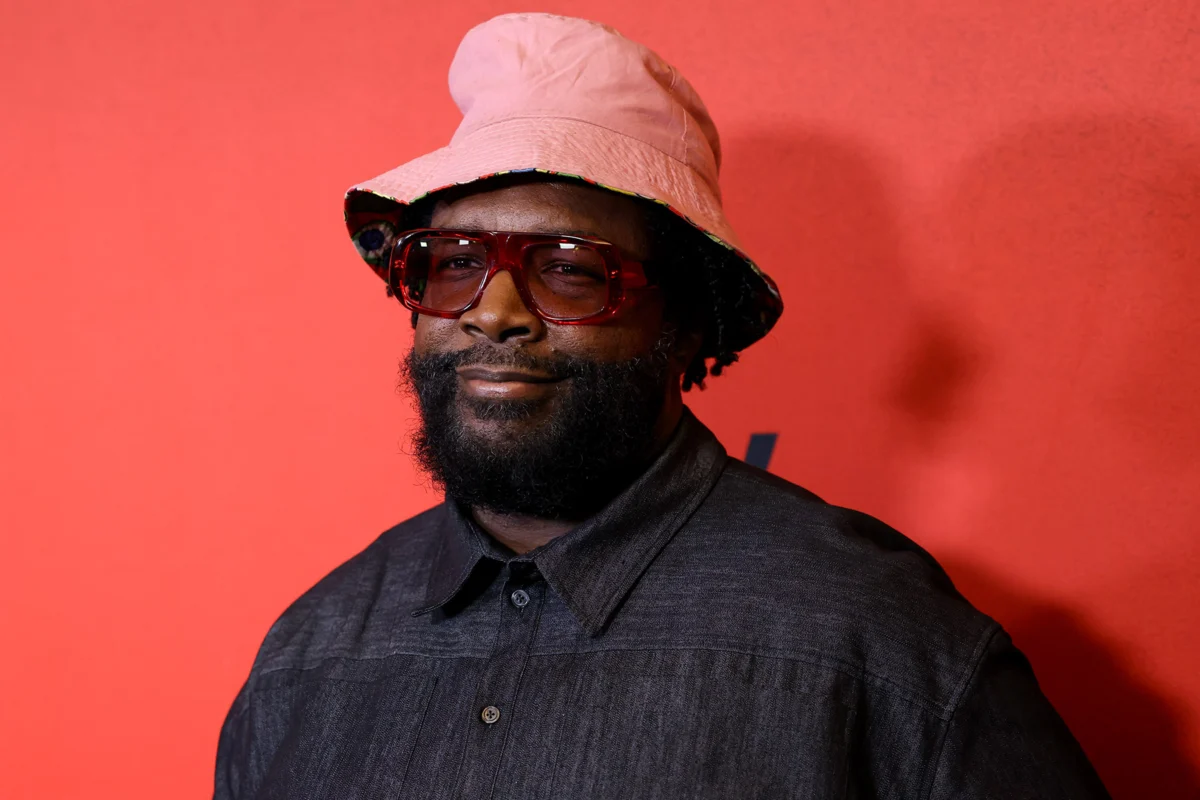
The art of the sample—the act of taking a fragment of recorded audio and repurposing it into a new composition—stands as the foundational pillar of modern hip-hop and electronic music. Ahmir “Questlove” Thompson, the acclaimed drummer, producer, and polymath behind The Roots, has spent his career not only practicing this art but chronicling it. Through his work as a documentarian—capturing the legacies of Sly Stone, Earth, Wind & Fire, and the cultural watershed of the 1969 Harlem Cultural Festival—Questlove has positioned himself as the industry’s foremost music historian. His recent appearance on the Billboard On the Record podcast provides a comprehensive lens through which to view the past, present, and uncertain future of sampling, tracing its journey from an unregulated creative frontier to a highly litigated, billion-dollar corporate asset.
The Genesis of Modern Sampling: Technology and Access
The technological democratization of music production is perhaps the most significant narrative arc in contemporary music. In the late 1970s and early 1980s, the ability to manipulate recorded sound was restricted by extreme financial barriers. The Fairlight CMI, an early digital sampler and synthesizer, carried a price tag of approximately $100,000, effectively limiting its use to a small elite of visionary producers such as Stevie Wonder, Herbie Hancock, and Quincy Jones.
It was during this period that the conceptual groundwork for sampling was laid. As Questlove notes, the 1983 hit “Owner of a Lonely Heart” by Yes remains a landmark moment, utilizing a breakbeat from Funk, Inc.’s “Kool Is Back.” This early cross-pollination of genres signaled that the recorded past could serve as the raw material for the future. By the mid-1980s, the introduction of more accessible hardware—most notably the E-mu SP-1200—allowed a new generation of producers, including Marley Marl, Large Professor, and Q-Tip, to treat the turntable and the sampler as instruments in their own right, piecing together disparate drum kicks and snare hits to construct entirely new rhythmic landscapes.
The Wild West Era: 1988–1991
For a brief, transformative window between 1988 and 1991, the legal framework governing music copyright remained largely unequipped to handle the rapid-fire aesthetic of hip-hop. This era, which Questlove characterizes as the “Wild West,” saw the release of seminal, sample-heavy albums such as Public Enemy’s It Takes a Nation of Millions to Hold Us Back and the Beastie Boys’ Paul’s Boutique.
During this period, albums were constructed as dense sonic collages, sometimes featuring dozens of samples within a single track. This approach turned the listener’s experience into a form of musical archeology. For Questlove, the release of Public Enemy’s It Takes a Nation of Millions acted as a “flux-capacitor moment,” transforming his father’s vast but previously ignored record collection into a treasure map of potential samples. This was not merely about theft; it was a form of communal creation that honored the lineage of soul, funk, and jazz music while propelling it into a digital future.
The Judicial Turning Point: The Biz Markie Case
The regulatory landscape shifted permanently in 1991 following the landmark copyright infringement lawsuit Grand Upright Music, Ltd. v. Warner Bros. Records, Inc. The case centered on rapper Biz Markie’s unauthorized use of a sample from Gilbert O’Sullivan’s 1972 song “Alone Again (Naturally).”
The ruling in favor of O’Sullivan fundamentally altered the economics of hip-hop. Prior to this, the lack of a standardized clearing process allowed for a free flow of ideas; post-1991, sampling became a logistical and financial hurdle. Labels were forced to establish formal departments dedicated to "clearing" samples—a process that involves negotiating upfront fees and royalty splits. This transition effectively ended the era of "collage" albums that relied on dozens of uncleared snippets, pushing hip-hop toward a more formalized, radio-friendly structure popularized by producers like Rick Rubin. While this protected the intellectual property rights of original artists, it also introduced a barrier to entry that favored well-funded major labels, effectively stifling the experimental nature of earlier, low-budget productions.
The Modern Landscape: Catalog Sales and Corporate Management
In recent years, the music industry has seen a massive surge in the acquisition of song catalogs by private equity firms and investment trusts. Companies like Hipgnosis and Concord have spent billions purchasing the rights to the back catalogs of iconic artists. This shift has created a complex dichotomy: some catalog owners act as “highway cops,” aggressively policing their assets, while others seek to monetize their holdings by actively encouraging sampling and interpolation.
This environment has created a paradox for contemporary producers. While the “outlaw” thrill of the early days has been replaced by legal paperwork, the potential for creative synthesis remains. Questlove points to a “Dream Team” of modern producers—including Just Blaze, 9th Wonder, and DJ Premier—who are often tasked with reworking these acquired catalogs to make them palatable for modern audiences. However, as Questlove observes, the danger element—the spark of creative defiance—is often extinguished once the process is entirely sanitized by legal departments.
The AI Frontier: A New Technological Paradigm
The current conversation surrounding sampling is increasingly dominated by the emergence of generative Artificial Intelligence. The recent viral success of AI-generated tracks, such as those modeled on the feud between Drake and Kendrick Lamar, has raised existential questions about the future of the medium.
The debate centers on two primary concerns: the ethics of training AI models on copyrighted material and the quality of the resulting output. From a technical perspective, Questlove remains skeptical of the current iteration of AI, citing a distaste for the "digital distortion" that often plagues synthesized audio. Yet, he acknowledges that as AI models mature toward version 7.0 and beyond, the line between human-made and machine-made music will continue to blur.
The broader implication for the industry is a necessary evolution in labor and compensation. Questlove advocates for transparency and fair distribution, noting that if AI is to be integrated into the music ecosystem, the creators—from the original songwriters to the engineers and producers—must be fairly compensated for the data used to train these systems. The "cooking vs. microwaving" analogy persists; while technology can speed up the process of creation, the "magic" that defines iconic music often resides in human synergy, emotion, and the imperfections that arise from live performance.
Broader Implications and Future Outlook
The evolution of sampling reflects the broader history of recorded music: a constant tension between the desire to innovate and the need to protect property. While the legal constraints established in the 1990s undoubtedly matured the music business, they also forced a departure from the raw, experimental spirit of the 1980s.
As the industry stands on the precipice of an AI-driven revolution, the lessons of the past are more relevant than ever. The history of sampling is, at its core, a history of how artists have navigated technological change to honor their influences. Whether through the early use of the Fairlight or the contemporary challenges posed by generative models, the fundamental goal remains unchanged: to capture a moment in time and build upon the collective legacy of those who came before. As Questlove suggests, the future of the art form will depend not on the technology itself, but on the ability of the industry to foster a sustainable model that balances the rights of creators with the relentless, human drive to create something new from the echoes of the old.