The Fifth Circuit Court of Appeals has delivered a landmark and devastating blow to environmental justice advocates, ruling that the United States Constitution does not guarantee citizens a fundamental right to clean, safe drinking water. Handed down on September 4, the decision arises directly from the protracted, decades-long water crisis in Jackson, Mississippi—a majority-Black capital city where residents have endured brown tap water, catastrophic system failures, and systematic institutional abandonment.
In a further blow to civil rights plaintiffs, the appellate court ruled that the Constitution does not afford citizens a "right to truthful information from officials during a public health crisis." The decision underscores a grim reality for marginalized communities across the nation: while the physical consequences of crumbling infrastructure fall disproportionately on Black and low-income populations, the federal judiciary offers virtually no constitutional recourse for victims of environmental neglect and governmental deception.
The ruling cements a legal landscape where systemic municipal failures can result in chronic illness, developmental damage, and pervasive health risks without triggering constitutional protections. Legal scholars and civil rights organizers warn that the precedent establishes a dangerous threshold, signaling that state and local governments can oversee public health catastrophes without fearing federal civil rights litigation under the Fourteenth Amendment.
Anatomy of a Legal Battle: The Fourteenth Amendment Claim
The federal appeals court ruling stems from a 2022 lawsuit filed by Jackson residents against the city and former Mayor Chokwe Antar Lumumba. The plaintiffs alleged that municipal authorities knowingly delivered lead-contaminated water to homes while actively misleading the public regarding its safety. Furthermore, the lawsuit contended that state officials repeatedly routed federal drinking water infrastructure funds away from predominantly Black Jackson and into whiter, more affluent municipalities, violating federal civil rights protections.
The core of the residents’ legal argument relied on the Fourteenth Amendment’s Due Process Clause, asserting a constitutional right to bodily integrity. Plaintiffs argued that by compelling residents to rely on a compromised municipal system and falsely assuring them it was safe, the government actively placed them in danger and violated their fundamental right to make informed health decisions.
A lower court initially dismissed the case, leading to the appeal before the Fifth Circuit. In the majority opinion, Judge Kurt Engelhardt acknowledged the profound severity of Jackson’s water woes but maintained that access to safe water is not a right "deeply rooted in our Nation’s history and tradition"—the stringent historical test required to establish a fundamental liberty interest under the Constitution.
Addressing the plaintiffs’ claim regarding false official assurances, Judge Engelhardt drew a sharp distinction between government speech and physical intrusion. He wrote that "lying about the presence of lead in the water is a far cry from the state’s physically extracting evidence from a criminal suspect or conducting an invasive medical procedure without consent." Conceding the tragic nature of the situation, the majority concluded with a stark limitation on judicial power: "The Constitution does not provide redress for every governmental wrongdoing."
A sharp dissenting opinion was issued by Judge Catharina Haynes, who argued that the plaintiffs had successfully and plausibly alleged that city officials violated their right to bodily integrity by knowingly exposing them to severe environmental hazards. Despite the dissent, the majority ruling stands as binding precedent across the Fifth Circuit’s jurisdiction, shutting courthouse doors to similar constitutional claims.
Decades of Decay: A Chronology of the Jackson Water Crisis
The legal battle in Jackson did not materialize in a vacuum; it is the culmination of decades of deferred maintenance, institutional racism, and structural disinvestment. The roots of the crisis stretch back generations, defined by a shrinking tax base, white flight, and chronic underfunding of municipal services.
By the late 20th century, Jackson’s infrastructure was already showing signs of severe strain. However, the crisis escalated into public view through a series of critical milestones:
- March 2020: The U.S. Environmental Protection Agency (EPA) issued an emergency administrative order warning that conditions at Jackson’s drinking water plants presented an "imminent and substantial endangerment" to human health, citing critical operational failures and vulnerabilities in the distribution network.
- February 2021: A severe winter storm struck the region, freezing aging equipment and rupturing water mains. Tens of thousands of residents were left entirely without running water for weeks, melting snow and collecting rain to flush toilets and cook.
- Late 2021 to Summer 2022: Persistent water quality warnings, boil-water notices, and infrastructure breakdowns plagued the city.
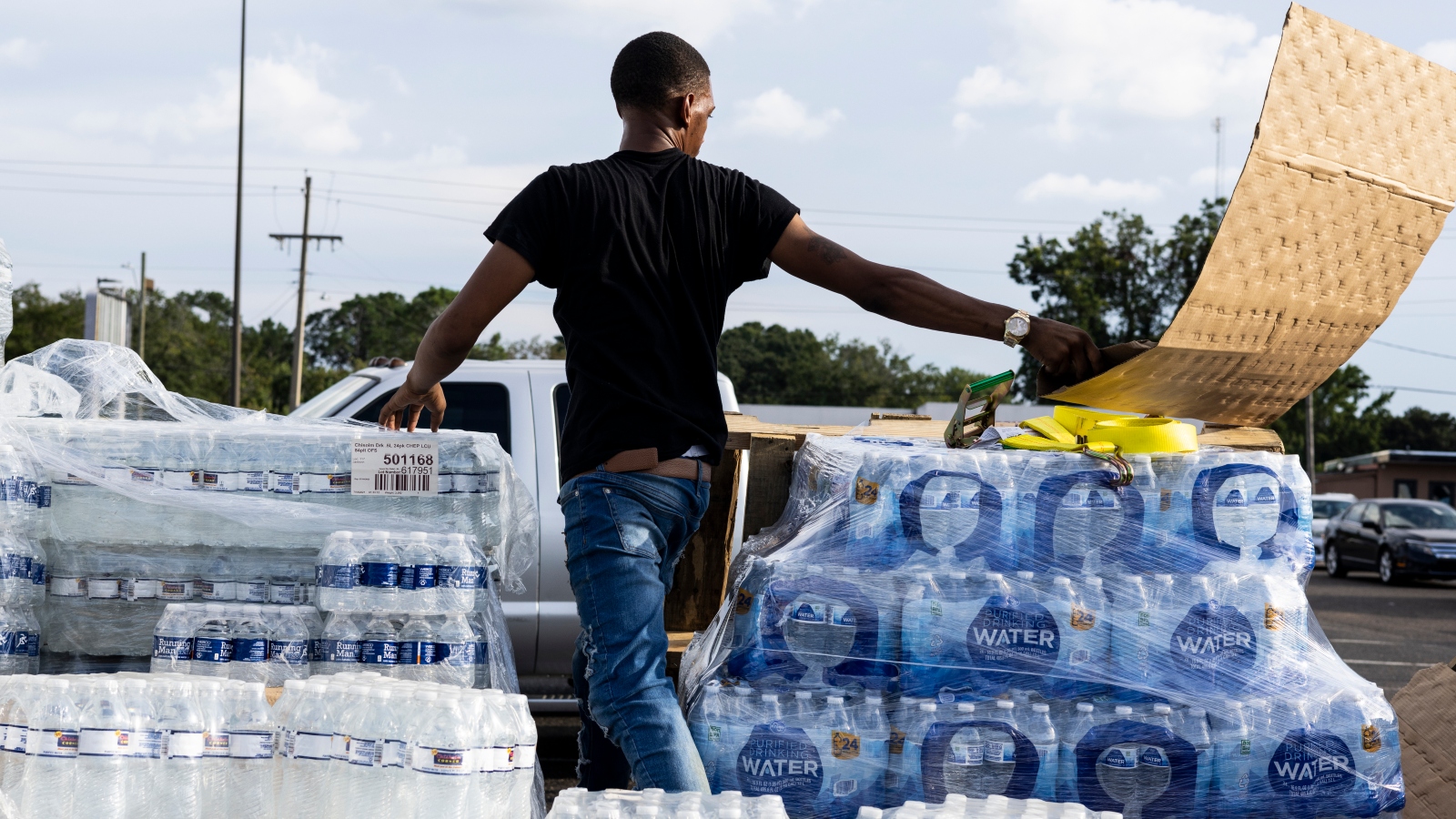
- August and September 2022: Heavy rainfall induced flooding that overwhelmed the O.B. Curtis Water Treatment Plant, the city’s primary water facility. Treatment processes failed completely, plunging the city of roughly 150,000 residents into a catastrophic state of emergency. Residents were left without reliable water pressure for drinking, bathing, or firefighting, prompting direct federal intervention and the appointment of a third-party manager.
- Late 2022: Residents filed their class-action civil rights lawsuit, seeking accountability for lead contamination and alleged municipal deception.
- March 2024: An EPA Inspector General report confirmed systemic failures in federal oversight and highlighted ongoing environmental injustices within Mississippi’s distribution of federal water grants.
- September 2024: The Fifth Circuit Court of Appeals issued its ruling, upholding the dismissal of the residents’ constitutional lawsuit.
The Human Toll: Health Consequences and Systemic Disparities
Jackson is a city where more than 80 percent of the population is Black, and the poverty rate is more than double the national average. For generations, residents have absorbed the physical and financial costs of a failing municipal utility.
Individuals like Gwendolyn Reed-Davis have spent years bearing the hidden costs of the crisis, driving long distances just to wash clothes and bathe children. Reed-Davis attributes her school-age children’s cognitive difficulties and her own severe kidney infections to prolonged exposure to contaminated water.

Extensive scientific research underpins these personal accounts. Countless peer-reviewed studies have established that childhood exposure to lead leads to irreversible cognitive impairment, lower academic achievement, and behavioral disorders, with impacts lasting decades. Crucially, epidemiological data shows that race—specifically being Black—is a stronger predictor of lead poisoning risk in the United States than poverty alone. Federal data indicates that Black communities nationwide are statistically more likely than white communities to be served by water systems facing health-based violations under the Safe Drinking Water Act, and that infrastructure fixes take significantly longer to materialize in minority neighborhoods.
Reactions and the Fight for Environmental Justice
The appellate court decision provoked sharp outrage from community organizers and civil rights advocates, who view the ruling as an institutional abdication of basic human rights.
"Jackson residents did everything this country tells poor people to do," said Danyelle Holmes, a senior national organizer with Mississippi’s Poor People’s Campaign. "They organized, they testified, they boiled their water, they filed suit, they trusted the courts. And at every step the answer has been no."
Holmes emphasized the profound psychological and civic toll of the verdict on a majority-Black capital city. "What it signals is that the law has told a majority-Black capital city that its suffering is real, but its remedy does not exist. They did not say the water was safe. They said even if everything the residents alleged is true, the Constitution owes them nothing."
Conversely, municipal leadership struck a different tone following the decision. In an official statement, Jackson Mayor John Horhn responded: "We are pleased that the Fifth Circuit upheld the dismissal of these claims. The City remains committed to the health, safety, and well-being of every Jackson resident."
Brooke Floyd, a lifelong Jackson resident and activist whose family has fought against water contamination for generations, noted the broader national implications of the court’s narrow interpretation of constitutional rights.
"I do think the ruling would’ve been different if the majority of our city looked different, was in a different tax bracket, and had a different ZIP code, but alas, we probably wouldn’t have had the problems to begin with," Floyd said. "The problem the rest of America needs to worry about is, while they were making sure not to guarantee me my rights, they were quietly taking yours, too."
Financial Pressures on a Vulnerable Population
As legal avenues close, the physical and financial rebuilding of Jackson’s water system continues under federal oversight. JXN Water, the federally appointed management entity tasked with rehabilitating the utility, reports operational improvements and revenue stabilization. However, these improvements are coming at a steep and controversial cost to the city’s impoverished residents.
In March, a court-approved 12 percent rate increase raised the average residential water and sewer bill by roughly $8.88 a month, bringing the baseline monthly cost to approximately $88. Furthermore, JXN Water’s long-term financial plan outlines proposed rate hikes of 10 percent in 2027, 9 percent in 2028, and 8 percent in 2029. For a community where over a quarter of the population lives below the federal poverty line, escalating utility bills present an immense economic burden.
Despite the hurdles imposed by the judicial system, local activists maintain that the fight for clean water will continue outside the courtroom.
"We are organizing, we are marching to the polls, and we are not waiting on a court to tell us our lives are worth clean water," Holmes declared. "As the Poor People’s Campaign teaches us, this is not about left and right. It is about right and wrong, and everybody knows which one Jackson has received."