The 2026 San Sebastian International Film Festival commenced this past Friday with a high-profile tribute to German cinematic visionary Werner Herzog, whose career spanning over five decades has cemented his status as one of the most influential figures in world cinema. While the Kursaal Theatre in northern Spain served as the stage for a celebratory standing ovation in honor of the director of Aguirre, the Wrath of God and Grizzly Man, the evening was simultaneously defined by a series of pointed political declarations that underscored the festival’s enduring commitment to addressing global human rights crises.
A Tribute to a Cinematic Legend
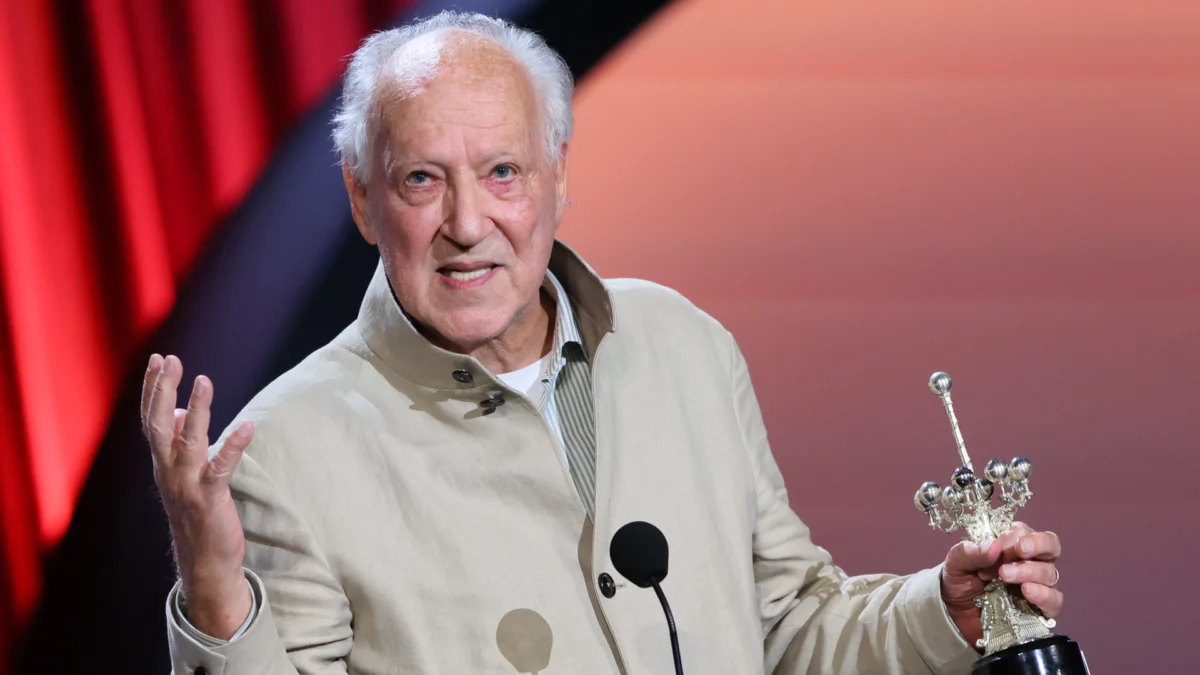
Werner Herzog, the recipient of the prestigious Donostia Award, was presented with the honor by actor Orlando Bloom. The award, which recognizes an outstanding career and significant contribution to the world of film, was met with a raucous and prolonged standing ovation from the international cohort of creatives present at the opening ceremony.
In a moment of mutual admiration, Herzog accepted the accolade from Bloom, describing the actor as a "living legend" and a "treasure of cinema." The ceremony served as a backdrop for the promotion of Herzog’s latest project, Bucking Fastards, a feature film boasting a star-studded cast that includes Kate Mara, Rooney Mara, Orlando Bloom, and Domhnall Gleeson.
During his acceptance speech, Herzog eschewed the traditional tropes of industry gratitude, instead weaving a narrative that connected his own past with the geography and cultural ethos of the Basque Country. Reflecting on his formative years as a filmmaker, Herzog recounted a journey taken on foot from the Cannes Film Festival into the Pyrenees mountains in the early 1970s. While he humorously noted that his navigational skills landed him in Biarritz rather than San Sebastian, he emphasized that his interactions with the Basque people left an indelible mark on his artistic sensibilities. "I met your people. I met Basque people in the mountains, and I was always intrigued," Herzog remarked, further identifying the region as a "country of poetry" and stating that he felt a deep sense of belonging among its inhabitants.
The Political Landscape of the 2026 Opening
The celebratory atmosphere of the Donostia presentation was punctuated by the festival’s hosts, Fariba Sheikhan and Mariona Terés, who utilized the platform to address urgent international conflicts. Their opening remarks signaled a clear departure from the purely industry-focused discourse often found at major European film festivals, choosing instead to center the ongoing humanitarian crisis in Gaza.
"We join the myriad of voices calling for an end to genocide, like the one happening in Gaza," the hosts stated to thunderous applause. Their declaration extended specific solidarity to filmmakers Yuval Abraham and Rachel Szor, the directors of the film NAZA. The documentary, which provides testimony from 24 Israeli military officers regarding the protocols and systemic targeting of civilians in Gaza, has become a focal point of geopolitical tension within the arts community.
This is not the first time the San Sebastian Film Festival has taken a firm stance on the conflict. In previous years, the festival has issued formal calls for an immediate ceasefire, characterizing the actions of the Israeli government under Prime Minister Benjamin Netanyahu as "unimaginable massacres." The 2026 iteration of the festival serves as a continuation of this advocacy, positioning the event as a critical space for dissent and the amplification of marginalized political perspectives.
Contextualizing the Controversy Surrounding NAZA
The inclusion of NAZA in the broader festival discourse highlights a significant rift between artistic freedom and state-sanctioned scrutiny. Following its debut at the Venice Film Festival, NAZA set a record for the longest standing ovation in the Lido’s recent history and secured the prestigious Special Jury Prize. However, the film’s critical success has been overshadowed by intense political backlash.
Israel’s Minister of Culture, Miki Zohar, has publicly criticized the filmmakers, going as far as to threaten the revocation of the Israeli citizenship of both Abraham and Szor. This escalation has drawn widespread condemnation from international film unions and human rights organizations, who view the threat as a direct assault on the freedom of expression. The San Sebastian hosts underscored this sentiment, denouncing the "unilateral breaking of international law, colonialist looting, sexual violence, and the cruel wars that systematically violate human rights."
The implications of these threats are profound. In the current global climate, where state authorities are increasingly monitoring the output of cultural institutions, the decision by festivals like San Sebastian to platform films like NAZA serves as a defensive bulwark for filmmakers operating under extreme duress.
Festival Overview and Program Highlights
The 2026 San Sebastian International Film Festival, running from September 18 to September 26, opened with Fatih Akin’s Ghost Song. The film, which explores the sudden, tragic termination of a burgeoning romance between two students, is reportedly heavily influenced by Akin’s long-standing interest in the aesthetic conventions of anime and manga.
The festival program continues to prioritize works that challenge traditional narratives, maintaining its reputation as one of the most intellectually rigorous stops on the European film circuit. With a diverse lineup of international features, the festival serves as both a marketplace for global talent and a forum for socio-political dialogue.
Analytical Perspective: Art and Activism
The juxtaposition of a lifetime achievement award for a giant of the European New Wave with a forceful condemnation of state-sponsored violence reflects the dual identity of the San Sebastian Film Festival. By honoring Herzog—a man who has spent his life documenting the "ecstatic truth" of the human experience—the festival reaffirmed its commitment to the power of the individual voice. Simultaneously, by platforming the concerns of directors like Abraham and Szor, the festival positioned cinema as an essential tool for historical record-keeping and political accountability.
Data from the past five years suggests that film festivals are increasingly becoming the primary stage for international political discourse. As traditional news media face mounting pressure and censorship, the "festival circuit" provides a transnational platform for documentary filmmakers to reach global audiences. The impact of such platforms is measurable: the public discourse surrounding NAZA has reached far beyond the specialized circles of cinephiles, forcing mainstream political figures to respond to the allegations leveled by the Israeli military officers featured in the film.
The Road Ahead
As the festival progresses, the focus will shift toward the competitive sections and the potential winners of the Golden Shell. However, the themes established on opening night—the intersection of poetry, place, and protest—will likely remain the central thread of the event. The festival serves as a reminder that cinema does not exist in a vacuum. It is deeply embedded in the political realities of the regions where it is produced and screened.
For Werner Herzog, the San Sebastian experience was one of homecoming—a connection forged in the rugged terrain of the Pyrenees and sustained by a career-long dedication to the art of the image. For the attendees of the opening ceremony, the event was a stark reminder of the responsibilities that accompany the consumption of art in a time of crisis. Whether through the lens of a documentary on military protocols or the poetic observations of a mountain traveler, the San Sebastian Film Festival continues to function as a vital conduit for the most pressing conversations of our time.
The remaining week of the festival will see a series of screenings, masterclasses, and panels that aim to reconcile these varying threads of the human experience. With high-profile arrivals and a slate of films addressing themes ranging from environmental collapse to the ethics of war, the 2026 edition of the festival is poised to leave a lasting impact on the global cultural landscape. As the industry watches, the message from San Sebastian is clear: the screen remains one of the most powerful arenas for speaking truth to power, and the voices that choose to use it will continue to shape the political and cultural trajectory of the decade.