On November 25, 1970, the annals of aerospace engineering were rewritten over the sun-drenched expanse
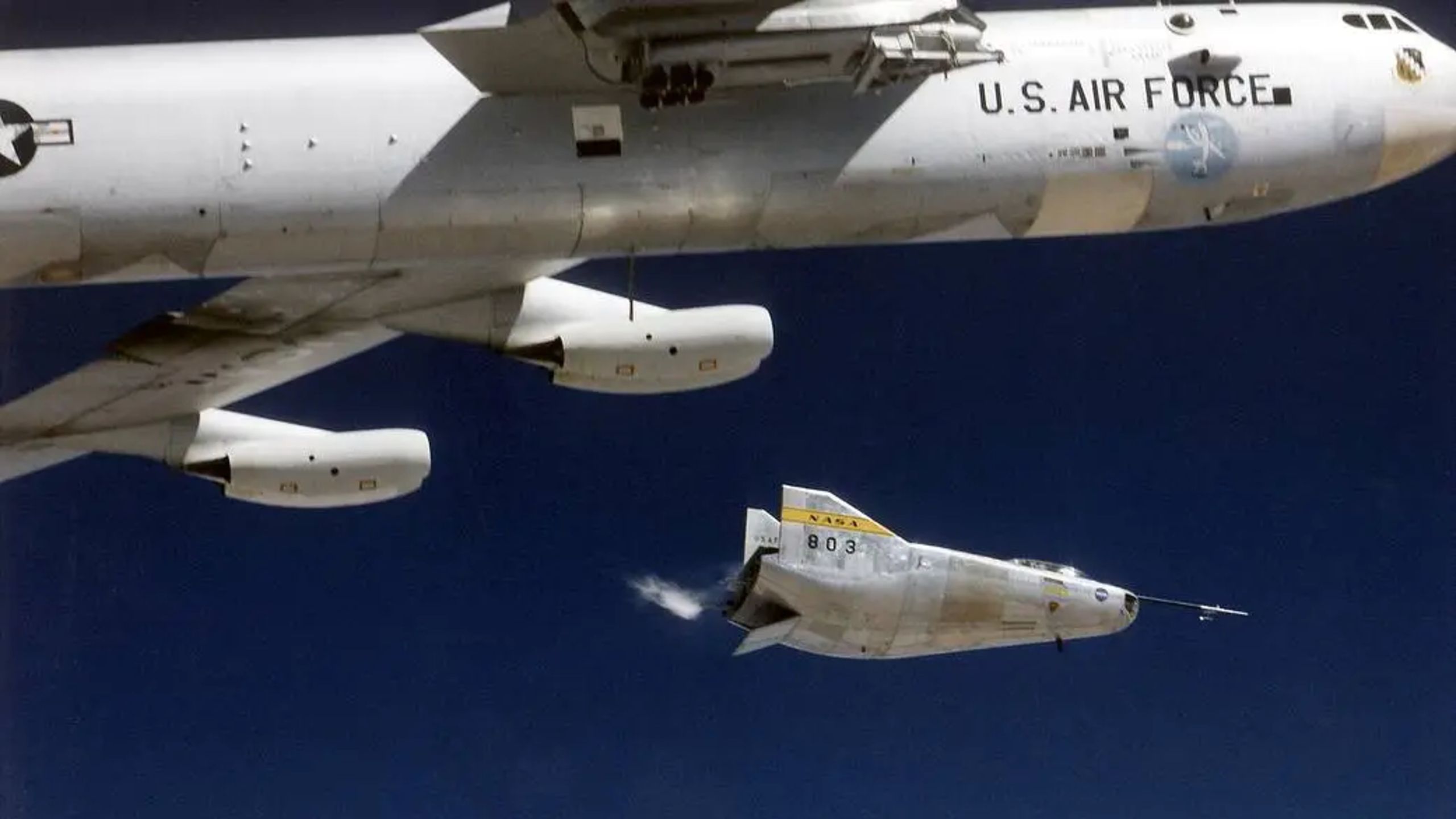
of the Mojave Desert when an unorthodox, wedge-shaped experimental aircraft known as the Northrop M2-F3 successfully completed its first powered flight. Unlike conventional aircraft that rely on broad, aerodynamic wings to generate lift, the M2-F3 was a heavyweight "lifting body"—a design engineered so that the fuselage itself provided the necessary aerodynamic lift to keep the craft airborne. This milestone flight not only validated a radical concept in aircraft architecture but also laid critical groundwork for the future of reusable space vehicles, including the development of the iconic Space Shuttle program.
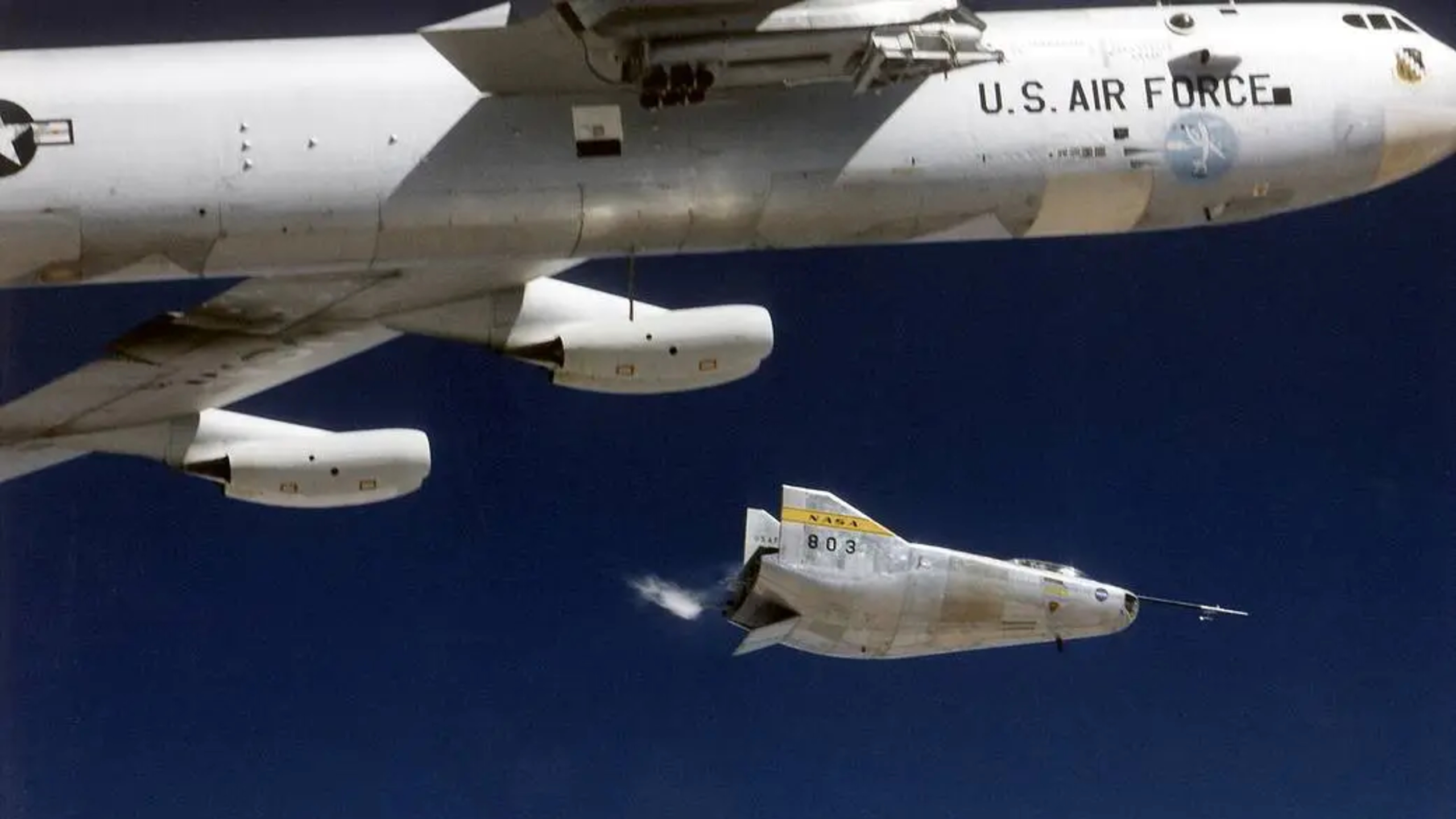
Piloted by seasoned Air Force test pilot Bill Dana, the mission commenced high above California when the M2-F3 was dropped from the belly of a modified B-52 mothership. Firing up its powerful rocket engine, Dana propelled the wingless craft to an altitude of 45,000 feet during a flight that lasted just over six minutes. While this inaugural powered run did not break the sound barrier, it served as a vital proving ground for the aircraft’s propulsion, stability, and control systems. Dana’s successful execution of the flight marked the transition of the M2-F3 from a passive glider into a high-performance supersonic research vehicle, setting the stage for subsequent missions that would eventually push the craft to 1.6 times the speed of sound and an altitude of 71,500 feet over the course of its 27-mission operational lifespan.
The Genesis of the Lifting Body Concept: From Drawing Board to Desert Trials
To fully understand the significance of the M2-F3’s 1970 flight, one must examine the rigorous evolutionary process that brought the aircraft to life. During the late 1960s and early 1970s, NASA’s Flight Research Center (now known as the Neil A. Armstrong Flight Research Center) in Edwards, California, was aggressively investigating alternative aerodynamic configurations. Engineers and aerodynamicists were grappling with a fundamental engineering challenge: how to design a spacecraft capable of re-entering Earth’s atmosphere from orbit and maneuvering through the air like an airplane to land on a conventional runway, rather than descending uncontrollably beneath a parachute into the ocean.
Traditional winged designs faced immense thermal and structural challenges during hypersonic re-entry, as long, thin wings would be subjected to extreme aerodynamic stress and devastating frictional heat. Lifting bodies offered a compelling solution by integrating the aerodynamic lifting surfaces directly into a stout, robust fuselage.
However, this concept came with significant handling penalties. Early lifting bodies were notoriously difficult to fly, possessing marginal stability and erratic roll-and-yaw characteristics. The M2-F3 was not an original design, but rather a meticulously rebuilt and heavily modified iteration of its ill-fated predecessor, the M2-F2.
The Shadow of the M2-F2: Learning from Near-Disaster
The journey toward the M2-F3 was forged through resilience in the face of near-tragedy. On May 10, 1967, NASA pilot Milt Thompson was flying the original M2-F2 during an unpowered glide test. As Thompson approached the dry lake bed at Edwards Air Force Base, the aircraft experienced a severe lateral-directional instability phenomenon known as "roll coupling." The M2-F2 rolled violently from side to side, rendering it virtually uncontrollable.
Moments before touchdown, the aircraft slammed hard into the desert floor, tumbling violently and rolling over several times. The landing gear sheared off, and the cockpit suffered catastrophic damage. Miraculously, Thompson survived the harrowing crash, though he sustained severe injuries. That dramatic accident—footage of which became globally famous years later as the opening sequence of the television series "The Six Million Dollar Man"—forced NASA engineers to re-evaluate the aerodynamic stability of the lifting body concept.
Rather than abandoning the program, researchers at NASA and Northrop hauled the wreckage back to the workshop and initiated a comprehensive redesign. To cure the severe stability deficiencies that plagued the M2-F2, engineers added a prominent third vertical fin directly centered between the two tip fins. This critical modification dramatically improved the vehicle’s directional control, transforming a notoriously dangerous aircraft into a much more stable and predictable flying machine. Upon its completion, the modified vehicle was officially redesignated the M2-F3.
Chronology of the M2-F3 Flight Program
The operational history of the M2-F3 was structured as a methodical, step-by-step expansion of its flight envelope, ensuring that safety and data collection preceded high-speed risk-taking.
- June 1970: The M2-F3 begins its flight test program with a series of unpowered glide flights, dropped from the B-52 mothership to evaluate its basic aerodynamic glide characteristics and landing behavior following the structural modifications.
- November 25, 1970: Bill Dana executes the first powered flight of the M2-F3, igniting the vehicle’s rocket engine at altitude, soaring to 45,000 feet, and successfully validating the craft’s propulsion and primary flight controls.
- 1971–1972: Throughout its active service life, the aircraft undergoes rigorous envelope expansion. Pilots test various control augmentation systems, reaction control thrusters, and side-arm controllers.
- December 20, 1972: The M2-F3 completes its 27th and final flight, bringing a highly successful conclusion to its phase of NASA’s lifting body research program.
Advanced Engineering and Technological Innovations
The M2-F3 was far more than just a shaped piece of metal; it served as an airborne laboratory for cutting-edge flight control technologies. Because the aircraft was designed to simulate the behavior of future spacecraft returning from orbit, engineers equipped it with systems that bridged the gap between atmospheric aviation and spaceflight.
One of the most notable technological integrations was a reaction jet control system. Similar to the attitude-control thrusters used on orbiting spacecraft and the Apollo command modules, these reaction control jets were installed on the M2-F3 to gather empirical data on their effectiveness in maneuvering an aircraft through thin, upper-atmospheric air where conventional aerodynamic control surfaces lose their efficacy.
Furthermore, as the M2-F3 program neared its conclusion, NASA researchers utilized the platform to evaluate advanced avionics, including a rate command augmentation control system and a side-arm control stick. The side-arm controller—designed to allow pilots to execute precise maneuvers with minimal physical arm movement—represented a radical departure from traditional central control columns. The insights gathered from the M2-F3 directly influenced the cockpit design of modern military fighter jets and future commercial and space aircraft.
Official Perspectives and Post-Program Analysis
NASA’s aeronautical research division consistently emphasized the immense value of the lifting body program in bridging the technological gap between conventional aviation and space exploration. In historical overviews of the program, agency officials noted that the empirical data harvested from the M2-F3, alongside its sister vehicles (the HL-10, X-24A, and X-24B), provided engineers with the confidence needed to design winged spacecraft that could glide back to Earth autonomously or under pilot control.
"The lifting body flight research program was instrumental in proving that a wingless, blunt-bodied vehicle could be successfully maneuvered and landed from hypersonic speeds," NASA historical documentation notes. "The lessons learned from the modifications made to the M2-F3 directly informed the aerodynamic profiling of the Space Shuttle orbiters, which utilized a similar delta-wing lifting body hybrid design during their historic re-entries."
The Broader Impact and Long-Term Legacy
The legacy of the Northrop M2-F3 extends far beyond its 27 completed missions. By demonstrating that an aircraft with minimal aerodynamic lifting surfaces could be successfully guided through the transonic and supersonic regimes, the program eliminated major design uncertainties for NASA’s upcoming spacecraft generations.
When the Space Shuttle Columbia roared into orbit in April 1981, it embodied the ultimate realization of the lifting body concept—a reusable vehicle that plunged back through Earth’s atmosphere at hypersonic speeds and landed safely on a runway like an airplane, rather than splashing down in the ocean like early capsule-based missions.
Today, the pioneering spirit of the M2-F3 is preserved for the public. Following the conclusion of its flight tests, NASA donated the historic aircraft to the Smithsonian Institution. The M2-F3 now hangs permanently suspended in the galleries of the Smithsonian National Air and Space Museum in Washington, D.C., where visitors from around the world can witness the unique, wingless silhouette that helped pave humanity’s pathway to reusable space transportation.