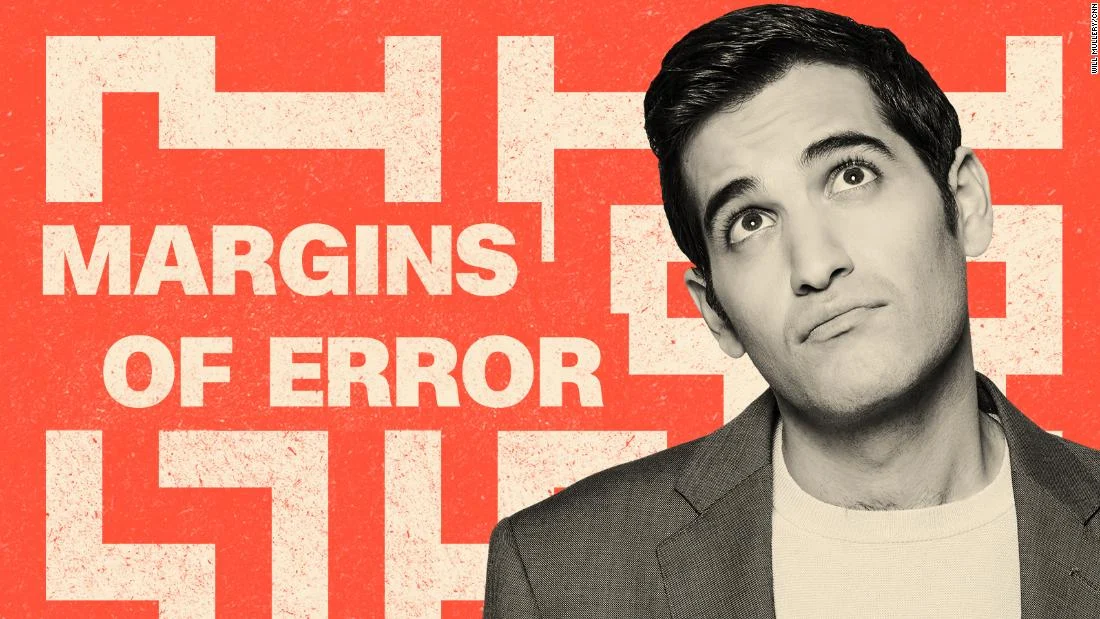
In an era defined by an overwhelming deluge of information, the ability to synthesize raw data into meaningful societal narratives has become an essential journalistic pursuit. CNN’s podcast, Margins of Error, serves as a bridge between the sterile world of statistical calculation and the messy, nuanced reality of the American experience. Hosted by senior data reporter Harry Enten, the series interrogates the numbers behind human behavior, questioning whether common perceptions align with empirical evidence. By deconstructing phenomena ranging from the cultural significance of regional accents to the economic thresholds of personal happiness, the podcast challenges listeners to look beyond the surface of everyday life to understand the underlying forces that shape our collective identity.
The Intersection of Data and Daily Life
The premise of Margins of Error is rooted in the belief that statistics are not merely abstract academic exercises but are reflective of human values, fears, and evolutionary traits. Since its inception, the program has consistently sought to provide clarity on why individuals act the way they do, often utilizing unconventional datasets to explain modern dilemmas.
The podcast’s investigative process typically involves collaboration with domain experts, academics, and, on occasion, lighthearted field experiments designed to test the limits of these data-driven theories. By pairing rigorous analysis with a narrative-driven approach, Enten has curated a series that touches on diverse facets of the human condition, including transportation logistics, the psychology of underdogs, meteorological forecasting, the evolution of romantic trends, and even the cultural resistance to the metric system.
A Chronology of Inquiry: Selected Case Studies
Since the spring of 2022, the podcast has maintained a consistent release schedule, tackling a new "margin of error" each week. This chronology reflects the show’s breadth:
- May 3, 2022: The series explored the homogenization of American speech, asking whether regional accents are fading under the pressure of national media and digital communication.
- May 10, 2022: A deep dive into the hygiene habits of the average American, contrasting historical norms of bathing with contemporary societal expectations.
- May 17, 2022: An investigation into the evolving perception of eyewear, moving from the historical "four-eyes" stigma to the modern aesthetic embrace of spectacles.
- May 24, 2022: An analysis of the correlation between wealth and happiness, featuring insights from researchers using real-time tracking technology to measure life satisfaction.
- May 31, 2022: A look at the rebranding of the carbonated beverage industry, focusing on the shift from "diet" to "zero sugar" labels.
- June 7, 2022: A study on the United States’ persistent refusal to fully integrate the metric system, highlighting the intersection of national identity and standard measurement.
- June 14, 2022: An examination of sociological data suggesting a decline in romantic engagement, including a visit to a Regency-era-themed social event.
- June 21, 2022: An assessment of modern meteorology, detailing why long-term forecasting remains a significant challenge despite advancements in predictive modeling.
- June 28, 2022: A psychological breakdown of why the public consistently favors underdogs, featuring interviews with former professional athletes and data analysts.
- July 5, 2022: An analysis of travel efficiency, utilizing AI-driven research to optimize road trips and airline boarding procedures.
Statistical Context and Societal Implications
The episodes of Margins of Error often serve as a mirror for contemporary American society. For instance, in the discussion regarding the "underdog effect," the program draws upon psychological studies indicating that human empathy is naturally drawn toward those perceived to be at a disadvantage. When applied to politics and sports, this bias can significantly influence fan engagement and voter sentiment, even when the data suggests a different outcome is statistically probable.
Similarly, the investigation into the metric system serves as a broader commentary on American exceptionalism. Despite the scientific community’s near-universal adoption of the International System of Units (SI), the United States maintains a complex, hybrid system. The podcast posits that this resistance is less about the technical superiority of one system over the other and more about the historical weight of tradition and the immense infrastructure costs required to transition.

The episode regarding the decline of romance, which touched on the rise of single-person households and changing courtship rituals, utilized census and survey data to highlight a shifting demographic landscape. This transition from traditional nuclear family models toward more individualized lifestyles is supported by decades of sociological research, which the podcast uses to contextualize the "disappearance" of traditional romantic indicators.
Perspectives from the Field
The production of the podcast relies heavily on external expertise, ensuring that the findings presented are grounded in peer-reviewed research or professional observation. For example, in the study of happiness, the show utilized data provided by Matt Killingsworth, a researcher whose app-based approach to measuring subjective well-being has provided new insights into how income levels impact emotional regulation.
Furthermore, the program’s willingness to engage with the entertainment and sports worlds—such as bringing in former Buffalo Bills player Coy Wire to discuss the underdog mentality—adds a layer of practical application to the theoretical statistics. By interviewing individuals who have lived through the scenarios being analyzed, the podcast avoids the pitfalls of purely theoretical discussion, grounding the "margins of error" in real-world outcomes.
Broader Impact and The Future of Data Journalism
The influence of Margins of Error lies in its ability to democratize data. By removing the jargon-heavy barriers that often prevent the general public from engaging with statistical research, the podcast encourages critical thinking about the information people consume daily. In a media environment plagued by misinformation and superficial reporting, the emphasis on accuracy, provenance of data, and the acknowledgement of inherent uncertainty—the "margin of error"—is a vital contribution to public discourse.
As artificial intelligence and big data become increasingly integrated into the fabric of daily life, the show’s focus on the "whys" behind the numbers becomes even more relevant. Whether exploring the efficiency of future transport powered by sustainable resources like kelp, or decoding the linguistic drift of the American population, the series underscores the fact that data is not merely a tool for prediction but a window into the evolution of human culture.
Ultimately, Margins of Error suggests that the most important findings are often found in the discrepancies between our intuition and the reality shown by the numbers. By exploring these gaps, Harry Enten provides listeners with the tools to navigate a complex, uncertain world with a higher degree of skepticism and a greater appreciation for the rigorous work of statistical inquiry. As the show continues to analyze the variables of the human experience, it stands as a testament to the enduring necessity of objective, data-driven storytelling in the modern news cycle.