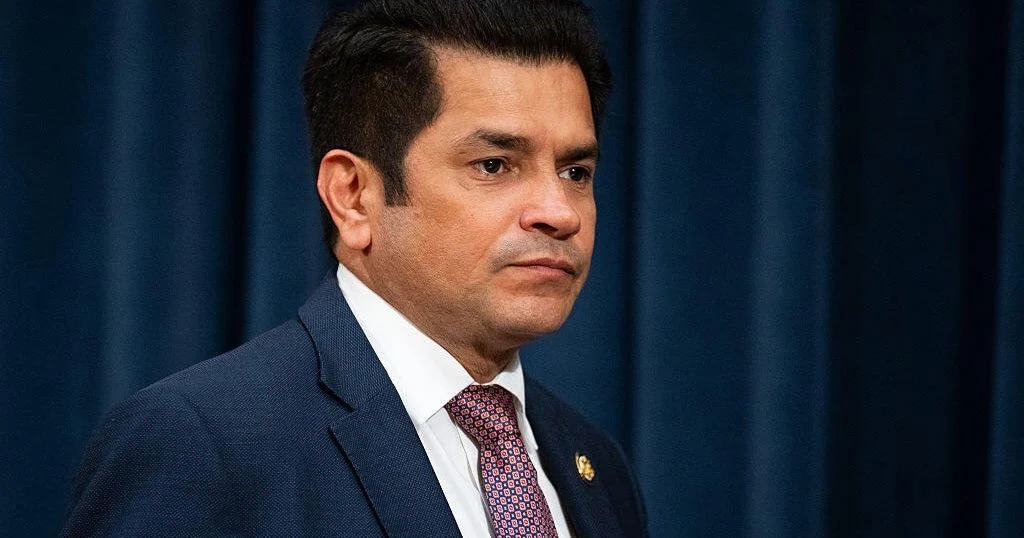
Representative Jimmy Gomez announced his immediate resignation from Congress on Monday, November 23, 2026, bowing to mounting pressure after a bipartisan House Ethics Committee investigation concluded there was substantial evidence he engaged in severe sexual misconduct, including nonconsensual sexual contact with a congressional staffer. The California Democrat, who had already lost his bid for reelection earlier in the election cycle, stated that his resignation would take effect on December 1, 2026, allowing his legislative office sufficient time to transition critical constituent casework before his departure.
The explosive developments follow a months-long, meticulous inquiry launched by the House Ethics Committee in August 2026. The bipartisan panel’s final report depicted a disturbing pattern of abuse of power, detailing multiple encounters in which Gomez allegedly harassed, groped, and physically assaulted a junior female staffer working on Capitol Hill. The committee’s findings noted that Gomez’s behavior was sufficiently egregious that it "could constitute criminal misdemeanor sexual abuse" or sexual assault under applicable legal frameworks.
In a public statement released shortly after the committee published its findings, Gomez conceded that he had significant disagreements with certain aspects of the report but recognized that stepping down was his only viable path forward. He acknowledged personal failings outside of his marriage and took full responsibility for actions that precipitated the crisis. Despite his earlier defeat in his reelection campaign—which meant he would have left office in early January anyway—the gravity of the Ethics Committee report accelerated his exit by more than a month.
A Detailed Chronology of the Allegations
The House Ethics Committee report outlines a troubling series of events spanning multiple months in 2024, centered on interactions between Representative Gomez and a female House staffer identified in the official documents as Witness 1.
The first incident occurred in February 2024. According to the committee’s findings, the staffer met Gomez at a birthday celebration hosted by a fellow lawmaker at a venue near Capitol Hill. Later that evening, Gomez, the victim, another lawmaker, and a second woman departed for a bar located in Washington’s Chinatown neighborhood.
It was inside the Chinatown establishment that the situation escalated significantly. The victim testified that Gomez began touching her legs before committing a nonconsensual act of digital penetration. Describing herself as completely "mortified" and paralyzed by the suddenness and severity of the violation, the staffer recalled not knowing how to react. She ultimately fled to the venue’s restroom, where she locked herself inside and wept.
When the group reconvened outside the establishment later that night, the harassment continued. The victim reported that Gomez physically pushed her against an exterior wall and forced a kiss upon her. Trapped and desperate to escape a volatile situation, the staffer stated she acquiesced to the kiss simply because she wanted the ordeal to end so she could return home safely.
When initially confronted by investigators regarding the encounter outside the bar, Gomez characterized the kiss as entirely consensual. However, he later altered his account, admitting that he placed his hand down the top of the victim’s skirt and claimed he asked for verbal confirmation before doing so, asserting that "she said yes." Gomez consistently denied the allegation of digital penetration, maintaining that the victim never physically resisted or verbally rebuffed his advances at the time.
A second disturbing incident transpired several months later, in July 2024. According to the committee report, Gomez used his position of authority to invite the staffer to his official congressional office via text message. Once inside the private confines of the office, the situation quickly turned aggressive when the staffer attempted to depart.
The victim told investigators that Gomez grabbed her, pressed his body forcefully against hers, and attempted to kiss her against her will. She stated that she repeatedly told him "no" and demanded to leave. According to her testimony, she had to exert significant physical effort to push him away from her before successfully breaking free and fleeing the office.
In stark contrast, Gomez minimized the July encounter during his interviews with the committee. He claimed that he merely walked the staffer to the door, offered a customary greeting—which he described as a "beso," or a kiss on the cheek—along with a hug, before she departed amicably.
The Ethics Committee firmly rejected Gomez’s defense, characterizing his behavior as "aggressive and inappropriate." Investigators emphasized that evidence collected throughout the inquiry demonstrated Gomez was acutely aware that his conduct was wrongful. Furthermore, the panel concluded that his actions inflicted "significant and ongoing distress" upon the victim, directly influencing her decision to leave her position on Capitol Hill.
Official Responses and Legal Condemnation
The release of the Ethics Committee report provoked swift, unequivocal condemnation from both legal representatives and congressional leadership, underscoring a zero-tolerance approach to workplace harassment within the legislative branch.
Attorneys Lisa J. Banks and Sarah E. Nesbitt, who represent the victim, issued a powerful statement affirming that the committee’s findings completely validate their client’s courage in coming forward.
"This report confirms that Representative Gomez sexually harassed and assaulted our client while she was a staffer on Capitol Hill," Banks and Nesbitt stated. They asserted that Gomez "abused the power given to him by the voters when he violated this young woman, effectively destroying her dreams of a career in public service." The attorneys further noted that elected officials often operate under the dangerous assumption that their status renders them immune to accountability, adding that the committee’s exhaustive investigation marks a vital milestone in dismantling toxic power dynamics within government institutions.
House Democratic leadership similarly addressed the scandal with grave concern, validating the decision of the California lawmaker to resign immediately. In a joint statement, House Minority Leader Hakeem Jeffries, Minority Whip Katherine Clark, and Democratic Caucus Chairman Pete Aguilar condemned the findings as "serious and deeply troubling."
"It is appropriate that he is stepping down," the Democratic leaders stated. "Decisive action to set a new standard for reform is an urgent priority for House Democrats."
Absence of Formal Sanctions and Broader Implications
Although the bipartisan panel found overwhelming evidence of misconduct, the committee opted not to recommend formal congressional punishments—such as expulsion or censure—primarily due to the timing of the investigation. Because Gomez had already been defeated by voters in his primary or general election cycle and was scheduled to vacate his seat in January anyway, the committee determined that an expedited punishment process was impractical.
Instead, the panel emphasized that publishing the full, unvarnished report was a vital institutional responsibility. By making the findings public, the committee ensured that the House of Representatives, as well as the broader public, retained a definitive record of the misconduct to evaluate in the judgment of history and future ethics frameworks.
The scandal surrounding Jimmy Gomez highlights persistent systemic vulnerabilities regarding the safety, protection, and empowerment of congressional staffers. Capitol Hill has long grappled with the unique power asymmetries inherent in the legislative branch, where young aides often find themselves structurally subordinate to powerful elected officials who control their professional advancement and livelihood.
In the wake of the #MeToo movement and subsequent legislative reforms designed to streamline the reporting of workplace harassment, Congress implemented mandatory anti-harassment training and established the Office of Congressional Workplace Rights. However, watchdogs and advocacy groups frequently point out that the enforcement mechanisms rely heavily on voluntary compliance and the courage of junior staffers to risk their careers by reporting predatory behavior by sitting members.
As Jimmy Gomez prepares to leave office ahead of schedule, the legacy of his tenure will be defined not by his legislative record, but by the profound institutional failure and abuse of public trust documented in the Ethics Committee’s historic findings. The case serves as a stark reminder of the continuous need for rigorous oversight, cultural transformation, and absolute accountability within the halls of American democracy.