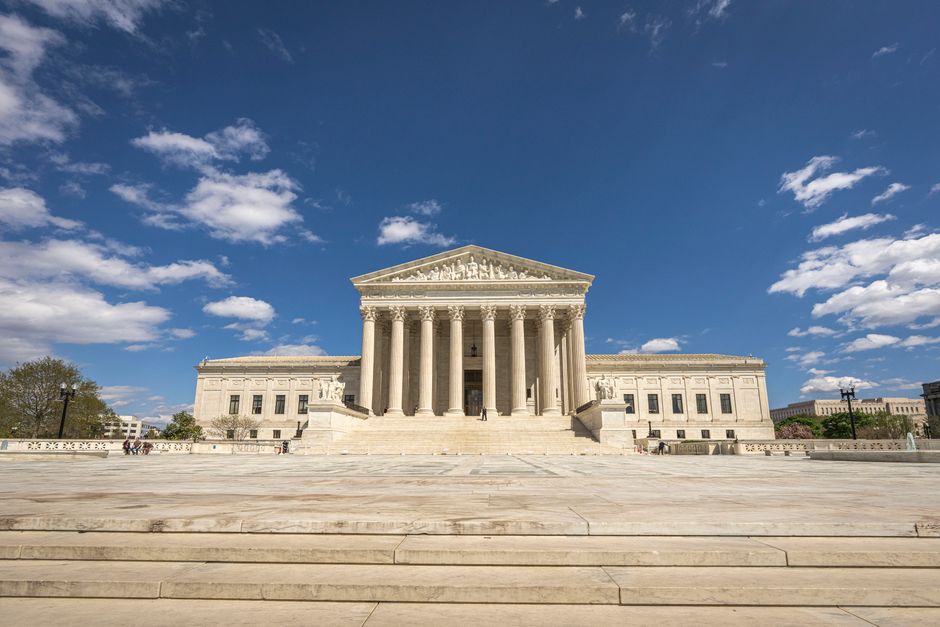
Trump Administration’s Migrant Parole Program and the Supreme Court: A Legal and Policy Showdown
The Trump administration’s aggressive approach to immigration enforcement saw the implementation of various policies aimed at deterring irregular migration and controlling the border. Among these, the Migrant Protection Protocols (MPP), often colloquially referred to as "Remain in Mexico," and subsequent parole programs designed to manage asylum seekers at the border, became focal points of intense legal challenges and ultimately, Supreme Court scrutiny. This article delves into the legal battles surrounding these programs, focusing on the Trump administration’s use of parole authority, the arguments presented before the Supreme Court, and the broader implications for immigration law and policy.
The Legal Basis for Migrant Parole: Understanding the Executive’s Authority
The core of the legal disputes surrounding these programs often hinged on the executive branch’s interpretation of its authority under the Immigration and Nationality Act (INA). Section 212(d)(5)(A) of the INA grants the Attorney General broad discretion to "parole into the United States temporarily" any alien applying for admission to the U.S. "for urgent humanitarian reasons or significant public benefit." This parole authority has historically been used to allow individuals to enter the U.S. for specific, limited purposes, such as medical treatment or to testify in legal proceedings. However, the Trump administration sought to leverage this authority in unprecedented ways to manage the influx of asylum seekers at the southern border.
The "Remain in Mexico" Policy and its Parole Implications
While MPP itself was not a parole program, its implementation and subsequent legal challenges directly intertwined with the broader discussion of the executive’s power to manage asylum seekers. MPP required non-Mexican asylum seekers arriving at the U.S.-Mexico border to wait in Mexico for their U.S. immigration court proceedings. This policy faced immediate and sustained legal opposition. Critics argued that it violated U.S. and international law by exposing asylum seekers to dangerous conditions in Mexico and effectively preventing them from accessing the asylum process.
The legal arguments against MPP often centered on its alleged incompatibility with the INA’s mandate that asylum seekers be detained or released into the U.S. while their claims are adjudicated. The Trump administration defended MPP as a necessary measure to address overwhelming numbers of asylum claims and deter frivolous applications, arguing that the INA allowed for the return of individuals to Mexico pending adjudication. The courts grappled with whether the government had adequately considered the safety and humanitarian concerns of those returned to Mexico and whether the policy constituted an unlawful abrogation of the U.S.’s asylum obligations.
The Evolution Towards Parole-Based Management Strategies
As legal challenges to MPP mounted, and in some instances, courts ordered its termination, the Trump administration began to explore and implement alternative strategies that sometimes involved the use of parole. These strategies aimed to manage the flow of asylum seekers and reduce the burden on border infrastructure and detention facilities. One significant approach involved granting parole to certain categories of asylum seekers who were deemed to pose no security risk and were in vulnerable situations, allowing them to enter the U.S. while their asylum cases proceeded. This was often framed as a humanitarian measure and a way to facilitate the orderly processing of asylum claims.
The Biden administration, upon taking office, inherited these complex legal and operational challenges. While seeking to dismantle MPP, the administration continued to utilize and adapt parole programs as a tool for managing border arrivals, albeit with different policy objectives and legal justifications. The Supreme Court’s involvement in cases related to these parole-like programs became crucial in defining the boundaries of executive authority and the government’s obligations to asylum seekers.
Key Supreme Court Cases and Their Significance
The Supreme Court’s engagement with the Trump administration’s border policies, including those involving parole-like mechanisms, has been multifaceted. While no single Supreme Court case directly addressed a specific Trump-era parole program in isolation from broader asylum and immigration enforcement contexts, several landmark decisions and ongoing disputes have illuminated the legal underpinnings of executive discretion in this area.
One of the most significant areas of contention, though not exclusively focused on parole, was the broader challenge to MPP. The Supreme Court’s rulings on MPP, such as Department of Homeland Security v. Regents of the University of California, while ultimately addressing the rescission of the program under the Biden administration, involved extensive legal arguments about the executive’s procedural obligations and the scope of administrative authority in implementing and revoking such policies. The underlying legal principles discussed in these cases regarding executive discretion and statutory interpretation are highly relevant to parole programs.
Another critical area involves the detention and release of asylum seekers. The INA mandates that asylum seekers who are not detained can be released on their own recognizance or on bond. However, the executive branch has considerable discretion in determining detention levels and release conditions. Parole, in this context, can be seen as a form of release that bypasses traditional bond requirements and is granted based on the specific criteria of humanitarian need or public benefit. Legal challenges have arisen when these parole decisions are perceived as arbitrary or discriminatory, or when they are used to circumvent the procedural safeguards afforded to asylum seekers under U.S. law.
The concept of "parole for significant public benefit" has been a particularly contested element. Critics argue that the administration may have broadened this interpretation to include the perceived benefit of managing border flows or alleviating detention capacity, rather than strictly adhering to traditional understandings of public benefit. This has led to litigation questioning whether the government’s justifications for granting parole in these instances are legally sound and supported by evidence.
The Supreme Court’s role in these matters is to interpret the relevant statutes, such as the INA, and to determine whether the executive branch has acted within the bounds of its delegated authority. This involves scrutinizing the legal basis for the administration’s actions, assessing whether proper administrative procedures were followed, and evaluating whether the policies in question contravene constitutional rights or established legal principles.
The Administrative Procedure Act (APA) and Judicial Review
A significant legal avenue for challenging immigration policies, including parole programs, is through the Administrative Procedure Act (APA). The APA provides a framework for judicial review of agency actions, allowing courts to overturn agency decisions that are arbitrary, capricious, an abuse of discretion, or otherwise not in accordance with law. Lawsuits filed against the Trump administration’s border policies, including those that involved parole-like measures, frequently invoked the APA to argue that the policies were unlawfully implemented or that the underlying justifications were insufficient.
The Supreme Court’s jurisprudence on the APA is crucial in these cases. Rulings have clarified the deference that courts should give to agency interpretations of statutes and the level of scrutiny that should be applied when reviewing agency actions. In the context of immigration, the Supreme Court has had to balance the executive branch’s broad authority over national security and immigration with the rights and protections afforded to individuals seeking asylum.
The impact of these legal challenges on the administration of the asylum system is profound. When courts enjoin or strike down specific policies, it forces the executive branch to revise its approach, leading to operational shifts and potentially new legal strategies. The constant back-and-forth between the executive and judicial branches underscores the dynamic and often contentious nature of immigration law and policy in the United States.
The Supreme Court’s ultimate decisions in cases touching upon the Trump administration’s use of parole authority have significant implications for:
- The scope of executive discretion: The Court’s interpretations will define the boundaries of the Attorney General’s and Secretary of Homeland Security’s authority to grant parole and manage asylum seekers at the border.
- The rights of asylum seekers: The rulings will impact how asylum seekers are treated while awaiting decisions on their claims, including their ability to access legal counsel, their safety, and their overall due process rights.
- The future of immigration enforcement: The legal precedents set will shape how future administrations can utilize parole and other discretionary tools to address border challenges.
- The balance of power: The cases highlight the ongoing tension between executive power and judicial oversight in the realm of immigration policy.
The legal battles surrounding the Trump administration’s migrant parole programs and related border policies at the Supreme Court represent a critical juncture in the evolution of U.S. immigration law. The Court’s pronouncements will not only shape the immediate landscape of border management but will also have lasting ramifications for the interpretation of statutory authority, the protection of asylum seekers’ rights, and the delicate balance of power between the branches of government in addressing complex humanitarian and national security issues. The ongoing litigation and the Supreme Court’s eventual rulings in related cases continue to be closely watched by policymakers, legal scholars, and advocates alike, as they grapple with the profound implications for the nation’s immigration system.
