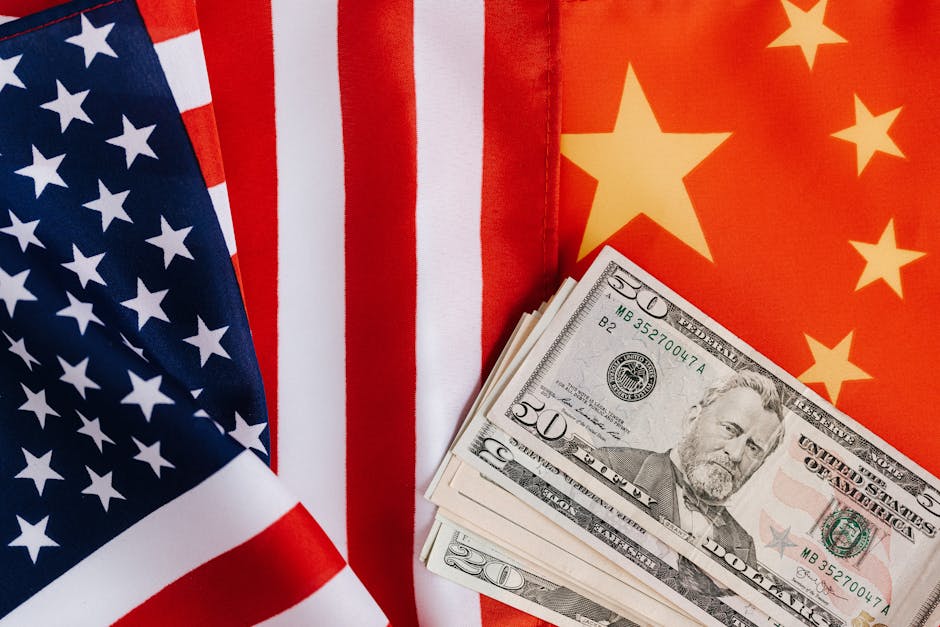
Rupee-Dollar Strength Hinges on Mild Bearish Bias Amid US-China Talks
The Indian Rupee’s trajectory against the US Dollar is currently sculpted by a delicate interplay of domestic economic fundamentals and significant geopolitical undercurrents. A discernible mild bearish bias has permeated the rupee’s outlook, suggesting a tendency for depreciation against the world’s reserve currency. This sentiment is not an isolated phenomenon but rather a response to a confluence of factors, most prominently the anticipation and ongoing developments surrounding US-China trade and economic dialogues. The market’s attention is acutely focused on these high-stakes negotiations, as their outcomes possess the potential to dramatically reshape global trade flows, investment patterns, and ultimately, currency valuations, including that of the rupee. Any perceived progress or significant setbacks in the US-China discussions will undoubtedly be swiftly priced into the rupee-dollar exchange rate. Investors and traders are meticulously analyzing statements, trade balance data, and any indications of policy shifts from both Washington and Beijing. A de-escalation of trade tensions, for instance, could bolster global risk appetite, leading to capital inflows into emerging markets like India, thereby supporting the rupee. Conversely, renewed trade friction or the imposition of new tariffs would likely trigger a risk-off sentiment, prompting a flight to safety into the US Dollar, consequently weakening the rupee. The current mild bearish bias reflects a cautious approach by market participants, acknowledging the inherent uncertainties and potential volatility stemming from these crucial dialogues.
Beyond the direct impact of US-China relations, several domestic economic factors contribute to the rupee’s current disposition. India’s inflation rate, while showing some moderation, remains a persistent concern for the Reserve Bank of India (RBI). Persistent inflationary pressures necessitate a vigilant monetary policy stance, potentially involving higher interest rates or a prolonged period of stable rates. Higher interest rates, in theory, make Indian assets more attractive to foreign investors, leading to capital inflows and rupee appreciation. However, the current mild bearish bias suggests that the market is weighing other factors more heavily, or that the anticipated impact of interest rates is being offset by other negative drivers. Furthermore, the pace of economic growth, while robust, faces headwinds. Global economic slowdown fears, coupled with domestic supply-side constraints and evolving consumer demand patterns, can temper optimism and influence capital flows. A slower-than-expected economic recovery could deter foreign investment, exerting downward pressure on the rupee. The current account deficit, a perennial feature of India’s external accounts, also plays a crucial role. A widening deficit signifies that India is importing more than it is exporting, creating demand for foreign currency and thus putting pressure on the rupee. While measures have been undertaken to manage the deficit, its persistence contributes to the underlying bearish sentiment. Moreover, global liquidity conditions, influenced by monetary policies of major central banks like the US Federal Reserve, significantly impact emerging market currencies. Any hints of a more hawkish stance from the Fed, such as faster-than-anticipated interest rate hikes or a reduction in quantitative easing, would typically lead to a strengthening of the US Dollar and a weakening of currencies like the rupee.
The US-China trade and technology war, a protracted and complex negotiation, remains a paramount driver of global economic sentiment and, by extension, currency markets. The recent focus on semiconductors, artificial intelligence, and access to critical raw materials underscores the evolving nature of this strategic competition. Each round of talks, whether formal or informal, carries the weight of potential breakthroughs or significant stalemates. For the Indian Rupee, the implications are multifaceted. A resolution that leads to a reduction in global trade barriers and a more predictable international trade environment would generally be positive for emerging markets. This could translate into increased demand for Indian exports and a surge in foreign direct investment (FDI) and foreign portfolio investment (FPI) into India. Such inflows would directly support the rupee, counteracting the mild bearish bias. Conversely, an escalation of trade disputes, particularly if it involves tit-for-tat retaliatory measures, could trigger a global economic slowdown, increased market volatility, and a flight to safety towards the US Dollar, the quintessential safe-haven asset. This scenario would exacerbate the bearish pressures on the rupee. The market is keenly awaiting concrete outcomes from these dialogues, rather than mere pronouncements. Agreements on specific sectors, commitments to reduce tariffs, or a clear roadmap for de-escalation would be viewed as significant positive catalysts for the rupee. Conversely, continued rhetoric without tangible action, or the introduction of new contentious issues, would likely reinforce the current cautious and mildly bearish sentiment. The interconnectedness of global supply chains means that any disruption stemming from US-China tensions has ripple effects across economies, influencing commodity prices, shipping costs, and manufacturing output, all of which indirectly affect the rupee.
Furthermore, the macroeconomic landscape within the United States itself plays an instrumental role in shaping the dollar’s strength and, consequently, the rupee’s weakness. The US Federal Reserve’s monetary policy decisions, particularly regarding interest rates and the pace of quantitative tightening, are closely scrutinized by global markets. A more hawkish stance from the Fed, characterized by a faster-than-expected increase in interest rates or a more aggressive reduction of its balance sheet, would generally lead to a stronger US Dollar. Higher interest rates in the US make dollar-denominated assets more attractive to global investors, drawing capital away from emerging markets and putting downward pressure on currencies like the rupee. Conversely, a more dovish approach by the Fed, or indications that interest rate hikes are nearing their peak, could provide some relief to emerging market currencies. The US inflation outlook is a critical determinant of the Fed’s policy path. If inflation proves to be stickier than anticipated, it would necessitate a more aggressive monetary tightening, further strengthening the dollar. Conversely, a significant cooling of US inflation could give the Fed more room to pause or even pivot towards a more accommodative stance, which would be beneficial for the rupee. Additionally, the performance of the US economy, including its labor market and GDP growth, influences investor sentiment. A resilient US economy can support dollar strength, while signs of a slowdown could weaken it. The interplay between these domestic US factors and the evolving US-China dialogue creates a complex environment for the rupee, where both drivers can either amplify or offset each other.
India’s own economic resilience and policy responses are crucial in mitigating the bearish pressures on the rupee. The government’s fiscal discipline, efforts to control inflation, and policies aimed at boosting domestic manufacturing and exports are all vital. Successful implementation of initiatives like the Production Linked Incentive (PLI) schemes can attract foreign investment and enhance India’s export competitiveness, thereby supporting the rupee. The RBI’s role in managing liquidity, intervening in the forex market judiciously, and maintaining price stability is also paramount. While the RBI generally refrains from aggressive intervention to manage the exchange rate, its actions can influence volatility and sentiment. The strength of India’s foreign exchange reserves also acts as a buffer against excessive depreciation. High reserves provide the central bank with the firepower to intervene in the market during periods of extreme volatility. However, the sustainability of these reserves depends on factors like capital flows and the trade balance. The overall sentiment towards emerging markets, influenced by global risk appetite, also plays a role. During periods of global economic uncertainty or geopolitical instability, investors tend to favor developed markets and safe-haven assets, leading to outflows from emerging markets and weakening their currencies. India’s ability to attract and retain foreign capital hinges on its perceived stability, growth prospects, and the attractiveness of its investment environment relative to other emerging economies. Therefore, domestic policy decisions and their perceived effectiveness in fostering a stable and growth-oriented economic environment are key determinants of the rupee’s resilience.
The current mild bearish bias on the rupee dollar pair suggests that market participants are factoring in a scenario where the US dollar remains relatively strong, potentially due to a combination of persistent US inflation, a hawkish Federal Reserve, or ongoing global economic uncertainties that benefit the dollar as a safe haven. Simultaneously, the perceived impact of US-China talks, while being closely watched, might not be sufficient to fundamentally alter the dollar’s dominance in the short to medium term unless significant de-escalation occurs. The bearish bias implies that upward movements in the USD/INR pair (which signifies rupee depreciation) are more likely than sustained downward movements (rupee appreciation) in the immediate future, assuming no dramatic shift in the prevailing economic and geopolitical landscape. This sentiment is a reflection of risk management and the cautious positioning of investors who are awaiting clearer signals from both the US Federal Reserve and the progress (or lack thereof) in the US-China negotiations. The absence of strong domestic catalysts for significant rupee appreciation, coupled with potential external headwinds, reinforces this cautious outlook. Therefore, any upward revisions in growth forecasts, substantial improvements in the trade balance, or decisive policy interventions to curb inflation without stifling growth could potentially alter this mild bearish bias. Until such shifts materialize, the market is likely to remain attuned to the nuances of the US-China dialogue and the Federal Reserve’s monetary policy path, which will continue to dictate the rupee’s struggle against the persistent strength of the US dollar.
