Nomura Securities’ commercial real estate lending platform has marked its first anniversary with a milestone achievement, closing the largest sole-bank, single-asset, single-borrower (SASB) commercial mortgage-backed securities (CMBS) transaction in nearly two years. The $719 million KELR 2026-MF deal is backed by a diverse portfolio of 12 multifamily properties and one student housing asset, all owned by Keller Investment Properties. As the sole lender for this floating-rate, interest-only transaction, Nomura has solidified its position in the competitive U.S. commercial real estate market, executing a deal that stands as one of the most significant single-bank SASB offerings since 2020.
The transaction comes just 11 months after Nomura relaunched its U.S. commercial real estate (CRE) lending platform, a move signaled by the high-profile recruitment of industry veterans from Barclays. The KELR 2026-MF deal not only highlights Nomura’s rapid ascent but also reflects a broader resurgence in the CMBS market, particularly within the multifamily sector. Investors responded with significant enthusiasm, leading to an oversubscribed offering that saw bond classes price competitively against even the largest institutional benchmarks.
Strategic Refinancing and Portfolio Composition
The KELR 2026-MF transaction provides a comprehensive refinancing solution for Keller Investment Properties, a firm based near Salt Lake City that has historically relied on agency debt from entities like Fannie Mae and Freddie Mac. The $719 million loan carries a two-year initial term with three one-year extension options, providing the borrower with significant flexibility in a shifting interest rate environment.
The collateral for the loan consists of 3,321 units spread across high-growth markets in Utah, Nevada, and Arizona. This geographic concentration in the "Mountain West" and "Sun Belt" regions has been a strategic focus for Keller, as these areas have seen robust population growth and strong rental demand over the last decade. A notable component of the portfolio is a student housing property serving Utah Valley University, adding a layer of recession-resistant stability to the asset pool.
According to the presale report from Fitch Ratings, Keller acquired the properties in the portfolio between 2001 and 2022. Since acquisition, the firm has demonstrated a commitment to asset appreciation, investing approximately $46 million in capital improvements across the sites. The proceeds from the CMBS loan will primarily be used to retire $696 million in existing debt, with the remaining $22.2 million allocated to closing costs and the establishment of various reserves.
A Breakthrough for a Relaunched Platform
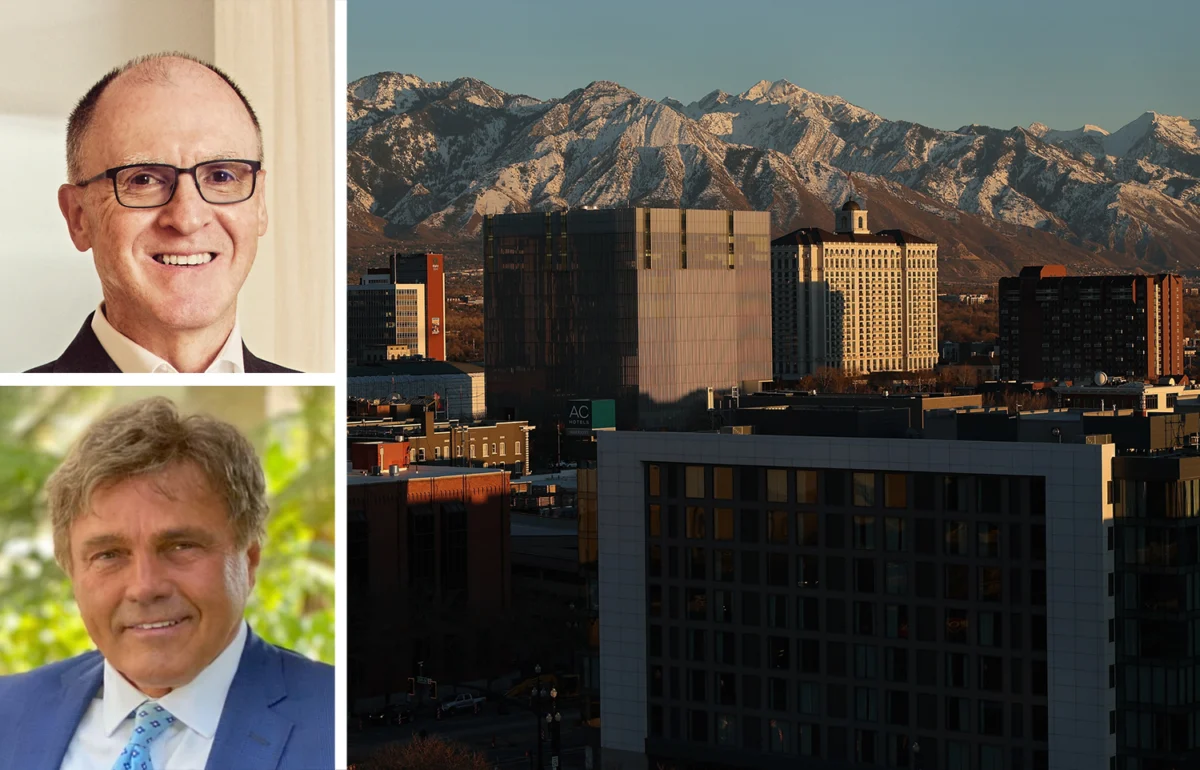
The success of the KELR 2026-MF deal is a testament to the strategic vision of Larry Kravetz, Head of U.S. CRE and CMBS at Nomura, and Frank Gilhool, Head of U.S. CRE Warehousing. The pair, along with several key team members, joined Nomura from Barclays in late 2024 to spearhead the firm’s return to the U.S. CRE lending space. In less than a year, the platform has participated in 12 SASB deals, but the Keller transaction represents its most significant solo achievement to date.
Competing against established "bulge bracket" banks for a mandate of this size is a challenge for any new platform. However, sources familiar with the deal indicate that Nomura’s "white glove" approach was a deciding factor for Keller Investment Properties. As a specialized group of 27 professionals, the Nomura team offered a level of transparency and direct communication that resonated with a first-time CMBS borrower. This coordinated workflow allowed the deal to close in just over 60 days—a timeframe described by industry insiders as a "land speed record" for a debut CMBS issuance.
Market Response and Competitive Pricing
The pricing of the KELR 2026-MF bonds underscores the high demand for quality multifamily collateral in the current market. The AAA-rated bonds, which received ratings from both Fitch Ratings and Moody’s, priced at 135 basis points over the Secured Overnight Financing Rate (SOFR).
To put this pricing into perspective, analysts compared the deal to Blackstone’s BX Trust 2026-PNDA, a similar two-year, floating-rate SASB deal that closed in mid-May. Despite the KELR deal having a higher leverage profile—77 percent compared to Blackstone’s 70 percent—the majority of the KELR bond classes priced "inside" (lower than) the Blackstone deal. This suggests that investors viewed the Keller portfolio and the Nomura-led execution with a high degree of confidence, despite Keller being a newcomer to the CMBS space.
The "oversubscription" of the deal—meaning investor demand far exceeded the supply of bonds available—indicates a healthy appetite for SASB structures. As interest rates begin to stabilize, institutional investors are looking for yield-bearing assets backed by tangible, cash-flowing real estate. Multifamily assets, in particular, are viewed as a safer bet compared to the office sector, which continues to struggle with remote work trends and high vacancy rates.
Perspectives from Keller Investment Properties
For Keller Investment Properties, the transition from agency debt to the CMBS market was a strategic move aimed at optimizing their capital structure. Matt Bowen, Executive Vice President at Keller, acknowledged that the venture into CMBS came with unique challenges but credited the collaboration between Nomura and Newmark for the smooth execution.
"This was our first venture into the CMBS world, and it came with challenges unique to us," Bowen said in a statement. "Fortunately, the team at Nomura provided thorough, insightful, and patient guidance through the complex process. We feel the oversubscription was a direct result of their knowledge and commendable efforts and the quality of our portfolio."
Bowen also highlighted the role of Newmark, which brokered the financing and acted as a lead advisor. The brokerage firm led a vigorous process, initially approaching five or six major banks to solicit proposals. Nomura’s ability to act as the sole lender on a $719 million ticket allowed for a more streamlined execution than a syndicated deal involving multiple lead banks.
The financing is expected to provide a foundation for the continued growth of the company, which was built by owner Scott Keller. With the new capital structure in place, the firm is looking forward to continued property improvements and potential expansion within the Western United States.
Chronology of the Deal and the Platform’s Growth
The timeline of the KELR 2026-MF deal reflects the rapid pace of the current CRE lending environment:
- September 2024: Nomura relaunches its U.S. CRE lending platform, hiring Larry Kravetz and Frank Gilhool.
- Late 2024 – Early 2025: The platform begins building its pipeline, participating in various SASB and conduit deals.
- March 2025: Newmark initiates the financing process for Keller Investment Properties, soliciting bids from major financial institutions.
- April 2025: Nomura is selected as the sole lender, beginning the intensive 60-day due diligence and securitization process.
- May 2025: Fitch and Moody’s release presale reports, evaluating the 13-property portfolio and assigning AAA ratings to the senior tranches.
- June 2025: The deal officially prices at 135 bps over SOFR and closes shortly thereafter, marking the platform’s most significant achievement to date.
Broader Implications for the CMBS Market
The success of the Nomura-Keller deal serves as a barometer for the broader health of the commercial real estate finance market. Several key takeaways emerge from this transaction:
- The Return of the SASB: Large-scale, single-borrower deals are returning to favor as lenders and investors regain confidence in property valuations. The fact that a single bank could warehouse and securitize over $700 million solo suggests that balance sheet capacity is returning to the sector.
- Multifamily Dominance: While the office market remains under a cloud of uncertainty, multifamily assets continue to be the "darling" of the CMBS world. The high occupancy rates and steady rent growth in the Utah, Nevada, and Arizona markets make these assets highly attractive to bondholders.
- The Rise of Non-Traditional Giants: Nomura’s ability to outperform larger, more established CMBS players suggests that the market is open to "boutique" style service within large global institutions. Borrowers are increasingly valuing specialized expertise and high-touch communication over long-standing institutional relationships.
- Agency to CMBS Migration: As agency lending (Fannie/Freddie) faces various regulatory and volume caps, more private owners of multifamily portfolios are exploring the CMBS market. This shift provides borrowers with alternative liquidity sources and often more flexible terms for large, multi-state portfolios.
Future Outlook
As Nomura Securities enters its second year with this revitalized platform, the industry will be watching to see if it can maintain this momentum. The KELR 2026-MF deal has set a high bar, proving that the firm can handle large-scale, complex originations with speed and precision.
For the Western U.S. real estate market, the deal reinforces the region’s status as a primary destination for institutional capital. With $46 million already invested in improvements and a fresh $719 million in financing, the Keller portfolio is well-positioned to capitalize on the ongoing economic migration to the Mountain West.
In an era where commercial real estate headlines are often dominated by distress and defaults, the successful execution of the KELR 2026-MF transaction offers a counter-narrative of growth, liquidity, and investor confidence. It marks a significant win for Nomura, a transformative step for Keller Investment Properties, and a positive signal for the U.S. CMBS market at large.