Tag: International Labor Standards – A Framework for Fair Work and Economic Justice
International labor standards are foundational principles and norms that address the rights and responsibilities of workers and employers across the globe. Established and promoted primarily by the International Labour Organization (ILO), these standards aim to ensure decent work for all, fostering social justice and promoting fair competition in the global economy. They encompass a wide array of issues, including freedom of association, collective bargaining, the elimination of forced labor and child labor, equal opportunity and treatment, and the provision of safe and healthy working conditions. The development and implementation of these standards are crucial for building a more equitable and sustainable world, recognizing that economic progress should not come at the expense of human dignity and fundamental rights. The universality of these standards is paramount, acknowledging that issues of labor transcend national borders and require a coordinated global response.
The International Labour Organization (ILO), established in 1919 as a specialized agency of the United Nations, plays a central role in setting and promoting international labor standards. Its tripartite structure, comprising representatives from governments, employers’ organizations, and workers’ organizations from its 187 member states, ensures that standards reflect the diverse perspectives and experiences of the world of work. The ILO’s standard-setting process involves the adoption of Conventions and Recommendations. ILO Conventions are international treaties that, once ratified by member states, create legally binding obligations. Recommendations, on the other hand, provide non-binding guidance on policy, legislation, and practice. Collectively, these instruments form a comprehensive body of international labor law designed to protect workers, promote social dialogue, and address evolving labor market challenges. The ILO’s unique tripartite nature is its strength, fostering consensus and ownership of the standards it develops, thereby increasing their legitimacy and impact.
Freedom of association and the right to collective bargaining are cornerstones of international labor standards, enshrined in ILO Conventions No. 87 and No. 98, respectively. Freedom of association protects the right of workers and employers to form and join organizations of their own choosing without prior authorization, and to join these organizations freely. This includes the right to establish trade unions, federations, and confederations, as well as the right for employers to form and join employers’ associations. The right to collective bargaining, as outlined in Convention No. 98, promotes the negotiation of terms and conditions of employment between employers and trade unions or other worker representatives. These rights are fundamental for empowering workers to have a voice in their workplaces, to negotiate fair wages, reasonable working hours, and safe working conditions, and to participate in decisions that affect their livelihoods. Without these rights, workers are vulnerable to exploitation and discrimination, and their ability to advocate for their interests is severely curtailed. The ILO’s Committee of Experts on the Application of Conventions and Recommendations (CEACR) plays a vital role in monitoring the implementation of these Conventions by ratifying states, ensuring that national laws and practices align with international obligations.
The elimination of all forms of forced labor and compulsory labor is another critical area addressed by international labor standards, particularly ILO Convention No. 29 and its 2014 Protocol, as well as Convention No. 105. Forced labor, defined as work or service exacted from any person under the menace of any penalty and for which the said person has not offered himself voluntarily, is a gross violation of human rights. This includes various forms such as debt bondage, human trafficking for labor exploitation, and forced recruitment for military or other services. International standards unequivocally condemn these practices and mandate that all member states take effective measures to prevent and eliminate them, including criminalizing such acts and providing remedies for victims. The fight against forced labor is a continuous global effort, requiring robust enforcement mechanisms, victim support, and international cooperation to dismantle trafficking networks and address the root causes of vulnerability. The ILO’s fundamental principles and rights at work are non-negotiable, and the prohibition of forced labor is among the most fundamental.
Child labor, defined as work that deprives children of their childhood, their potential, and their dignity, and that is harmful to physical and mental development, is also a primary concern of international labor standards. ILO Conventions No. 138 (Minimum Age) and No. 182 (Worst Forms of Child Labour) are pivotal in this regard. Convention No. 138 sets the general minimum age for admission to employment, while Convention No. 182 focuses on the most hazardous and exploitative forms of child labor, such as slavery, trafficking, debt bondage, forced recruitment, and engagement in work that is likely to harm the health, safety, or morals of children. International standards demand that member states take immediate and effective measures to abolish the worst forms of child labor and to progressively raise the minimum age for admission to employment. Addressing child labor requires a multi-faceted approach, including investing in education, poverty reduction, social protection, and raising awareness about the harmful consequences of child labor. The eradication of child labor is not just a moral imperative; it is essential for breaking intergenerational cycles of poverty and ensuring a future generation equipped with the skills and opportunities for decent work.
Equality of opportunity and treatment in employment and occupation is a fundamental principle underpinning international labor standards, as articulated in ILO Convention No. 111. This Convention prohibits discrimination on the grounds of race, color, sex, religion, political opinion, national extraction, or social origin. It aims to ensure that all workers have equal access to employment, training, promotion, and remuneration, regardless of their background or personal characteristics. Beyond these protected grounds, international labor standards increasingly advocate for non-discrimination based on other factors, such as age, disability, sexual orientation, and gender identity. Promoting equality and combating discrimination are essential for fostering inclusive labor markets, harnessing the full potential of the workforce, and achieving social justice. This involves implementing affirmative action policies, promoting diversity and inclusion in the workplace, and ensuring that legal frameworks are robust in preventing and redressing discriminatory practices. The ILO’s work in this area extends to addressing gender-based discrimination and promoting equal pay for work of equal value, recognizing that economic empowerment is a critical component of broader gender equality.
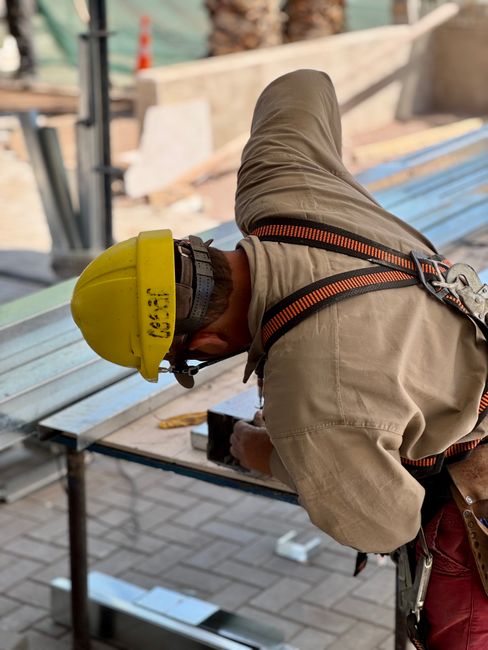
Safe and healthy working conditions are a fundamental human right and a key objective of international labor standards. ILO Conventions No. 155 (Occupational Safety and Health) and No. 187 (Framework Convention on Safety and Health at Work) provide a comprehensive framework for promoting a preventive safety and health culture at work. These standards require member states to develop, implement, and periodically review a national policy on occupational safety and health, with a view to preventing work-related injury and ill-health. This includes the establishment of national systems for inspection, the provision of information and training to workers and employers, and the promotion of worker participation in safety and health matters. The economic costs of inadequate occupational safety and health are substantial, encompassing medical expenses, lost productivity, and compensation claims. Investing in robust safety and health systems not only protects workers but also enhances productivity, reduces operational costs, and contributes to sustainable economic development. The ILO continuously works to update its standards and provide guidance on emerging OSH challenges, such as those related to the gig economy and the impact of new technologies.
Social dialogue, encompassing consultation and cooperation between governments, employers’ organizations, and workers’ organizations, is a crucial mechanism for the development and implementation of effective labor policies and the promotion of industrial peace. ILO Convention No. 144 on Tripartite Consultations (International Labour Standards) emphasizes the importance of consulting employers’ and workers’ organizations on matters relating to the ILO’s activities, including the ratification and application of international labor standards. Strong social dialogue fosters consensus, builds trust, and leads to more sustainable and equitable outcomes. It is a vital tool for navigating economic transitions, adapting to technological change, and resolving labor disputes peacefully. The ILO actively promotes tripartite dialogue at national and international levels, recognizing that inclusive decision-making processes are essential for achieving decent work for all and for ensuring that the benefits of economic development are shared widely. The strength of national labor institutions is often directly correlated with the effectiveness of their tripartite structures.
The globalization of the economy has brought both opportunities and challenges for international labor standards. Increased global trade and investment can lead to economic growth and job creation, but they also raise concerns about a "race to the bottom," where countries may lower labor standards to attract investment. International labor standards serve as a crucial safeguard against such practices, providing a common benchmark for fair labor conditions and promoting responsible business conduct. They encourage multinational enterprises to adhere to international labor principles throughout their supply chains, fostering a level playing field for businesses and protecting workers’ rights globally. The ILO’s Global Supply Chain initiative, for example, aims to promote decent work across complex production networks. Furthermore, international labor standards are increasingly being integrated into trade agreements and investment treaties, reinforcing their importance in the global economic architecture. The monitoring and enforcement of these standards in global supply chains remain a significant challenge, requiring collaboration between governments, businesses, trade unions, and civil society organizations.
The enforcement and monitoring of international labor standards are critical for their effectiveness. While ILO Conventions are legally binding upon ratification, their implementation relies on national legislation and enforcement mechanisms. The ILO’s supervisory system, including the Committee of Experts on the Application of Conventions and Recommendations (CEACR) and the Conference Committee on the Application of Standards, plays a vital role in identifying non-compliance and promoting dialogue with member states to address shortcomings. International labor standards also serve as a reference point for national labor laws, court decisions, and collective bargaining agreements. In addition, non-governmental organizations (NGOs), trade unions, and consumers often play a crucial role in advocating for the observance of these standards and holding governments and corporations accountable. The effectiveness of enforcement hinges on strong national institutions, independent judiciaries, and a commitment to upholding fundamental rights at work.
The role of international labor standards extends beyond the immediate workplace. They are intrinsically linked to broader goals of poverty reduction, inclusive development, and the achievement of the United Nations Sustainable Development Goals (SDGs). SDG 8, for instance, specifically calls for the promotion of sustained, inclusive, and sustainable economic growth, full and productive employment, and decent work for all. The realization of decent work, underpinned by international labor standards, is a prerequisite for achieving many other SDGs, including those related to poverty, hunger, health, education, gender equality, and reduced inequalities. By ensuring that economic progress is built on a foundation of fair labor practices and respect for human rights, international labor standards contribute to a more just, equitable, and sustainable global society. The interconnectedness of labor rights with broader development objectives highlights the pervasive and essential nature of these standards in shaping the future of work and society.
