Nvidia and HPE Forge Alliance to Build Germany’s Most Powerful Supercomputer: A Deep Dive into the "Leonardo" Project and its AI Revolution
The German Research Center for Artificial Intelligence (DFKI) is set to receive a monumental boost to its computational capabilities with the ambitious collaboration between Nvidia and Hewlett Packard Enterprise (HPE). This partnership is instrumental in the development of a new supercomputer, unofficially dubbed "Leonardo," which promises to be Germany’s most powerful and will significantly accelerate AI research and development across the nation. This endeavor represents a strategic investment in the future of scientific discovery, pushing the boundaries of what is possible in fields ranging from drug discovery and climate modeling to advanced manufacturing and autonomous systems. The core of this groundbreaking project lies in the synergistic integration of Nvidia’s cutting-edge AI acceleration technologies with HPE’s robust and scalable supercomputing infrastructure, creating a platform designed for the most demanding computational workloads. The immediate and long-term implications for Germany’s scientific and technological leadership are substantial, positioning it as a frontrunner in the global AI race.
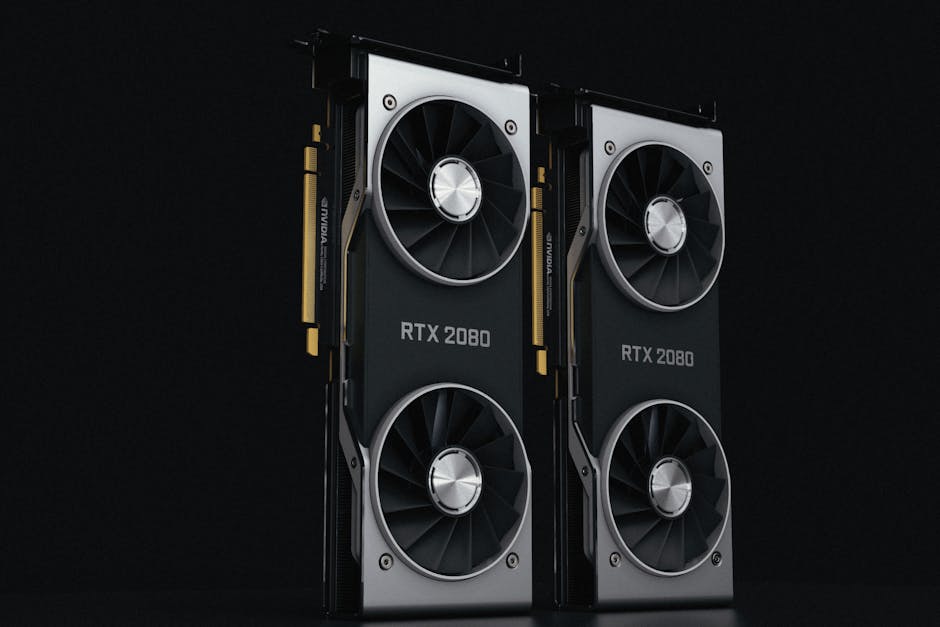
At the heart of this new supercomputer’s architecture lies Nvidia’s Hopper architecture, specifically the H100 Tensor Core GPUs. These GPUs are not merely incremental improvements; they represent a generational leap in AI performance. The H100s are engineered with dedicated Tensor Cores that are significantly faster than their predecessors, capable of handling a wider range of precision formats, including FP8, which allows for dramatically increased throughput and reduced memory footprint for AI training and inference tasks. The sheer number of these GPUs that will be integrated into Leonardo is staggering, promising an unprecedented level of parallel processing power. Each H100 GPU boasts advanced features like Transformer Engine, which intelligently optimizes the computation of transformer models, a cornerstone of modern natural language processing and other complex AI tasks. Furthermore, the NVLink interconnect technology ensures high-bandwidth, low-latency communication between GPUs, crucial for scaling AI workloads across thousands of processing units without becoming a bottleneck. This distributed computing capability is paramount for training the massive deep learning models that are driving the current AI revolution. The integration of these state-of-the-art accelerators is not just about raw power; it’s about enabling researchers to tackle problems that were previously computationally intractable, opening up new avenues of scientific inquiry.
Hewlett Packard Enterprise (HPE) plays a pivotal role in providing the foundational infrastructure for Leonardo. The supercomputer will be built upon HPE’s Cray EX supercomputer architecture, renowned for its modularity, scalability, and high-performance interconnects. The Cray EX platform is designed to handle the complexities of exascale computing, offering a robust and reliable environment for sustained high-performance computing (HPC). This includes the integration of high-speed networking fabric, such as HPE Slingshot, which is specifically designed to connect thousands of compute nodes and accelerators efficiently, minimizing communication overhead. The architecture also encompasses advanced cooling solutions to manage the immense heat generated by the densely packed compute nodes and GPUs, ensuring optimal operational stability. Furthermore, HPE’s expertise in system integration, storage solutions, and data management is critical for building a cohesive and high-performing supercomputing system. The ability to seamlessly integrate thousands of Nvidia H100 GPUs within a stable and manageable HPE Cray EX framework is a testament to the engineering prowess of both companies. The scalability of the HPE Cray EX platform ensures that Leonardo can be readily expanded and adapted to meet future computational demands as AI research evolves.
The impact of Leonardo on AI research in Germany will be transformative. DFKI, as the primary beneficiary, will gain access to a computational resource that can accelerate its already leading-edge work in various AI domains. This includes natural language understanding, computer vision, robotics, and intelligent agents. Researchers will be able to train larger and more sophisticated AI models, explore novel algorithmic approaches, and conduct more extensive simulations. For instance, in drug discovery, Leonardo could drastically shorten the time it takes to identify promising drug candidates by simulating molecular interactions at an unprecedented scale. In climate science, it could enable more accurate and granular climate models, leading to better predictions and more effective mitigation strategies. The ability to process and analyze vast datasets in near real-time will also be crucial for applications in smart manufacturing, cybersecurity, and personalized medicine. The availability of such a powerful AI supercomputer will not only empower existing research but also attract new talent and foster a more vibrant AI ecosystem in Germany. The acceleration of AI research translates directly into faster innovation and the development of practical solutions to some of society’s most pressing challenges.
Beyond DFKI, Leonardo is envisioned as a national resource, accessible to a broad spectrum of German research institutions and potentially extending to European collaborations. This democratizes access to cutting-edge AI computing, fostering a more collaborative and interconnected research landscape. The strategic goal is to elevate Germany’s position as a global leader in AI research and development, enabling it to compete effectively in the international arena. By providing researchers with unparalleled computational power, Germany aims to accelerate the pace of scientific discovery and technological innovation across numerous disciplines. This investment is not just about building a supercomputer; it’s about building a future where AI-driven breakthroughs are commonplace and contribute significantly to economic growth and societal well-being. The collaborative nature of the project, involving both public research institutions and private sector technology giants, exemplifies a forward-thinking approach to national competitiveness in a rapidly evolving technological landscape. The broader accessibility of Leonardo aims to foster a ripple effect, inspiring innovation and driving adoption of advanced AI techniques across various sectors of the German economy.
The technical specifications of Leonardo, while still under development, point towards a system designed for peak performance. It is expected to house thousands of Nvidia H100 GPUs, interconnected via HPE’s Slingshot network. The system will likely incorporate a massive amount of high-speed memory and storage to handle the enormous datasets characteristic of modern AI workloads. The computational power is anticipated to reach into the exaflops range, a measure of performance in quintillions of floating-point operations per second, particularly for AI-specific tasks. This level of performance is critical for tackling complex simulations and training deep neural networks that can have billions or even trillions of parameters. The architecture will be designed for high efficiency, both in terms of power consumption and cooling, which are significant considerations for large-scale supercomputing. The integration of Nvidia’s AI libraries and software stack, alongside HPE’s management and orchestration tools, will create a comprehensive and user-friendly environment for researchers. The precise number of compute nodes and the overall memory capacity will be tailored to the specific requirements of the AI workloads it is intended to support, ensuring a system that is both powerful and optimized for its purpose.
The partnership between Nvidia and HPE is a strategic alignment of strengths. Nvidia brings its unparalleled expertise in AI hardware and software, from GPUs to CUDA, cuDNN, and TensorRT. HPE contributes its deep understanding of high-performance computing infrastructure, including system design, networking, and data management. This synergy is crucial for delivering a supercomputer that is not only powerful but also efficient, scalable, and reliable. The joint development process will likely involve close collaboration between engineers from both companies to optimize the integration of hardware and software components. This ensures that the full potential of Nvidia’s AI accelerators can be realized within HPE’s robust supercomputing framework. The success of Leonardo will undoubtedly pave the way for future collaborations and further advancements in the field of AI-driven supercomputing. The combined expertise of these two industry leaders addresses the multifaceted challenges of building and operating a system of this magnitude.
The implications for the broader scientific community are profound. Access to Leonardo will enable researchers across various disciplines to conduct experiments and simulations that were previously impossible due to computational limitations. This includes advancements in fundamental physics, materials science, astrophysics, and computational biology. The ability to analyze complex biological systems, simulate the formation of stars and galaxies, or design novel materials with specific properties will be dramatically enhanced. The supercomputer will serve as a catalyst for innovation, empowering researchers to make breakthroughs that could have far-reaching societal benefits. Furthermore, it will foster a new generation of scientists trained in the use of advanced computational tools, ensuring that Germany remains at the forefront of scientific discovery for years to come. The open access policy, where applicable, will further amplify the impact by allowing a wider array of researchers to leverage its capabilities, fostering interdisciplinary collaboration and accelerating the pace of scientific progress.
The development of Leonardo is not just about raw computing power; it’s about enabling responsible and impactful AI development. The system will support research into explainable AI (XAI), ethical AI, and robust AI, ensuring that the powerful capabilities of AI are developed and deployed in a manner that is beneficial and trustworthy. Researchers will be able to investigate the fairness and bias in AI algorithms, develop methods for ensuring AI systems are transparent and accountable, and build AI that can operate reliably in complex and unpredictable environments. This focus on responsible AI development is crucial for building public trust and ensuring that the benefits of AI are shared equitably across society. The availability of such a powerful platform will also attract international collaboration, fostering a global community of researchers working together to address shared challenges using AI. This collaborative spirit, combined with immense computational power, creates a fertile ground for significant advancements in AI research and its applications. The emphasis on responsible AI development underscores Germany’s commitment to leading not just in AI capability but also in the ethical considerations surrounding its advancement.
